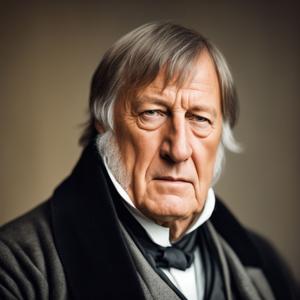
Understanding Hegel’s Philosophy of Spirit: When Concept Meets Reality
Georg Wilhelm Friedrich Hegel once declared, “The concept of the spirit has its reality in the spirit.” (Par. 553 Encyclopedia). This statement might seem cryptic at first glance, but it captures a core insight of Hegel’s philosophy of Spirit — one that contradicts the conventional way of thinking about concepts, reality, and existence. What does Hegel mean by "Spirit"? For Hegel, Spirit (or Geist) is far from a static thing or mere idea floating above and outside of the world. Instead, Spirit is an active, self-developing process in which the whole of reality is involved. It’s a history of self-actualization, both individually and collectively through reflective thought (theoretical mind) and purposeful action (as objective mind, i.e. society). In other words, Spirit is about becoming — it is constantly “becoming itself.” At the heart of Spirit therefore lies freedom. But Hegel’s notion of freedom isn’t just the ability to choose randomly; it’s a kind of freedom rooted in self-determination guided by reason and adherence to self-imposed norms. Spirit is “absolute negativity,” meaning it negates itself, turns into its opposite, negates its opposite as merely "other," and thereby affirms itself in an ongoing process of self-definition and realization. Spirit exists only insofar as it is active - we can think of it as a self-creating force. It “posits” or brings into being what can only exist within Spirit itself. This means that anything real in the realm of Spirit doesn’t come from outside but emerges from Spirit’s own self-determining activity. The philosophy of Spirit tries to capture this internal logic - a system that unfolds from Spirit itself through its immanent laws and necessary development. Spirit is not static knowledge; it’s an ongoing, dynamic achievement. Self-Relation and Unity Through Recognition Another key idea is that Spirit is a self-relating whole - a universal totality that includes particular differences without allowing them to stand alone independently. These differences become meaningful only as moments or "elements" within the whole unity of Spirit. Hegel famously described this unity as expressed in our very own self-consciousness: “the ‘I’ that is a ‘We’ and a ‘We’ that is an ‘I,’” highlighting the deep mutual recognition among self-conscious individuals. Spirit, then, is essentially social and relational: it realizes itself through reciprocal recognition of consciousnesses in a community of minds. Interestingly, Hegel saw Spirit also as the “truth of nature.” Spirit isn’t opposed to nature but presupposes it - it reveals that nature itself is already structured by the Idea (the concept or rational principle). This means that nature’s reality can be understood as grounded in a deeper spiritual or conceptual order. Spirit uncovers how nature’s external forms are determined by this immanent Idea, shining light on the bridge (ultimate underlying unity) between material existence and conceptual truth.
Becoming and Actualization: The Embodiment of Concept
The historical development of the Spirit involves its growth toward its truth, which is understood as the alignment of the concept with its reality - the actualization of potential into concrete existence. Spirit realizes its infinite nature by engaging with what at first seems to be its external reality, appropriating it, and reshaping it. This is how the concept “gives itself” its own actuality. In Hegel’s eyes, philosophy isn’t just abstract reasoning; it studies how the Idea becomes fully realized in the world. What does it mean to speak about the reality of the Spirit? The notion of "reality" or Realität plays a critical role in Hegel’s system. It’s not simply what is physically present or happens by chance - reality, for Hegel, is the concrete, actualized existence that corresponds fully to a concept. Reality is the living, self-manifesting embodiment of an idea or principle. Philosophy’s highest task is to understand this realized concept, because concepts are the inward living principles underpinning all of reality. Bringing it All Together: When Concept Becomes Spirit So, when Hegel says, “The concept of the spirit has its reality in the spirit,” he is emphasizing that the abstract idea of Spirit finds its true, concrete existence only within the living, dynamic activity of Spirit itself. The concept of Spirit isn’t just a detached thought; it becomes real through Spirit’s own ongoing self-expression and self-realization. This includes key attributes like freedom, self-consciousness, and reason, all of which unfold within the historical, cultural, and institutional forms Spirit takes over time. This insight also aligns with Hegel’s broader idealism, where:
- The concept is the real first, the determining principle embedded immanently in all things.
- Truth means the correspondence of concept and reality, not their opposition.
- Spirit, in its unfolding, is the essential being shaping the reality of the world as we experience it.
Spirit as Self-Manifester
Ultimately, Spirit is not something external to its concept; it is the process and medium through which the concept realizes itself in concrete forms. The subjective, objective, and absolute forms of Spirit represent stages and moments in this self-realization. The “reality” of Spirit, then, is found precisely in its own self-driven, self-manifesting activity - consciousness evolving, culture developing, institutions forming, all as expressions of Spirit coming fully to life. In summary, Hegel’s profound insight challenges the idea that concepts live apart from the world. For him, true reality is where concept and existence meet—in the vibrant, ongoing life of Spirit itself. To understand this is to grasp the heart of Hegelian philosophy: reality is not static but a living process of self-realizing freedom.
Become a supporter of this podcast: https://www.spreaker.com/podcast/the-philosophy-channel--4573240/support.
"Dare to use your own reason" - Immanuel Kant