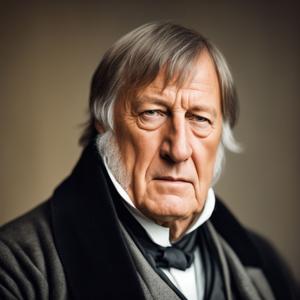
Hegel’s philosophical discourse on the absolute spirit represents a culmination of his exploration of consciousness, reality, and freedom. This concept serves as the apex of his system, embodying the unity between individual consciousness (the subjective spirit) and collective structures (the objective spirit). In the text, Hegel delves into the nature of the absolute spirit, emphasizing its eternal self-awareness, its manifestations, and its essential role in bridging faith and knowledge.
The absolute spirit is described as the ultimate reality, where the spirit achieves complete identity with itself. In Hegel’s view, it reconciles all opposites—subjective and objective, finite and infinite, particular and universal—into a unified whole. This unity is not static but dynamic; it is eternal, self-contained, and self-returning, reflecting a process of continuous realization and self-recognition. Through this process, the absolute spirit attains true freedom, which Hegel identifies as the essence of spirit. Freedom here is not mere independence, but the ability to fully comprehend and actualize one’s own nature.
To Hegel, the development of the spirit is a journey, with the absolute spirit as its final destination. The path begins with subjective spirit, which encompasses individual self-consciousness and thought. It progresses to objective spirit, manifested in societal norms, ethical life, and laws. Finally, the journey culminates in the absolute spirit—a unity of both, realized through three key forms: art, religion, and philosophy. Each of these serves as a distinct expression of the absolute spirit:
Art represents the sensuous manifestation of beauty and truth, providing an aesthetic encounter with the divine.
Religion embodies the communal and spiritual connection between humanity and the ultimate reality, offering both subjective faith and objective truth.
Philosophy, the highest form, articulates the spirit’s knowledge of itself through rational thought and pure understanding.
Religion plays a crucial role in Hegel’s framework. He portrays it as the highest sphere where the absolute spirit becomes tangible in human experience. It is both subjective—originating within individuals—and objective—emanating from the absolute spirit itself. This duality underscores the interconnectedness of faith and knowledge. Hegel rejects the idea of opposition between faith and knowledge; instead, he asserts that faith is a specific form of knowledge, a mode of understanding truth that aligns with the spirit’s realization. This perspective challenges the notion of religion as a purely subjective or irrational experience, positioning it as a vital manifestation of the absolute spirit.
Hegel’s critique of contemporary approaches to religion in the text highlights a shift in focus from God as an objective being to the subjective dimension of faith. While he acknowledges this trend, he underscores the importance of recognizing God as spirit within the community. This collective understanding ensures that religion remains a reflection of truth and not merely an individual or emotional experience.
In conclusion, Hegel’s concept of the absolute spirit embodies the ultimate realization of freedom, truth, and unity. Through its manifestations in art, religion, and philosophy, the absolute spirit reconciles the subjective and objective dimensions of human experience, achieving complete self-awareness. Its emphasis on the interrelation of faith and knowledge provides profound insights into the nature of spirit, illuminating the path to understanding human existence and the divine.
Become a supporter of this podcast: https://www.spreaker.com/podcast/the-philosophy-channel--4573240/support.
"Dare to use your own reason" - Immanuel Kant