
Sign up to save your podcasts
Or

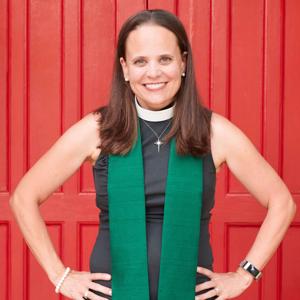


Mother Suzanne draws on the image of Jesus as the Good Shepherd to remind her congregation that Christ came not to offer a half-hearted, mediocre existence, but a life that is overflowing and abundant. Through the moving story of Roxanne, a single mother in recovery, she illustrates how the economy of God works through small, intentional acts of love — a snack, a Dr. Pepper, and a cooking pot. Living abundantly, she reminds us, is not about worldly goods, but about choosing hope, generosity, and trust in a God who desires good for each of us.
THE GOSPEL John 10:1-10
Jesus said, “Very truly, I tell you, anyone who does not enter the sheepfold by the gate but climbs in by another way is a thief and a bandit. The one who enters by the gate is the shepherd of the sheep. The gatekeeper opens the gate for him, and the sheep hear his voice. He calls his own sheep by name and leads them out. When he has brought out all his own, he goes ahead of them, and the sheep follow him because they know his voice. They will not follow a stranger, but they will run from him because they do not know the voice of strangers.” Jesus used this figure of speech with them, but they did not understand what he was saying to them.
So again Jesus said to them, “Very truly, I tell you, I am the gate for the sheep. All who came before me are thieves and bandits; but the sheep did not listen to them. I am the gate. Whoever enters by me will be saved, and will come in and go out and find pasture. The thief comes only to steal and kill and destroy. I came that they may have life, and have it abundantly.”
Artwork: The Good Shepherd, Bernhard Plockhorst (1878)
Support the show
In this Easter season sermon, Mother Suzanne walks us through the road to Emmaus, reminding us that the risen Christ shows up quietly and humbly in the small, ordinary moments of our lives — often without us even realizing it. Just as the disciples only recognized Jesus when he broke bread in his own unmistakable way, we too are invited to open our eyes and hearts to his presence in the everyday rhythms of our lives. Mother Suzanne calls us to lay down what no longer serves us, trusting that in that surrender, space opens up for new life, new love, and personal resurrection.
THE GOSPEL Luke 24:13-35
Now on that same day two of Jesus' disciples were going to a village called Emmaus, about seven miles from Jerusalem, and talking with each other about all these things that had happened. While they were talking and discussing, Jesus himself came near and went with them, but their eyes were kept from recognizing him. And he said to them, “What are you discussing with each other while you walk along?” They stood still, looking sad. Then one of them, whose name was Cleopas, answered him, “Are you the only stranger in Jerusalem who does not know the things that have taken place there in these days?” He asked them, “What things?” They replied, “The things about Jesus of Nazareth, who was a prophet mighty in deed and word before God and all the people, and how our chief priests and leaders handed him over to be condemned to death and crucified him. But we had hoped that he was the one to redeem Israel. Yes, and besides all this, it is now the third day since these things took place. Moreover, some women of our group astounded us. They were at the tomb early this morning, and when they did not find his body there, they came back and told us that they had indeed seen a vision of angels who said that he was alive. Some of those who were with us went to the tomb and found it just as the women had said; but they did not see him.” Then he said to them, “Oh, how foolish you are, and how slow of heart to believe all that the prophets have declared! Was it not necessary that the Messiah should suffer these things and then enter into his glory?” Then beginning with Moses and all the prophets, he interpreted to them the things about himself in all the scriptures.
As they came near the village to which they were going, he walked ahead as if he were going on. But they urged him strongly, saying, “Stay with us, because it is almost evening and the day is now nearly over.” So he went in to stay with them. When he was at the table with them, he took bread, blessed and broke it, and gave it to them. Then their eyes were opened, and they recognized him; and he vanished from their sight. They said to each other, “Were not our hearts burning within us while he was talking to us on the road, while he was opening the scriptures to us?” That same hour they got up and returned to Jerusalem; and they found the eleven and their companions gathered together. They were saying, “The Lord has risen indeed, and he has appeared to Simon!” Then they told what had happened on the road, and how he had been made known to them in the breaking of the bread.
Artwork: “The Road to Emmaus” Robert Zund, 1877
Support the show
Summary
The Rev. Canon Perry Mullins explores how fear of disappointment often keeps us from hoping, using the story of Thomas and the disciples after Christ's resurrection to show that Jesus enters our locked rooms of fear and grief. Christ's wounds on his resurrected body serve as Marks of hope, proving that while we experience suffering, hope in the resurrection will ultimately not disappoint us. Jesus meets us in our pain and shows us his scars not to demand belief, but to give us reason for it—demonstrating that death did not get the last word in him, and will not get the last word in us either.
THE GOSPEL John 20:19-31
When it was evening on that day, the first day of the week, and the doors of the house where the disciples had met were locked for fear of the Jews, Jesus came and stood among them and said, "Peace be with you." After he said this, he showed them his hands and his side. Then the disciples rejoiced when they saw the Lord. Jesus said to them again, "Peace be with you. As the Father has sent me, so I send you." When he had said this, he breathed on them and said to them, "Receive the Holy Spirit. If you forgive the sins of any, they are forgiven them; if you retain the sins of any, they are retained."
But Thomas (who was called the Twin), one of the twelve, was not with them when Jesus came. So the other disciples told him, "We have seen the Lord." But he said to them, "Unless I see the mark of the nails in his hands, and put my finger in the mark of the nails and my hand in his side, I will not believe."
A week later his disciples were again in the house, and Thomas was with them. Although the doors were shut, Jesus came and stood among them and said, "Peace be with you." Then he said to Thomas, "Put your finger here and see my hands. Reach out your hand and put it in my side. Do not doubt but believe." Thomas answered him, "My Lord and my God!" Jesus said to him, "Have you believed because you have seen me? Blessed are those who have not seen and yet have come to believe."
Now Jesus did many other signs in the presence of his disciples, which are not written in this book. But these are written so that you may come to believe that Jesus is the Messiah, the Son of God, and that through believing you may have life in his name.
Artwork: Incredulity of Saint Thomas by Paolo Moranda Cavazzola 1520
Support the show
Summary
Mother Suzanne celebrates Easter by highlighting Mary Magdalene as the first apostle who stayed at the empty tomb when others fled, recognizing Jesus when he called her by name. She connects Mary's faithful witness to three baptisms happening that morning - Mykala, Jacob, and baby Zachary - emphasizing that Jesus has also called each of them by name to be his beloved children. On this resurrection day, these new Christians are charged with the same task as Mary: to tell others they have seen the Lord.
The Gospel John 20:1-18
Early on the first day of the week, while it was still dark, Mary Magdalene came to the tomb and saw that the stone had been removed from the tomb. So she ran and went to Simon Peter and the other disciple, the one whom Jesus loved, and said to them, “They have taken the Lord out of the tomb, and we do not know where they have laid him.” Then Peter and the other disciple set out and went toward the tomb. The two were running together, but the other disciple outran Peter and reached the tomb first. He bent down to look in and saw the linen wrappings lying there, but he did not go in. Then Simon Peter came, following him, and went into the tomb. He saw the linen wrappings lying there, and the cloth that had been on Jesus’ head, not lying with the linen wrappings but rolled up in a place by itself. Then the other disciple, who reached the tomb first, also went in, and he saw and believed; for as yet they did not understand the scripture, that he must rise from the dead. Then the disciples returned to their homes.
But Mary stood weeping outside the tomb. As she wept, she bent over to look into the tomb; and she saw two angels in white, sitting where the body of Jesus had been lying, one at the head and the other at the feet. They said to her, “Woman, why are you weeping?” She said to them, “They have taken away my Lord, and I do not know where they have laid him.” When she had said this, she turned around and saw Jesus standing there, but she did not know that it was Jesus. Jesus said to her, “Woman, why are you weeping? Whom are you looking for?” Supposing him to be the gardener, she said to him, “Sir, if you have carried him away, tell me where you have laid him, and I will take him away.” Jesus said to her, “Mary!” She turned and said to him in Hebrew, “Rabbouni!” (which means Teacher). Jesus said to her, “Do not hold on to me, because I have not yet ascended to the Father. But go to my brothers and say to them, ‘I am ascending to my Father and your Father, to my God and your God.’” Mary Magdalene went and announced to the disciples, “I have seen the Lord”; and she told them that he had said these things to her.
Artwork: From 12th Century St. Albans psalter: Mary Magdalene Announces the Resurrection to the Apostles
Support the show
Summary
On the fourth Sunday in Lent, Grace Community Missioner Ed Carrette explores the theme of spiritual awakening through Biblical stories of people "seeing the light," from the blind man healed by Jesus to Paul's conversion experience. Using Bruce Springsteen's "Blinded by the Light" as a metaphor, Carrette emphasizes that God's grace and love come first—before our actions, baptism, or spiritual practices—and our lives become a response to that unconditional love. The central message is that we are called to live as "children of light," offering the same grace, mercy, and forgiveness to others that God has already given us.
THE GOSPEL John 9:1-41
Artwork: Christ Healing the Blind - El Greco (c. 1570)
Support the show
Summary
On the third Sunday in Lent, IONA Postulant Ginger Wolfe explores the striking contrast between Nicodemus in John 3 and the Samaritan woman at the well in John 4, highlighting how Jesus was tough with the educated, respected Nicodemus but gentle and patient with the marginalized, unnamed woman. While Nicodemus left confused despite his knowledge, the Samaritan woman experienced a profound transformation through Jesus' offer of living water, abandoning her water jar to become the first evangelist to her village with the joyful message, "Come and see."
THE GOSPEL John 4:5-42
Artwork: Christ and the Samaritan Woman - Vincenzo Catena c. 1520–1530
Support the show
Summary
In this Second Sunday of Lent sermon, Bishop Andy Doyle challenges the congregation to embrace the discomfort of true discipleship, using Nicodemus's nighttime visit to Jesus as an example of cautious faith. He emphasizes that following Jesus means allowing Him to disrupt our comfortable lives, politics, and relationships, calling us to see others through God's eyes of love and compassion rather than our own preferences. The Bishop calls for a Lenten journey of humility, prayer, and genuine transformation - being "born again" in a way that makes us better human beings who hunger for God's deliverance in a troubled world.
THE GOSPEL John 3:1-17
There was a Pharisee named Nicodemus, a leader of the Jews. He came to Jesus by night and said to him, “Rabbi, we know that you are a teacher who has come from God; for no one can do these signs that you do apart from the presence of God.” Jesus answered him, “Very truly, I tell you, no one can see the kingdom of God without being born from above.” Nicodemus said to him, “How can anyone be born after having grown old? Can one enter a second time into the mother’s womb and be born?” Jesus answered, “Very truly, I tell you, no one can enter the kingdom of God without being born of water and Spirit. What is born of the flesh is flesh, and what is born of the Spirit is spirit. Do not be astonished that I said to you, ‘You must be born from above.’ The wind blows where it chooses, and you hear the sound of it, but you do not know where it comes from or where it goes. So it is with everyone who is born of the Spirit.” Nicodemus said to him, “How can these things be?” Jesus answered him, “Are you a teacher of Israel, and yet you do not understand these things?
“Very truly, I tell you, we speak of what we know and testify to what we have seen; yet you do not receive our testimony. If I have told you about earthly things and you do not believe, how can you believe if I tell you about heavenly things? No one has ascended into heaven except the one who descended from heaven, the Son of Man. And just as Moses lifted up the serpent in the wilderness, so must the Son of Man be lifted up, that whoever believes in him may have eternal life.
“For God so loved the world that he gave his only Son, so that everyone who believes in him may not perish but may have eternal life.
“Indeed, God did not send the Son into the world to condemn the world, but in order that the world might be saved through him.”
Artwork: Christ Instructing Nicodemus, By Crijn Hendricksz Volmarijn (ca 1604-1645)
Support the show
Summary
Mother Suzanne explores how Jesus deliberately entered the Judean wilderness for 40 days of testing, following in the footsteps of Moses and Israel's 40-year journey. She encourages the congregation to embrace their own wilderness experiences this Lent, recognizing that God calls us into difficult places not to abandon us, but to transform us and speak to us in the solitude where His love proves more certain than any fear.
THE GOSPEL Matthew 4:1-11
Jesus was led up by the Spirit into the wilderness to be tempted by the devil. He fasted forty days and forty nights, and afterwards he was famished. The tempter came and said to him, “If you are the Son of God, command these stones to become loaves of bread.” But he answered, “It is written,
‘One does not live by bread alone,
but by every word that comes from the mouth of God.’”
Then the devil took him to the holy city and placed him on the pinnacle of the temple, saying to him, “If you are the Son of God, throw yourself down; for it is written,
‘He will command his angels concerning you,’
and ‘On their hands they will bear you up,
so that you will not dash your foot against a stone.’”
Jesus said to him, “Again it is written, ‘Do not put the Lord your God to the test.’”
Again, the devil took him to a very high mountain and showed him all the kingdoms of the world and their splendor; and he said to him, “All these I will give you, if you will fall down and worship me.” Jesus said to him, “Away with you, Satan! for it is written,
‘Worship the Lord your God,
and serve only him.’”
Then the devil left him, and suddenly angels came and waited on him.
Artwork: The Temptation of Christ, created by the French painter Ary Scheffer in 1854.
Support the show
Summary
Mother Suzanne explains that Lent is not about punishment or self-denial for its own sake, but rather a season of preparation that helps us move closer to God by removing the distractions and masks that prevent us from seeing clearly. Through the three pillars of Lent—prayer, fasting, and almsgiving—we can experience spiritual clarity and authenticity by stepping away from our cluttered patterns and excessive consumption. She emphasizes that this 40-day journey is a choice that leads to freedom and to becoming who we are meant to be.
The Gospel Matthew 6:1-6, 16-21
Jesus said, “Beware of practicing your piety before others in order to be seen by them; for then you have no reward from your Father in heaven. So whenever you give alms, do not sound a trumpet before you, as the hypocrites do in the synagogues and in the streets, so that they may be praised by others. Truly I tell you, they have received their reward. But when you give alms, do not let your left hand know what your right hand is doing, so that your alms may be done in secret; and your Father who sees in secret will reward you. And whenever you pray, do not be like the hypocrites; for they love to stand and pray in the synagogues and at the street corners, so that they may be seen by others. Truly I tell you, they have received their reward. But whenever you pray, go into your room and shut the door and pray to your Father who is in secret; and your Father who sees in secret will reward you. And whenever you fast, do not look dismal, like the hypocrites, for they disfigure their faces so as to show others that they are fasting. Truly I tell you, they have received their reward. But when you fast, put oil on your head and wash your face, so that your fasting may be seen not by others but by your Father who is in secret; and your Father who sees in secret will reward you. Do not store up for yourselves treasures on earth, where moth and rust consume and where thieves break in and steal; but store up for yourselves treasures in heaven, where neither moth nor rust consumes and where thieves do not break in and steal. For where your treasure is, there your heart will be also.”
Support the show
Summary
Mother Suzanne explores the Transfiguration as a pivotal moment where Jesus, accompanied by Moses and Elijah, is transformed on a mountain before his disciples Peter, James, and John. She emphasizes that rather than trying to decode this mysterious encounter, we should enter into it, understanding that the Bible is less a book of certainties than a book of life-changing encounters with God. The transfiguration serves as God's loving preparation for Jesus before his descent toward Jerusalem and his ultimate death.
THE GOSPEL Matthew 17:1-9
Six days later, Jesus took with him Peter and James and his brother John and led them up a high mountain, by themselves. And he was transfigured before them, and his face shone like the sun, and his clothes became dazzling white. Suddenly there appeared to them Moses and Elijah, talking with him. Then Peter said to Jesus, “Lord, it is good for us to be here; if you wish, I will make three dwellings here, one for you, one for Moses, and one for Elijah.” While he was still speaking, suddenly a bright cloud overshadowed them, and from the cloud a voice said, “This is my Son, the Beloved; with him I am well pleased; listen to him!” When the disciples heard this, they fell to the ground and were overcome by fear. But Jesus came and touched them, saying, “Get up and do not be afraid.” And when they looked up, they saw no one except Jesus himself alone.
As they were coming down the mountain, Jesus ordered them, “Tell no one about the vision until after the Son of Man has been raised from the dead.”
Artwork: The Transfiguration, by Raphael (Rafael Sanzio), 1516
Support the show
From the publisher's feed
The Preaching Moment Podcast shares the weekly sermons of The Rev. Suzanne Weidner-Smith, Rector of Grace Episcopal Church in Alvin, Texas—a church where faith is lived out in real, tangible…
At Grace, worship doesn’t end at the church doors. Each week, hundreds of families are served through a drive-through food distribution; homebound seniors receive not just groceries but also companionship; and neighbors experiencing homelessness are welcomed with hot meals, clean clothes, and dignity. What began as meeting physical hunger has grown into something deeper: a ministry of presence, relationship, and hope.
Mother Suzanne’s preaching is shaped by this reality. Drawing from scripture, story, and her years as a hospice chaplain, she speaks to a faith that meets people where they are—in uncertainty, in struggle, and in everyday life. Her sermons are grounded, compassionate, and rooted in the belief that the Gospel is not just something we hear, but something we live.
These are sermons from a community becoming a sanctuary—where compassion is practiced, stories are honored, and the good news of Jesus is made real, week after week.
Put faith into action — support Grace’s food ministries.
If The Preaching Moment speaks to you, you can help Grace Episcopal Church put that faith into action. Listener support benefits Grace’s food ministries by helping provide food for hundreds of families each week, groceries for homebound seniors, and food for hungry neighbors. Click “Support the Show” to help us feed our neighbors with love, dignity, and grace.