
Sign up to save your podcasts
Or

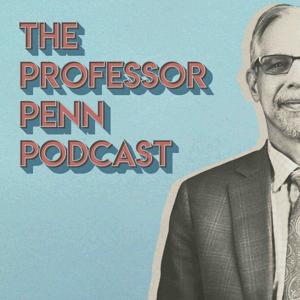


Professor Penn sits down with Kraig and Desiree Bougher to discuss faith, business, and the need for Christians to bring Christ back into the marketplace. They share how COVID Times pushed them to launch Ignite, a community built to connect Christian business owners, entrepreneurs, and leaders around truth, encouragement, and shared purpose. The conversation explores how business can be more than profit, becoming a place of service, mentorship, generosity, and spiritual responsibility. Professor Penn connects their mission to his own story of illness, faith, and rebuilding, arguing that hardship can become the place where people truly encounter God. They also discuss abortion, marriage, Christian responsibility, voting, and the danger of believers leaving faith out of politics and public life. Ultimately, the episode calls Christians to stop standing on the sidelines, live their faith openly, and rebuild America through truth, work, prayer, and civic action.
Professor Penn reflects on the theater of modern politics, arguing that scripted candidates and establishment media are masking deeper problems inside the country. He focuses heavily on election integrity, automatic voter registration, illegal immigration, and the need to treat voting as a sacred civic responsibility. Penn also connects small business, debt, trade, and government policy to a larger argument that ordinary citizens are being squeezed by a system built for corporations, lobbyists, and political insiders. The episode shifts into Minnesota gun rights, where Penn criticizes the recent Senate gun bill and questions whether advocacy groups are using fear to raise money rather than clearly defending citizens’ rights. He also discusses faith, forgiveness, personal responsibility, and the cost of telling the truth in public life. Ultimately, the episode calls for citizens to stop treating politics like entertainment and start organizing around truth, sovereignty, and real civic action.
Professor Penn breaks down King Charles addressing Congress as a signal of resurging globalism and continued U.S. alignment with a British-rooted empire, challenging the idea of true American sovereignty. He connects modern conflicts, especially in the Middle East, to long-standing colonial history and questions the morality and economic structure of war, debt, and resource control. The episode dives into emerging technologies like AI, digital ID, and universal basic income, warning of a shift toward technocratic control and loss of individual freedom. Penn also critiques domestic politics as an illusion of choice, arguing both parties advance the same underlying agenda while citizens remain disengaged. He closes with a call for faith, historical awareness, and grassroots political action to reclaim sovereignty and resist a dystopian future.
Professor Penn argues that the Minnesota Senate race reflects a deeper fight inside the Republican Party between outsider populists and establishment candidates sold as “electable.” He warns that endless war, federal debt, and political corruption are pushing the country toward digital currency, digital ID, and technocratic control. The episode also explores how Zionism, Christian end-times theology, and modern foreign policy became intertwined, with Professor Penn questioning the religious and political forces shaping America’s role in the Middle East. He closes by urging listeners to stop being passive, get involved locally, and defend the republic before the current system becomes irreversible.
The episode opens with a reaction to footage of Saddam Hussein’s court-ordered execution, leading into a broader discussion about America’s history of regime change around the world. Professor examines rising tensions with Iran, the potential impact on global trade, and argues that nations led heavily by military figures may be more prone to conflict. The conversation then shifts to Second Amendment pressures, reactions from Republican leaders, and a look back at U.S.–Iran relations dating to the early 1900s. The episode wraps with reactions to comments from Senate candidate Adam Schwarze and Michelle Tafoya, before closing on the SAVE Act and the ongoing debate around election security.
Episode #281 of @professorpennpodcast In this episode, Professor Penn reacts to clips of Congressman Eli Crane questioning Governor Tim Walz and State Senator Erin Quade criticizing Republican lawmakers over ICE operations in Minnesota, emphasizing the public’s responsibility to hold elected officials accountable. The discussion highlights Walter Hudson’s emergence as a leading voice within the state GOP, the planned March 1st rent strike, and what Professor views as contradictions in Minnesota’s approach to ICE enforcement. The conversation then shifts to Pastor John Hagee and biblical arguments surrounding Israel, where Professor critiques the intersection of faith, politics, and institutional influence. The episode closes with reactions to commentary on political sex scandals, President Trump’s push for voter ID laws in the upcoming midterms, and Robert Kagan’s warning that Europe should be wary of America’s trajectory.
In this episode, Professor is joined by CD7 congressional candidate Dave Hughes, who shares his political background and why he believes politics must begin at the local level. Hughes reflects on his experience within the Republican Party, expressing frustration over internal conflicts and naming figures such as Michelle Fischbach and Alex Plechash as part of that story. When asked why he’s running for Congress in 2026, Hughes outlines a bold plan to drastically reduce the size of the federal government, including eliminating entire departments, and addresses concerns about whether members of Congress grow wealthy and shift their principles once in office. The conversation expands into agriculture policy, abortion, the direction of modern America compared to its founding ideals, and closes with a discussion on military policy and national priorities moving forward.
In this episode, Professor is joined by CD7 congressional candidate Dave Hughes, who shares his political background and why he believes politics must begin at the local level. Hughes reflects on his experience within the Republican Party, expressing frustration over internal conflicts and naming figures such as Michelle Fischbach and Alex Plechash as part of that story. When asked why he’s running for Congress in 2026, Hughes outlines a bold plan to drastically reduce the size of the federal government, including eliminating entire departments, and addresses concerns about whether members of Congress grow wealthy and shift their principles once in office. The conversation expands into agriculture policy, abortion, the direction of modern America compared to its founding ideals, and closes with a discussion on military policy and national priorities moving forward.
Episode 278. In this episode, Professor is joined by special guest Wendy Philips, who shares her journey from living and working in California to her early career as a singer and songwriter, including formative childhood stories and a memorable encounter with Chuck Norris. Wendy reflects on her family’s influence, particularly her father’s impact, and how she found the courage to enter politics despite significant personal and professional challenges. She opens up about coming to faith later in life, serving as a worship leader, and how a powerful message from God redirected her purpose beyond music. The conversation concludes with her experience with the Republican Party, the obstacles she faced, and her upcoming campaign for Secretary of State.
In this episode, Professor opens with a recap of how caucus went, noting that Tanner has stepped into the role of delegate while walking him through the next steps and responsibilities of a precinct delegate. The discussion moves into the biblical perspective on immigration in America and how Minnesota media shapes narratives through selective headlines and imagery. Professor then reviews recent news clips involving Michele Tafoya, questioning her legitimacy and framing her as part of the political status quo, before expanding into a deeper breakdown of who the “real enemies” are and how financial power, education funding, and media influence are used to manipulate the public. The episode closes with a reaction to new developments in the Georgia election investigation and what they may signal going forward.
From the publisher's feed
Ranked by our users in the last 21 days
22,894 Listeners
25,978 Listeners

11,878 Listeners
464 Listeners

63,386 Listeners

6,891 Listeners

16,510 Listeners
43,725 Listeners

4,733 Listeners
6,839 Listeners

9,006 Listeners

5,906 Listeners

2,200 Listeners

1,348 Listeners

899 Listeners