
Sign up to save your podcasts
Or

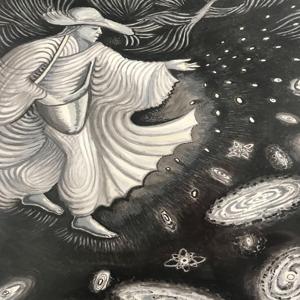


La experiencia gnóstica que tan profundamente influyó a Carl Jung está disponible en las profundidades de la psique para toda la humanidad. Este ultimo episodio de Gnosticismo es en parte sobre mi experiencia personal. Me vienen a la mente las palabras de William Blake en su libro El matrimonio del cielo y el infierno que dice lo siguiente:
“Si las puertas de la percepción fueran depuradas, todo aparecería a los hombres como realmente es: infinito. Pues el hombre se ha encerrado en sí mismo hasta ver todas las cosas a través de las estrechas rendijas de su caverna.”
Five articles and reports from very traditional and respected sources are examined. They all point to the extreme seriousness of the economic, financial, pandemic, and climatic crises that are upon us. These articles are:
Ruchir Sharma, “The two big reasons to doubt the global boom”. FT. 19th July 2021
Tuomas Malinen: “Inflation is here to stay, and it should worry everyone”. GNS blog: 15 July 2021
Martin Wolf “Why further financial crises are inevitable”. FT. March 19. 2019
Martin Wolf “The G20 has failed to meet its challenges”. FT. 13 July 2021
The Office of Budget Responsibility for the UK. Fiscal Risks Report to Parliament, July 2021
Jung explico como muchos conceptos de gnósticos prefiguraron la Psicología Analítica. Por ejemplo, que tenían un concepto como el inconsciente, que se puede acceder lo a través del arte, que tenían símbolos de integración, y muchos mas.
La confrontación creativa de Jung con el inconsciente entre 1913-1917 combinó el ritual de descenso y renacimiento de las religiones de misterio con la búsqueda de un conocimiento superior de los gnósticos. Si bien esto puede no ser parte de la psicoterapia normal, es parte del núcleo místico de la Psicología Analítica que a su vez ha entrado en nuestros propios tiempos. Esta combinación de los misterios, gnosis y la Psicología Analítica ofrece un camino del alma en el siglo XXI.
The double-edged nature of technology is presented as well as its intense dialectic with human nature. In conclusion to this mini-series on technology a mythological image comes to mind of the Nataraja, the dancing Shiva of Hindu mythology, who in an iconic statue is poised in a Yoga position with one hand holding the drum bringing creation into existence and the other the fire that destroys it. Shiva is standing on the mighty dwarf, the ego, which as well as having reason as it compass is ruled by the passions – fear, greed, sexuality, power and so on. Could this be a message about the creative-destructive nature of our technologies as well as our mind? Will it be only when we can overcome the dominance of the mighty dwarf and consciously realise the great opposites that dominate the cosmos and our psyche that we will pass beyond this stage of our evolution?
Graphs and images mentioned in this episode are to be viewed in the philosophy section of www.alanmulhern.com
Martin Wolf's article Humanity is a cuckoo in the planetary nest can be found in the Financial Times 21st March 2021.
The Economics of Bio-diversity: the Dasgupta Review can be viewed in its entirety at https://www.gov.uk/government/publications/final-report-the-economics-of-biodiversity-the-dasgupta-review
Precursors of Transhumanism in mythologies and religions, especially Christianity, are outlined.
The dangers of technology and its impact on a profoundly altered human nature are given in numerous novels, sci-fi films, books, and articles.
The dangers of humans being replaced altogether (the singularity) are mentioned.
The Transhumanist agenda is explained.
"What a piece of work is a man! How noble in reason, how infinite in faculty! In form and moving how express and admirable! In action how like an angel, in apprehension how like a god! The beauty of the world. The paragon of animals. And yet, to me, what is this quintessence of dust?" Hamlet Act 2 Scene 2
Jung se identificó con los gnósticos por varias razones. En primer lugar, tenían un intenso sentido espiritual de alienación; en segundo lugar, ofrecían una crítica radical del judaísmo y del cristianismo oficial; y tercero, encontraron una ruta hacia el dios desconocido, su redención que, para Jung, se convertiría en el arquetipo del Self. Por todas estas razones, el gnosticismo y la psicología junguiana también son de gran relevancia para el mundo moderno que carece de guía espiritual en la crisis de nuestro tiempo.
Firstly this episode explores the broad phases in social and cultural epochs emphasizing the critical determining role of technology and economic structures. Those most mentioned by social theorists are: Traditional, Modern, Post-modern to which is added the Post-human - the period we are now potentially entering.
Secondly it examines various viewpoints of Carl Jung expressed in Memories, Dreams, Reflections:
A. His anti-technology views.
B. His belief that one should live close to one's ancestors and past generations - that their unresolved questions needed answering in the present.
C. His conviction that other cultures lived closer to archetypal reality than the modern European.
D. That the modern white man and woman were archetypally and mythically impoverished.
E. That contemporary issues in his day related to sexuality and gender roles were leading to a future goal - the prevention of reproduction.
References in the podcast include:
Cushman, P. (1990) Why the self is empty: American Psychologist vol. 45, no.5.
Frosch, S. (1991) Identity Crisis: Psychoanalysis and the Self.
Gergen, K.J. (1991) The Saturated Self: Dilemmas of Identity in Contemporary Life.
Giddens, A. (1991) Modernity and Self Identity.
Jung C.G. (1962) Memories, Dreams, Reflections.
En este episodio vamos a enfatizar el impacto personal del gnosticismo sobre Jung.
Lo haremos a través de su escrito llamado: los Siete Sermones a los Muertos. Es este un texto sumamente personal y esotérico. Nuestro argumento es el siguiente: Jung experimentó una iniciación en su confrontación con el inconsciente; fue el espíritu gnóstico y la voz gnóstica lo que lo poseyó en su descenso durante los años 1913-1917.
Los gnósticos vivían una tradición mística muy poderosa y tenían diversas ideas metafísicas y mitológicas que formaban un puente hacia los aspectos transpersonales de la psicología analítica. También su influencia personal sobre Jung fue inmensa, ya que él experimentó la gnosis a través de su espíritu.
This episode outlines the thoughts of two major thinker on the subject of Technology and Consciousness.
Firstly, Marshall McLuhan, a prophet of technology of the 1960s. who argues that technologies profoundly change our consciousness.
Secondly, Iain Mcgilchrist, the author of The Master and his Emissary. An account of the different hemispheres of the brain is given and their impact on the changing nature of consciousness during the development of civilizations. Especial emphasis is placed in this episode on the connection between technology and the left hemisphere and the impact of this one-sided development.
This episode considers our emergence as a species and the deep entanglement with technology from the beginning especially its interaction with the changing genetic structure and therefore with developing consciousness of the homo genus or lineage.
Technologies also alter human identity by deeply influencing the psychology of distinct periods of the history of civilizations.
From the publisher's feed
Season Two - The Quest. With special focus on the evolving crises of the 21st century.
Season One - Psychotherapy: Jungian approach to healing.
Season Three - En Español: la…

206 Listeners

26,233 Listeners

1,468 Listeners

1,029 Listeners

1,659 Listeners

16,033 Listeners