
Sign up to save your podcasts
Or

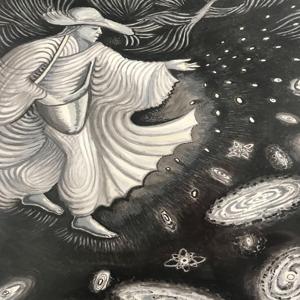


El concepto de Jung del Self no solo fue una de las grandes contribuciones a la Psicología Profunda, sino que surgió de su propio retiro y desintegración durante la Primera Guerra Mundial y su notable viaje para encontrar su propia mitología. Este episodio contará la historia de este descenso y renacimiento.
In today’s episode I have decided to do something rather different. I have chosen a mythic individual at the start of Chinese history, the Yellow Emperor, and have constructed a poem using the story of his retreat to the Mountains of the West in search of enlightenment at the feet of the sage Guangchengzi. This is one of the earliest stories we have of the search for spiritual illumination and its impact not just on an individual but on the collective which was in deep discord. I believe such a story, myth, or archetype is right for our time.
The literary sources for Taoist philosophy are taken from The Secret of the Golden Flower, a book of great importance to Jung. There are also references in the poem to the I Ching, the Book of Changes.
This episode explores Death Potential which is not a psychological trait but a mythological and metaphysical category. Moreover, it is archetypal and universal and therefore is not unique to capitalism but exists within our consciousness across its whole history. The immense technological powers of capitalism constellate this Death Potential in the most intense form yet experienced by our species. This distinguishes it from Freud’s notion of the death instinct. I do not believe such an instinct exists in the human psyche but I do believe that mankind has a tremendous fear of death which is repressed, becomes intolerable and is then projected outwards. I also believe that the whole perinatal period, (that is the period around birth: in the womb, actual birth, and immediate post-birth) can be an intimate, dramatic, sometimes traumatic, encounter with the forces of death that can deeply shape human character. In other words our entrance into consciousness is through the gates of potential death. This is projected onto nature,other human beings, and the world. This is our greatest danger.
En el último podcast esbocé una visión clásica de Jung del proceso de individuación. Cubrí la Persona y la Sombra. En este episodio describo las siguientes dos etapas: el encuentro con el Anima o Animus, y también con los arquetipos.
An extensive list is explored of the changes in consciousness brought about by the development of capitalism. This includes:
The removal from nature. A material view of the world. The increasingly rational and economic viewpoint. The abandonment of the religious outlook. More individualism, less individuation. An economic view of societal relationships. A legalistic view of relationships. Rational and bureaucratic systems of control. Specialisation but fragmentation of knowledge. Dominance of money relationships. Greater education. Wealth creation and enjoyment. A vast increase in consumerism. The impact of property ownership. Technological reliance. Greater freedom. A change in the nature of the repressive apparatus within the collective psyche. Increasing dominance of the conscious over the unconscious. Disenchantment and loss of soul. Nature is viewed as a completely exploitable resource. The movement to a de-gendered human being. Informational capitalism – in which the consciousness of humanity is becoming fused with digital and virtual realities. The rise of artificial intelligence and the alteration of human nature.
The changes in consciousness engendered by capitalism are outlined. But there is also a light of new vision in the modern age that seems as nothing as compared with the vast forces of global economic development, finance, industrialization, and information technology. These forces that have produced the contemporary alienated, rationalised, increasingly digitalised human being are currently reshaping humanity so that it is even further removed from nature and seem overwhelming. Yet history shows us that vast changes in consciousness begin like a small light, a vision glimpsed by few, but increasingly felt by many.
There is an emerging vision in the modern age which amazingly has been nurtured out of science itself, that sees the universe as alive and pregnant with meaning and consciousness, that sees nature as holy, that sees the human being as part of a spiritual development out of matter towards higher consciousness, that opposes the forces that are destroying us. Only by such visionary consciousness will we emerge from the precarious ledge we are balanced upon and move upwards to the next stage of our evolution.
The productive forces of the capitalism are immense and without precedent. The continually reshape the relationship between world powers, countries, regions, cities, classes, and individuals. It also has inherent, inbuilt tendencies towards crises and even collapse. As well as its transformative power these weaknesess are enumerated briefly in this episode. Yet for all its creativity this power is also demonic and life-destroying.
From Eden cast in fallen state,
To world of death condemned,
Both Eve and Adam tears did shed,
This paradise must end.
Banished into endless toil,
Out of primal grace,
The shadow within consciousness,
Then gripped the human race.
Economic systems rise,
But never calm our fear.
Towards the gates of death we go,
If you have ears, then hear
En este podcast comenzamos a explorar las contribuciones de Jung a la psicoterapia. Examinaremos su visión de la estructura de la psique, su función intencional, sus mecanismos compensatorios y de autoequilibrio, el concepto de complejo, el proceso de individuación a partir de la persona y la sombra. En los siguientes podcasts continuaremos con la exploración de su trabajo.
La psicología junguiana continúa creciendo durante el siglo XXI, ya que no solo ofrece un rico conjunto de herramientas para examinar la psique, sino también la conciencia y los métodos para promover su desarrollo e individuación. El pensamiento junguiano instrumenta el acceso a la psique profunda, entra en el tejido vivo de nuestro tiempo, aborda su sentido de alienación y desesperación, y proporciona significado y el camino de transformación no solo a los individuos sino al colectivo.
The EU engaged in a exaggerated expansion of its membership. It now creates vast debts in an attempt to bail out States, banks, and even economies. It seems a titanic enterprise. Umm, titanic? The very word strikes an ominous chord in trauma memory. Back in 1912 it was asked how the Titanic, the largest passenger ship of its day, could be sunk by an iceberg. Monetary policy, with its exploding debts and money creations, could well be the iceberg that sinks the European Union.
The general problems of the EU, both external and internal are covered. The monetary policies of the ECB since the 2008 crash are presented as a series of errors; These policies are desperate attempts to cover up the depths of the crisis and have led the Eurozone on the path of ruin. Only by understanding these polices as defensive and desperate manoeuvres of dubious legality, will one see the seriousness of the situation the EU is facing. And finally the latest stages of capitalism with respect to the balance between free markets and the State are examined.
The core problem of the European Union lies in its economic arrangements that, should they not be modified, will probably break apart the union as we currently know it.
As well as the deep differences between EU member states there is a lack of economic flexibility that arises from adopting a common currency. The rigid maintenance of the Euro with the absence of flexible exchange rates plus the escalating debts of the union will undermine its coherence, lead to the downfall of the Euro, and provoke a severe banking crisis which will go global and endanger the Union.
Division in the EU has sharpened. Thus, the EU leaders are caught between a rock and hard place. On the one hand, as countries enter into economic crises, there is threat of the breakup of the union and the destruction of the European dream, the great project. A banking crisis would be sure to follow as debts are reneged upon and the lending banks collapse triggering a global financial crisis. On the other hand, the opposite: the road of federalisation, the defence of the Euro, and the placating of weaker member states. The issuing of a common European debt is a milestone on this path.
From the publisher's feed
Season Two - The Quest. With special focus on the evolving crises of the 21st century.
Season One - Psychotherapy: Jungian approach to healing.
Season Three - En Español: la…

206 Listeners

26,233 Listeners
1,468 Listeners

1,029 Listeners

1,659 Listeners

16,033 Listeners