
Sign up to save your podcasts
Or

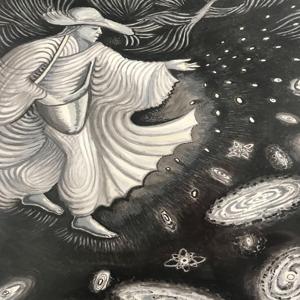


The gospels, the supposed authoritative evidence for Jesus, are problematic. However they, along with Paul’s writings, point to a real Jesus of great charisma who lived at a time prior to their writings who said many remarkable things of a spiritual nature with great authority, who had a small band of followers and who was crucified since he clashed with the Jewish authorities at a fraught period of their history. Between his death and the writings of the Gospels sufficient time passed for amazing tales and fantastical legends to gather around the increasingly mythical figure of Christ. In this podcast we examine the evidence for Jesus Christ and whether the gospels are really witnesses to his life.
The heroic is the process by which our consciousness emerges and is transformed to higher levels. The hero in each of us is our struggle with the darkness and our efforts at rebirth. So too in civilisations, at the collective level, the heroic requires courage, vision and sacrifice which allow civilisations to be born, as well as to face their crises and be reborn. However, many civilisations have not been able to overcome their challenges and they have become extinct.
Hero myths are some of the oldest stories we have. The story of Osiris’ death at the hand of his brother Seth is probably the most dramatic and was retold across thousand of years of Egyptian history. The battle between the forces of light and darkness symbolises the inner state of mankind, the nature of our psyche. The forces of order, the creative principles that have fashioned the existence of not only life but the human psyche, are threatened by chaos and destructiveness.
The underlying philosophy upon which these podcasts are based is in the following book and can be obtained at the link below:
The Sower and the Seed
Reflections on the Development of Consciousness
(Karnac Books 2015)
https://rb.gy/xmvpjq
This symphony is not only the emergence of the Romantic movement (our relationship to the sublime) but has pagan vitality permeating it; the spirit of great mystery religions of Greece, Egypt and the Near East are saturating this symphony since at its heart is a death and resurrection archetype which can turn any spiritually attuned person inside-out. The hero myth is central to it, especially that of Prometheus who stole the fire (spirit, intelligence) from the Olympians so as to create the human race and for which he was cruelly punished - like Beethoven, the greatest living composer, for many the greatest of all time, who was going deaf and feared the loss of his titanic creativity. The third symphony is the rising from his grave of despair. Beyond that it represents an archetype in human consciousness, that of its death and rebirth. This symphony is immersed in that archetype and therefore speaks to our times as much as to his.
Thanks to the BBC radio 3 recording of Beethoven’s 3rd symphony 2005 and made available on the Internet Archive on a Creative Commons label. All musical extracts in these podcasts taken from that source. https://archive.org/details/BBCSymphony3Beethoven_1
Beethoven’s music put the struggle of the individual, the agony and ecstatic flight, at the centre of the performance. Music in his hands was being reshaped forming a new stage of human consciousness. This is the journey of the hero – hence the title: the Eroica. It may start with Napoleon and the politics of the day, it proceeds through the individual struggle of the greatest living composer rapidly going deaf and faced with suicide; but it then reaches out to the archetypal and transcendent.
The second movement, our topic in this episode, begins with the famous funeral march - the world’s greatest? Beethoven’s second movement divides in two parts – the death of the hero and the experience of 'resurrection'. The funeral march can then be thought of a descent into a symbolic death (depression, stagnation, loss, trauma and so on), which in this movement, amazingly, has a turning point and a rebirth.
Thanks to the BBC radio 3 recording of Beethoven’s 3rd symphony 2005 and made available on the Internet Archive on a Creative Commons label. All musical extracts in these podcasts taken from that source. https://archive.org/details/BBCSymphony3Beethoven_1
The opening movement of Beethoven's 3rd is the first stage of the hero's journey – struggle and victory. The hero myth has many variations in its death and resurrection themes. Mythologically it involves the bringing of new consciousness to humanity.
It therefore represents in Beethoven’s day the revolts, insurrections and revolutions that were emerging in Europe and its colonies. However, Beethoven is tapping into an archetypal structure and therefore this music is as relevant now as it was then. For we too, in the contemporary age, live in a civilization in crisis and transition where radical change needs to be fought for.
Individuals also seek their own renewal which is partially an independent activity, something, in the inner world – it’s not exactly a programme but an archetype, a template of immense possibility deep in the psyche. At its core the 3rd symphony demonstrates this within a death and rebirth archetype that takes music into the Romantic period and places the individual's relation to the sublime or transcendent at the centre of consciousness.
This is the first of three podcasts on Beethoven's 3rd symphony.
Thanks to the BBC radio 3 recording 2005 of Beethoven’s 3rd symphony and made available on the Internet Archive on a Creative Commons label. All musical extracts in these podcasts taken from that source. https://archive.org/details/BBCSymphony3Beethoven_1
Gnostic themes of entrapment, profound alienation, the struggle for gnosis (knowledge, illumination), the battle between the light and the dark, the forces of evil and good, the illusions of the world, the devilish devices to distract one from truth are all archetypal themes that reoccur throughout history and across all cultures. Gnosticism, despite some of its excesses, speaks profound truth in wonderful poetry which once heard is unforgettable. They speak of the soul like no others:
“In that world of darkness I dwelt thousands of myriads of years, and nobody knew of me that I was there. . . . Year upon year and generation upon generation I was there, and they did not know about me that I dwelt in their world."
In the modern era Gnostic motifs have surfaced in films such as Superman and the Matrix. This episode is the last in the Gnostic series. It finishes with a contemporary question: is there a gnostic dimension to the transgender question?
"The struggle between Light and Darkness concentrates upon mankind, who becomes the main prize and battlefield of the two contending parties, in whom both sides have almost all their stakes: Light that of its own restoration, Darkness that of its very survival. This is the metaphysical centre of the Manichaean religion, and it enhances the deeds and destiny of the individual to an absolute importance in the history of total existence". Hans Jonas: The Gnostic Religion.
“The symbol of the call is so fundamental to Eastern Gnosticism that it may be termed the religion of the call, sometimes termed the call from without which may illumine the mortal house" "I sent a call out into the world … He called with heavenly voice into the turmoil of the worlds". (Hans Jonas)
This "call" is the most powerful connection of Gnosticsm to Jungian psychology since the Self is also the source of the call - from the soul to the contemporary ego.
Jung knew he had to drop anchor into the historical depths since he felt instinctively that what he was discovering was not just another interesting theory but something that was archetypal in dimension and therefore could be found in many cultures throughout history and even lay in the historical unconscious despite repression and persecution - just as gnosticism lay buried in the sands beneath the Christian surface. This gives Jungian psychology an extraordinary depth, an anchor deep in the world psyche.
The underlying philosophy upon which these podcasts are based is in the following book and can be obtained at the link below:
The Sower and the Seed
Reflections on the Development of Consciousness
(Karnac Books 2015)
https://rb.gy/xmvpjq
The essence of the gnostic experience is one that will never disappear and will again play its part in the crises that are evolving in the 21 century as many individuals undertake the path of initiation into higher knowledge, Gnosis. Such initiation rites are preceded by a period of preparation, a descent, a confrontation and an integration with the shadow, a meeting with the core of oneself, the visionary experience, and a rebirth. In the 21st century this classical initiation path is now conjoined with Jungian psychology which has become a new container into which the ancient wisdom and myths has been poured.
From the publisher's feed
Season Two - The Quest. With special focus on the evolving crises of the 21st century.
Season One - Psychotherapy: Jungian approach to healing.
Season Three - En Español: la…

206 Listeners

26,236 Listeners

1,470 Listeners

1,029 Listeners

1,661 Listeners

16,044 Listeners