
Sign up to save your podcasts
Or

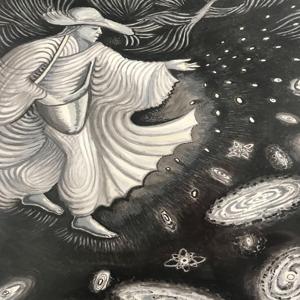


Jung underwent an initiation in his confrontation with the unconscious; it was the gnostic spirit and voice that inhabited him in the 1913-1917 descent. The Gnostics lived a very powerful mystic tradition and there are many metaphysical and mythological ideas which form a bridge to the transpersonal aspects of Jungian psychology. Their influence on Jung was immense since he experienced gnosis through their spirit.
“When I began to understand alchemy I realised that it represented the historical link with Gnosticism and that a continuity therefore existed between past and present. Grounded in the natural philosophy of the Middle Ages, alchemy formed the bridge on the one hand into the past, to Gnosticism, and on the other into the future, to the modern psychology of the unconscious. ... The possibility of a comparison with alchemy, and the uninterrupted intellectual chain back to Gnosticism, gave substance to my psychology.” CGJung
“The experiences of the alchemists were, in a sense, my experiences, and their world was my world. Thus, I had at last reached the ground which underlay my own experiences of the years 1913 to 1917 (that is the descent or confrontation with the unconscious); for the process through which I had passed at that time corresponded to the process of alchemical transformation". CGJung
Jung did an enormous amount to breathe the spirit back into alchemy after the cold hand of the Western scientific enlightenment had extinguished its flame. He was a pioneer in re-interpreting the alchemical symbols into the language of archetypal myths as well as psychology allowing them to live again.
He was convinced it provided a missing link between the modern analytical psychology that he had created and the wisdom of the ancient world. For him it was the language of the lost soul. Although deeply enigmatic there was a key to the alchemy mysteries and Jung was destined, vocationally called, redemptively compelled to find it as few others could. One is reminded of a saying of the gnostic redeemer: "I wandered through worlds and generations ... all the mysteries unlock."
From his disintegration, his descent to the underworld, Jung brought creative treasures, not simply as theoretical ideas but as practical tools that could be inserted into the living tissue of our times. Jungian psychotherapy is a potent tool of transformation.
" The years ... when I pursued the inner images were the most important time of my life. Everything else is to be derived from this. My entire life consisted in elaborating what had burst forth from the unconscious and flooded me like an enigmatic stream and threatened to break me. That was the stuff and material for more than only one life. Everything later was merely the outer classification, the scientific elaboration, and the integration into life. But the numinous beginning, which contained everything was then.” CGJung
The depths of the psyche irrupted in Jung with tremendous force. But he found that ore from which he alchemised the gold of his creations. It came from an inexhaustible seam where psyche means cosmos and buried so deep and under such pressure that it was dangerous to approach. But his daemon drove him and he unravelled the secret of bringing it to the surface, at first hot white and liquid but then transformed through symbol on its long journey from the interior.
The underlying philosophy upon which these podcasts are based is in the following book and can be obtained at the link below:
The Sower and the Seed
Reflections on the Development of Consciousness
(Karnac Books 2015)
https://rb.gy/xmvpjq
We examine Chapters 8 and 9 of Memories,Dreams, Reflections which tell of the building of his Tower at Bolligen, Lake Zurich, and his travels to find a non-European perspective on himself and Western civilization.
Jung and the recovery of the soul: the first of a series on Carl Jung, his life, thought, formation of a school of psychotherapy, and contribution to Western civilization.
We critically explore a humanist vision that argues there is almost certainly no God, that evolution and natural selection are the only plausible explanations for the universe and ourselves, that religions have caused enormous damage, and that our ethical systems should be forged from reason.
"When one person suffers a delusion it is called insanity. When many people suffer a delusion it is called religion". Richard Dawkins.
"If it be now, tis not to come; if it be not to come, it will be now; if it be not now, yet it will come. The readiness is all." (Hamlet: Act 5 Sc.2)
From the publisher's feed
Season Two - The Quest. With special focus on the evolving crises of the 21st century.
Season One - Psychotherapy: Jungian approach to healing.
Season Three - En Español: la…
206 Listeners

26,233 Listeners
1,468 Listeners

1,029 Listeners

1,659 Listeners

16,033 Listeners