
Sign up to save your podcasts
Or

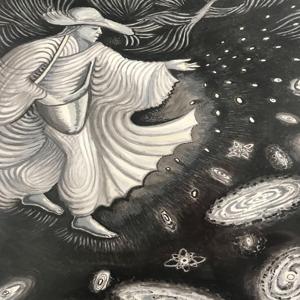


The role of the therapist in the healing process is rarely one of distance and anonymity. It is one respecting proper clinical boundaries but there are important times when there is co-evolution and mixing of psyches at a deep level and healing intelligence is activated, stimulated and shared. It is useful to think of the Self, the inner directing centre of an individual, as having shared-field properties – not a personal possession but a manifestation of the collective unconscious
Healing intelligence is integral to the complete functioning of the healthy psyche. It requires the cooperation of consciousness itself, which, when orientated towards healing, is aligned to the deeper psyche, learns from it, but can question it and engage in a healthy dialogue which is transformative for both consciousness and the unconsciousness.
The practitioner needs to be aware of the crucial yet variable importance of the ego and of consciousness at each stage of the transformation process and healing journey and be able to judge whether the ego and its defences need challenge or support. However, it is their challenging and dismantling which leads to healing intelligence being released.
The book upon which these podcasts are based is:
Healing Intelligence:The Spirit in Psychotherapy - Working with Darkness and Light.
(Karnac Books 2012). It can be otained at https://rb.gy/v4vntt
The vitality of healing intelligence determines the capacity of a wounded area to heal itself. This energy may be thought of as potency two characteristics of which are:
Expressiveness - the capacity of the psyche, suffering a wound, complex or trauma to express its pain in a healthy and effective manner.
Receptivity - the capacity of the wounded psyche to listen and be open.
While healing intelligence is an expression of the wholeness of the psyche, it is intimately bound up with numerous healthy character components, some of which are constitutional, some the result of early conditioning, some the result of training, and others Self-forged.
Therapy is not always successful; the deep psyche is not always accessible and even when it is, healing is not guaranteed. Transpersonal vision may be possible but the psyche may not have the capacity to integrate its meaning and energy. Sometimes, parts of the emotional structure are damaged and cannot heal, no matter how heroic the efforts.
Integration implies character re-formation, a change in identity structure. This requires greater access to the underlying emotional structure underpinning the ego, which undergoes change thereby stimulating character reform and development. What begins and sustains this change is the power of awareness. Self-reflectivity is the essence of the process. This is the normal but extra-ordinary process of psychotherapy, which seeks, therefore, to reinforce self-awareness by becoming more conscious of the underlying emotional structure, its complexes, difficulties, and healing possibilities. The work of personal development necessitates an intense process of integration which takes time, effort, and considerable courage. Quick solutions are rarely available, especially when the emotional wounds are serious.
Eight dimensions of the capacity to work psychologically are examined. These are: the capacity for introspection; the ability to express emotion and their truth; to see oneself and others more objectively; acceptance of self-responsibility; awareness that one’s psyche consists of different but inter-related parts; the conscious attitude is aligned to the unconscious but is also relatively independent; the existence of a symbolic attitude; the ability to contact the contents of the deep psyche with the faculty of inner awareness.
Here we deal with the second part of the integration process - the capacity to work psychologically with the material from the unconscious. Case studies of the varying capacities to work psychologically are given. An unfavourable psychological attitude thus prevents the process of integration even beginning. So what then is a favourable psychological attitude?
The book upon which these podcasts are based is:
Healing Intelligence:The Spirit in Psychotherapy - Working with Darkness and Light.
(Karnac Books 2012). It can be otained at https://rb.gy/v4vntt
Integration is the least developed stage in the theory and practice of psychotherapy. Here we examine the first of three steps in this process: the evaluation of healthy or unhealthy material from the psyche.
The task of therapists in attuning to the inter-subjective field is:
1. To attune to the deep psyche of the client.
2. To help locate and express wounds as fully as possible.
3. To help clarify, challenge, and where possible, clear out the negativity within the psyche of the client.
4. To stimulate natural healing energy and, where required, contribute their own to aid this process within the client.
Let us presume that much of the early, more reductive work such as the therapeutic alliance, the analysis of character and family history and so forth has been established. However the alignment to the deep psyche and integration has special considerations of its own and is rather different from the earlier stages.
From the publisher's feed
Season Two - The Quest. With special focus on the evolving crises of the 21st century.
Season One - Psychotherapy: Jungian approach to healing.
Season Three - En Español: la…
206 Listeners

26,233 Listeners

1,468 Listeners

1,029 Listeners

1,659 Listeners

16,033 Listeners