
Sign up to save your podcasts
Or

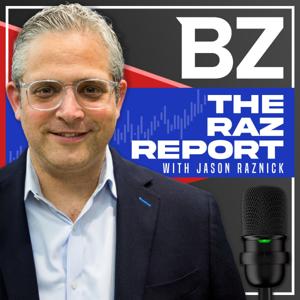


In this episode, Bruce Linton joins 'The Raz Report' to talk about how he got started in the cannabis industry and where he sees it going next!
Bruce Linton, played a pivotal role in establishing the first publicly traded cannabis company in North America!
With the legalization of cannabis in Canada, Bruce embraced the burgeoning industry with great enthusiasm! Through his visionary leadership, the founder and former CEO and Chairman of Canopy Growth achieved an impressive market valuation of approximately $18 billion!
Guest:
Bruce Linton
LinkedIn: https://www.linkedin.com/in/brucealinton/
Maman began his business journey while he was still in high school and has experience working at many different major tech companies, including Robinhood.
Host:
Jason Raznick
Twitter: https://twitter.com/jasonraznick
Sign Up to Benzinga Pro today to receive most exclusive interviews, news and stock picks fast!
https://pro.benzinga.com/
Click here for more episodes of The RazReport.
Disclaimer: All of the information, material, and/or content contained in this program is for informational purposes only. Investing in stocks, options, and futures is risky and not suitable for all investors. Please consult your own independent financial adviser before making any investment decisions.
In this episode of The RazReport Jason talks to Bloom Co-Founder Allan Maman about growth marketing and what it takes to grow an idea into something real.
Guest:
Allan Maman
Twitter: https://twitter.com/allanmaman
Maman began his business journey while he was still in high school and has experience working at many different major tech companies, including Robinhood.
Host:
Jason Raznick
Twitter: https://twitter.com/jasonraznick
Sign Up to Benzinga Pro today to receive most exclusive interviews, news and stock picks fast!
https://pro.benzinga.com/
Click here for more episodes of The RazReport.
Disclaimer: All of the information, material, and/or content contained in this program is for informational purposes only. Investing in stocks, options, and futures is risky and not suitable for all investors. Please consult your own independent financial adviser before making any investment decisions.
In this episode of The RazReport Jason talks to Chris Camillo, founder of TickerTags and host of the YouTube channel DumbMoney.tv.
Guest:
Chris Camillo
Twitter: https://twitter.com/ChrisCamillo
Before founding TickerTags, the social analytics company that famously predicted Brexit results in 2016, Chris Camillo traded $20,000 into more than $2,000,0000 — in three years. Chris is an ordinary self-directed investor — not a broker, financier or asset manager. In 2007, just months before the great recession, Chris applied a social data arbitrage trading strategy investing $20k in the stock market. Despite his unconventional background, Camillo generated nearly $10 million of stock market returns from 2007 to 2017. You can ride along with Chris on his YouTube channel DumbMoney.tv as he pursues investment opportunities full time.
Host:
Jason Raznick
Twitter: https://twitter.com/jasonraznick
Sign Up to Benzinga Pro today to receive most exclusive interviews, news and stock picks fast!
https://pro.benzinga.com/
Click here for more episodes of The RazReport.
Disclaimer: All of the information, material, and/or content contained in this program is for informational purposes only. Investing in stocks, options, and futures is risky and not suitable for all investors. Please consult your own independent financial adviser before making any investment decisions.
This is an excerpt of Jason Raznick's interview with Jake Paul, co-founder of Betr, and Joey Levy of co-founder of Betr from Benzinga's Sports Betting Summit.
Guest:
Jake Paul
Co-founder of Betr
Joey Levy
Co-founder of Betr
Host:
Jason Raznick
Twitter: https://twitter.com/jasonraznick
Sign Up to Benzinga Pro today to receive most exclusive interviews, news and stock picks fast!
https://pro.benzinga.com/
Click here for more episodes of The RazReport.
This is an excerpt of Jason Raznick's on-site interview with Bob Parsons, founder of GoDaddy and Parsons Xtreme Golf. Parsons opened Parsons Xtreme Golf's newest retail store in Detroit. The store is in Troy, a suburb about 25 minutes north of downtown.
Guest:
Bob Parsons
Founder of GoDaddy, Parsons Xtreme Golf.
Host:
Jason Raznick
Twitter: https://twitter.com/jasonraznick
Sign Up to Benzinga Pro today to receive most exclusive interviews, news and stock picks fast!
https://pro.benzinga.com/
Click here for more episodes of The RazReport.
Sign Up to Benzinga Pro today to receive most exclusive interviews, news and stock picks fast!
https://pro.benzinga.com/
Click here for more episodes of The RazReport.
Transcript:
Jason Raznick: What was your vision for Parsons Xtreme Golf?
Bob Parsons: I only do things that I like to do. Things that I love doing, because when you love something you're willing to work hard or you spend more time doing it for the sake of just doing it better and better and better.
I always was curious why golf clubs didn't get better every year. You get new golf clubs that perform pretty much the same or work maybe only a little marginally better. I talked to a friend of mine and I said "why don't these clubs get better every year?" And he goes, "well, you know, we do the best we can. We got price points. We got release schedules."
My question to him was if you were in a situation where you didn't have any time or money constraints, and you could spend whatever you wanted, could you make a hell of a club? He said "I'd like to think that we can." And so I thought about it, I talked to him again and I said, "let's do it." And so, that was the beginning of Parsons Xtreme Golf.
That was in 2013, we started working on our gen 1 clubs and when we finally got the clubs where they needed to be, I got a call from him and a couple of guys in engineering and said, Bob, "we've got a breakthrough."
This breakthrough hasn't been duplicated by anybody, nobody figure out how we do it. So when we shipped our first clubs in 2015, they were unlike anything that's ever been done. Then of course we push the envelope, in every generation since. We interview a lot of people.
Jason Raznick: You take on industries that have been around for years and then you dominate them.
Bob Parsons: We're not like any other company. You'll notice a commercial that we put up, there's no other company doing a commercial like that.
We just simply said "we killed it with these sticks".
Jason Raznick: And that is your creation? Is that your idea?
Bob Parsons: Always but it works. We have our own stores. And as long as it's good, that's the number one key for us to being successful.
With our golf clubs, each release has to be noticeably better.
Jason Raznick: So say someone's club snaps, can they just come to the store and then you guys fix it? Most clients don't have that direct relationship with the manufacturer. How many of these stores do you have?
Bob Parsons: We have 13 now. We will have 14 in 2 weeks. And we will have 15 the following month, 16, the following month.
Jason Raznick: And the last question is we hear about your covenant golf club in Scottsdale.Is there a deal where someone buys like 3 sets of clubs and they get to go out there?
Bob Parsons: No, not even 50 sets.
Jason Raznick: Would you ever take Parsons Xtreme Golf public?
Bob Parsons: I'm not the type of guy to take any company public. GoDaddy went public and I was the chairman when it did, I resigned and became just a board member. I'm not a public company CEO.
"Right now there is a lack of capital supplying an industry that has an incredible opportunity and that mismatch means that capital that is deployed is deployed at an attractive price," Ricky Sandler
This is a replay of Jason Raznick's interview with Ricky Sandler founder and CEO of Eminence Capital at the Benzinga Cannabis Conference in Miami Beach.
Host:
Jason Raznick
Twitter: https://twitter.com/jasonraznick
Sign Up to Benzinga Pro today to receive most exclusive interviews, news and stock picks fast!
https://pro.benzinga.com/
Click here for more episodes of The RazReport.
Disclaimer: All of the information, material, and/or content contained in this program is for informational purposes only. Investing in stocks, options, and futures is risky and not suitable for all investors. Please consult your own independent financial adviser before making any investment decisions.
"The WWE athletes pay fines repeatedly because it is necessary, it is a healthier way to fall asleep at night, to take the edge off." Ric Flair
This is a replay of Jason Raznick's panel interview with:
at the Benzinga Cannabis Conference.
Iconic American wrestler Ric Flair and legendary American boxer Mike Tyson are retired champions in their respective combat sports. They also share a common interest in cannabis.
Ric Flair Drip: The retired wrestler, popularly known as "Nature Boy," has partnered with the team at Tyson 2.0, Tyson's rapidly expanding cannabis brand, which offers premium and affordable cannabis flower, concentrates and consumables nationwide.
The cannabis company is launching a new Flair-branded line of products called Ric Flair Drip that will feature edibles called "Wooooo Chews."
The edibles will be similar to the company's "Mike Bites," fun ear-shaped edibles with a chunk missing in reference to the time "Iron Mike" took a bite out of boxing great Evander Holyfield's ear.
Host:
Jason Raznick
Twitter: https://twitter.com/jasonraznick
Sign Up to Benzinga Pro today to receive most exclusive interviews, news and stock picks fast!
https://pro.benzinga.com/
Click here for more episodes of The RazReport.
Disclaimer: All of the information, material, and/or content contained in this program is for informational purposes only. Investing in stocks, options, and futures is risky and not suitable for all investors. Please consult your own independent financial adviser before making any investment decisions.
In this episode of The Raz Report, Jason Raznick speaks with Jakub Rehor, Co-founder and CIO of Lucy Labs
Jason and Jakub talk about:
Guest:
Jakub Rehor
Co-founder and CIO of Lucy Labs
Twitter: https://twitter.com/jakubrehor
Learn more about Lucy Labs here!
Host:
Jason Raznick
Founder, CEO of Benzinga
Twitter: https://twitter.com/jasonraznick
Sign Up to Benzinga Pro today to receive most exclusive interviews, news and stock picks fast!
https://pro.benzinga.com/
Click here for more episodes of The RazReport.
Disclaimer: All of the information, material, and/or content contained in this program is for informational purposes only. Investing in stocks, options, and futures is risky and not suitable for all investors. Please consult your own independent financial adviser before making any investment decisions.
Transcript:
In this edition of the RazReport we have Jakub Rehor Co-Founder and CIO of Lucy Labs.
Jason Raznick: This is going to be an exciting one because he has tons of experience working at hedge funds from Third Avenue and just being in this industry, being in the McKinsey. So I'm going to stop talking now and start asking questions, Jakub, you have a lot of interest in experience from crypto to equities being at multi-billion-dollar value fund for many years.
But before we get into all that fun stuff, where did you grow up?
Jakub Rehor: I grew up in Czechoslovakia, so it was in the 1970s and 1980s. So it was still a communist country and it was a very different place than then living here in the US now.
Jason Raznick: So you went through the Velvet Revolution?
Jakub Rehor: Yeah. The Velvet Revolution. One thing I might mention, because it has something to do with crypto is there was an interesting currency situation in Czechoslovakia.
So you had the national currency, which was the crown and that's what you were to earn and you would spend in regular shops, but you also had hard currency stores that had stuff that the regular shops didn't have. And if you want it to be shopping in those hard currency stores, you need i the special vouchers that that were exchangeable for a higher currency.
And you could go into these stores and use these vouchers to pay for, more luxury luxurious stuff. And nobody would really ask you how you got your hands on it. That it was a, it was just considered to be okay. And the third currency that was circulating in the country was the Deutsche Mark.
If you were planning to go on a vacation abroad or you were planning to live it up and go to restaurants and buy some souvenirs you would use Deutsche Mark. So there was really like three currencies in circulation in the country. And there was a gray market where people would be changing from one currency to another.
So I'm familiar with with a situation where technically you have a single currency, but you have actually in reality, multiple circulating currencies with fluctuating exchange rates
. And the connection to crypto is that people are talking about now, oh, why would we even have something like Bitcoin running in parallel with whatever the country currencies is?
And it's so strange and there will be never any need for it. And I'm like, no, that's normal to me. I grew up with that. That's just absolutely normal state of affairs.
Jason Raznick: And so you going with those multiple currencies, do you think then, like the Bitcoin revolution will be here stay?
Jakub Rehor: Oh, it's absolutely here to stay. Nobody will uninvent Bitcoin. We now know that it's impossible. Whatever happens to Bitcoin in itself somebody will come up with a new cryptocurrency. It's just you'll never put this genie back into the bottle. What Bitcoin did was to do something that was considered impossible.
Prior to that, a lot of people have tried to create native internet currency, and a lot of them foundered on the same set of problems. They, it was centralized. It was easy to shut down. It was referring to an underlying FIAT or underlying commodity and it was difficult to keep the ledger synchronized around the world.
And Bitcoin solved all of these problems. It really, it is a real breakthrough in computer science.
Jason Raznick: It brings you back to when you were growing up in Czechoslovakia where there were multiple currencies.
Jakub Rehor: Yeah. And the problem that Bitcoin solves are very often not problems that we have here in the US here, the payment systems work pretty well here.
Banks work pretty well. You're not worried about your ATM stopping working tomorrow. So explaining the value of Bitcoin to Americans is a little bit like it, it sounds a little bit unreal, the problems that it's trying to solve, but you go outside of the US you go to countries like Cyprus or Lebanon, Venezuela Iran. They get it. They mean they understand that solves their problems today and here.
Jason Raznick: So going back to your upbringing, you ended up going to school at Yale. Was that from Czechoslovakia or like how'd you end up in Yale?
Jakub Rehor: So I was studying electrical engineering and Czechoslovakia, and I was involved in the students strike.I joined the national student strike coordinating committee, which was part of the Velvet Revolution. We basically built the check internet very early on.
We connected all the universities across the country hook them up and we use that network to print and distribute all the materials that the the development revolution leaders were putting out. Our goal was to break the monopoly, the media monopoly that the communist media had and get all this information out into people's hands.
And we mentioned to do that in a space of a week, about a week and a half. We we hooked up basically all the printers and copy machines and fax machines that we could get our hands on. And we were printing we're printing posters and materials by the tens of thousands. We had them on all the streets in the country.
Jason Raznick: And did it catch on?
Jakub Rehor: Yeah. When the student strike started it originally was just a couple of schools and then it snowballed it started at the theater academy. Then, we joined as the electrical engineering and pretty much all the schools very quickly joined on and 10 days after the start of the strike, we were able to organize a general strike where the whole country shut down for 2 hours. To send the message to the government that we can prove that we have general support for what we stand for.
And in order to organize the general strike, you really needed to coordinate all this information, get it out, get it into the right hands. Early on we realized that kind of, again, there's a connection to Bitcoin.
The problem really wasn't in trying to encrypt the communication on our network. We didn't really care if the secret service was reading us or not, because we were putting it out and posters and all that stuff. Anyway, the real challenge was to authenticate the information. We were worried that the state security would try to inject some provocative material in there to try to disrupt us by sending false information. And there, so authentication was, it was more of an issue than.
And it's very similar to Bitcoin where all the transactions are visible to everyone. They're not encrypted, which address sent how much to what address, but the important part is authenticated. You cannot fake sending money. You cannot send money that you don't have.
Jason Raznick: So then you make your way to America and you go to Yale. Did that change you? Did the Velvet Revolution shape the person you are today?
Jakub Rehor: Yale was a wonderful experience. You are surrounded with a lot of bright, talented driven people and it's it was a great environment to encourage you to go and and pursue whatever interests you have.
Jason Raznick: so from Yale, did you go right to your first job?
Jakub Rehor: Yep. Went straight to McKinsey. Spent a couple of years at McKinsey doing consulting at various places.
Jason Raznick: What kind of companies were you consulting for at McKinsey?
Jakub Rehor: It was a very interesting batch of companies. My first client was a, it was an online service, actually, one of the first online services.
This was before internet really caught on. So in those days you had the three companies, CompuServe, Prodigy, and AOL, and they had a strategic issue. What do we do about this internet thing? Are we just gonna ignore it? Because we have much content on our own network or are we going to take this bet that over the long-term the content that's available on the internet is going to be better than what we have inside our network.
And okay. If you decide to take that bet what does it mean? What kind of technology do we have to build? How do we connect our customers with that? How do we do our marketing? It was really interesting times. It was the early days of the internet.
Jason Raznick: Is that something that you were striving towards?
Jakub Rehor: Yeah. It's like basically whatever I did, I couldn't get away from the internet and the technology. It just follows you everywhere.
Jason Raznick: Then you left McKinsey. And is that when you went to Marty Whitman's Third Avenue?
Jakub Rehor: Not directly, at first I went to Sanford Bernstein. Then I went to Putnam Investments and then I ended up at Third Avenue. So I actually started doing value investing at Sanford Bernstein. I was an equity analyst and then worked my way up through being more senior, all the way to PM level at the Third Avenue.
And so I spent a long time analyzing balance sheets, analyzing companies, analyzing businesses and making investments and running portfolio construction, running a managing risk and all that wonderful stuff.
Jason Raznick: So at Third Avenue, we came all the way to PM. How many people were there at Third Avenue?
Jakub Rehor: At the time it was about 100 people, about 20 people were in the research department or in the investment.
Jason Raznick: What made you want to go from McKinsey to Wall Street?
Jakub Rehor: The best part of working at McKinsey was doing the strategy, research and thinking longer term, the hardest part of working McKinsey was doing cost cutting.
So one of the studies I was on was that a electrical utility where, they had a capital budget that it was getting a little bit out of control and you had to go in there and start cutting expenses. So you would go and identify the projects that needed to be shut down. And that's it's pretty stressful situation because you talk to people whose jobs are linked directly to these projects.
So they know that if this project gets canned, they may have no future of the company. So they will, they try to fight really hard to preserve it. So you end up in this like hand to hand combat where you fighting against the people you're trying to help. It's quite stressful. And it wasn't all that enjoyable.
Going into Wall Street and equity investing is very much like becoming a strategy specialist, right? You're thinking about longer-term issues. You spend a lot of time researching what's going on, but luckily you don't have to go there and actually do the hard things that are required to run a business.
Jason Raznick: So then you start researching this crypto space. And is that when you're like your co-founders you got ready to create lucky Labs?
Jakub Rehor: Yeah, that was pretty much around 2017, early 2018.
So my co-founders: One of them came from investment banking and private equity. He was actually the CEO of Lehman Brothers, North American Equity Sales. So he's very familiar with that side of the business, with things like prime brokerage execution, operations, all that stuff. And the other co-founder is a technology specialist and he started his career working at JP Morgan, working on their foreign exchange trading desk.
When it first became automated in the early 1990s and his latest project before we started Lucy Labs was he was a consultant for ISDA, which you may be familiar, it is the is the organization that regulates over the counter derivatives trading. And they had a long project stemming from the financial crisis in which they are forcing over the counter traders to put up margin.
Historically OTC trades were done without a margin. Which led to problems when Lehman Brothers blew up. And the ISDA, a margin project went on for several years to create the methodology, to calculate margin requirements for any derivative ever traded anywhere in the world. So you can imagine that was a huge project. And our co-founder Rob was was the lead consultant.
Jason Raznick: What are the first two things you did Lucy Labs?
Jakub Rehor: The first thing was let's figure out what works here. This is a completely new market that we don't know anything about, which is very exciting. A little bit scary too. So we rolled up our sleeves and start figuring out how to do execution here, how to find investment opportunities, how to get historical data, how to put it all together and roll out to an investment strategy.
And so we did that, we were a prop trading fund for three years, we were doing it with our own. And investigating as much as we could about the market.
Jason Raznick: Are there that work in traditional finance, but don't that don't work in crypto?
Jakub Rehor: So I would say even most things in traditional finance don't really work in crypto. So coming in as a value investor, there's really no value investing in crypto. It's very difficult to figure out intrinsic value for any of these projects. People have tried, we have certainly tried it's a very difficult problem.
And I don't think that anyone has found a way to make it. What does work is a momentum-based strategies. So momentum is something that has worked on all sorts of assets over long periods of history. And so when we started looking at crypto, we had this theory that, it probably will be working in crypto as well.
And we were pleasantly surprised how powerful the momentum factor is within crypto. It is it is actually quite surprisingly powerful. Crypto is very much driven by sentiment by retail trading and a momentum just captures that very well.
Jason Raznick: And this volatility is macro volatility. What do you make of it in the crypto space? The past few weeks?
Jakub Rehor: We've been in this space for 4 years and this is just par for course, this is actually not even particularly. Painful period in the sense that we've lived through the bear market of 2018, we've lived through the 2000, 20, early years in the bear market in 2018.
Just to give you a little comparison, Ethereum was down 95%. From peak to trough in a space of less than a year. That's a very painful situation. Bitcoin was down over 80% peak to trough. So that's what a bear market in crypto looks like. Similarly in 2020 to March, 2020, we went through a 24 hour period in which Bitcoin dropped 50% in 24 hours.
In crypto you have to deal with the volatility. Your models have to take that into account. You cannot be leveraged you, your risk management has to be, on top and you just have to expect that there is a, there is always something scary happening.
Jason Raznick: How do you guys go about trading in crypto?
Jakub Rehor: So we do a bunch of things, so I can describe a few of those things.
Let's talk about the momentum trading. We have a pretty active program in which we take long positions in crypto coins when momentum is positive and we go to cash when momentum turns negative. You look at the recent historical performance and in general, there is an autocorrelation of performance. So things in crypto that have gone up recently have a tendency to keep going up and things that have gone down recently have a tendency to go down. So that's the bet you want to be taking. The downside is you will miss the turning point. So when things start bouncing off a bottom or an instinct, things start rolling at the top.
You're going to miss that, but that's actually over the long-term, that's a price that's beneficial to pay. So we would when there is a bear market in crypto thing, things start selling off, we will generally go into cash. And that's certainly what we've been doing. Most of this year in that our models started putting us into cash towards the end of last year, towards the beginning of this year.
And we were almost completely in cash for the past month or so.
And you don't necessarily even need a very elaborate models, any sort of trend model will tell you to get out of the market over the past month or so.
Jason Raznick: Okay. So then how do you know when to get in?
Jakub Rehor: You wait, you miss the bottom. You see the market turning around, you see the price momentum picking up, and then you jump back on with the expectation that you will probably get in 10 or 15% above the bottom price. But again, in the longterm, that's a very good trade-off to take.
Jason Raznick: So are you guys getting back in now?
Jakub Rehor: No, we're still waiting for things to stabilize.
Jason Raznick: When do you think that will be?
Jakub Rehor: One thing I've learned is not to try to predict the markets. it's way too hard. So I, I have no idea when this will turn is there more downside it's possible? Again, in 2018, we've seen 85 to 90% drawdowns in crypto. So it's certainly possible is that what's going to happen? I have no idea. We're going to, we're going to let our models tell us when to get in.
Jason Raznick: Are you in straight cash or are you doing stable coins? How do you handle that?
Jakub Rehor: There are a number of things you can do in the crypto market if you want to be market neutral. There are strategies that you can do to generate returns. So I can mention a few of them.
So one is a trade in crypto that does have a counterpart in traditional markets. And it's called a Basis Trade. The idea here is you may have a derivative, let's say a future that's trading at a different price from the underlying, so you can have a future on Bitcoin trading at a premium to the spot price of Bitcoin.
And a simple trade is you can go short the future. You can buy the underlying spot and at the future expiration, that gap is going to close. And you're going to collect that spread. So that's the traditional basis trade that works in traditional markets. People do this in US treasuries and commodities and all sorts of things. But it also works in crypto and in crypto, there's actually a slightly, different version of this.
The dominant product in crypto trading is a Perpetual Swap, which looks a little bit like a future, but it has no expiration. And the way the mechanism works is that when there is a difference between the derivative price and the underlying price, there's a funding rate that goes from one side to the other.
When the derivative is more expensive than the spot, the people who are long are paying people who are short. So you can put a short position in the perpetual swap. You can put a long position in the spot and collect the funding rates. And that's a trait that historically has been providing returns of about 10% to 15% per year. There are periods when it makes more money than that. When there is a lot of speculative excitement and speculative mania we have seen it book 30%, 40% annualized. And then there are times when people are running away from the market and you will be generating maybe 0% or low single digits.
Jason Raznick: I personally put some money in stable coins, USDC right? What you were describing is too complicated for me, I won't understand.
Jakub Rehor: Stable coins is a safe place to be when things start falling apart. But of course, stable coins, it's a minefield as well. There are multiple kinds of stable coins. There's the very simple kind of, that works like a money market fund in traditional finance. There it's a fully backed by reserves and the stable coin is just a token. It works like a share in the underlying fund. And the fund hopefully is fully collateralized and it always has a 100% of its assets in cash or cash like products. So USDC is a great example of that, right? That's a that's a stable coin that's fully backed.
Jason Raznick: Would you say USDC is very safe?
Jakub Rehor: I would. I would put also USDT with USDC. So people think that USDT is an algorithmic stable coin, but it's not. It's exactly the same idea as USDC. They are also backed by reserves. they started disclosing their reserves and the composition of their reserves. So you can look at their statements and figure out what. How well back they are and how much confidence you can have in them. So USDT is actually a fully backed stable coin and it's not subject to the same problem that the algorithmic stable coins have.
Algorithmic stable coins are completely different. And there are really two kinds. You could imagine a situation where you do not have US dollar reserves backing you, but you can have crypto reserves backing the dollar peg value of your stable coin.
Because crypto is so volatile. What you need to have is you need to be over collateralized, right? If you're issuing $1 worth of stable coins, you probably want to have at least $2 worth of crypto backing you because if crypto falls down 50% you are still fully backed.
So over collateralized, stable coins are, they're not necessarily that great because crypto can fall more than 50%, but at least it's a reasonable stab at approaching this problem. There's a whole, another class of algorithmic stable coins that are under collateralized. So they issue $1 worth of liabilities and they have less than $1 worth of assets, and that is crazy stuff. And those are bound to blow up. And Terra USD was definitely one of those where they were under collateralized. They issued billions of dollars worth of the pegged stable coin. And the mechanism that they had was saying if a lot of people come in and try to convert to US Dollar at parody, we have these other things that that we can print unlimited amounts off, and we're going to print this thing and we're going to sell it. And that way we'll generate the value for the stable coin, which obviously is insane because when you have a run on the bank when you have a run on the stable coin, the value of the stuff that you are printing is starting to collapse so you have to keep printing more and more to generate the same amount of value. And you end up diluting that second asset to zero and you end up breaking the peg. Terra USD is not the first one where it happened. There was a bunch of other ones in the past. It is absolutely amazing to me that people keep falling for this. But here we are, people put tens of billions of dollars into this.
Jason Raznick: What do you think got people so into it?
Jakub Rehor: There's the old saying in the markets, "Bulls make money, bears make money, and pigs get slaughtered." People just got really piggish. These 20% yields sound amazing.
I think that a lot of people did understand that these yields are unsustainable and they are they were funded by the VC investors or the launch of funds that that Luna the project behind the stable coins raised.
So they understood that these 20% yields wouldn't last, but they thought, I'll just collect them for as long as I can and get out. And, as we know, getting out is the hard part.
Jason Raznick: Getting out is the hard part. And so when you're in cash, do you guys do just say "Hey, I'm going to buy some USDC"?
Jakub Rehor: Sure, we do that.
Jason Raznick: What about Terra Luna?
Jakub Rehor: No, forget it. Nothing algorithmic. We wouldn't feel comfortable with that.
There is actually an interesting innovation going on, so I would say. There is one potential new kind of algorithmic stable coin. That is interesting to watch. It's tiny. It's still an experiment. We'll see if the experiment is successful or not. But the idea is similar to what I just described about the basis trade, right? So when you have a basis trade, you sell a derivative and you buy the underlying spot. What do you actually generate is like a synthetic stable coin. You create a synthetic dollar that. And there are people out there who are trying to generate to create synthetic dollars exactly. By doing this, by putting these offsetting positions on the derivatives and the spot markets, and they're doing it on decentralized exchanges. So that is an interesting idea because it's not really subject to the same risk that the traditional algorithmic stable coins are because even in Iran, you should be able to liquidate both sides and and be able to defend the peg.
Now. It's still early days. There's only, I think few million dollars experimenting with this approach. And a lot of this depends on the infrastructure outside of these folks control. If you are issuing a stable coin like that, you need fairly liquid markets in the derivatives that you use to back this up, those markets have to provide a 24 / 7 availability. You have to be able to withdraw money fairly quickly. So the infrastructure really needs to be there. And the danger is that we are still too early and the infrastructure cannot support that. But it's a very interesting.
Jason Raznick: And are you guys trying to get involved with these experiments or are you just watching it?
Jakub Rehor: We're watching at this point and cheering on from the sidelines.
The whole crypto space is a thousand experiments right now.
Jason Raznick: Do you think there should be more regulation in the crypto space?
Jakub Rehor: Regulation is coming, there is no doubt about it. Regulation makes sense when the market is a little bit more mature and it becomes obvious what is the right thing to do and what is not the right thing to do.
Regulators are not really equipped to know upfront. What is a good idea and what is a bad idea. And right now, you see a lot of the regulators around the world, including the US stepping back and trying to figure out what the heck is going on. What should we allow? What should we not allow? And that allows the space to do a lot of experimentation and sort of by learning, we're going to discover what is a good idea and what we should just. Let it happen again.
I think algorithmic stable coins is a very dangerous idea and we're getting a lot of evidence for that. And I think the regulation is going to clamp down on that. At the same time, fully backed, reserved stable coins are sailing through this crisis pretty well and I think the regulation again should reflect that and encourage that sort of product as opposed to the more algorithmic ones.
Jason Raznick: Who is Lucy?
Jakub Rehor: Our CTO came up with that. There was a fairly famous fossil form of the early human, like before humans really evolved to become modern humans. And it's so it's it hearkens to that. It's like early steps in this new world that is being that is developing in front of us.
Jason Raznick:What else does Lucy Labs do?
Jakub Rehor: So we have a blog on Medium we just launched, a blog talking about crypto products. The first post specifically talks about perpetual swaps. The history of them. It's a product that's unique to crypto doesn't really have an exact equivalent in traditional finance. So we spend a little bit of time explaining how it works and what are the tricky things to be aware of working with that. And we're really enjoying that. So I think we'll be doing a lot more to have that.
Jason Raznick: What are perpetual swaps?
Jakub Rehor: So perpetual swaps it's super interesting. It's a version of a future. Traditional futures of an expiration. So usually every three months or so the future expires and it's settled either with the underlying or it gets settled in cash. And when the crypto exchanges started taking off, that was the product that they offered and they discovered that retail investors actually had a real trouble.
managing Futures, the managing the expirations. People would forget that, third, Friday in June or whatever is the expiration date. And they would log into their account once every two weeks. And one day they would log into their account and their position was gone and they will be like, oh my God, what's happening.
The traditional futures turned out to be not a great fit for crypto. So a number of exchanges started experimenting and one of them called Bitmax which was based in Hong Kong in those days they played with different things. They tried to shorten the futures to have expiration every 48 hours then every 24 hours. And finally they decided what if we never expire this thing? Just make it perpetual. Then the issue you have, how do you make sure that the swap price doesn't drift away completely from the underlying, if you don't have expiration that will force those two prices to converge, how do you make sure they don't just, it just doesn't walk off into space.
And the innovation they came up with is they first started thinking of referencing some outside interest rate that would and you were to charge the people who were on the wrong side of the trade. So if the future was too expensive they would charge people who were long. And the question is, how do you set an interest rate in crypto, like what is the Bitcoin interest rate? There's really no good answer for that. So they decided let's just generate it from the price itself. Let's just look at the difference between the price of the swap and the price of the underlying. And let's charge that difference.
That will force people who are long to be paying a lot of money and hopefully it will incentivize them to close the position and sell the long position, which will force it back to the equilibrium price. And when they first came up with that, nobody knew if it would work or not. It was a real experiment. It was a kind of stab in the dark. And in the first 6 months, it was pretty hairy. The prices were all over the place. The swap price was drifting away from their underlying and it was a little bit chaotic, but after about six months ARPS figured out how to play this game and over the past 2 or 3 years, that market has really matured and it became the predominant way of trading crypto outside of the US. The perpetual swap markets are anywhere on the order of 5 to 10 times greater than the underlying spot markets.
Jason Raznick: One of the things you mentioned earlier with Marty Whitman, you are an investigator and you're looking for opportunities to companies and you can value, invest and see stuff that people aren't seeing. Is this similar to that?
Jakub Rehor: It's very similar. It's again, you're being a detective and you constantly ask questions like what's going on and why? The way we really wrapped our head around the perpetual swaps was we were taking regular positions in the spot markets, and then we saw liquidity as much better in the perpetual swap so why not start trading that we started trading that. We're getting hit with these funding costs. And we're like, oh, we hate paying these funding rates. Hear me out. What if we start collecting them instead? How would you go about it? And very quickly we figured out, okay, you can create the synthetic position and do this.
And yeah, you stay, you learn by doing. The way you discover these opportunities, you are active in the space. You trade, you do experiments and you discover things that you didn't realize were happening and you'll find new opportunities all the time.
And we'll help amplify your blog and get people to get the word out.
Jason Raznick: What advice do you have for crypto investors?
Jakub Rehor: I would say with retail investors, crypto is a very risky, very volatile asset space. You do want to be in it longer term, but be aware that these 80% drawdowns are happening and are likely to happen for the foreseeable future.
So position sizing is the most important thing you need to worry about. If things get really tough. Can I survive this, don't put on too big a position and definitely do not put on leverage. Retail investors tend to get in trouble with too much leverage on their positions.
But longer term. Crypto is very likely to be around for a long time. And learning about it is best done by trading and being active in the market. Be there and trade it. But keep it Small enough that you can afford the pain of the downturn, similar to what we're seeing today.
for institutional investor, my advice is slightly different. I would still say you should be experimenting in this market. The interesting thing is the infrastructure for trading that's being built in crypto markets is, I would say a hundred years ahead of what's in the traditional markets that you are used to, the efficiency and effectiveness of the trading platforms is going to absolutely steamroll, the traditional trading venues.
And I would recommend to start learning about how things work there so that when it happens, you'll be prepared. I'll give you an example, the huge difference between a traditional infrastructure and the crypto infrastructure in traditional infrastructure. Let's say you trade futures and the way you to say you're trading futures on wheat, for example.
So you have to put up a margin and at the end of each day, your position is marked to market and the exchange calculates any additional margin that's needed. And you have until the next morning to come up with the cash to keep the position. OIn that period between the calculation of the margin and depositing of the cash, the exchanges that.
If you actually go bankrupt, the exchange may not be able to collect. And, they have a fund to insure them against that. But it is a real business risk for the exchange, which is why they set the margins very high. To live with having that risk on their balance sheet.
So the size of the margin is a function of the payment cycle and the settlement cycle. In traditional finance, the settlement cycle has to be at least 24 hours because the traditional payment rails take 24 hours to get, your payment from your bank to the exchange or the broker.
So by nature, they cannot offer high leverage in the products that they. Just because of the settlement counterparty risk issue.
You go to crypto exchanges and you realize that they have the recalculate, the margins at a much higher frequency. The exchange. I mentioned BitMax, actually, they started recalculating margin on every tick.
So every trade happens, they go and go through a million accounts that they have and recalculate the margin requirements immediately. So they don't have that 24 hour delay for them to be at risk, they can liquidate positions much faster than that. Because of that they can lower their margin requirements. And some of these guys used to offer a 100 times leverage. Thankfully they reduced that now, but you can still get 20 to 25 times leverage on your crypto positions. The exchanges can afford to do that without putting themselves at risk because of this much faster settlement cycle that they have available.
Now, if you are an institutional trader and you doing things like hedging, you're doing things like arbitrage. Where do you want to execute? You obviously want to execute at the place with lower margin requirements because you'll have a better capital efficiency. You'll have a higher return on capital.
So liquidity is likely to stay at these crypto exchanges that have the newer techniques. And we're seeing that clearly in, for example, the Bitcoin futures market. CME rolled out its Bitcoin futures product in December, 2017. So it's four years now. And they only have about 5% market share in global Bitcoin futures trading, which is amazing.
CME is leading venue for derivatives trading. How come they cannot get more market share than that? And the response is because of the, how slow their settlement cycle is. They are requiring 35% margin for any Bitcoin position while the crypto exchanges, they may ask for 3 to 5% margin for the same position.
So again, as an institutional investor, you'll be better off trading on these new exchanges.
Now these guys, the crypto exchanges are coming into the US so right now, there is a hearing in front of the Congress Senate Agriculture Committee. And and there is a application with the CFTC in which FTX, which is one of the leading crypto exchanges is trying to bring this 24/ 7 trading in commodities with instant margin calculation, and an instant settlement so T plus 0 seconds. If this gets approved and really, there's no reason why it shouldn't be it needs to work its way through the regulatory process, but if this gets approved and you will get a fully regulated exchange with these parameters, can you imagine what that's going to do with people like CME?
The reason CME is doing things this way is that's how you did it in 1868. When you were started, when you literally had a guy, in the morning, run to the bank with a check. And deposited with the clerk on the exchange at 7:30 AM. And if the check wasn't there by 8:30 AM, the positions would be liquidated that's and it's baked into all of their systems.
They are, it will not be easy for them to upgrade their system to be able to compete with this.
Jason Raznick: Do you personally buy Bitcoin or were you an early investor in Bitcoin?
Jakub Rehor: Oh yeah, way too early. I bought my first Bitcoin back in 2013 or something like that. It was $14. I was down 80% within a month of my purchase. So yeah, it was a small amount of money.
Jason Raznick: Do you have a favorite crypto?
Jakub Rehor: I'm still partial of the Bitcoin, my first love.
Jason Raznick: The last one is what's your worst or your first job? That's a question I always ask.
Jakub Rehor: I did all sorts of things. I painted houses. I work in the fields. I worked in bakeries. So it's a very wide range of things and honestly, they're all fine. I think any job is what you make from it. What you make of it. You can learn a lot of from just painting a house.
Jason Raznick: And if people want to check you out, where should they go?
Jakub Rehor: We are at https://lucylabs.io/.
Jason Raznick: Thank you for coming on the RazReport. We appreciate it.
This is a replay of Jason Raznick's interview with Fyllo Founder and CEO Chad Bronstein at the Benzinga Cannabis Conference.
Jason and Chad talk about:
Hosts:
Jason Raznick
Twitter: https://twitter.com/jasonraznick
Sign Up to Benzinga Pro today to receive most exclusive interviews, news and stock picks fast!
https://pro.benzinga.com/
Click here for more episodes of The RazReport.
Disclaimer: All of the information, material, and/or content contained in this program is for informational purposes only. Investing in stocks, options, and futures is risky and not suitable for all investors. Please consult your own independent financial adviser before making any investment decisions.
Transcript:
This is a replay of Jason Raznick's interview with Fyllo Founder and CEO Chad Bronstein at the Benzinga Cannabis Conference.
Chad Bronstein is the most energetic driven entrepreneur that I am going to say in this industry. This guy not only has Fyllo , not only Tyson 2.0 and more companies, we are pumped to introduce the man, the myth, the legend, Chad Bronstein from Fyllo.
Jason Raznick: So what time do you get up, what time do you end your day at ?
Chad Bronstein: I get up about six o'clock in the morning.Go for a run. Then my son wakes up. Work pretty much until later on and then hang out with my son and my wife. And then I am in conference calls late into the night.
Jason Raznick :Fyllo - how did you start this company?
Chad Bronstein: So prior to starting Fyllo , I was running a large ad tech company and I was bored. And I just want to do something new.
And so I had to make a crucial decision. I had a bunch of offers, I was doing well. I decided I'm going to go start a cannabis company.
And we started Fyllo three years ago. And it's been a great ride. So we told Brian Spears, Britney Spear's brother. Hey, can you get us in front of Mike Tyson? Brian lived in Vegas. And so he got us to Mike's brother-in-law and then we brought Mike on as a strategic advisor to really talk about traumatic brain injury and the effects of psychedelics.
Jason Raznick: And what do you do to stay in shape and to have these guns?
Chad Bronstein: Right now I just do cardio.
Jason Raznick: Do you eat healthy?
Chad Bronstein: I eat really healthy, I don't eat red meat.
Jason Raznick: What does Fyllo do in the most basic terms?
Chad Bronstein: We offer multiple services.
So we have brands like Dunkin Donuts, buying data from us and why they do that is because they don't know that Jason wears a Rolex. He drives a nice car. He shops at Nordstrom's, but they don't let Jason goes to Michigan and buys a bunch of marijuana. And there's all these different correlations you can make.
You're literally spending $200 a week on weed. Why wouldn't Nike want to target you? Because they know you can afford it. Why wouldn't a car manufacturer want to target you because you're spending $200 a week on weed because they know you can afford leasing a car. pharma buys data, because they don't want to lose, share shift to the cannabis industry because instead of buying ibuprofen or Aleve, you're taking cannabis medicinal products.
So we have over 7,000 brands buying data from us. And we're integrated into every major platform like Google trade desk, et cetera, where you can go into the platform and buy our data.
Jason Raznick: Are you a much better Nielsen?
Chad Bronstein: Nielsen is a great company. Fyllo is the data of the future. Cryptocurrency is now becoming more and more talked about and trend, right? You have gaming, which is a big conversation. Those data sets are where Fyllo is going.
Jason Raznick: So you're going to get into other sectors. What's the sales process like?
Chad Bronstein: So for us, what was great was we talking about something different and everyone opened up like "I ate edibles with my husband last night".So it opened up the flood gates to have more of an intimate relationship with them versus that uptight vendor relationship.
So that was fun for us and we had to educate the large brands.
Jason Raznick: So you're basically at level 1 with this company now in terms of revenue or scale, but you've gotten the acceptance by mainstream companies. So now what?
Chad Bronstein: I think the thing for us is we're going to grow, continue to grow at scale. We have 300% growth YoY. Our growth is pretty astronomical and it's because we have a good team. We are 300 people.
Jason Raznick: : Where are you guys based in, mostly in Chicago?
Chad Bronstein: We just bought a data company called Semasio based in Germany. We are in a lot of major cities.
Jason Raznick: : Can we talk a little about Tyson 2.0, so what's Tyson 2.0?
Chad Bronstein: Tyson 2.0 is a cannabis company formed with legendary boxer Mike Tyson. We have become the most well-known brands in the space. We created Mike Bites and it went viral. We had Howard Stern, Jimmy Kimmel, everyone talking about it.
We raised $8 million from some of the most strategic investors in the cannabis space. And so the key for our success was that we struck a deal that allowed us to get distribution.
Mike is an advocate for cannabis. He smokes a lot of weed every week. It helps him and he's outspoken about it. And so it's very much on brand.
Jason Raznick: Thank you for coming on.
Chad Bronstein: I am honored to be here.
This is a replay of Jason Raznick's interview with Chad Bronstein at the Benzinga Pyschedelics Conference.
Jason and Chad talk about:
Hosts:
Jason Raznick
Twitter: https://twitter.com/jasonraznick
Sign Up to Benzinga Pro today to receive most exclusive interviews, news and stock picks fast!
https://pro.benzinga.com/
Click here for more episodes of The RazReport.
Disclaimer: All of the information, material, and/or content contained in this program is for informational purposes only. Investing in stocks, options, and futures is risky and not suitable for all investors. Please consult your own independent financial adviser before making any investment decisions.
Transcript:
Chad Bronstein is the most energetic driven entrepreneur that I am going to say in this industry. This guy not only has Fyllo , not only Tyson 2.0 and more companies, we are pumped to introduce the man, the myth, the legend, Chad Bronstein from Fyllo.
BZ: So what time do you get up at ?
I get up about six o'clock in the morning.Five every day. Yeah. About five 30. Go for a run. Then my son wakes up, hang out with. Work pretty much until later on and then hanging out with my son and my wife. And then Jeff calls me up at nine o'clock at night, or Adam Wilks calls me up at 12, was sitting over there and I take up a phone, I pick up the phone, but how so we're going to start Philo.
Okay. And I know there's 2,600 people watching remotely, but filo, like how did you start this company? What was the problem you saw in the. So prior to starting fuel, I was running a large ad tech company and I was bored, probably the same way you dropped bill Benzinga. And I just want to do something new and we had brands like Juul and Charlotte's web come into Amobi, but it's all my Singtel, so we wouldn't touch cannabis.
And so I had to make a crucial decision. I had a bunch of offers, I was doing well. I had. I'm going to go start a cannabis company. And she's what the fuck? A cannabis company? I said, yes, canvas company. So I went at it, I hit up Aristotle, Eric, a lot of these Jeff, all these people here. I said, Hey, if I go start this, will you come?
And we started filo three years ago. We're not 300 people. And it's been a great ride. So like you say, you hit up Aristotle on a few others. Your network is immense. If you guys talk about people that are connected, they talk the six degrees of Kevin bacon. The six degrees of Chad Bronstein is in full effect.
I, you guys don't even understand from Mike Tyson to Rick Blair, he's calling me on the phone. He's Hey, I was just here with iron Mike, whatever, so how does this happen? Like you're six degrees of Chad Bronstein, I guess it just happens. It's like people, right? It's I always say when you when you are running a sales organization, you talk about champions, and people that introduced. In Bernstein, right? Ian winners going to 20 different people. How I got to Mike was filo had a guy networking for us named Bryan Spears whose Britney Spears, his brother and Daniel Carsello is a founder of a we sauna. Okay. So some Brian spheres, Brittany Spears, brother was working for Philo.
Correct. So I want to follow this throat. Okay. So keep going. So we, we talk about you it's like an conference was yesterday and cannabis. We worked on de-stigmatizing. And the better, the best people to do that are people with loud voices. So I told Daniel we needed to get in front of Mike Tyson.
So we called Brian spirit. We told Bryan Spears, Hey, can you get us in front of Mike? Cause Brian lived in Vegas. And so he got us to Mike's brother-in-law and then we brought Mike on as a strategic advisor of we sauna to really talk about traumatic brain injury and the effects of psychedelics. From there, we started to really understand Tyson his last, I'm not going to name the name, but his last cannabis.
And then the same thing we did with Philo, I hit up Adam Wilks was the CEO of Tyson 2.0, the beautiful bald head right there. Cause you know him before. Yeah. I didn't know him cause he was a client of a fellows. So he rented and Adam giveaway stand up. So people should be tight. You don't have just yet Tyson 2.0 guys who want to meet him.
He's right there. Yeah. There you go ahead. And we put it together at Tyson 2.0 together. Filo runs all the advertising for it. So you asked me how I do all these things are very sensitive. Adam works. That's the filo team right there. Adam works really closely with all of us. And we got a lot of retail scale because our relationships was female.
So we hit up Columbia catered to that partnership because Columbia care was a client of DeVos and we brought Mike. So it's, I think the, for my success, it's synergies and people like that whole table right there. And my team, I wouldn't be here without them. So it's about, who's behind you and who's helping you.
And execute. And so that's how it flows. And the guy with the yellow shoes is just a badass there's. So Aristotle ran Marcus Limonus his portfolio. He sold a sunglass company to them and he nagged me every day. And I was just like Benzing I was his biggest client. So I bought all the sunglasses.
You, oh, you did. I had my, I had to go to Facebook, Twitter, Snapchat, and I would do client roadshows and he would do a sunglass event for all my clients. Oh really? Yeah. And so I met him that way and then I, when I started. I was like, you should come with me and do this because he's a startup. He loves startups.
She's a hustler heel. He was carrying boxes in our small little WeWork office, doing anything he needed to do to make this successful. And he's my partner in crime. Where are your sunglasses? I there in my room. All right. So I'll lose them. So that's because his whole son that his company was, if you lose them, you can get it for 50% off.
And I lose my sunglasses all the time. Or you need to put a tracking device on, but I'm Marcus Limonus. He sold it. He worked for him. He sold his company, Marcus and and then he ran a CPG portfolio. So that's, I gotta just do a plug here. That's the power of the network that he has. That's the six degrees of tread Brodsky.
You're at dispensing a cannabis. It's a lot better than we've had in the past, but there's so many relationships here and listen to badges are sometimes the wrong way. Go to someone, turn the badge and use it as an icebreaker. Literally three years ago, I was at the Benzinga conference. I met Jason. He didn't know who I was.
I was a nobody. And in Chicago, this guy's walking. Like he said, he was a, nobody. He was a nobody, it's money he's raised since then $140 million. Yeah. So in Chicago we met and he was at our conference, probably met someone there. Yeah. I met him. We were talking about this Jeff's and other he's my chief commercial officer field is alchemy.
And he saw, he came, I made him come to the Miami conference. I was trying to hire him, which one was the last Miami conference. Jeff just sold his company to Salesforce for eight or an 80 million. How much? 880 million. Oh, so that was more than me. Yeah. So he, I had it really convinced him to come to feel.
He came to Benzing in Miami with me. Where's our like cut. We don't get, we got, we haven't sold fuel yet. We're not, we don't want to cut. We're not in your boat. We're not in your boat yet. We'd only want to come. We want to see great deals happen. You guys are all in the room. Connecting, meeting people.
After this thing, go outside, talk to people, connect with the bachelor. I'm going to be three years ago. I met this guy in Chicago and it's three years later as I just repeated three years, three. Okay. And three, whatever his company is huge. And we're going to get to how big his company is in a second. And you're not going to believe the deals that they're doing, but you met and you didn't have Tyson 2.0, you didn't have this and you didn't have we sign up right now.
We thought it was interesting. Have you guys saw Daniel Carswell speak yesterday? He's an incredible story. He reached out to me on LinkedIn. He lives in Chicago. He played for the Blackhawks two time Stanley cup champion. And he wrote to me I'm not a hockey fan and I didn't know who he was. I watched the story.
And he asked me to help him with the psychedelics with we sauna. And so we took it public. We raised about 20 million for it. And the mission is to help people with traumatic brain injury, but it happened from a LinkedIn message because he saw the success fetal was having, and he saw I was local in Chicago.
He needed a support and I love this story. And then, Eric, Jeff was my first investor. Aristotle came on and he was doing all the backend with me. Conrad helped me create the name. And so you see the theme, Nicole Cosby who's our chief legal officer did all the illegal work, looked at all the contracts.
So Philo helped with our resources with Daniel, given the resources to be a good CEO and run the company. You ha you have the core, a strong core. And by the way, your wife helped with the name too. Yeah, but my and my wife helped the name. The honest you with Lena was the reason why I started filo. Oh, really?
We've lived a nice life. And I said, I'm going to go start a cannabis company and take a huge risk and a pay cut. And she said, I support you. You do this risk because I didn't smoke weed before I started. Not much before I started feel, then I started to really learn. And Brian Kaplan who's over there. I was meeting him.
He's at timeless in Arizona telling him my ideas and now he works for filo. So it's like back to that. It's your separation, but it's also about working through, we have chemistry with you, Patrick and Elliot. You guys are a tripod that you guys have great connections. Me and my team, I have to have chemistry and trade on energy.
That's it? That's it. And so now, but the fellow in this whole story, but before we get to feel on what you guys do, I want to get to one more thing. Health is very important to you, and that's partly why these companies exist, but health is very important to you. You're very. Like, how does health made a difference in your life?
And what do you do to stay in shape and to have these guns? The interviewers usually touch the guest harms and feel their five said, I don't know. So I didn't take the interview. I have to I, right now I just cardio just to like me and Conrad were talking about his cardio is if the ellipticals tennis, Rocky running, I played tennis with Aristotle until.
Okay. It's not very good, but it's a lot of chasing his bad balls, so I'm running all the time. Okay. So that's it? Yeah. And I what about eating? Do you eat healthy? Yeah, I eat really healthy because prior to starting though, I was traveling four days a week and I was eating like entertaining it steaks all the time and I cut out red meat and to start eating healthy because red meats out still, I don't eat red meat.
Yeah. Hold on. You have a dinner a couple nights from now. What are you going to eat there? For real. Yeah. He's going to clap that up. It's going to the steak. Okay. Whatever, I won't go into that. All right. So Philo, tell us for the person who was in sixth grade, tell this audience, the worldwide audience, watching the 2000 people as well.
What filo does in the most basic terms. So think of feel is I like to say to Salesforce of cannabis, right? We have multiple. So if I use a Columbia care as an example, just to make it easy with an example, we have a compliance software. We a hyper-local and we help law firms like DLA Piper and Columbia care stay ahead of local jurisdictions.
Then we bought a company called data, all that was a loyalty software, which we bought it rebuilt the technology as to how long ago did you buy data out? And you already integrated it rebuilt the technology, the whole thing. Yeah. So in three weeks we're gonna launch the version three of the technology, but yeah we also bought Cantor rags and that's where we got to Benzinga conference to which you make them in inventing a conference.
No, but the same thing. We, you entertain, you build your relationships with the Ben thing at conferences, just lie and say you met him too. But we rebuilt that technology, which is the legal side. And then we have the largest data marketing. And in cannabis, but now in the mainstream market.
So we have brands like Dunkin donuts, buying data from us and why they do that is because they don't know that Jason wears a Rolex. He drives a nice car. He doesn't, he has shops at Nordstrom's, but they don't let Jason goes to lumen, Michigan and buys a bunch of marijuana. And there's all these different correlations you can make.
You're literally spending $200 a week on weed. Why wouldn't Nike want to target you? Because they know you can afford it. Why wouldn't a car manufacturer want to target you because you're spending $3 a week on weed because they know you can afford leasing a car pharma Pfizer data, because they don't want to lose, share shift to the cannabis industry because instead of buying ibuprofen or Aleve, you're taking cannabis medicinal products.
So they want to make sure that they have that conversation with you. So we have over 7,000. That are the very large brands buying data from us. And we're integrated into every major platform like Google trade desk, et cetera, where you can go into the platform and buy our data. So in other words, maybe this is a bad analogy.
Are you a much better Nielsen? So Nielsen is a great company. Is that ever been an analogy first off? That's amazing. You said that Nielsen discipline private for 16 billion. I know. I know. I. Nielsen is a great company. But what I like to say, and Conrad is our chief marketing officer. What we were saying is Nielsen has, the data that you can get, you know what you're getting with them feed those data of the future.
So cannabis is data that you don't, you can't attribute to that cryptocurrency is now becoming more and more talked about and trend, right? You have gaming, which is a big conversation. Those data sets are where Philo's going, and those are, so you're going to get into other sectors. Okay. And so when you're calling inspire brands or Dunkin donuts, and you're like, Hey, this was Conrad, or this was Chad, we want to, do you want data?
This helps you, your customers are growing. Is it hard to convince the customers like, Hey, right now they don't buy data. Like sometimes it's like, how do you, what's the sell process for you? Jeff, myself, everyone we add. It took two years to educate big brands.
When we get on a call with a big brand, this is called inspire. Like, why the fuck am I talking to a datas cannabis? And we would have so much fun with it because once you started to educate them and say what the data is and what they could do with it, it took us a year, but we now have very conservative.
That you would have never thought would buy our data. And I think what's important is before this, I was competing against Google trade desk. Moby all of us were in that and you can't talk about much different differentiation. People were uptight when you're going into an ad agency, they talk to a fucking a thousand vendors a day.
So for us, what was great was we talking about something different and everyone opened up like, oh, I ate edibles. Last night we're smoking me and my friends are smoking flower the day before. So it opened up the flood gates to have more of an intimate relationship with them versus that uptight vendor relationship.
So that was that was fun for us and put a lot of education, but it was always, it's still fun to have that conversation okay. So you're basically at level one with this company now in terms of revenue or scale, but you've gotten the acceptance by mainstream companies. So now it's just a question of.
Hit the numbers and go, I think the thing for us is we're going to grow, continue to grow at scale. We're 300% year over year, we did our first quarter revenue in this quarter, what we did in 2021, really? So our growth is pretty astronomical and it's done because we have a good team.
We're 300 people. Where are you guys based in, mostly in Chicago or robot. We just bought a company that. Not in cannabis, the data company we're in Porto, Armenia, Israel, Sri Lanka, Chicago, Denver, LA, and New York. What was the company about last week? Was that a secret? No, it's the, we were public with it.
Scottsdale was a data play. And the ad tech industry, we partnered with them contextual data. They have 50 people, 30 other engineers were in Porto and we engineering is hard to come. And so we look at companies that have really good engineering talent so we can continue to beef up our engineering. So engineering is what allows you to get to these other verticals and other products.
Yeah. And build what we're doing. They able to let you set a launch, the buy a company in a year ago and rebuild a whole new technology. That's great. So now guys, there's a debate here. There's a debate and people say the wrong name. The name of the company is Philo, but some people say five. So I Chad, do you want to correct them or is it fine?
Everyone says that it's actually a good starting of a conversation, but we created that name in my, when we were in literally no office space, it just in my house with a white. And so that's how it came out and Philo the way that to remember it. If you have, it's you gotta feel it, feel it feel though, that's it that's
At the end of the day, if they're talking about you you're doing all, and. It's height. Can we talk a little about Tyson 2.0, so what's this Tyson 2.0 Rick layer. I know, I think we have Rick flair tomorrow. Mike Tyson tomorrow, Chad Adam right there. So we got the whole crew.
So what's Tyson 2.0 all about Tyson 2.0 is an IP branding company. We have become, I think the, one of the most well-known brands in the space we launched and not everyone loved it, but we launched. And most people loved it, we got, you got mixed feedback, but it went viral. And we had Howard stern, Jimmy Kimmel, everyone talking about it.
And we actually are going to be creating re shots of Andrew Holyfield as well. People don't realize this, but Mike and Amanda are very good friends, so everyone's oh, it's, they're good friends. And so I think it's important Tyson, 2.0 we launched. We've grown astronomically.
We raised $8 million from some of the most strategic investors in the cannabis space. So the key was, and with Tyson 2.0, a lot of celebrity brands, we talk about this all the time with me and Adam and EV is that a lot of celebrity brands don't make it because they don't have distribution. And so the key for us, for our success was that we struck a deal that allowed us to get distribution.
And we're very good at marketing. Mike allows us to. Kevin Hart to come on hotbox scene, Paul Pierce, Scott storage, all these big names, and they all love Mike. And so Mike is an advocate for cannabis. He smokes a lot of weed every week. It helps them and he's outspoken about it. And so it's very much on brand.
When we went out to market and it's all premium cannabis, we have multiple skews. We've done a lot of collaboration. And it's going very well. And then Rick flair was my neighbor, my boat neighbor in Tampa. I told you the story and I'm a big WBE fan. Adam, a lot of people debated about Rick flair and I said, Rick flair creates the stall.
Jeff and Mike has nostalgia. What people don't understand is celebrities. Don't all have an installment value. A five-year-old knows who Mike Tyson is and your great grandfather or grandmother would know what Mike Tyson is. Same with Rick flair. Rick flair is a cultural icon. How's that gonna do right now?
to do it. He's going to do it tomorrow. I don't want to do it, but I just tried, but yeah. So Rick flair, drip, we launched and Rick also has that nostalgic factor. Now, so that's tomorrow guys don't miss it. But I know we only have a minute left. We talked about the six degrees of trad Bronstein.
You guys, if you haven't met him, literally, you should surround him to get around this guy, make TEALS. I know he's not here to sell them stuff. We met him three years ago when he was nice and small, but at least at his team, And here's a guy with yellow shoes. You'll easily be able to point him out. And that's the guy with the sunglass guy, Marcus Limonus anything Chad that I didn't say, or we didn't talk about.
So I know Javier is like looking at me, like I'm some crazy dude. So Chad, anything that we need to say about you or anything like no other than here's that at all? Six degrees Tyson, 2.0, we signed up. We got we got obviously Philo, not phylo you got a feeling that's wrong, and that's it.
I don't know. No, thanks for having me. I think I'm super impressed. Do you feel like your day started? I think we're just getting started. I was going to give you a compliment. I'm super impressed with what you guys did here. I think everyone walking around this room that was at any events. You have double the amount of people and you guys bring a lot of people in the community together, and this is how we all, what we all miss.
So you guys should be very proud of what you guys have done. And I'm monitoring.
From the publisher's feed
The Raz Report - Stories of Inspiration Podcast features exclusive interviews about the stock market, entrepreneurship, stock market and life tips.
81 Listeners

8 Listeners

7 Listeners

0 Listeners

4 Listeners

13 Listeners

1 Listeners
0 Listeners
0 Listeners

9 Listeners

0 Listeners