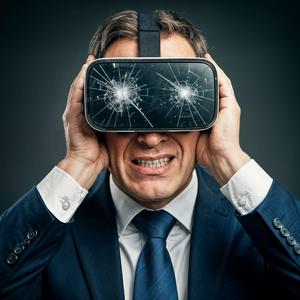
Welcome back, friends, to another episode in our ongoing autopsy of Enterprise VR — a bold vision of the future that somehow resulted in headaches, nausea, and the Operations VP quietly asking if VR training is mandatory.
This series is a behind-the-scenes account narrated by someone who spent years watching Enterprise VR die the slowest possible death, not from lack of vision, but from friction, discomfort, embarrassment, and the very human statement: “Nope. I’m not doing that again.”
If you came here expecting a story about elegant design, intuitive controls, and technology melting invisibly into the background, you’re going to want to sit down, preferably somewhere near a trash can. Because Episode 6 is about what actually happened when real employees were asked to strap a plastic brick to their face, experience cognitive overload, and trust that nausea was just part of the onboarding curve.
These audio essays accompany the written series on LinkedIn and Medium, but they’re not word for word readings. They’ve been rebuilt for your ears. Shorter, sharper, and optimized for listening while commuting, cooking, or pretending to pay attention during yet another “camera-optional” meeting.
Episode 6 was created to show that no amount of “immersive engagement” can overcome the universal truth of enterprise technology: if it’s uncomfortable, confusing, or makes you look ridiculous, nobody’s using it twice.
This episode is divided into four scenes and is proudly sponsored by EvilCorp.
Warning: Prolonged exposure to Enterprise VR may result in motion sickness, headset hair, or deep questioning of corporate priorities. Consult your manager before attempting another “immersive learning experience.” Side effects may include dizziness, nausea, the slow erosion of dignity, and a sudden urge to update your résumé.
Scene One: The Human Factor. Employees are not gamers. Enterprise VR failed by assuming they were.
Scene Two: Cognitive Overload. Users weren’t overwhelmed by the virtual world — they were overwhelmed by figuring it out. After 20 minutes, fatigue set in. By 40, even experienced users were done.
Scene Three: The Body Revolts. Motion sickness became VR’s quiet assassin. Eyes moved. Inner ears disagreed. Even those who didn’t get sick walked away disoriented and exhausted.
Scene Four: The Environment and the Ego. Cube farms were never designed for flailing adults in headsets. Psychological safety evaporated. Dignity followed. The tech didn’t fit the space, the space didn’t fit the people — and the ego never stood a chance.