The Roman World

The Roman World

By Dr Rhiannon EvansEducation
Download on the App Store

The Roman World episodes

  • Empire and Symbol
    Ancient Rome and its culture still exerts an enormous influence on modern culture, particularly in the west. Through media such as film, literature, art, architecture, law codes and political institutions we are still influenced by Rome and we continue to reuse and reinvent Roman forms.This lecture considers some of the ideas which are transmitted when we tell narratives of Rome (for example in the films Gladiator or The Life of Brian) or make reference to ancient Rome in buildings, paintings and even in the classroom. While Rome is still alive for us, we can see that each historical era has reconfigured ancient culture to suit its own ends and remade Rome in its own image. Copyright 2013 La Trobe University, all rights reserved. Contact for permissions.

    49 min
  • Empire and Symbol (handout)
    Ancient Rome and its culture still exerts an enormous influence on modern culture, particularly in the west. Through media such as film, literature, art, architecture, law codes and political institutions we are still influenced by Rome and we continue to reuse and reinvent Roman forms.This lecture considers some of the ideas which are transmitted when we tell narratives of Rome (for example in the films Gladiator or The Life of Brian) or make reference to ancient Rome in buildings, paintings and even in the classroom. While Rome is still alive for us, we can see that each historical era has reconfigured ancient culture to suit its own ends and remade Rome in its own image. Copyright 2013 La Trobe University, all rights reserved. Contact for permissions.
    0 min
  • Roman Spectacle
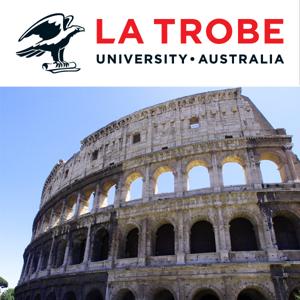
    Amphitheatres are notorious as the places where the Romans held their more gruesome forms of "entertainment", including gladiatorial fights, executions of condemned prisoners, and wild beast hunts. As such displays grew more complicated and imaginative in their staging and special effects, so too did the design of the amphitheatres in order to accommodate elaborate performances and the Colosseum in Rome represents the culmination of this architectural development. However, Roman amphitheatres were not just about entertaining the masses: the structures and the events held in them were tightly linked to Roman society and especially to the careers of prominent Romans, who used this form of entertainment as a way to claw their way up the political ladder - and to stay there. This lecture also deals with the wildly popular horse and chariot racing in the circus, a form of entertainment even more closely tied to political factionalism and with huge popular appeal. Copyright 2013 La Trobe University, all rights reserved. Contact for permissions.
    56 min
  • Roman Spectacle (handout)
    Amphitheatres are notorious as the places where the Romans held their more gruesome forms of "entertainment", including gladiatorial fights, executions of condemned prisoners, and wild beast hunts. As such displays grew more complicated and imaginative in their staging and special effects, so too did the design of the amphitheatres in order to accommodate elaborate performances and the Colosseum in Rome represents the culmination of this architectural development. However, Roman amphitheatres were not just about entertaining the masses: the structures and the events held in them were tightly linked to Roman society and especially to the careers of prominent Romans, who used this form of entertainment as a way to claw their way up the political ladder - and to stay there. This lecture also deals with the wildly popular horse and chariot racing in the circus, a form of entertainment even more closely tied to political factionalism and with huge popular appeal. Copyright 2013 La Trobe University, all rights reserved. Contact for permissions.
    0 min
  • Pompeii (handout)
    Buried under the ash from the cataclysmic eruption of the volcano Vesuvius in AD 79, Pompeii and other sites around the Bay of Naples provide extraordinary insights into a Roman town –not just what it looked liked, but how it functioned also. This lecture looks at some of the main public buildings of Pompeii, and especially the development of Pompeii immediately after it was made a Roman colony, and then later in the early Imperial period. What emerges is the role of architecture and other urban adornment in the promotion of individual careers in Pompeii – also reflected in the homes of Pompeiians. Copyright 2013 La Trobe University, all rights reserved. Contact for permissions.
    0 min
  • Pompeii
    Buried under the ash from the cataclysmic eruption of the volcano Vesuvius in AD 79, Pompeii and other sites around the Bay of Naples provide extraordinary insights into a Roman town –not just what it looked liked, but how it functioned also. This lecture looks at some of the main public buildings of Pompeii, and especially the development of Pompeii immediately after it was made a Roman colony, and then later in the early Imperial period. What emerges is the role of architecture and other urban adornment in the promotion of individual careers in Pompeii – also reflected in the homes of Pompeiians. Copyright 2013 La Trobe University, all rights reserved. Contact for permissions.
    52 min
  • Empire and Symbol
    Ancient Rome and its culture still exerts an enormous influence on modern culture, particularly in the west. Through media such as film, literature, art, architecture, law codes and political institutions we are still influenced by Rome and we continue to reuse and reinvent Roman forms.This lecture considers some of the ideas which are transmitted when we tell narratives of Rome (for example in the films Gladiator or The Life of Brian) or make reference to ancient Rome in buildings, paintings and even in the classroom. While Rome is still alive for us, we can see that each historical era has reconfigured ancient culture to suit its own ends and remade Rome in its own image. Copyright 2013 La Trobe University, all rights reserved. Contact for permissions.
    49 min
  • Empire and Symbol (handout)
    Ancient Rome and its culture still exerts an enormous influence on modern culture, particularly in the west. Through media such as film, literature, art, architecture, law codes and political institutions we are still influenced by Rome and we continue to reuse and reinvent Roman forms.This lecture considers some of the ideas which are transmitted when we tell narratives of Rome (for example in the films Gladiator or The Life of Brian) or make reference to ancient Rome in buildings, paintings and even in the classroom. While Rome is still alive for us, we can see that each historical era has reconfigured ancient culture to suit its own ends and remade Rome in its own image. Copyright 2013 La Trobe University, all rights reserved. Contact for permissions.

    0 min
  • Pompeii
    Buried under the ash from the cataclysmic eruption of the volcano Vesuvius in AD 79, Pompeii and other sites around the Bay of Naples provide extraordinary insights into a Roman town –not just what it looked liked, but how it functioned also. This lecture looks at some of the main public buildings of Pompeii, and especially the development of Pompeii immediately after it was made a Roman colony, and then later in the early Imperial period. What emerges is the role of architecture and other urban adornment in the promotion of individual careers in Pompeii – also reflected in the homes of Pompeiians. Copyright 2013 La Trobe University, all rights reserved. Contact for permissions.

    52 min
  • Pompeii (handout)
    Buried under the ash from the cataclysmic eruption of the volcano Vesuvius in AD 79, Pompeii and other sites around the Bay of Naples provide extraordinary insights into a Roman town –not just what it looked liked, but how it functioned also. This lecture looks at some of the main public buildings of Pompeii, and especially the development of Pompeii immediately after it was made a Roman colony, and then later in the early Imperial period. What emerges is the role of architecture and other urban adornment in the promotion of individual careers in Pompeii – also reflected in the homes of Pompeiians. Copyright 2013 La Trobe University, all rights reserved. Contact for permissions.
    0 min

About The Roman World

From the publisher's feed

The Roman World introduces students to the society, literature and art of ancient Rome, through a study of its major historical and literary figures, such as Julius Caesar, Augustus, Nero, Virgil and…

More shows like The Roman World

Ancient Greece: Myth, Art, War by Professor Chris Mackie and Dr Gillian Shepherd

Ancient Greece: Myth, Art, War

36 Listeners

Epics of Rome by Dr Rhiannon Evans

Epics of Rome

9 Listeners

History of Children's Literature by David Beagley

History of Children's Literature

37 Listeners

Fiction for Young Adults by David Beagley

Fiction for Young Adults

5 Listeners

Early Imperial Russia by Dr Adrian Jones

Early Imperial Russia

26 Listeners

Ancient Greece: City and Society by Dr Gillian Shepherd

Ancient Greece: City and Society

15 Listeners

Media Studies by La Trobe University

Media Studies

1 Listeners

Australian Aboriginal History by Professor Richard Broome

Australian Aboriginal History

6 Listeners

The Philosophy of Descartes by La Trobe University

The Philosophy of Descartes

3 Listeners