The Roman World

The Roman World

By Dr Rhiannon EvansEducation
Download on the App Store

The Roman World episodes

  • Roman Spectacle
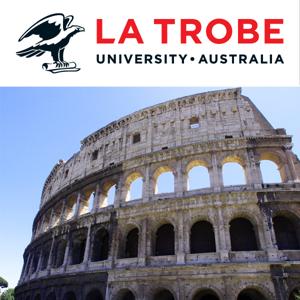
    Amphitheatres are notorious as the places where the Romans held their more gruesome forms of "entertainment", including gladiatorial fights, executions of condemned prisoners, and wild beast hunts. As such displays grew more complicated and imaginative in their staging and special effects, so too did the design of the amphitheatres in order to accommodate elaborate performances and the Colosseum in Rome represents the culmination of this architectural development. However, Roman amphitheatres were not just about entertaining the masses: the structures and the events held in them were tightly linked to Roman society and especially to the careers of prominent Romans, who used this form of entertainment as a way to claw their way up the political ladder - and to stay there. This lecture also deals with the wildly popular horse and chariot racing in the circus, a form of entertainment even more closely tied to political factionalism and with huge popular appeal. Copyright 2013 La Trobe University, all rights reserved. Contact for permissions.
    56 min
  • Roman Spectacle (handout)
    Amphitheatres are notorious as the places where the Romans held their more gruesome forms of "entertainment", including gladiatorial fights, executions of condemned prisoners, and wild beast hunts. As such displays grew more complicated and imaginative in their staging and special effects, so too did the design of the amphitheatres in order to accommodate elaborate performances and the Colosseum in Rome represents the culmination of this architectural development. However, Roman amphitheatres were not just about entertaining the masses: the structures and the events held in them were tightly linked to Roman society and especially to the careers of prominent Romans, who used this form of entertainment as a way to claw their way up the political ladder - and to stay there. This lecture also deals with the wildly popular horse and chariot racing in the circus, a form of entertainment even more closely tied to political factionalism and with huge popular appeal. Copyright 2013 La Trobe University, all rights reserved. Contact for permissions.
    0 min
  • Flavian Rome
    After Nero's suicide in 68 CE Rome was plunged into civil war again, as successive military commanders were declared emperor. The victor was Flavius Vespasian, who managed to found a new (Flavian) dynasty. Vespasian oversaw the building of the Colosseum, and both he and his son, Titus, remained popular. However, the third Flavian, Domitian, is depicted as one of the most sinister, paranoid and tyrannical of all Roman emperors, and his murder in 96 brought an end to Rome's second dynasty. Copyright 2013 La Trobe University, all rights reserved. Contact for permissions.

    50 min
  • Flavian Rome (handout)
    After Nero's suicide in 68 CE Rome was plunged into civil war again, as successive military commanders were declared emperor. The victor was Flavius Vespasian, who managed to found a new (Flavian) dynasty. Vespasian oversaw the building of the Colosseum, and both he and his son, Titus, remained popular. However, the third Flavian, Domitian, is depicted as one of the most sinister, paranoid and tyrannical of all Roman emperors, and his murder in 96 brought an end to Rome's second dynasty. Copyright 2013 La Trobe University, all rights reserved. Contact for permissions.
    0 min
  • Freedmen and Satire: Petronius
    Nero’s subversive courtier, Petronius, is almost certainly the Petronius Arbiter who wrote the satirical work Satyricon, one of the most interesting and bizarre pieces of Roman literature which survives. This novel deals with the nefarious adventures and sexual exploits of three characters travelling through southern Italy, and unusually in Roman literature, primarily involves characters of low status. Freedmen are oftencentral, particularly in the ‘Dinner of Trimalchio’ episode, which satirises the extraordinarily rich but uneducated and vulgar freedman, Trimalchio, whose tyrannical behaviour and aspirations to greatness have led some to see him as a satirical version of Nero himself. Copyright 2013 La Trobe University, all rights reserved. Contact for permissions.
    51 min
  • Freedmen and Satire: Petronius (handout)
    Nero’s subversive courtier, Petronius, is almost certainly the Petronius Arbiter who wrote the satirical work Satyricon, one of the most interesting and bizarre pieces of Roman literature which survives. This novel deals with the nefarious adventures and sexual exploits of three characters travelling through southern Italy, and unusually in Roman literature, primarily involves characters of low status. Freedmen are oftencentral, particularly in the ‘Dinner of Trimalchio’ episode, which satirises the extraordinarily rich but uneducated and vulgar freedman, Trimalchio, whose tyrannical behaviour and aspirations to greatness have led some to see him as a satirical version of Nero himself. Copyright 2013 La Trobe University, all rights reserved. Contact for permissions.
    0 min
  • Workers and Freedmen
    Work is represented as something dirty and sordid by the Roman elite, particularly Cicero, while freedmen always retained some of the stigma associated with their former slave status. This lecture looks at the way workers and freedmen were represented in both elite texts and by themselves, and shows a quite different picture emerging from the tombstones and inscriptions put up by non-elites. Copyright 2013 La Trobe University, all rights reserved. Contact for permissions.
    47 min
  • Workers and Freedmen (handout)
    Work is represented as something dirty and sordid by the Roman elite, particularly Cicero, while freedmen always retained some of the stigma associated with their former slave status. This lecture looks at the way workers and freedmen were represented in both elite texts and by themselves, and shows a quite different picture emerging from the tombstones and inscriptions put up by non-elites. Copyright 2013 La Trobe University, all rights reserved. Contact for permissions.
    0 min
  • Another Renaissance: Neronian Culture
    Nero seems to have encouraged innovative art and architecture (including his own extravagant houses), and to have fostered literary achievement. But his 'Golden House' in particular proved unpopular, as it dominated Rome and gave rise to the rumour that Nero himself started the fire of 64 CE so that he could rebuild the city (and then blamed the Christians). Meanwhile the significant literary figures of his reign (Seneca, Lucan and Petronius), who were also members of Nero's imperial court, all fell from grace spectacularly and were forced to suicide. This lecture explores Neronian culture and the key elements of its artistic and literary output. Copyright 2013 La Trobe University, all rights reserved. Contact for permissions.
    57 min
  • Another Renaissance: Neronian Culture (handout)
    Nero seems to have encouraged innovative art and architecture (including his own extravagant houses), and to have fostered literary achievement. But his 'Golden House' in particular proved unpopular, as it dominated Rome and gave rise to the rumour that Nero himself started the fire of 64 CE so that he could rebuild the city (and then blamed the Christians). Meanwhile the significant literary figures of his reign (Seneca, Lucan and Petronius), who were also members of Nero's imperial court, all fell from grace spectacularly and were forced to suicide. This lecture explores Neronian culture and the key elements of its artistic and literary output. Copyright 2013 La Trobe University, all rights reserved. Contact for permissions.
    0 min

About The Roman World

From the publisher's feed

The Roman World introduces students to the society, literature and art of ancient Rome, through a study of its major historical and literary figures, such as Julius Caesar, Augustus, Nero, Virgil and…

More shows like The Roman World

Ancient Greece: Myth, Art, War by Professor Chris Mackie and Dr Gillian Shepherd

Ancient Greece: Myth, Art, War

36 Listeners

Epics of Rome by Dr Rhiannon Evans

Epics of Rome

9 Listeners

History of Children's Literature by David Beagley

History of Children's Literature

37 Listeners

Fiction for Young Adults by David Beagley

Fiction for Young Adults

5 Listeners

Early Imperial Russia by Dr Adrian Jones

Early Imperial Russia

25 Listeners

Ancient Greece: City and Society by Dr Gillian Shepherd

Ancient Greece: City and Society

15 Listeners

Media Studies by La Trobe University

Media Studies

1 Listeners

Australian Aboriginal History by Professor Richard Broome

Australian Aboriginal History

7 Listeners

The Philosophy of Descartes by La Trobe University

The Philosophy of Descartes

3 Listeners