
Sign up to save your podcasts
Or

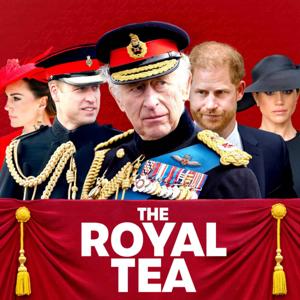


Ian Collins tackles what he calls the monarchy’s biggest crisis since the abdication after Prince Andrew is arrested at Sandringham and police continue searching Royal Lodge. Collins asks whether this is simply another royal scandal or the “beginning of the end” for the institution now Queen Elizabeth II is gone and King Charles is facing sustained reputational damage from Andrew, Harry and years of royal turmoil.
Former Palace insider Dickie Arbiter puts the Andrew affair “on a plane” with the abdication for sheer constitutional and reputational jeopardy, but argues Charles is doing what he can while a police investigation is live. Arbiter insists the King cannot go further than carefully worded statements without risking accusations of interference, and says the monarchy has survived by evolving for centuries though it must modernise further and become more transparent.
Historian and author Andrew Lownie brands the moment a “Me Too” reckoning for the Royal Family, warning that survival depends on full candour: what was known, when it was known, and who acted (or didn’t). Lownie frames the crisis as a potential turning point that could define Charles’s reign either as proof the monarchy is accountable under the law, or as evidence of an establishment that protected “bad apples” until forced to act.
Andrew Mountbatten-Windsor denies any wrongdoing.
Hosted on Acast. See acast.com/privacy for more information.
Mark Dolan speaks to royal biographer Angela Levin about Andrew Mountbatten-Windsor’s arrest, his long-standing arrogance, the “curse of the spare,” and what the scandal means for King Charles and Prince William.
Mark Dolan is joined by royal biographer Angela Levin to examine the shock arrest of Andrew Mountbatten-Windsor and the personal and constitutional fallout. Levin describes the early-morning police visit as a “very, very bad shock” and argues the public humiliation marks a dramatic reversal for a figure she says carried a lifelong sense of superiority and entitlement.
The discussion focuses on Andrew’s character, with Levin linking his behaviour to the so-called “curse of the spare” and claiming he had long harboured ambitions for the throne. She argues his status as a favoured son fostered arrogance that shaped later decisions and poor judgment, now contributing to reputational damage for the wider royal family.
The conversation then turns to the implications for King Charles’ health, Prince William’s future role, and whether the scandal accelerates pressure for generational change. Levin suggests William has never been close to his uncle and may ultimately play a decisive role in distancing the monarchy, while the immediate priority remains managing the institutional impact of the crisis.
Andrew Mountbatten-Windsor denies any wrongdoing.
Hosted on Acast. See acast.com/privacy for more information.
Mark Dolan is joined by Isabel Oakeshott to analyse the arrest of Andrew Mountbatten-Windsor on suspicion of misconduct in public office, with a focus on the legal and reputational consequences rather than the spectacle. Oakeshott warns the Crown Prosecution Service faces a “painstaking and very long winded process” to determine whether there is a realistic prospect of conviction, noting the offence is “notoriously difficult to prosecute” and any decision will be heavily scrutinised whichever way it falls.
The discussion turns to Andrew’s long-standing issues of judgment, his associations with controversial figures, and whether the damage now extends beyond one individual to the institution itself. Oakeshott argues the scandal risks spreading to the wider royal brand, not because of direct wrongdoing by others, but because of questions over whether stronger intervention should have come earlier.
The episode also explores the political and constitutional stakes, including public perception of fairness, the challenge of empanelling an impartial jury in a high-profile case, and the possibility of further disclosures about Andrew’s business relationships. The conversation concludes with the implications for King Charles, with Oakeshott suggesting the monarch is unlikely to fall but acknowledging the crisis will define the early years of his reign.
Andrew Mountbatten-Windsor denies any wrongdoing.
Hosted on Acast. See acast.com/privacy for more information.
Talk Breakfast host Mark Dolan opens a dramatic morning after Andrew Mountbatten-Windsor is arrested on suspicion of misconduct in public office and later released under investigation, a development dominating front pages and reigniting the crisis around Andrew’s past links to Jeffrey Epstein. Dolan frames the central question for listeners: is Andrew’s return home a temporary reprieve, or the start of a legal process that could end in a prosecution with profound consequences for the royal family?
In studio, former newspaper editor Neil Wallis describes the arrest as a rare, true “stop-the-presses” moment, while Talk’s royal correspondent Rupert Bell says the speed and intensity of the police action has shocked even those who felt it was “inevitable.” The discussion turns to the Palace response, King Charles’ message that “the law must take its course”, and whether the monarchy can contain the scandal to Andrew alone, or whether it risks contaminating the institution if the public senses anything less than full cooperation.
Joining from the US, royal commentator Kinsey Schofield argues investigators may have moved fast to secure evidence, particularly with Andrew “moving from one place to another,” and suggests the focus, at this stage, is the alleged sharing of confidential information in a government capacity rather than wider historic claims. The panel then debates whether Andrew should be removed from the line of succession to “tidy it up,” and what further steps, if any, Charles should take while an active investigation is ongoing.
Andrew Mountbatten-Windsor denies any wrongdoing.
Prince Andrew arrested, Andrew Mountbatten-Windsor, misconduct in public office, Epstein files, King Charles statement, “law must take its course”, royal family crisis, monarchy, line of succession, royal scandal, Sandringham arrest, released under investigation, police probe, public office offence, UK constitutional implications
Hosted on Acast. See acast.com/privacy for more information.
Kevin O’Sullivan speaks to royal biographer Andrew Lownie after the dramatic arrest of Andrew Mountbatten-Windsor on suspicion of misconduct in public office. Lownie, whose book Entitled: The Decline and Fall of the House of York helped expose alleged corruption at the heart of the York household, says he is “thrilled the police have acted as swiftly as they have” and admits he feared the former prince might “do a runner” before facing justice. While stressing there have been no charges and Andrew Mountbatten Windsor has denied any wrongdoing, Lownie describes the move as a watershed moment for royal accountability.
He argues the arrest may “lance the boil” for the monarchy, restoring public faith that “the royals are not above the law,” but warns the implications could stretch far beyond one man. Lownie claims the King “knew far more than he’s saying” about past attempts to contain the scandal, and insists officials, aides and former trade envoys should now be questioned. “I approached 3,000 people,” he reveals, many of whom refused to speak, adding he is willing to hand material not yet in the public domain to investigators.
Calling this a potential “Me Too moment of the monarchy,” Lownie says the institution must embrace transparency on finances, archives and oversight if it is to retain public trust. As police examine allegations linked to Jeffrey Epstein, trade missions and confidential disclosures, he warns this could become “far more important than the abdication” in terms of modern royal crisis. Whether the arrest satisfies public anger or opens deeper questions about who knew what and when, Lownie says, will define the future of the Crown.
Hosted on Acast. See acast.com/privacy for more information.
Kevin O’Sullivan speaks to retired Met detective Mike Neville as Andrew Mountbatten-Windsor is arrested on suspicion of misconduct in public office, in a dramatic escalation of the Epstein-linked investigation. Neville explains the reality of the early-morning raid, describing how senior detectives would have moved in front and back, cautioned him immediately and seized digital devices. In sensitive cases like this, he says, everything would likely be recorded to prevent any dispute over what was found or said.
Neville calls the scale of the inquiry “enormous” and warns this is not a short-term operation. With multiple police forces examining evidence linked to Jeffrey Epstein, historic trade envoy trips and alleged confidential disclosures, he says coordination is critical. “Somebody’s got to take account for this,” Neville adds, raising questions about what protection officers, senior commanders and officials may have known at the time.
He also delivers a blunt assessment of the arrest itself, arguing that police are often criticised for targeting “the plebs and not the real villain”, but that this development shows investigators have now “got a grip of this”. As forensic teams sift through phones, emails and tablets, Neville predicts weeks, if not months, of digital analysis.
Andrew Mountbatten-Windsor denies any wrongdoing.
Hosted on Acast. See acast.com/privacy for more information.
Samara Gill delivers a blistering analysis of the arrest of Andrew Mountbatten-Windsor and the extraordinary prospect that he could face life imprisonment if charged and convicted of misconduct in public office. She argues this is not another palace embarrassment but a constitutional earthquake, with a senior royal arrested on suspicion of sharing confidential government information during his time as UK trade envoy. Gill explains how the newly surfaced Epstein-linked emails shift the focus from historic sexual allegations to potential national security breaches, a development she says takes the scandal “into a different realm entirely”.
Breaking down the legal jeopardy, Gill outlines how misconduct in public office carries a maximum sentence of life in prison in the most serious cases. She explores the allegation that sensitive briefings linked to official trips to China, Vietnam and Afghanistan may have been shared with Jeffrey Epstein, raising profound questions about privilege, responsibility and whether royal status created a culture of impunity.
Andrew denies wrongdoing and has not been charged.
Hosted on Acast. See acast.com/privacy for more information.
Ian Collins speaks to royal journalist Valentine Low after Andrew Mountbatten-Windsor was arrested by Thames Valley Police on suspicion of misconduct in public office.
Low says the Jeffrey Epstein saga has been “dogging him for years and years and years” but that the latest allegations around the alleged disclosure of confidential government information take the case “to a different realm”. He also warns the offence is serious but “a notoriously difficult charge to make stick” with a “high bar” for prosecutors.
Discussing the dramatic fall from royal life to police custody, Low reflects that Andrew is someone who “always stood on his dignity” and that this represents “a long way to have fallen”. Ian and Valentine examine what happens next, from potential bail to the legal battle ahead, as the royal crisis deepens.
Andrew Mountbatten-Windsor denies any wrongdoing.
Hosted on Acast. See acast.com/privacy for more information.
Julia Hartley-Brewer speaks to former Sun Royal Editor Charlie Rae after the extraordinary arrest of Andrew Mountbatten-Windsor on suspicion of misconduct in public office. With the King declaring that “the law must take its course” and expressing his “deepest concern,” the constitutional stakes could not be higher. Rae calls the development “absolutely extraordinary” and warns the former prince will now face investigators who will be “probing exactly what he did, when he did it and how he did it” — not a television interviewer, but detectives examining alleged confidential emails linked to the Epstein files.
Drawing on decades covering the Royal Family, Rae gives a personal insight into Andrew’s character, describing him as “an arrogant man” who made it clear, “I am a Prince of the Realm.” The discussion revisits long-standing allegations connected to Jeffrey Epstein, Virginia Giuffre and claims of trafficking to the UK, asking why earlier complaints were not fully investigated and why misconduct in public office has become the first arrestable offence. Rae questions whether royal protection officers “must have seen something” during trips to Epstein’s New York residence, and whether more scrutiny is still to come.
As multiple police forces assess evidence and the monarchy faces intense global attention, Julia and Rae examine whether this moment ultimately shields King Charles by proving no one is above the law — or deepens the crisis engulfing the House of Windsor. With Andrew denying wrongdoing and the legal process now under way, this episode breaks down what happens next in the Prince Andrew, Jeffrey Epstein and Royal Family investigation.
Hosted on Acast. See acast.com/privacy for more information.
Andrew Mountbatten-Windsor has been arrested on suspicion of misconduct in public office in a dramatic new chapter of the Epstein files investigation. On Talk, Julia Hartley-Brewer speaks to former Head of Royal Protection Dai Davies as police take the unprecedented step of detaining the King’s brother. With Thames Valley Police leading inquiries and multiple forces now coordinating, Davies says his first reaction was simple: “At long last.”
Davies tells Talk he has been calling for action “for nearly six years” and argues that the allegations around Andrew’s time as UK trade envoy are serious and potentially far reaching. He describes the case as a “Pandora’s box” with “enormous consequences” not only for Andrew but for the wider Royal Family. Questioning how senior palace officials handled early warnings, he says bluntly, “Stop taking us for fools, frankly,” and raises concerns about who knew what inside Buckingham Palace as the Epstein scandal unfolded.
In stark comments, Davies warns of a possible “conspiracy of silence” if evidence shows information was deliberately withheld, adding that as an investigator he would not stop at junior levels but would “go all the way up.” With Andrew now in custody and the monarchy facing intense scrutiny, this episode examines whether the arrest signals long awaited accountability or the beginning of a deeper reckoning for the institution itself.
Andrew Mountbatten-Windsor denies any wrongdoing.
Hosted on Acast. See acast.com/privacy for more information.
From the publisher's feed
Get the latest Royal Family news, interviews and insider analysis every week on The Royal Tea - the must-listen podcast for everything Buckingham Palace and beyond.
Featuring the best…
We also track the fallout from the disgraced former Prince, Andrew Mountbatten-Windsor.
Expect exclusive commentary, big royal debates, and must-hear moments from Talk’s presenters — all in one place.
For the best royal insight, gossip and analysis, subscribe to The Royal Tea and stay ahead of the story.
God Save The King!
Hosted on Acast. See acast.com/privacy for more information.
Ranked by our users in the last 21 days

1,894 Listeners
990 Listeners

45 Listeners
331 Listeners

3,185 Listeners

493 Listeners

598 Listeners
26 Listeners
11 Listeners
847 Listeners
417 Listeners
101 Listeners
430 Listeners
16 Listeners
91 Listeners

0 Listeners

0 Listeners
7 Listeners

15 Listeners

2 Listeners

146 Listeners
4 Listeners