
Sign up to save your podcasts
Or

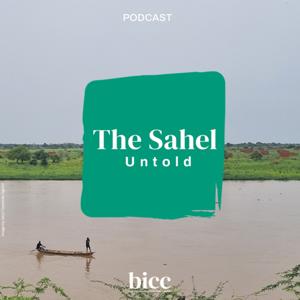


What happens when your very identity is politicised, and the world decides who you are before you even speak?
In this gripping episode, we explore the complex and volatile conflict in Northwest Nigeria through the eyes of Usman, a Fulani man caught in the crossfire of the state, insurgent groups, and deep-seated societal stigma.
Once living a carefree life as a traditional herdsman, Usman’s world was shattered forever when armed violence tore through his community. Trapped in a landscape where ethnic identity is weaponised, he spent a year innocently behind bars—collectively blamed for banditry and extremism.
Listen now to hear a side of the conflict rarely told.
This podcast was developed within the framework of the PAVE project (Breaking Patterns of Armed Violence), jointly implemented by the African Union (AU), the United Nations Peace Building and Peace Support Office – Disarmament, Demobilisation and Reintegration Branch (DDR) and the bicc – Bonn International Centre for Conflict Studies. This project is generously funded by the German Federal Foreign Office.
Featuring AI-generated voiceover.
●●●
Qu'est-ce qui se passe lorsque votre identité est politisée et que le monde décide de qui vous êtes avant même que vous n'ayez eu le temps de vous exprimer?
Dans cet épisode captivant, nous explorons le conflit complexe et volatile qui sévit dans le nord-ouest du Nigeria à travers le regard d'Usman, un homme peul pris entre deux feux: celui de l'État, celui des groupes insurgés et celui d’une stigmatisation sociale profondément ancré.
Menant autrefois la vie insouciante d'un berger traditionnel, le monde d'Usman a été brisé à jamais lorsque la violence armée a ravagé sa communauté. Piégé dans un paysage où l'identité ethnique est instrumentalisée, il a passé un an innocemment derrière les barreaux, accusé collectivement de banditisme et d'extrémisme.
Écoutez dès maintenant pour découvrir un aspect du conflit rarement raconté.
Ce podcast a été développé dans le cadre du projet PAVE (Breaking Patterns of Armed Violence / Briser les cycles de violence armée), mis en œuvre conjointement par l'Union africaine (UA), le Bureau d'appui à la consolidation de la paix des Nations Unies – Branche du désarmement, de la démobilisation et de la réintégration (DDR), et le bicc (Bonn International Centre for Conflict Studies). Ce projet est généreusement financé par le ministère fédéral allemand des Affaires étrangères.
Avec une voix off générée par IA.
In this episode, we meet Said, a young man from Chad, who decided to make a difference for his country. Having studied and lived abroad for many years, he co-founded the non-governmental organisation (NGO) Water4Chad, whose core mission is to provide sustainable access to clean water for communities across Chad. Half of this vast country covering 1.28 million square kilometres is desert. Chad has been severely hit by climate change, political turmoil and insecurity.
For more information, visit our project page on bicc – Bonn International Centre for Conflict Studies.
This podcast was developed within the framework of a joint project by the African Union (AU), the United Nations Department of Peace Operations (DPO) and bicc - Bonn International Centre for Conflict Studies. This project is generously funded by the German Federal Foreign Office.
The podcast is narrated by Claudia Breitung and Milena Berks. Many additional hands supported this project—both within the bicc project team and, even more importantly, through our local partners working on the ground in the Sahelian countries.
●●●
Dans cet épisode, nous rencontrons Said, un jeune homme originaire du Tchad qui a décidé de changer les choses dans son pays. Après avoir étudié et vécu à l'étranger pendant de nombreuses années, il a cofondé l'organisation non gouvernementale (ONG) Water4Chad, dont la mission principale est de fournir un accès durable à l'eau potable aux communautés à travers le Tchad. La moitié de ce vaste pays de 1,28 million de kilomètres carrés est désertique. Le Tchad a été durement touché par le changement climatique, les troubles politiques et l'insécurité.
À travers le parcours de Said, ses difficultés et ses succès, nous apprenons ce que sont le destin, le courage, la responsabilité et ce que signifie le mot « chez soi », mais aussi comment faire preuve de résilience dans des environnements extrêmement difficiles, où l'impossible peut devenir possible.
Pour plus d'informations, consultez notre page projet sur bicc – Bonn International Centre for Conflict Studies.
Ce podcast a été développé dans le cadre d'un projet commun de l'Union africaine (UA), du United Nations Department of Peace Operations (DPO) et du bicc - Bonn International Centre for Conflict Studies. Ce projet est généreusement financé par le ministère fédéral allemand des Affaires étrangères.
Le podcast est narré par Claudia Breitung et Milena Berks. De nombreuses autres personnes ont contribué à ce projet, tant au sein de l'équipe du projet bicc que, surtout, parmi nos partenaires locaux travaillant sur le terrain dans les pays du Sahel.
In this episode, we hear the powerful, personal stories of Zeinab and Fatima—women whose lives were changed forever by Boko Haram, the notorious jihadist group operating in the Lake Chad Basin. Zeinab shares her harrowing abduction on her wedding day and how she was forced to become a stranger’s wife, while Fatima recounts the day she was taken from a farm, forced into multiple marriages, and ultimately branded ‘cursed’ — condemned to become a suicide bomber.
For more information, visit our project page on bicc – Bonn International Centre for Conflict Studies.
This podcast was developed within the framework of a joint project by the African Union (AU), the United Nations Department of Peace Operations (DPO) and bicc - Bonn International Centre for Conflict Studies. This project is generously funded by the German Federal Foreign Office.
The podcast is narrated by Claudia Breitung and Milena Berks. Many additional hands supported this project—both within the bicc project team and, even more importantly, through our local partners working on the ground in the Sahelian countries.
●●●
Dans cet épisode, nous entendons les récits poignants et personnels de Zeinab et Fatima, deux femmes dont la vie a été bouleversée à jamais par Boko Haram, le groupe djihadiste notoire opérant dans le bassin du lac Tchad. Zeinab raconte son enlèvement tragique le jour de son mariage et comment elle a été contrainte de devenir la femme d'un inconnu, tandis que Fatima revient sur le jour où elle a été enlevée dans une ferme, contrainte à plusieurs mariages et finalement qualifiée de « maudite », condamnée à devenir kamikaze.
À travers leurs récits, nous explorons les dimensions du conflit armé liées au genre dans le nord du Nigeria : les inégalités socioculturelles et économiques auxquelles les femmes sont confrontées, la réalité brutale des enlèvements comme ceux des filles de Chibok, et la manière dont les femmes survivent et reprennent leur vie en main. Zeinab et Fatima parlent ouvertement de leur fuite, de leur réintégration dans leurs communautés, de leurs réflexions et de leurs espoirs pour l'avenir.
Cet épisode donne non seulement la parole aux victimes, mais prépare également le terrain pour notre prochain voyage, qui nous mènera au Tchad afin d'explorer les solutions potentielles à la crise qui sévit actuellement dans la région.
Pour plus d'informations, consultez notre page projet sur bicc – Bonn International Centre for Conflict Studies.
Ce podcast a été développé dans le cadre d'un projet commun de l'Union africaine (UA), du United Nations Department of Peace Operations (DPO) et du bicc - Bonn International Centre for Conflict Studies. Ce projet est généreusement financé par le ministère fédéral allemand des Affaires étrangères.
Le podcast est narré par Claudia Breitung et Milena Berks. De nombreuses autres personnes ont contribué à ce projet, tant au sein de l'équipe du projet bicc que, surtout, parmi nos partenaires locaux travaillant sur le terrain dans les pays du Sahel.
In this premiere episode of The Sahel Untold, we meet Bouba, a man from Maiduguri, a town in northern Nigeria, whose life took an unexpected turn. Once dreaming of becoming a doctor, Bouba found himself deep in the Sambisa Forest, tending to the wounds of Boko Haram fighters. He shares his story—how he was drawn into the notorious jihadist group, what life was like as a fighter and the path that ultimately led him to leave. A gripping, human story that sheds light on the untold realities behind one of West Africa’s most infamous conflicts.
For more information, visit our project page on bicc – Bonn International Centre for Conflict Studies.
This podcast was developed within the framework of a joint project by the African Union (AU), the United Nations Department of Peace Operations (DPO) and bicc - Bonn International Centre for Conflict Studies. This project is generously funded by the German Federal Foreign Office.
The podcast is narrated by Claudia Breitung and Milena Berks. Many additional hands supported this project—both within the bicc project team and, even more importantly, through our local partners working on the ground in the Sahelian countries.
●●●
Dans ce premier épisode de “The Sahel Untold”, nous faisons la connaissance de Bouba, un homme originaire de Maiduguri, une ville du nord du Nigeria, dont la vie a pris un tournant inattendu. Alors qu'il rêvait autrefois de devenir médecin, Bouba s'est retrouvé au cœur de la forêt de Sambisa, soignant les blessures des combattants de Boko Haram. Il raconte son histoire : comment il a été attiré par le notoire groupe djihadiste, sa vie de combattant et le chemin qui l'a finalement conduit à quitter le groupe. Une histoire humaine captivante qui met en lumière les réalités méconnues de l'un des conflits les plus tristement célèbres d'Afrique de l'Ouest.
Pour plus d'informations, consultez notre page projet sur bicc – Bonn International Centre for Conflict Studies.
Ce podcast a été développé dans le cadre d'un projet commun de l'Union africaine (UA), du United Nations Department of Peace Operations (DPO) et du bicc - Bonn International Centre for Conflict Studies. Ce projet est généreusement financé par le ministère fédéral allemand des Affaires étrangères.
Le podcast est narré par Claudia Breitung et Milena Berks. De nombreuses autres personnes ont contribué à ce projet, tant au sein de l'équipe du projet bicc que, surtout, parmi nos partenaires locaux travaillant sur le terrain dans les pays du Sahel.
For more information, visit our project page on bicc – Bonn International Centre for Conflict Studies.
This podcast was developed within the framework of a joint project by the African Union (AU), the United Nations Department of Peace Operations (DPO) and bicc - Bonn International Centre for Conflict Studies. This project is generously funded by the German Federal Foreign Office.
The podcast is narrated by Claudia Breitung and Milena Berks. Many additional hands supported this project—both within the bicc project team and, even more importantly, through our local partners working on the ground in the Sahelian countries.
●●●
Pour plus d'informations, consultez notre page projet sur bicc – Bonn International Centre for Conflict Studies.
Ce podcast a été développé dans le cadre d'un projet commun de l'Union africaine (UA), du United Nations Department of Peace Operations (DPO) et du bicc - Bonn International Centre for Conflict Studies. Ce projet est généreusement financé par le ministère fédéral allemand des Affaires étrangères.
Le podcast est narré par Claudia Breitung et Milena Berks. De nombreuses autres personnes ont contribué à ce projet, tant au sein de l'équipe du projet bicc que, surtout, parmi nos partenaires locaux travaillant sur le terrain dans les pays du Sahel.