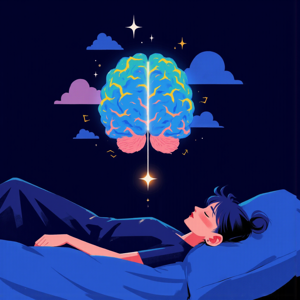
The Science Behind Dreams

The Science Behind Dreams

By Paul StanleyScienceLife Sciences
Download on the App Store

The Science Behind Dreams episodes

  • Why Certain People Keep Appearing in Dreams

    This episode explores why some individuals repeatedly appear in our dreams, even if we haven't seen them for years. The brain stores strong social and emotional memories, and during sleep it revisits these memories while processing experiences and feelings. People who appear in dreams often represent emotions, life periods, or relationship dynamics, rather than the actual person themselves.

    Dream characters may symbolize authority, comfort, loss, or unresolved conflict. Sometimes they return because of unfinished emotional experiences, while other times they appear as stable emotional anchors during stressful periods. The brain may also use familiar faces simply because they help structure emotional storytelling in dreams.

    Research shows that most dream characters come from real people we have encountered, even briefly. Ultimately, recurring dream figures are not visitors from outside—they are reflections of memory and emotion, helping the mind understand relationships and integrate past experiences.

    9 min
  • The Places That Don't Exist – Recurring Dream Worlds
    This episode explores why people often return to the same locations in dreams—houses, cities, schools, or landscapes that don't exist in waking life but feel deeply familiar. The brain naturally organizes emotional experiences into spatial maps, creating stable "dream environments" where similar feelings can be processed over time. The hippocampus, responsible for memory and navigation, builds these inner landscapes so the mind can revisit and adjust emotional situations. As life changes, these places may evolve or disappear, reflecting psychological growth. They are not supernatural realms but emotional memories expressed as physical spaces. Recurring dream locations act as metaphors for inner states—feeling lost, safe, trapped, or at peace. When the emotional issue connected to the place resolves, the location often fades. Ultimately, these dream worlds are maps of the self, showing how the mind organizes experience through space rather than words.
    7 min
  • When Dreams Break the Rules – Why Logic Disappears at Night
    This episode explains why dreams often ignore logic and create impossible situations, shifting identities, and broken timelines. During REM sleep, the brain's prefrontal cortex, which controls reasoning and critical thinking, becomes less active, while emotional and memory centers remain highly active. As a result, dreams are guided by feeling rather than facts. Without logical supervision, the mind connects events based on emotional meaning, not reality. Memories mix freely without time or context, forming collage-like dream scenes. This allows the brain to focus on emotional processing and integration instead of rational analysis. The loss of logic also fuels creativity, enabling unusual connections and insights. However, it can intensify fear in nightmares, since problem-solving abilities are reduced. Lucid dreaming occurs when logic partially returns inside a dream. Ultimately, dreams abandon logic to preserve immersion and emotional depth. By breaking rules, they allow the mind to heal, reorganize experiences, and communicate through metaphor rather than reason.
    7 min
  • Why Dreams Exaggerate Reality – When the Mind Turns Up the Volume
    This episode explains why dreams often feel intense, dramatic, and emotionally overwhelming. During REM sleep, the brain's emotional centers become highly active while the logical, regulating regions quiet down. As a result, feelings that were restrained during the day—fear, desire, doubt, longing—are released and amplified at night. Dreams exaggerate because they translate emotional weight into powerful symbols. Subtle worries become collapsing bridges, quiet insecurity becomes public exposure, and mild anxiety becomes panic. This is not distortion, but emotional translation, ensuring that important feelings are noticed. Fear is especially amplified because the brain prioritizes survival and uses dreams to rehearse emotional responses. But positive emotions like love and joy can also be intensified, showing what connection and fulfillment feel like. When exaggerated dreams repeat, it usually means the underlying emotion hasn't been acknowledged. Once it is recognized in waking life, the dream often softens. Ultimately, dreams exaggerate because they speak without filters—revealing emotional truth in its purest form.
    8 min
  • Dreams as Messages – When the Mind Speaks in Symbols
    This episode explores the idea that some dreams feel like messages, not random images. Dreams communicate through symbols and emotion rather than words, because the unconscious mind processes experience through feelings, patterns, and associations. When waking life is busy or emotionally crowded, dreams become a way for the mind to speak to itself.Neuroscience shows that during REM sleep, the brain reorganizes emotional memories and unresolved tensions. Dreams often appear during periods of uncertainty, transition, or inner conflict, revealing feelings we sense but haven't yet acknowledged. Historically, cultures have viewed dreams as guidance because they often express truth before conscious awareness catches up.Not all dreams carry messages, but those that feel vivid, emotionally charged, or repetitive often point to something important. Their meaning is symbolic, not literal. Dreams don't give instructions—they offer insight, reflecting how we truly feel about our lives.Ultimately, dreams are advisors rather than commands. When we listen without overinterpreting, they help us understand ourselves more deeply. A dream that lingers is often not demanding explanation—it's asking to be heard.
    7 min
  • Dreams and Identity – Who We Are When We Sleep
    This episode explores how dreams reflect and reshape our sense of self. While awake, identity feels stable, defined by roles and routine. But in dreams, identity becomes fluid—letting us explore who we are beneath expectations. Dreams reveal hidden parts of the self: courage in the timid, fear in the confident, longing in the responsible caregiver.Dreaming often brings back past selves—childhood versions, forgotten dreams, or old emotional landscapes—reminding us that identity is layered and continuous. Dreams also project future selves, allowing us to imagine or rehearse who we might become before we take steps in waking life.Moments of transition—new beginnings, loss, cultural change, personal discovery—activate dreams that negotiate shifting identity. Dreams also expose the shadow self, the emotions or desires we suppress during the day. These aren't threats but valuable clues to wholeness.Ultimately, dreams show the truth beneath performance. They tell us that identity is not fixed, but constantly evolving—and that every version of ourselves, past and future, speaks through the dreams we live each night.
    7 min
  • Stress Dreams – When the Mind Can't Put Down the Weight
    This episode explores stress dreams, the frantic, exhausting dreams that appear when waking life becomes overwhelming. These dreams surface during times of pressure, deadlines, emotional conflict, or burnout. Because the emotional brain remains active during REM sleep while logic quiets, stress leaks into dreams unchecked.Common themes—being late, losing teeth, being chased, failing exams, or losing important items—symbolize deeper anxieties like vulnerability, fear of failure, and loss of control. Even long after school, people still dream about tests because the brain reuses familiar symbols to express current stress.Stress dreams repeat when emotions remain unresolved. Rather than punishment, they serve as emotional rehearsal, preparing the mind to handle difficult feelings. However, when stress dreams become constant, they reflect overload: the brain processing what waking life can't.The episode concludes that stress dreams aren't enemies—they're signals. By reducing daytime pressure, slowing down before sleep, and acknowledging the fear behind the dream, people can ease the cycle. Stress dreams remind us of one truth: the mind carries what we don't allow ourselves to feel.
    8 min
  • Reconnecting with Your Dreams – Restoring the Lost Conversation
    This episode focuses on how people can reconnect with their dreams after periods of dream silence. Dreams never stop occurring; what fades is our connection to them. Modern life—stress, noise, and constant stimulation—pushes attention outward, making it harder for dream memories to cross into waking awareness.Reconnection begins with slowing down, especially during the moments after waking. Gentle awareness, staying still, and focusing on emotion rather than narrative help retrieve dream memory. Writing even small fragments signals to the brain that dreams matter, gradually strengthening recall. Intention before sleep and emotional honesty during the day also invite dreams back.The episode emphasizes that dream recall is not control or interpretation, but relationship. Dreams respond to curiosity and respect, not pressure. Reconnecting often brings greater emotional awareness, creativity, and clarity. Ultimately, rediscovering dreams is about returning to a quieter inner intelligence that never left—only waited to be heard again.
    7 min
  • When Dreams Go Silent – Why Some People Stop Remembering Dreams
    This episode explores the phenomenon of dream silence—when people feel they no longer dream or can't remember their dreams. Science shows that almost everyone continues to dream; what fades is dream recall, not dreaming itself. During REM sleep, the brain's chemistry makes memories fragile, and without gentle awakenings, dreams vanish quickly.Modern life—stress, alarms, screens, and routines—erases dream memory before it can settle. Aging, emotional overload, grief, burnout, and certain medications can further reduce recall, often as a form of psychological protection rather than failure.The episode emphasizes that dream recall depends on attention and habit. When dreams are treated as unimportant, the brain stops saving them. But recall can be rebuilt through slower waking, reflection, and journaling. Dream silence is not an absence—it's a pause. Even when dreams seem quiet, the mind continues to process, heal, and imagine, waiting for the moment we're ready to listen again.
    7 min
  • Shared Dreams – When Minds Seem to Meet in Sleep
    This episode explores the idea of shared dreams—experiences where people feel they dreamed the same thing or met someone else in a dream. While there is no scientific evidence that two minds literally share a dream space, psychology offers powerful explanations.Strong emotional bonds, shared experiences, similar routines, and mutual anticipation can lead to emotional synchronization, causing different people to dream about similar themes or events. Memory also plays a role, as we tend to remember similarities and overlook differences when comparing dreams.The episode examines shared dreams among close partners, twins, and during moments of crisis, explaining how subconscious awareness and emotional attunement can make dreams feel deeply connected. Cultural interpretations often frame shared dreams as spiritual encounters, while neuroscience sees them as parallel processes shaped by empathy and memory.Ultimately, the episode concludes that shared dreams may not prove minds meet during sleep, but they do reveal something powerful: human connection continues in dreams, shaped by emotion, relationship, and longing—even when the world is silent.
    7 min

About The Science Behind Dreams

From the publisher's feed

Why do we dream? What do our dreams mean? From Sigmund Freud's psychoanalytic theories to modern neuroscience's exploration of brain activity during sleep, this podcast delves into the fascinating…