
Sign up to save your podcasts
Or

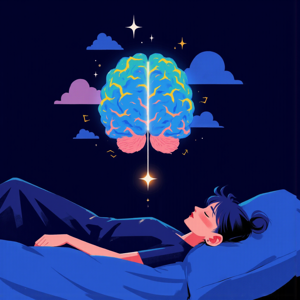


This final episode explores how dreams challenge the idea that the self is fixed and permanent. During sleep, identity can shift dramatically. We may become younger, older, unfamiliar versions of ourselves, or even experience the dream from another perspective. These changes suggest that the sense of self is continually constructed from memory, emotion, bodily awareness, and attention.
Dreams reveal how strongly identity depends on personal memory and emotional context. When a dream changes our history or removes important facts about waking life, we temporarily become someone different. Lucid dreams make this even more fascinating by separating the dream character from the observing mind that knows the experience is unreal.
The episode explains that the self may be less like a solid object and more like an evolving story. Although waking identity is stable and meaningful, it is constantly updated through new experiences, changing beliefs, relationships, and memories.
Ultimately, dreams do not provide a final answer to who we are. Instead, they show how identity is created. They reveal that consciousness is flexible, reality is interpreted by the brain, and the dreamer is part of the same extraordinary process that creates the dream world.
This episode explores how lucid dreamers can influence dreams after realizing they are asleep. Lucidity occurs when self-awareness partially returns during REM sleep, creating a hybrid state where the dream continues but the dreamer can make conscious choices.
Dream control depends heavily on expectation, emotion, and attention. Confidence can help dreamers fly, change locations, or summon people, while doubt may cause the dream to resist. Staying calm and focusing on sensory details can stabilize a fading dream.
Lucid dreaming may also help transform nightmares, rehearse skills, build confidence, and encourage creativity. However, control is never complete because unconscious processes continue shaping the dream.
Ultimately, lucid dreaming is not only about controlling an imaginary world. It reveals how conscious intention and the unconscious mind interact, showing that even inside our own dreams, awareness has influence—but not absolute command.
This episode explores how meditation and mindfulness can influence dream awareness, recall, and emotional tone. By training the mind to observe thoughts and feelings without immediate reaction, mindfulness strengthens the same self-awareness that can sometimes continue into sleep and lead to lucid dreaming.
Meditation may also improve dream recall by encouraging people to wake slowly and notice dream fragments before they disappear. By reducing stress and calming the nervous system, it can make dreams feel less chaotic and help dreamers respond more calmly to nightmares.
The episode emphasizes that mindfulness is not about controlling every dream or forcing an interpretation. It is about approaching dreams with curiosity, patience, and emotional balance. Ultimately, clearer dreams may begin with a clearer and more attentive relationship with the waking mind.
This episode explores how keeping a dream journal can improve both dream awareness and mental well-being. Writing down dreams immediately after waking helps preserve memories that would otherwise fade within minutes and gradually trains the brain to remember dreams more clearly.
Over time, dream journals reveal recurring patterns, emotions, and symbols that may reflect underlying stress, anxiety, hopes, or unresolved experiences. Rather than focusing on individual dreams, the real value comes from recognizing these long-term emotional themes. This makes dream journaling a useful tool in psychotherapy, helping people better understand their emotional lives and monitor progress during recovery from stress or trauma.
Dream journaling can also enhance creativity by preserving unusual ideas and associations generated during sleep. In addition, the habit encourages mindfulness, self-reflection, and a deeper awareness of one's inner world. It may even increase the likelihood of lucid dreaming by helping people recognize recurring dream patterns.
Ultimately, a dream journal is more than a record of dreams—it is a window into the mind. By paying attention to dreams without forcing interpretations, we develop a stronger connection with our emotions, thoughts, and subconscious processes, turning ordinary dreams into valuable opportunities for self-understanding.
This episode explores whether recurring nightmares can be changed, and the answer from modern neuroscience is yes. Nightmares are not fixed experiences—they are emotional simulations created by the brain as it processes fear, stress, trauma, and unresolved emotions. Because the brain remains adaptable through neuroplasticity, nightmare patterns can gradually be reshaped.
One of the most effective techniques is Imagery Rehearsal Therapy (IRT), where people consciously imagine a new, safer ending to a recurring nightmare while awake. By repeatedly practicing this new version, the brain can eventually incorporate it into the dream itself, reducing the nightmare's intensity or stopping it altogether.
The episode also explains that relaxation before sleep, keeping a dream journal, recognizing recurring emotional themes, and, in some cases, lucid dreaming can help transform frightening dreams. For trauma-related nightmares, professional therapy may be necessary, as these dreams often reflect the brain's ongoing effort to heal.
Ultimately, nightmares are not signs of weakness or punishment—they are signals that the mind is trying to process difficult emotions. Because dreams are continually reconstructed rather than replayed, even the darkest nightmare can gradually change as the brain learns new emotional responses.
This episode explores how people can influence their dreams by shaping the brain's activity before sleep. Although dreams cannot be fully controlled, modern neuroscience shows that they are affected by our daily experiences, emotions, habits, and expectations.
The episode introduces the concept of dream incubation, where focusing on a specific thought, image, or question before bed increases the likelihood that it will appear in a dream. Evening routines also matter—calming activities and stress reduction can lead to more peaceful dreams, while emotionally intense content may contribute to disturbing ones.
Keeping a dream journal, practicing reality checks, and visualizing positive outcomes for recurring nightmares can gradually reshape dream patterns. These techniques work because the brain remains highly adaptable, continuously learning through neuroplasticity.
Ultimately, dreams are not fixed or uncontrollable. They evolve with our thoughts, emotions, and experiences. While we cannot dictate exactly what we dream, we can meaningfully influence the emotional landscape of our dream world by changing how we prepare our minds before sleep.
This episode explores why some dreams seem to match real-life events in surprisingly accurate ways. These dream-reality coincidences often feel meaningful because the human brain is naturally designed to search for patterns and connections.
Over a lifetime, people experience tens of thousands of dreams containing countless images, people, places, and situations. Given enough dreams and enough real-world experiences, some similarities are statistically inevitable. However, people tend to remember the rare matches and forget the many dreams that never connect to reality.
The episode also explains that the unconscious mind constantly processes information outside conscious awareness. Dreams may reflect subtle clues, observations, or emotional patterns that the conscious mind has not yet recognized. When reality later unfolds in a similar way, the dream can appear prophetic even though it was based on existing information.
While science explains most dream coincidences through probability, memory, and pattern recognition, these experiences can still feel deeply meaningful. Ultimately, dream coincidences reveal how closely connected dreams, emotions, memory, and perception are—and how the brain continuously searches for meaning in both the inner and outer worlds.
This episode examines the long-standing belief that dreams can predict future events. Throughout history, many cultures have viewed dreams as prophetic messages, and many people report experiences where a dream seemed to come true. However, psychology and neuroscience offer alternative explanations.
The episode explains that humans dream thousands of times throughout their lives, making it inevitable that some dreams will resemble later events. Because people naturally remember the "hits" and forget the "misses," these coincidences can feel far more significant than they actually are. The brain is also a powerful pattern-detection system, often finding meaningful connections between unrelated events.
Another important explanation is that the unconscious mind notices subtle clues that conscious awareness may overlook. Dreams can process these hidden signals and create scenarios that later appear predictive. In many cases, the dream is not foretelling the future but recognizing patterns already present in the current situation.
Ultimately, science has found no reliable evidence that dreams can literally predict future events. However, dreams can reveal fears, expectations, intuitions, and possibilities before we consciously recognize them. A dream may not show the future itself, but it can sometimes reveal where the future is already beginning to take shape.
This episode explores the mysterious connection between déjà vu and dream memory. Déjà vu is the powerful feeling that a present moment has already been experienced before, even though no clear memory exists to explain it.
One theory suggests that forgotten dream fragments may contribute to this sensation. Because most dreams are quickly forgotten, the brain may retain emotional or visual traces. When a real-life situation resembles one of these forgotten dream patterns, it can trigger a strong sense of familiarity.
The episode also examines how the brain constantly compares current experiences to stored memories. Déjà vu may occur when the brain mistakenly labels a new experience as familiar or when reality overlaps with scenarios previously imagined or simulated during dreaming.
While déjà vu is not considered evidence that dreams predict the future, it highlights the complex relationship between memory, imagination, and perception. Ultimately, the phenomenon reveals that the brain is constantly reconstructing reality—and sometimes, that process makes the present feel like a memory from the past.
This episode explores the theory that dreams function as the brain's simulation engine, creating virtual experiences that help us prepare for real life. Rather than being random stories, dreams may act as practice environments where the mind rehearses responses to danger, social situations, emotional challenges, and future possibilities.
The episode introduces the Threat Simulation Theory, which suggests that dreams evolved to help humans practice dealing with risks such as being chased, trapped, or facing conflict. Dreams may also serve as social simulations, allowing the brain to explore relationships, cooperation, rejection, and belonging.
Modern neuroscience views the brain as a prediction machine, constantly creating models of possible futures. Dreams may extend this process during sleep, combining memories, emotions, and imagination into simulated experiences. This helps explain why dreams can feel creative, unusual, and sometimes even predictive.
Ultimately, the episode suggests that dreams are more than memories—they are virtual worlds where the brain tests ideas, rehearses emotions, and prepares for uncertainty. While the body sleeps, the mind continues exploring possibilities for the future.
From the publisher's feed