The Shadow

The Shadow

By Classic Radio ShowsArtsFictionDramaPerforming Arts
Download on the App Store

The Shadow episodes

  • Afrs 049 - Heres To Romance - Jim Ameche - Robert Ripley - Marion Hutton 05-10-45
    The biggest names in Hollywood and Broadway recorded for AFRS during the war years, The American Forces Network can trace its origins back to May 26, 1942, when the War Department established the Armed Forces Radio Service (AFRS). The U.S. Army began broadcasting from London during World War II, using equipment and studio facilities borrowed from the British Broadcasting Corporation (BBC). The first transmission to U.S. troops began at 5:45 p.m. on July 4, 1943, and included less than five hours of recorded shows, a BBC news and sports broadcast. That day, Corporal Syl Binkin became the first U.S. Military broadcasters heard over the air. The signal was sent from London via telephone lines to five regional transmitters to reach U.S. troops in the United Kingdom as they prepared for the inevitable invasion of Nazi-occupied Europe. Fearing competition for civilian audiences the BBC initially tried to impose restrictions on AFN broadcasts within Britain (transmissions were only allowed from American Bases outside London and were limited to 50 watts of transmission power) and a minimum quota of British produced programming had to be carried. Nevertheless AFN programmes were widely enjoyed by the British civilian listeners who could receive them and once AFN operations transferred to continental Europe (shortly after D-Day) AFN were able to broadcast with little restriction with programmes available to civilian audiences across most of Europe (including Britain) after dark. As D-Day approached, the network joined with the BBC and the Canadian Broadcasting Corporation to develop programs especially for the Allied Expeditionary Forces. Mobile stations, complete with personnel, broadcasting equipment, and a record library were deployed to broadcast music and news to troops in the field. The mobile stations reported on front line activities and fed the news reports back to studio locations in London.
    ---------------------------------------------------------------------------
    Entertainment Radio Stations Live 24/7 Sherlock Holmes/CBS Radio Mystery Theater
    https://live365.com/station/Sherlock-Holmes-Classic-Radio--a91441
    https://live365.com/station/CBS-Radio-Mystery-Theater-a57491
    ----------------------------------------------------------------------------

    31 min
  • Afrs 001 - Spike Jones - Frances Langford - Charlie Ruggles 06-03-45
    The biggest names in Hollywood and Broadway recorded for AFRS during the war years, The American Forces Network can trace its origins back to May 26, 1942, when the War Department established the Armed Forces Radio Service (AFRS). The U.S. Army began broadcasting from London during World War II, using equipment and studio facilities borrowed from the British Broadcasting Corporation (BBC). The first transmission to U.S. troops began at 5:45 p.m. on July 4, 1943, and included less than five hours of recorded shows, a BBC news and sports broadcast. That day, Corporal Syl Binkin became the first U.S. Military broadcasters heard over the air. The signal was sent from London via telephone lines to five regional transmitters to reach U.S. troops in the United Kingdom as they prepared for the inevitable invasion of Nazi-occupied Europe. Fearing competition for civilian audiences the BBC initially tried to impose restrictions on AFN broadcasts within Britain (transmissions were only allowed from American Bases outside London and were limited to 50 watts of transmission power) and a minimum quota of British produced programming had to be carried. Nevertheless AFN programmes were widely enjoyed by the British civilian listeners who could receive them and once AFN operations transferred to continental Europe (shortly after D-Day) AFN were able to broadcast with little restriction with programmes available to civilian audiences across most of Europe (including Britain) after dark. As D-Day approached, the network joined with the BBC and the Canadian Broadcasting Corporation to develop programs especially for the Allied Expeditionary Forces. Mobile stations, complete with personnel, broadcasting equipment, and a record library were deployed to broadcast music and news to troops in the field. The mobile stations reported on front line activities and fed the news reports back to studio locations in London.
    ---------------------------------------------------------------------------
    Entertainment Radio Stations Live 24/7 Sherlock Holmes/CBS Radio Mystery Theater
    https://live365.com/station/Sherlock-Holmes-Classic-Radio--a91441
    https://live365.com/station/CBS-Radio-Mystery-Theater-a57491
    ----------------------------------------------------------------------------
    32 min
  • Afrs 001 - Date With The Duke - First Song The Mood To Be Wooed 04-21-45
    The biggest names in Hollywood and Broadway recorded for AFRS during the war years, The American Forces Network can trace its origins back to May 26, 1942, when the War Department established the Armed Forces Radio Service (AFRS). The U.S. Army began broadcasting from London during World War II, using equipment and studio facilities borrowed from the British Broadcasting Corporation (BBC). The first transmission to U.S. troops began at 5:45 p.m. on July 4, 1943, and included less than five hours of recorded shows, a BBC news and sports broadcast. That day, Corporal Syl Binkin became the first U.S. Military broadcasters heard over the air. The signal was sent from London via telephone lines to five regional transmitters to reach U.S. troops in the United Kingdom as they prepared for the inevitable invasion of Nazi-occupied Europe. Fearing competition for civilian audiences the BBC initially tried to impose restrictions on AFN broadcasts within Britain (transmissions were only allowed from American Bases outside London and were limited to 50 watts of transmission power) and a minimum quota of British produced programming had to be carried. Nevertheless AFN programmes were widely enjoyed by the British civilian listeners who could receive them and once AFN operations transferred to continental Europe (shortly after D-Day) AFN were able to broadcast with little restriction with programmes available to civilian audiences across most of Europe (including Britain) after dark. As D-Day approached, the network joined with the BBC and the Canadian Broadcasting Corporation to develop programs especially for the Allied Expeditionary Forces. Mobile stations, complete with personnel, broadcasting equipment, and a record library were deployed to broadcast music and news to troops in the field. The mobile stations reported on front line activities and fed the news reports back to studio locations in London.
    ---------------------------------------------------------------------------
    Entertainment Radio Stations Live 24/7 Sherlock Holmes/CBS Radio Mystery Theater
    https://live365.com/station/Sherlock-Holmes-Classic-Radio--a91441
    https://live365.com/station/CBS-Radio-Mystery-Theater-a57491
    ----------------------------------------------------------------------------
    31 min
  • Afrs 062 - Concert Hall - host Lionel Barrymore - Bartlett and Robertson - First Selection - Jesus Joy of Mans Desirebach
    The biggest names in Hollywood and Broadway recorded for AFRS during the war years, The American Forces Network can trace its origins back to May 26, 1942, when the War Department established the Armed Forces Radio Service (AFRS). The U.S. Army began broadcasting from London during World War II, using equipment and studio facilities borrowed from the British Broadcasting Corporation (BBC). The first transmission to U.S. troops began at 5:45 p.m. on July 4, 1943, and included less than five hours of recorded shows, a BBC news and sports broadcast. That day, Corporal Syl Binkin became the first U.S. Military broadcasters heard over the air. The signal was sent from London via telephone lines to five regional transmitters to reach U.S. troops in the United Kingdom as they prepared for the inevitable invasion of Nazi-occupied Europe. Fearing competition for civilian audiences the BBC initially tried to impose restrictions on AFN broadcasts within Britain (transmissions were only allowed from American Bases outside London and were limited to 50 watts of transmission power) and a minimum quota of British produced programming had to be carried. Nevertheless AFN programmes were widely enjoyed by the British civilian listeners who could receive them and once AFN operations transferred to continental Europe (shortly after D-Day) AFN were able to broadcast with little restriction with programmes available to civilian audiences across most of Europe (including Britain) after dark. As D-Day approached, the network joined with the BBC and the Canadian Broadcasting Corporation to develop programs especially for the Allied Expeditionary Forces. Mobile stations, complete with personnel, broadcasting equipment, and a record library were deployed to broadcast music and news to troops in the field. The mobile stations reported on front line activities and fed the news reports back to studio locations in London.
    ---------------------------------------------------------------------------
    Entertainment Radio Stations Live 24/7 Sherlock Holmes/CBS Radio Mystery Theater
    https://live365.com/station/Sherlock-Holmes-Classic-Radio--a91441
    https://live365.com/station/CBS-Radio-Mystery-Theater-a57491
    ----------------------------------------------------------------------------

    31 min
  • Afrs 053 - This Is The Story - The Tabernacle In Dukes Place 10-29-44
    The series began on NBC Radio as a summer replacement situation comedy in 1944, featuring vocalist Bea Wain. It then moved to ABC Radio with Jean Gillespie portraying Young's girlfriend Betty. The program was next broadcast by NBC for a 1946–47 run and was off in 1948. When it returned to NBC in 1949, Louise Erickson played Betty and Jim Backus was heard as wealthy and snobbish playboy Hubert Updike III, a character he later adapted as Thurston Howell III in Gilligan's Island.
    ---------------------------------------------------------------------------
    Entertainment Radio Stations Live 24/7 Sherlock Holmes/CBS Radio Mystery Theater
    https://live365.com/station/Sherlock-Holmes-Classic-Radio--a91441
    https://live365.com/station/CBS-Radio-Mystery-Theater-a57491
    ----------------------------------------------------------------------------

    26 min
  • Afrs 053 - Science Magazine Of The Air - How Your Baby Grows
    The biggest names in Hollywood and Broadway recorded for AFRS during the war years, The American Forces Network can trace its origins back to May 26, 1942, when the War Department established the Armed Forces Radio Service (AFRS). The U.S. Army began broadcasting from London during World War II, using equipment and studio facilities borrowed from the British Broadcasting Corporation (BBC). The first transmission to U.S. troops began at 5:45 p.m. on July 4, 1943, and included less than five hours of recorded shows, a BBC news and sports broadcast. That day, Corporal Syl Binkin became the first U.S. Military broadcasters heard over the air. The signal was sent from London via telephone lines to five regional transmitters to reach U.S. troops in the United Kingdom as they prepared for the inevitable invasion of Nazi-occupied Europe. Fearing competition for civilian audiences the BBC initially tried to impose restrictions on AFN broadcasts within Britain (transmissions were only allowed from American Bases outside London and were limited to 50 watts of transmission power) and a minimum quota of British produced programming had to be carried. Nevertheless AFN programmes were widely enjoyed by the British civilian listeners who could receive them and once AFN operations transferred to continental Europe (shortly after D-Day) AFN were able to broadcast with little restriction with programmes available to civilian audiences across most of Europe (including Britain) after dark. As D-Day approached, the network joined with the BBC and the Canadian Broadcasting Corporation to develop programs especially for the Allied Expeditionary Forces. Mobile stations, complete with personnel, broadcasting equipment, and a record library were deployed to broadcast music and news to troops in the field. The mobile stations reported on front line activities and fed the news reports back to studio locations in London.
    ---------------------------------------------------------------------------
    Entertainment Radio Stations Live 24/7 Sherlock Holmes/CBS Radio Mystery Theater
    https://live365.com/station/Sherlock-Holmes-Classic-Radio--a91441
    https://live365.com/station/CBS-Radio-Mystery-Theater-a57491
    ----------------------------------------------------------------------------
    31 min
  • Afrs 040 - Swing time - First Song - The Sunny Side Of The Street - Mel Torme - Frances Langford - Tony Romano
    The biggest names in Hollywood and Broadway recorded for AFRS during the war years, The American Forces Network can trace its origins back to May 26, 1942, when the War Department established the Armed Forces Radio Service (AFRS). The U.S. Army began broadcasting from London during World War II, using equipment and studio facilities borrowed from the British Broadcasting Corporation (BBC). The first transmission to U.S. troops began at 5:45 p.m. on July 4, 1943, and included less than five hours of recorded shows, a BBC news and sports broadcast. That day, Corporal Syl Binkin became the first U.S. Military broadcasters heard over the air. The signal was sent from London via telephone lines to five regional transmitters to reach U.S. troops in the United Kingdom as they prepared for the inevitable invasion of Nazi-occupied Europe. Fearing competition for civilian audiences the BBC initially tried to impose restrictions on AFN broadcasts within Britain (transmissions were only allowed from American Bases outside London and were limited to 50 watts of transmission power) and a minimum quota of British produced programming had to be carried. Nevertheless AFN programmes were widely enjoyed by the British civilian listeners who could receive them and once AFN operations transferred to continental Europe (shortly after D-Day) AFN were able to broadcast with little restriction with programmes available to civilian audiences across most of Europe (including Britain) after dark. As D-Day approached, the network joined with the BBC and the Canadian Broadcasting Corporation to develop programs especially for the Allied Expeditionary Forces. Mobile stations, complete with personnel, broadcasting equipment, and a record library were deployed to broadcast music and news to troops in the field. The mobile stations reported on front line activities and fed the news reports back to studio locations in London.
    ---------------------------------------------------------------------------
    Entertainment Radio Stations Live 24/7 Sherlock Holmes/CBS Radio Mystery Theater
    https://live365.com/station/Sherlock-Holmes-Classic-Radio--a91441
    https://live365.com/station/CBS-Radio-Mystery-Theater-a57491
    ----------------------------------------------------------------------------
    31 min
  • Afrs 026 - Jubilee - Louis Armstrong 05-24-43
    The biggest names in Hollywood and Broadway recorded for AFRS during the war years, The American Forces Network can trace its origins back to May 26, 1942, when the War Department established the Armed Forces Radio Service (AFRS). The U.S. Army began broadcasting from London during World War II, using equipment and studio facilities borrowed from the British Broadcasting Corporation (BBC). The first transmission to U.S. troops began at 5:45 p.m. on July 4, 1943, and included less than five hours of recorded shows, a BBC news and sports broadcast. That day, Corporal Syl Binkin became the first U.S. Military broadcasters heard over the air. The signal was sent from London via telephone lines to five regional transmitters to reach U.S. troops in the United Kingdom as they prepared for the inevitable invasion of Nazi-occupied Europe. Fearing competition for civilian audiences the BBC initially tried to impose restrictions on AFN broadcasts within Britain (transmissions were only allowed from American Bases outside London and were limited to 50 watts of transmission power) and a minimum quota of British produced programming had to be carried. Nevertheless AFN programmes were widely enjoyed by the British civilian listeners who could receive them and once AFN operations transferred to continental Europe (shortly after D-Day) AFN were able to broadcast with little restriction with programmes available to civilian audiences across most of Europe (including Britain) after dark. As D-Day approached, the network joined with the BBC and the Canadian Broadcasting Corporation to develop programs especially for the Allied Expeditionary Forces. Mobile stations, complete with personnel, broadcasting equipment, and a record library were deployed to broadcast music and news to troops in the field. The mobile stations reported on front line activities and fed the news reports back to studio locations in London.
    ---------------------------------------------------------------------------
    Entertainment Radio Stations Live 24/7 Sherlock Holmes/CBS Radio Mystery Theater
    https://live365.com/station/Sherlock-Holmes-Classic-Radio--a91441
    https://live365.com/station/CBS-Radio-Mystery-Theater-a57491
    ----------------------------------------------------------------------------
    30 min
  • Afrs 09 - Suspense - The ABC Murders 05-18-43
    The biggest names in Hollywood and Broadway recorded for AFRS during the war years, The American Forces Network can trace its origins back to May 26, 1942, when the War Department established the Armed Forces Radio Service (AFRS). The U.S. Army began broadcasting from London during World War II, using equipment and studio facilities borrowed from the British Broadcasting Corporation (BBC). The first transmission to U.S. troops began at 5:45 p.m. on July 4, 1943, and included less than five hours of recorded shows, a BBC news and sports broadcast. That day, Corporal Syl Binkin became the first U.S. Military broadcasters heard over the air. The signal was sent from London via telephone lines to five regional transmitters to reach U.S. troops in the United Kingdom as they prepared for the inevitable invasion of Nazi-occupied Europe. Fearing competition for civilian audiences the BBC initially tried to impose restrictions on AFN broadcasts within Britain (transmissions were only allowed from American Bases outside London and were limited to 50 watts of transmission power) and a minimum quota of British produced programming had to be carried. Nevertheless AFN programmes were widely enjoyed by the British civilian listeners who could receive them and once AFN operations transferred to continental Europe (shortly after D-Day) AFN were able to broadcast with little restriction with programmes available to civilian audiences across most of Europe (including Britain) after dark. As D-Day approached, the network joined with the BBC and the Canadian Broadcasting Corporation to develop programs especially for the Allied Expeditionary Forces. Mobile stations, complete with personnel, broadcasting equipment, and a record library were deployed to broadcast music and news to troops in the field. The mobile stations reported on front line activities and fed the news reports back to studio locations in London.
    ---------------------------------------------------------------------------
    Entertainment Radio Stations Live 24/7 Sherlock Holmes/CBS Radio Mystery Theater
    https://live365.com/station/Sherlock-Holmes-Classic-Radio--a91441
    https://live365.com/station/CBS-Radio-Mystery-Theater-a57491
    ----------------------------------------------------------------------------
    31 min
  • Afrs Command Performance - VJ Day Special 09-02-45
    The biggest names in Hollywood and Broadway recorded for AFRS during the war years, The American Forces Network can trace its origins back to May 26, 1942, when the War Department established the Armed Forces Radio Service (AFRS). The U.S. Army began broadcasting from London during World War II, using equipment and studio facilities borrowed from the British Broadcasting Corporation (BBC). The first transmission to U.S. troops began at 5:45 p.m. on July 4, 1943, and included less than five hours of recorded shows, a BBC news and sports broadcast. That day, Corporal Syl Binkin became the first U.S. Military broadcasters heard over the air. The signal was sent from London via telephone lines to five regional transmitters to reach U.S. troops in the United Kingdom as they prepared for the inevitable invasion of Nazi-occupied Europe. Fearing competition for civilian audiences the BBC initially tried to impose restrictions on AFN broadcasts within Britain (transmissions were only allowed from American Bases outside London and were limited to 50 watts of transmission power) and a minimum quota of British produced programming had to be carried. Nevertheless AFN programmes were widely enjoyed by the British civilian listeners who could receive them and once AFN operations transferred to continental Europe (shortly after D-Day) AFN were able to broadcast with little restriction with programmes available to civilian audiences across most of Europe (including Britain) after dark. As D-Day approached, the network joined with the BBC and the Canadian Broadcasting Corporation to develop programs especially for the Allied Expeditionary Forces. Mobile stations, complete with personnel, broadcasting equipment, and a record library were deployed to broadcast music and news to troops in the field. The mobile stations reported on front line activities and fed the news reports back to studio locations in London.
    ---------------------------------------------------------------------------
    Entertainment Radio Stations Live 24/7 Sherlock Holmes/CBS Radio Mystery Theater
    https://live365.com/station/Sherlock-Holmes-Classic-Radio--a91441
    https://live365.com/station/CBS-Radio-Mystery-Theater-a57491
    ----------------------------------------------------------------------------
    30 min

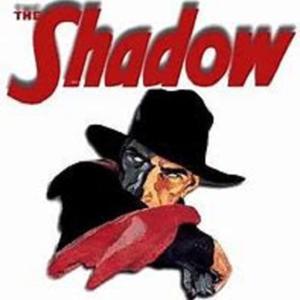
About The Shadow

From the publisher's feed

The Shadow is the name of a collection of serialized dramas, originally in 1930s pulp novels, and then in a wide variety of media, and it is also used to refer to the character featured in The Shadow…