
Sign up to save your podcasts
Or

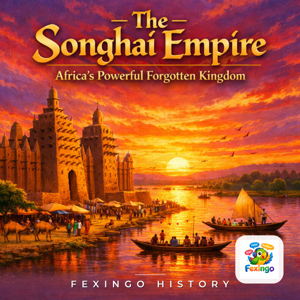


We often think of Songhai through the lens of its armies or its scholars, but its true power lay in its control of trade. In this episode, we step away from the battlefield to examine the economic engines that built the empire: the trans-Saharan salt mines of Taoudenni and the gold fields of Bambuk and Bure. We explore how the Wangara merchants acted as the invisible circulatory system of West Africa, moving wealth across desert dunes to fund the grandeur of Gao and Timbuktu. Lucas and Luna discuss the complex logistics of camel caravans, the state’s regulation of salt blocks, and how Askia Muhammad’s standardization of weights and measures transformed local markets into international hubs. This is a look at the quiet, relentless machinery of commerce that sustained one of history’s most formidable empires.
#SonghaiEmpire #TransSaharanTrade #WangaraMerchants #AskiaMuhammad #TimbuktuHistory #GoldSaltTrade #WestAfricanHistory #Taoudenni #BambukGold #NigerRiverEconomy #GaoCity #SahelCivilization #MedievalAfrica #IslamicScholarship #CamelCaravans #FexingoHistory #HistoryPodcast #AfricanKingdoms
Keep every episode free: buymeacoffee.com/fexingo
We left off with the fall of Gao and the capture of Ahmed Baba, but the story didn't end there. This episode explores the resilient shadow state that emerged in the hills of Kankan after the Saadi invasion. We trace how the Dendi leaders, particularly the mysterious figure known as the Ma al-Aynayn, kept Songhai traditions alive through a decades-long guerrilla war against Moroccan forces. You will hear about the specific tactics used in the inland delta, the role of local Sorko communities in sustaining resistance, and why this final chapter matters for understanding West African sovereignty. Join Lucas and Luna as they dig into the Tarikh al-Sudan accounts of these later years, uncovering the human cost of imperial collapse and the quiet endurance of cultural identity when empires fall.
#SonghaiEmpire #DendiKingdom #KankanRebellion #MaalAynayn #WestAfricanHistory #SaadiDynasty #MoroccanInvasion #BattleOfTondibi #TimbuktuManuscripts #SorkoWarriors #NigerRiverDelta #AskiaIshaqII #JudarPasha #AhmedBaba #TarikhalSudan #MalikiJurisprudence #FexingoHistory #History
Keep every episode free: buymeacoffee.com/fexingo
After the devastating Moroccan invasion of 1591, most histories say the Songhai Empire collapsed into obscurity. But beneath the surface, a parallel political structure survived in the inland delta. This episode explores the rise of the Dendi Kingdom, a decentralized network of local rulers who maintained Songhai traditions while resisting foreign domination for centuries. We examine how leaders like Gao and Kankou Sangone adapted to the new reality, using the Niger River’s geography to create a resilient state that outlasted the Askia dynasty. Through the lens of the Tarikh al-Sudan and oral histories, we uncover how Songhai identity persisted not through imperial conquest, but through localized resistance and cultural preservation. Listen as Lucas and Luna trace the journey from the Battle of Tondibi to the enduring legacy of the Dendi chiefs, revealing how Africa’s forgotten kingdoms continued to shape West African politics long after the empires fell.
#SonghaiEmpire #DendiKingdom #WestAfricanHistory #MoroccanInvasion #BattleOfTondibi #AskiaDynasty #TimbuktuScholars #NigerRiverDelta #KankouSangone #GaoHistory #TarikhAlSudan #AhmedBaba #JudarPasha #SaadiDynasty #MaliEmpireLegacy #AfricanResistance #FexingoHistory #History
Keep every episode free: buymeacoffee.com/fexingo
While earlier episodes explored the military might of Sonni Ali and the administrative machinery of the karamo, this episode turns to Askia Muhammad, the man who cemented Songhai’s Islamic identity through one of history’s most audacious journeys. In 1496, just years after seizing power, Askia left his empire in Gao to walk over two thousand miles across the Sahara to Mecca. This wasn't a retreat; it was a strategic masterstroke. We trace his route through Tuareg territories, his arrival in Cairo where he met the Mamluk Sultan, and his eventual return with scholars and architectural plans that transformed Timbuktu into a global center of learning. The conversation examines how this pilgrimage legitimized his rule against internal rivals and external Sunni clerics, reshaping West African politics by aligning Songhai not just with regional powers, but with the broader Ummah. We also look at the specific reforms he enacted upon his return, from standardizing weights and measures to establishing a merit-based bureaucracy, proving that faith and statecraft were inextricably linked in the heart of the Sahel.
#AskiaMuhammad #SonghaiEmpire #HajjPilgrimage #TimbuktuScholars #WestAfricanHistory #SaharanTrade #IslamicGoldenAge #GaoCity #MaliSultanate #NorthAfrica #CairoEgypt #MeccaSaudiArabia #TuaregNomads #MalikiJurisprudence #TransSaharan #FexingoHistory #HistoryPodcast #AfricanKingdoms
Keep every episode free: buymeacoffee.com/fexingo
While previous episodes explored the military might of Sonni Ali Ber and the political intrigue of Askia Muhammad, this episode dives into the legal and administrative framework that kept the Songhai Empire flowing. We examine the unique water laws governed by the Sorko fishers and the karamo officials along the Niger River. Discover how disputes over fishing rights, irrigation, and river navigation were settled in specialized courts, blending Maliki jurisprudence with local custom. The conversation highlights the role of the hiyo, traditional river vessels, and the fari-mondio, the annual flood cycle that dictated economic life. Through the lens of these river courts, we see a sophisticated bureaucracy managing one of Africa's most vital trade arteries, ensuring that the empire’s wealth from gold, salt, and kola nuts moved smoothly from Gao to Timbuktu and beyond.
#SonghaiEmpire #WestAfricanHistory #NigerRiver #SorkoFishers #TimbuktuScholars #MalikiJurisprudence #AskiaMuhammad #SonniAliBer #RiverLaw #AfricanLegalHistory #GaoMali #DjenneTrade #HiyoBoats #FariMondio #KaramoSpies #AhmedBaba #TarikhAlSudan #History #FexingoHistory
Keep every episode free: buymeacoffee.com/fexingo
While earlier episodes have explored the military might of Sonni Ali and the political intrigue of Askia Muhammad, this episode turns its gaze to the physical and intellectual soul of the Songhai Empire: its monumental architecture and the scholarly networks that made Timbuktu a beacon of Islamic learning. We examine how the empire’s rulers didn’t just conquer land but constructed spaces of power, from the sprawling courtyards of Gao to the intricate mud-brick towers of Sankore. Lucas traces the evolution of Sudano-Sahelian architecture, detailing the use of toron beams and palm oil plaster that defined the skyline of West Africa. Luna guides us through the specific roles of qadis and judges who lived within these walls, mediating disputes not just in law but in daily life. We uncover how the very act of building a mosque was an act of statecraft, reinforcing Maliki jurisprudence across the Niger Bend. The conversation highlights key figures like Ahmed Baba and the anonymous architects whose designs survived centuries of erosion and conflict, offering a tangible look at how faith and governance were woven into the earth itself.
#SonghaiEmpire #Timbuktu #SankoreUniversity #AhmedBaba #AskiaMuhammad #SonniAli #SudanoArchitecture #MalikiJurisprudence #WestAfricanHistory #IslamicScholarship #NigerRiver #GaoCity #Djenne #ToronBeams #TarikhAlSudan #QadiCourts #FexingoHistory #History
Keep every episode free: buymeacoffee.com/fexingo
While the Askia dynasty is often remembered for its scholars and trade, Songhai society was deeply stratified by slavery, a reality that sparked one of Africa’s most significant pre-colonial uprisings. This episode explores the Great Revolt of 1591, where enslaved populations in Gao and Timbuktu rose up against the crumbling empire following the Moroccan invasion. We examine the roles of the Sorko river communities and the urban underclass who saw the chaos as an opportunity to break centuries of bondage. Through the lens of local oral histories and the fragmented accounts in the Tarikh al-Sudan, we uncover how these revolts reshaped the social fabric of West Africa long after the military defeat at Tondibi.
#SonghaiEmpire #WestAfricanHistory #SlaveryInAfrica #AskiaDynasty #GaoMali #TimbuktuScholars #MoroccanInvasion #BattleOfTondibi #JudarPasha #AhmedBaba #TarikhAlSudan #SorkoPeople #NigerRiver #AfricanRevolts #PreColonialAfrica #IslamicLawAfrica #FexingoHistory #HistoryPodcast
Keep every episode free: buymeacoffee.com/fexingo
While we have explored the military might of Sonni Ali Ber and the administrative reforms of Askia Muhammad, we often overlook the quiet, formidable influence of the women in the Songhai court. This episode examines the role of royal wives not merely as consorts but as political actors, focusing on Della Kebda, the wife who helped legitimize Askia’s controversial rise to power. We will look at how marriage alliances with neighboring states like Katsina and Agadez were used to secure trade routes and stabilize the empire during times of internal strife. By analyzing the Tarikh al-Sudan and other historical records, we uncover how these women navigated the complex web of Maliki jurisprudence and traditional Songhai customs to wield significant soft power, shaping the dynasty’s future through strategic diplomacy rather than the sword.
#SonghaiEmpire #AskiaMuhammad #DellaKebda #WestAfricanHistory #Timbuktu #Gao #NigerRiver #SankoreUniversity #MalikiJurisprudence #TarikhAlSudan #RoyalHarem #PoliticalMarriage #Katsina #Agadez #SonniAli #AfricanDynasties #FexingoHistory #History
Keep every episode free: buymeacoffee.com/fexingo
Before Askia Muhammad reorganized the empire, there was Sonni Ali Ber, the warrior-king who built Songhai into a continental powerhouse. This episode moves past the later administrative reforms and religious tensions to explore the man himself. We look at how Sonni Ali used his mastery of the Niger River to conquer Timbuktu and Djenné in the late 1400s, creating an empire that stretched from the Atlantic to beyond Hausaland. We examine the historical evidence from the Tarikh al-Sudan regarding his military tactics, particularly the use of the Sorko river fleet, and contrast this with local oral traditions that paint him as both a divine ruler and a sorcerer. You will learn why he targeted specific cities for their strategic value rather than just wealth, and how his sudden death left a power vacuum that Askia Muhammad would eventually fill. We also touch on the complex relationship between Sonni Ali and the Islamic scholars of Timbuktu, challenging the idea that he was purely anti-Islamic.
#SonniAliBer #SonghaiEmpire #TimbuktuHistory #Djenné #NigerRiver #SorkoWarriors #TarikhAlSudan #WestAfricanHistory #AskiaMuhammad #IslamicScholars #RiverNavy #MedievalAfrica #MaliEmpireFallout #GaoCity #HistoricalFigures #FexingoHistory #HistoryPodcast #AfricanCivilization
Keep every episode free: buymeacoffee.com/fexingo
While Timbuktu is known for its scholars, the true engine of the Songhai Empire was the Niger River itself. This episode explores the Sorko people, a distinct ethnic group who served as Songhai’s elite naval warriors and fishermen. Under Sonni Ali Ber, the Sorko developed the hiyo, a massive war canoe capable of carrying hundreds of soldiers, allowing the empire to conquer key cities like Timbuktu and Djenné through rapid riverine assaults. We examine how their mastery of water law, river navigation, and guerrilla tactics on the water made them indispensable to Askia Muhammad’s military reforms. From the fari-mondio river festivals to the complex logistics of feeding a standing navy, discover how the Sorko transformed a geographic feature into an unstoppable military machine that defined West African power for centuries.
#SonghaiEmpire #SonniAliBer #SorkoWarriors #NigerRiver #WestAfricanHistory #Timbuktu #Djenné #hiyoCanoe #AskiaMuhammad #TarikhAlSudan #RiverNavalPower #MalinkeHistory #AfricanMilitary #GaoCity #WaterLaw #FariMondio #HistoryPodcast #FexingoHistory
Keep every episode free: buymeacoffee.com/fexingo
From the publisher's feed