
Sign up to save your podcasts
Or

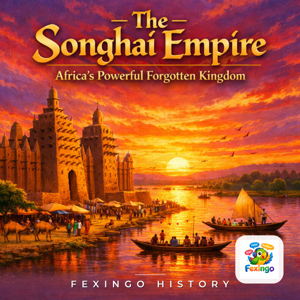


While Timbuktu’s libraries often steal the spotlight, the Songhai Empire’s true power was forged on the waters of the Niger. This episode explores the rise of Sonni Ali Ber, a warrior-king who understood that control of the river meant control of West Africa. We dive into the unique role of the Sorko people, an ethnic group of fishermen and navigators who formed the backbone of Songhai’s naval forces. Through their specialized boats like the hiyo and fari-mondio, they executed devastating amphibious assaults that terrified rival states. We examine how Sonni Ali used these riverine tactics to conquer key trade hubs like Jenne and Timbuktu in just three years, transforming a regional kingdom into a vast empire. The conversation also touches on the complex relationship between the Muslim scholarly class and Sonni Ali’s syncretic religious practices, which drew criticism from orthodox clerics but ensured his military loyalty. By focusing on the logistics of river warfare and the specific engineering of Songhai’s fleet, we uncover the mechanical reality behind one of Africa’s most formidable medieval powers.
#SonghaiEmpire #SonniAli #SorkoPeople #NigerRiver #WestAfricanHistory #Timbuktu #Jenne #RiverWarfare #MedievalAfrica #HiyoBoat #MaliSuccessor #AfricanNavalPower #FexingoHistory #HistoryPodcast #HistoricalNarrative #TradeRoutes #IslamicScholars #PreColonialAfrica #MilitaryHistory
Keep every episode free: buymeacoffee.com/fexingo
We left off last time exploring the merchant princes of Gao and the silk road trade, but beneath that glittering surface of gold and kola nuts lay a rigid machinery of control. In this episode, we turn to the karamo, Songhai’s secret police and intelligence network, to understand how the Askia dynasty maintained order across a vast empire. We examine the legal frameworks they operated under, specifically the Mukhtasar Khalil, and how the qadi system intersected with state security. Through the lens of specific incidents in Timbuktu and Gao, we see how dissent was monitored, how tax collectors were protected, and how the empire’s stability relied on fear as much as faith. This is a deep dive into the administrative spine of West Africa’s largest empire.
#SonghaiEmpire #AskiaDynasty #Karamo #SecretPolice #TimbuktuHistory #GaoHistory #WestAfricaHistory #MukhtasarKhalil #IslamicLawAfrica #QadiSystem #StateSecurity #IntelligenceNetwork #AfrocentricHistory #SahelCivilization #HistoricalInstitutions #ColonialMyths #FexingoHistory #History
Keep every episode free: buymeacoffee.com/fexingo
While we have explored the grand mosques of Timbuktu and the political maneuvering of Askia Muhammad, this episode turns our gaze to the Niger River itself. We examine the Sorko people, a distinct ethnic group whose mastery of watercraft and fishing defined Songhai’s economy and military power for centuries. Lucas walks us through how their unique vessels, the hiyo boats, were not just tools of trade but instruments of war that allowed Sonni Ali to conquer neighboring states with terrifying speed. Luna asks about their social structure and whether they were truly independent or integrated into the empire’s hierarchy. Together, we uncover how the river was more than a highway; it was a fortress, a bank, and a battlefield, revealing a side of African history that rarely makes it into the textbooks.
#SonghaiEmpire #SorkoPeople #SonniAli #NigerRiver #WestAfricanHistory #MaritimeHistory #AskiaMuhammad #Timbuktu #Gao #hiyoBoat #AfricanKingdoms #RiverCivilizations #MaliEmpire #SaadianInvasion #HistoricalEthnicity #FexingoHistory #HistoryPodcast #UncolonizedAfrica
Keep every episode free: buymeacoffee.com/fexingo
We left off talking about the military and the mosques, but the Songhai Empire’s true power lay in its balance sheets. This episode dives into the world of the Wangara merchants and the complex taxation systems that turned the Niger River into a golden highway. We explore how figures like Askia Muhammad professionalized trade through the karamo tax collectors, ensuring that salt from the Sahara and gold from the Bambuk mines flowed smoothly into imperial coffers. You will hear about the specific goods traded, from kola nuts to leather, and how these economic networks connected West Africa to the wider Mediterranean and Middle Eastern worlds. It is a story of logistics, law, and the quiet power of the ledger rather than the sword.
#SonghaiEmpire #WestAfricanHistory #TimbuktuTrade #AskiaMuhammad #WangaraMerchants #NigerRiverCommerce #TransSaharanTrade #GaoHistory #KaramoTaxation #MalikiLaw #AfricanEconomy #SaltAndGold #IslamicScholars #TarikhAlSudan #HistoricalTradeRoutes #FexingoHistory #HistoryPodcast #PreColonialAfrica
Keep every episode free: buymeacoffee.com/fexingo
We often think of empires through their armies or their scholars, but the Songhai Empire’s true stability came from its administrative machinery. This episode explores the role of the karamo—the royal tax collectors and provincial governors who acted as the empire’s financial backbone. We look at how Askia Muhammad professionalized this system, moving away from arbitrary tribute to a structured bureaucracy rooted in Maliki law. You will hear about the Mukhtasar Khalil, the legal text that guided these officials, and how figures like the Qadi in Timbuktu and Gao enforced order across the Niger River bend. It is a story of ink and ledgers rather than swords and spears, revealing how a complex state functioned day-to-day.
#SonghaiEmpire #AskiaMuhammad #Karamo #WestAfricanHistory #MalikiLaw #TimbuktuScholars #NigerRiverTrade #MukhtasarKhalil #Qadi #GaoCity #DjenneHistory #AfricanBureaucracy #TaxCollectionHistory #IslamicLawAfrica #SahelCivilization #FexingoHistory #HistoryPodcast #PreColonialAfrica
Keep every episode free: buymeacoffee.com/fexingo
While Timbuktu’s libraries and the Niger River’s trade routes have dominated our coverage of the Songhai Empire, we rarely pause to examine the iron-fisted machinery that held it all together. In this episode, Lucas and Luna dismantle the myth of the decentralized Sahelian state by exploring the Askia Dynasty’s highly professionalized standing army. We trace the evolution from Sonni Ali’s cavalry-heavy tactics to Askia Muhammad’s rigid infantry formations, revealing how a centralized bureaucracy managed everything from soldier salaries to military logistics. You will meet the specific roles of the Sorko river warriors and the Tuareg scouts who served as the empire’s eyes in the desert. We also look at the controversial but effective system of military garrisons placed in conquered territories, a strategy that ensured loyalty through constant rotation and direct oversight from Gao. This is not just about battles; it is about the administrative brilliance required to project power across thousands of miles of arid land. Join us as we uncover the disciplined ranks, the standardized weaponry, and the strict codes of conduct that turned the Songhai Empire into a true military superpower of the fifteenth and sixteenth centuries.
#SonghaiEmpire #AskiaMuhammad #WestAfricanHistory #MaliEmpireSuccessor #SahelHistory #SonniAli #NigerRiver #Gao #Timbuktu #Djenne #MilitaryHistory #StandingArmy #IslamicScholars #SorkoWarriors #TuaregScouts #TarikhAlSudan #15CenturyAfrica #FexingoHistory
Keep every episode free: buymeacoffee.com/fexingo
We trace the fragile end of the Songhai Empire, focusing on the power struggles between Askia Ishaq II and the ambitious governor Askia Muhammad Gao. This episode explores how internal dissent invited the Moroccan Saadian invasion led by Judar Pasha in 1591. We examine the Battle of Tondibi, where matchlock arquebuses shattered traditional cavalry tactics, and the subsequent collapse of centralized authority. You will hear about the retreat to Dendi, the martyrdom of Ahmed Baba, and the fragmented legacy of a once-mighty empire that controlled West African trade for centuries. Through the lens of the Tarikh al-Sudan, we uncover the human cost of political betrayal and military innovation.
#SonghaiEmpire #AskiaIshaqII #JudarPasha #BattleOfTondibi #SaadianDynasty #AhmedBaba #DendiResistance #WestAfricanHistory #TimbuktuScholars #MoroccanInvasion #1591History #TarikhAlSudan #NigerRiverTrade #ArquebusTechnology #MalikiIslam #GaoMali #AfricanKingdoms #FexingoHistory
Keep every episode free: buymeacoffee.com/fexingo
This episode explores the political machinery of Songhai through the lens of Della Kebda, Askia Muhammad’s wife. We examine how royal marriages forged alliances with Katsina and Agadez, stabilizing the empire’s northern borders. The conversation details the role of the Maliki scholars in regulating these unions and how Della Kebda influenced provincial governance from within the palace walls.
#SonghaiEmpire #DellaKebda #AskiaMuhammad #WestAfricanHistory #TimbuktuScholars #MalikiLaw #RoyalHaremPolitics #KatsinaAlliance #AgadezTrade #ProvincialGovernors #SahelianArchitecture #IslamicGhana #FexingoHistory #AfricanKingdoms #MedievalAfrica #NigerRiverCivilization #AskiaDynasty #HistoryPodcast
Keep every episode free: buymeacoffee.com/fexingo
While previous episodes explored Songhai’s military might and trade networks, we turn to the ideological engine that held the empire together: Askia Muhammad’s radical religious reforms. After seizing power in 1493, Askia didn’t just rule; he reimagined the state’s relationship with Islam, moving beyond Sonni Ali’s pragmatic tolerance toward a structured Maliki orthodoxy. We examine how he standardized the qadi system, mandated Islamic law in courts, and used pilgrimage to Timbuktu to legitimize his authority against local traditions. This shift transformed Songhai from a tribal confederation into an Islamic caliphate, creating tensions with non-Muslim subjects and reshaping the region’s intellectual landscape. Listen as Lucas and Luna unpack the complex interplay of faith, politics, and power that defined Askia’s reign.
#SonghaiEmpire #AskiaMuhammad #WestAfricanHistory #IslamicLaw #MalikiSchool #TimbuktuScholars #SonniAli #15thCentury #SahelHistory #QadiSystem #PilgrimageToMecca #MaliSuccessor #AfricanKingdoms #ReligiousReform #LegalHistory #FexingoHistory #HistoryPodcast #Timbuktu
Keep every episode free: buymeacoffee.com/fexingo
While we often discuss Songhai’s military might or its scholars, the empire’s true longevity rested on a sophisticated, centralized fiscal system. In this episode, Lucas and Luna explore the lives of the *karamo*—the imperial tax collectors who traveled from Gao to Djenne, collecting duties on salt, gold, and grain. We look at how Askia Muhammad reformed these roles to prevent corruption, creating a bureaucracy that funded everything from the royal court to the maintenance of the Niger River fleet. You will hear about the specific goods taxed, the tension between local autonomy and imperial demand, and the role of the *qadi* in adjudicating disputes over unpaid levies. This is a deep dive into the administrative machinery that kept West Africa’s largest empire running for over a century, revealing how commerce and law intertwined to sustain power far beyond the battlefield.
#SonghaiEmpire #AskiaMuhammad #WestAfricanHistory #TaxCollectors #Karamo #Timbuktu #Gao #Djenne #NigerRiver #ImperialBureaucracy #SahelianTrade #SaltRoutes #GoldTrade #MalikiLaw #Qadi #FexingoHistory #HistoryPodcast #AfricanHistory
Keep every episode free: buymeacoffee.com/fexingo
From the publisher's feed