
Sign up to save your podcasts
Or

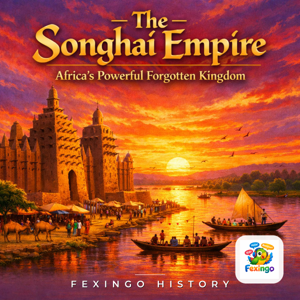


In this episode, Lucas and Luna explore the Koyam, the elite slave-soldier caste that formed the backbone of the Songhai military. From their origins under Sonni Ali to their pivotal role in Askia Muhammad's campaigns, Lucas explains how these warriors, often recruited from conquered peoples, became fiercely loyal royal bodyguards and administrators. The discussion covers their unique status—neither fully free nor enslaved—their training, and their eventual betrayal during the Saadian invasion. Lucas draws on accounts from the Tarikh al-Sudan and other sources to show how the Koyam system allowed Songhai to project power across the Sahel, but also sowed the seeds of internal division. Luna asks about their daily lives, their weapons, and what happened to them after the empire fell. The episode ends by reflecting on the legacy of this military institution in later West African states.
#SonghaiEmpire #Koyam #SlaveSoldiers #SonniAli #AskiaMuhammad #TarikhAlSudan #Sahel #MilitaryHistory #WestAfrica #Gao #Timbuktu #NigerRiver #BattleOfTondibi #JudarPasha #Sankore #Mossi #History #FexingoHistory #SunniAli #SankoreMosque
Keep every episode free: buymeacoffee.com/fexingo
Long before the Mamluks or the Janissaries, the Songhai Empire relied on a military caste of slave soldiers called the Koyam or Tyeddo. This episode tells the story of how Sonni Ali and the Askia dynasty used enslaved warriors—often captured from the Mossi, Gurma, and Hausa—to build the largest standing army West Africa had ever seen. We look at the kondo system of military slavery, where boys were taken young, converted to Islam, trained in cavalry and archery, and given elite status even as they remained legally property. Lucas and Luna explore the contradictions: these slave soldiers could own property, marry, and even rise to high command, but they could never break free of their master's grip. The episode also covers the decline of the system under Askia Ishaq II, when the slave army's loyalty frayed just before the Saadian invasion. We touch on the Songhai navy's slave rowers and the cultural legacy of the Tyeddo in modern Nigerien storytelling.
#SonghaiEmpire #SlaveSoldiers #Koyam #Tyeddo #SonniAli #AskiaMuhammad #WestAfricanHistory #MilitaryHistory #Kondosystem #Mossi #Hausa #Gurma #NigerRiver #Gao #Timbuktu #AfricanEmpires #History #FexingoHistory #WestAfrica #SunniAli
Keep every episode free: buymeacoffee.com/fexingo
In this episode, Lucas and Luna explore the arrival of the North African scholar Muhammad al-Maghili in the Songhai Empire during the reign of Askia Muhammad. Al-Maghili, a fiery jurist from Tlemcen, brought a strict reformist vision of Islam that clashed with the empire's syncretic traditions. They discuss his fatwa against Askia Muhammad's predecessor, Sonni Ali, the debate over the status of conquered peoples, and the lasting impact of al-Maghili's writings, including his treatise 'The Obligations of Princes'. The conversation reveals how Islamic scholarship and politics intertwined in the Sahel, shaping Songhai's religious landscape and leaving a controversial legacy that resonates today.
#SonghaiEmpire #MuhammadalMaghili #IslamicReform #AskiaMuhammad #Timbuktu #SonniAli #SahelHistory #WestAfrica #Fatwa #IslamicScholarship #ObligationsofPrinces #Tlemcen #TransSaharanTrade #Gao #Sankore #ReligiousHistory #History #FexingoHistory #SunniAli #SankoreMosque
Keep every episode free: buymeacoffee.com/fexingo
In the late 15th and early 16th centuries, the Songhai Empire under Askia Muhammad and his successors faced a new threat from the south: the expanding Portuguese Empire along the West African coast. While Portugal had initially focused on the Gold Coast and Benin, their presence disrupted trans-Saharan trade routes that were the lifeblood of Songhai. This episode explores the fascinating 'what if' of diplomacy between Askia Muhammad and King Manuel I of Portugal, including a proposed alliance against the Mossi and the Hausa states. We delve into the letters exchanged, the Portuguese embassy sent to Gao, and why the alliance ultimately failed. Along the way, we touch on Songhai's diplomatic sophistication, the role of the Tuareg in mediating contact, and the early seeds of European imperialism in West Africa. Specific figures include Askia Muhammad, King Manuel I, the Portuguese factor Balthasar de Castro, and the Tuareg leader who facilitated the embassy. This episode sheds light on a lesser-known chapter where Songhai engaged directly with a rising Atlantic power, offering a glimpse of what might have been.
#SonghaiEmpire #AskiaMuhammad #Portugal #KingManuelI #Gao #NigerRiver #WestAfrica #TransSaharanTrade #Mossi #HausaStates #Tuareg #BalthasarDeCastro #Diplomacy #16thCentury #EuropeanContact #History #FexingoHistory #WhatIf #SunniAli #SankoreMosque
Keep every episode free: buymeacoffee.com/fexingo
After the Battle of Tondibi in 1591, the Songhai Empire didn't simply vanish. The Askia dynasty fractured, and a new ruling family emerged in the south: the Takeda. This episode focuses on the post-imperial Songhai state in the Dendi region, centered around the town of Kukiya. Lucas and Luna explore how the Takeda family claimed descent from Sonni Ali, resisted Moroccan occupation, and maintained a rump kingdom for over a century. They discuss the reign of Askia Nuhu, who led the resistance from Dendi, and the later rulers like Askia Dawud II who held on until the early 1700s. The conversation also touches on the changing trade routes, the rise of the Bambara kingdoms, and the role of the Niger River as both a refuge and a highway. Songs and oral traditions, including the epic of Askia Dawud II, provide a window into how the Takeda dynasty was remembered. By the 18th century, the last vestiges of Songhai power faded, but its legacy persisted in the culture and politics of the Niger Bend.
#Takeda #Dendi #Kukiya #AskiaNuhu #SonniAli #Songhai #NigerRiver #BattleOfTondibi #MoroccanInvasion #Saadian #RumpKingdom #17thCentury #WestAfrica #OralTradition #Epic #Bambara #History #FexingoHistory #SonghaiEmpire #SunniAli
Keep every episode free: buymeacoffee.com/fexingo
In this episode, Lucas and Luna explore the story of the Gao Mosque—the 10th-century mudbrick structure that predates the Songhai Empire and outlived its fall. Unlike the famous Sankore Madrasa in Timbuktu, Gao's mosque has stood for over a thousand years, witnessing the rise and fall of empires. They discuss the mosque's original construction under the Gao kingdom, its renovation by Askia Muhammad after his hajj, its near-destruction during the Saadian invasion, and its remarkable survival into the modern era. The conversation touches on the role of the Koyam dynasty, the significance of the Niger River trade route, and how the mosque became a symbol of resilience for the Songhai people. They also delve into the controversial 1960s restoration that replaced the original wooden spikes with concrete, sparking a debate about heritage preservation. This episode offers a fresh perspective on Songhai's architectural legacy beyond Timbuktu.
#GaoMosque #SonghaiEmpire #WestAfrica #MudbrickArchitecture #AskiaMuhammad #KoyamDynasty #NigerRiver #Sahelian #Timbuktu #Sankore #HeritagePreservation #UNESCO #MedievalAfrica #IslamicArchitecture #Gao #Mali #FexingoHistory #History #SunniAli #SankoreMosque
Keep every episode free: buymeacoffee.com/fexingo
In this episode of Fexingo History, we explore the Songhai Empire's connection to the broader Islamic world through the lens of pilgrimage. While Mansa Musa's 1324 hajj is legendary, Songhai's Askia Muhammad made his own transformative journey to Mecca in 1496–98. We delve into why he went, what he brought, and who he met—including the Abbasid caliph in Cairo who officially recognized him as 'Caliph of the Sudan.' We also touch on earlier Songhai rulers like Sonni Ali, who embraced Islam pragmatically, and Askia Dawud's later patronage of scholarship. This episode examines how pilgrimage shaped Songhai's political legitimacy, trade networks, and intellectual ties to the Muslim world, from Timbuktu to Mecca. Listeners will learn about Askia Muhammad's entourage of 500 horsemen and 1,000 infantry, the 300,000 gold pieces he spent in Cairo, and the lasting impact of his hajj on Songhai's identity. We also discuss the role of Timbuktu as a center of Islamic learning and the scholarly network that connected West Africa to Cairo, Fez, and beyond.
#SonghaiEmpire #AskiaMuhammad #Hajj #Mecca #WestAfrica #Timbuktu #IslamicHistory #MansaMusa #Cairo #CaliphOfTheSudan #1496 #TransSaharanTrade #AhmedBaba #SonniAli #AskiaDawud #Sankore #History #FexingoHistory #SunniAli #SankoreMosque
Keep every episode free: buymeacoffee.com/fexingo
In this episode, Lucas and Luna explore the architectural marvels of the Songhai Empire, focusing on mud-brick mosques like the Great Mosque of Jenne. They discuss building techniques, the role of architects like al-Sahili (though legendary), the Koyam and their traditions, and how the Sahelian style influenced West Africa. They also touch on the decline of mud architecture during the Moroccan invasion and its modern revival as a UNESCO World Heritage site. Specifics include the use of banco, the annual plastering festival (crépissage), and the spread of this style from Djenne to Timbuktu and Gao.
#Songhai #MudArchitecture #GreatMosqueOfJenne #SahelianStyle #Banco #Crepissage #WestAfrica #Mali #UNESCO #AlSahili #Koyam #Timbuktu #Djenne #Gao #NigerRiver #ArchitectureHistory #AfricanHistory #FexingoHistory #SonghaiEmpire #SunniAli
Keep every episode free: buymeacoffee.com/fexingo
Beyond the kings and generals, Songhai's history was shaped by women who wielded influence in surprising ways. In this episode, Lucas and Luna explore the roles of women in the Songhai Empire—from the queen mothers who advised rulers, to the female merchants who dominated the salt and gold trades, to the women of Timbuktu who funded mosques and collected libraries. We discuss the legal rights women held under Songhai's interpretation of Islamic law, the female scholars who studied at Sankore, and the European traveler accounts that noted their public authority. We also touch on the powerful women of the Mossi states, Songhai's perennial rivals, where queen mothers sometimes served as regents. This episode offers a fresh perspective on gender and power in medieval West Africa.
#SonghaiEmpire #WestAfricanHistory #WomenInHistory #QueenMothers #FemaleMerchants #SankoreMadrasa #Timbuktu #GenderAndPower #AskiaMuhammad #Mossi #MedievalAfrica #TransSaharanTrade #IslamicLaw #FemaleScholars #History #FexingoHistory #Podcast #AfricanEmpires #WestAfrica #SunniAli
Keep every episode free: buymeacoffee.com/fexingo
When Askia Dawud took the throne of the Songhai Empire in 1549, he inherited a realm that his father Askia Muhammad had built and his brothers had nearly torn apart. For over three decades, Dawud ruled with a steady hand, expanding agriculture, patronizing the scholars of Timbuktu and Jenne, and maintaining peace along the Niger River. Under his reign, the empire reached its greatest territorial extent, and the intellectual golden age of Timbuktu flourished—even as whispers of internal decay grew louder. This episode explores Dawud's long rule: his irrigation projects that turned the Inland Niger Delta into a breadbasket, his careful management of the trans-Saharan trade routes, his patronage of the great scholar Ahmed Baba, and the succession crisis that followed his death. We also examine the quiet warning signs—the rise of the Saadian dynasty to the north, the growing independence of provincial governors, and the fragility of an empire held together by a single man's authority. It's a story of stability masking vulnerability, of a golden afternoon before the twilight.
#SonghaiEmpire #AskiaDawud #AhmedBaba #Timbuktu #Jenne #NigerRiver #InlandNigerDelta #TransSaharanTrade #IslamicScholarship #WestAfricanHistory #SaadianDynasty #Agadez #Kano #Irrigation #SuccessionCrisis #GoldenAge #History #FexingoHistory #WestAfrica #SunniAli
Keep every episode free: buymeacoffee.com/fexingo
From the publisher's feed