
Sign up to save your podcasts
Or

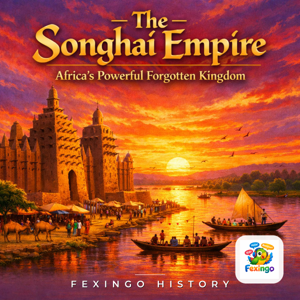


The Songhai Empire is often remembered for its great emperors, legendary scholars, and epic battles. But who actually built the economic engine that made it all possible? In this episode, we dive into the lives of the Sorko fishing clans of the Niger River. These expert boatmen and fishers were the backbone of Songhai's transport, food supply, and even its navy. We explore their origins, the sophisticated fishing techniques they used—including the dangerous time of the falo, the floodplain harvest—and how they evolved into the empire's military marine force. We trace the Sorko from their legendary founder Faran Maka Bote to their service under Askia Muhammad and Askia Dawud, and how their knowledge of the river's channels and currents gave Songhai a strategic edge against the Mossi and the Saadian invaders. Learn about their social organization, their role in the kore irrigation system, and the oral traditions that preserve their history. This is the story of the people who kept the empire afloat, literally and figuratively.
#Sorko #SonghaiEmpire #NigerRiver #FaranMakaBote #AskiaMuhammad #Kore #Falo #RiverWarriors #WestAfricanHistory #OralTradition #SankoreMadrasa #Gao #Timbuktu #MossiBattles #SaadianInvasion #AhmedBaba #History #FexingoHistory #WestAfrica #SunniAli
Keep every episode free: buymeacoffee.com/fexingo
In this episode, Lucas and Luna explore the Sankore Madrasa in Timbuktu, one of the world's oldest universities and a cornerstone of Songhai intellectual life. They discuss its origins under the Mali Empire, its golden age under Askia Muhammad Toure, and how it became a center for Islamic scholarship, law, astronomy, and medicine. The conversation highlights key scholars like Ahmed Baba, who wrote the Tarikh al-Sudan, and describes the bustling manuscript trade that made Timbuktu a hub of knowledge. They also touch on the Saadian invasion's devastating impact on Sankore, including the deportation of scholars to Marrakech. The episode brings this legacy to life with vivid details of daily academic life, the curriculum, and the library system.
#SankoreMadrasa #Timbuktu #AhmedBaba #AskiaMuhammad #SonghaiEducation #IslamicScholarship #ManuscriptTrade #TarikhAlSudan #SaadianInvasion #MaliEmpire #WestAfrica #AfricanHistory #FexingoHistory #History #University #Scholars #BookTrade #IntellectualHistory #SonghaiEmpire #SunniAli
Keep every episode free: buymeacoffee.com/fexingo
In this episode, Lucas and Luna explore the Sunjata epic—the foundational oral tradition of the Mali Empire—and its complex relationship with Songhai history. They discuss how the epic was preserved by griots, its historical core versus legendary embellishments, and why Songhai rulers like Askia Muhammad both admired and distanced themselves from Mali's hero. The episode touches on the role of the Sundiata Keita, the Battle of Kirina, the griot Balla Fasséké, and the epic's transmission through lineages like the Kouyaté family. Lucas explains how the epic served political purposes for Mali and later Songhai, and how it remains a living tradition in West Africa today.
#SunjataEpic #MaliEmpire #SonghaiEmpire #GriotTradition #SundiataKeita #BattleOfKirina #BallaFassK #Kouyat #WestAfricanHistory #OralTradition #EpicPoetry #AskiaMuhammad #MansaMusa #MandePeoples #SossoEmpire #SumanguruKante #History #FexingoHistory #WestAfrica #SunniAli
Keep every episode free: buymeacoffee.com/fexingo
In this episode, Lucas and Luna explore the Zarma rebellion against the Songhai Empire in the 16th century. They delve into the causes of the uprising, the key figures involved like Askia Dawud and the Zarma leader Kanta, and the battle that reshaped the empire's southern frontier. The conversation covers the Zarma people's origins, their resentment of Songhai taxation and military conscription, and the rebellion's aftermath, which weakened Songhai's control over the Niger River region. Lucas also discusses how the rebellion is remembered in Zarma oral traditions and its long-term impact on the empire's stability, setting the stage for later conflicts with the Saadian invasion.
#SonghaiEmpire #ZarmaRebellion #WestAfrica #16thCentury #AskiaDawud #Kanta #NigerRiver #Kebbi #OralTradition #AfricanHistory #EmpireCollapse #MilitaryHistory #Taxation #Resistance #Sahel #Gao #Timbuktu #History #SunniAli #AskiaMuhammad
Keep every episode free: buymeacoffee.com/fexingo
In this episode, Lucas and Luna explore the Songhai Empire's remarkable imperial courier system—a network of runners that connected Gao, Timbuktu, and Jenne at astonishing speed. They trace its origins to the Mali Empire's 'dikon' system and examine how Askia Muhammad I formalized it into a state institution. The episode highlights the legendary 'dikon' runners, who could cover up to 100 miles a day, and the relay stations known as 'woro' that kept them supplied. Lucas also discusses the system's role in tax collection, military intelligence, and administrative cohesion, and reveals how it collapsed after the Moroccan invasion of 1591. The conversation touches on the Tarikh al-Sudan and the writings of Al-Sa'di for primary source details, and compares the Songhai system to the Persian Chapar Khaneh and Inca chasqui. Specific figures mentioned include Askia Muhammad I, Askia Dawud, and Judar Pasha. The episode also covers the system's decline under Saadian rule and its legacy in oral traditions.
#SonghaiEmpire #ImperialCourier #Dikon #WestAfrica #NigerRiver #AskiaMuhammad #Gao #Timbuktu #Jenne #TarikhAlSudan #AlSadi #MaliEmpire #ChaparKhaneh #HistoryOfMail #PrecolonialAfrica #FexingoHistory #OralTradition #Infrastructure #SunniAli #SankoreMosque
Keep every episode free: buymeacoffee.com/fexingo
In this episode, Lucas and Luna explore the sophisticated tax and tribute system that powered the Songhai Empire, focusing on the reign of Askia Muhammad Toure (1493–1528). They discuss the central role of the fari-mondio (tax collector), the land tax known as kharaj, the trade tax on salt and gold, and the system of provincial tributes from conquered states like the Mossi and Hausa kingdoms. Lucas explains how the Askias balanced Islamic legal principles with local customs, using the Maliki school of law adapted by scholars like Al-Maghili. They also touch on the role of the qadis in tax disputes and the use of cowrie shells and gold dust as currency. The episode highlights the administrative genius of Songhai, contrasting it with the less centralized Mali Empire. Specific examples include the tax on Taghaza salt mines, the tribute paid by Kebbi, and the innovative use of the Niger River for transport of goods. The conversation ends with a reflection on how this system both sustained and strained the empire.
#SonghaiEmpire #AskiaMuhammad #Taxation #Kharaj #FariMondio #Taghaza #NigerRiver #Mossi #HausaKingdoms #Kebbi #Maliki #AlMaghili #CowrieShells #GoldDust #WestAfrica #History #FexingoHistory #AfricanHistory #SunniAli #SankoreMosque
Keep every episode free: buymeacoffee.com/fexingo
This episode dives deep into the Songhai Empire's naval power, focusing on the Sorko river warriors who manned the fleets on the Niger River. Discover how these skilled boatmen, using dugout canoes called kanta, dominated the river from Gao to Timbuktu, enforcing trade, transporting armies, and launching amphibious assaults against the Mossi and other rivals. Learn about the specialized tactics, the construction of war canoes carrying up to 80 soldiers, and the strategic importance of the Niger in holding the empire together. We also explore how the riverine defenses crumbled against the Saadian invasion, as the Moroccan arquebusiers and cavalry outmatched the Sorko in open battle. The episode touches on the legacy of the Sorko as a distinct caste and their role in Songhai's economy and military might.
#SonghaiEmpire #Sorko #NigerRiver #AfricanHistory #NavalHistory #RiverWarriors #AskiaMuhammad #Gao #Timbuktu #Mossi #SaadianInvasion #Kanta #WestAfrica #MedievalAfrica #MilitaryHistory #EmpireBuilding #History #FexingoHistory #SunniAli #SankoreMosque
Keep every episode free: buymeacoffee.com/fexingo
Before the Saadian invasion, Songhai's economy wasn't just about gold and salt. At the empire's heart lay an ingenious agricultural system based on floating rice fields along the Niger River. In this episode, Lucas and Luna explore the Songhai rice farms cultivated by the Sorko and other riverine peoples, the role of the Niger's annual flood in shaping the growing calendar, and how the state managed land tenure and taxation of rice paddies. They discuss the varieties of African rice (Oryza glaberrima) domesticated in the region, the use of dikes and canals to control water, and the connection between rice surpluses and the empire's ability to feed its armies and cities like Gao and Timbuktu. Listeners learn about the seasonal rhythms of planting and harvest, the labor organization of farming communities, and how the Moroccan invasion disrupted this fragile ecosystem, leading to famine and depopulation.
#SonghaiEmpire #WestAfricanAgriculture #NigerRiver #AfricanRice #OryzaGlaberrima #Sorko #FloatingRice #Gao #Timbuktu #PrecolonialFarming #SahelianCuisine #MoroccanInvasion #FamineHistory #LandTenure #Irrigation #FoodHistory #History #FexingoHistory #WestAfrica #SunniAli
Keep every episode free: buymeacoffee.com/fexingo
In this episode, Lucas and Luna explore the little-known legal reforms of Askia Muhammad Toure, the first Songhai emperor to codify a unified legal system for his sprawling empire. Drawing on the writings of Muhammad al-Maghili and the Tarikh al-Sudan, they discuss how Askia Muhammad blended Maliki jurisprudence with local customs, established qadis in Gao, Timbuktu, and Jenne, and attempted to reconcile Islamic law with the realities of governing a multi-ethnic state. The episode examines specific edicts—such as restrictions on alcohol, regulation of trade contracts, and the treatment of non-Muslim subjects—and considers why so few of these laws survived the empire's collapse. It also touches on the controversy surrounding Askia Muhammad's harsh penalties and the resistance from traditional Songhai elites. The conversation highlights how law was a tool of both consolidation and control, and raises the question of what Songhai's legal legacy might have been had the empire endured.
#SonghaiEmpire #AskiaMuhammad #IslamicLaw #Maliki #LegalHistory #Timbuktu #Gao #Jenne #TarikhAlSudan #AlMaghili #Qadis #WestAfrica #History #FexingoHistory #Empire #Codification #LegalReform #Sahel #SunniAli #SankoreMosque
Keep every episode free: buymeacoffee.com/fexingo
When we think of Songhai, we think of Saharan salt caravans and the scholars of Timbuktu. But this episode turns to the river. Lucas and Luna explore the Songhai navy—a fleet of war canoes that patrolled the Niger River, enforcing imperial control, transporting troops, and dominating trade. We look at the construction of these massive vessels, the role of the Sorko fishermen-turned-warriors, and key naval battles like the confrontation with the Mossi kingdoms. We also discuss how the navy declined after the Saadian invasion and what archaeological evidence remains. Specific names and places: the Niger River, Gao, the Sorko people, the battle of Lake Debo, Askia Muhammad's river campaigns, and the Moroccan invasion's impact on riverine trade. A fresh angle on Songhai's power that goes beyond the desert.
#SonghaiEmpire #NigerRiver #NavalHistory #Sorko #AskiaMuhammad #Gao #LakeDebo #MossiKingdoms #RiverWarfare #WestAfricanHistory #CanoeWarriors #SaadianInvasion #TradeRoutes #PrecolonialAfrica #MilitaryHistory #Timbuktu #HistoryPodcast #FexingoHistory #WestAfrica #SunniAli
Keep every episode free: buymeacoffee.com/fexingo
From the publisher's feed