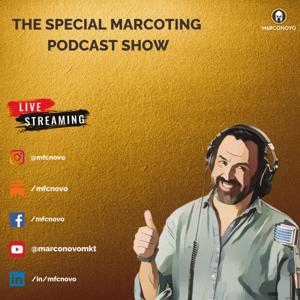
In 2026, community won’t be a nice-to-have—it will be the critical difference between brands that grow and brands that disappear. While most online communities are loud, very few actually make a lasting impact. As social media platforms continue to change their algorithms and restrict features, content creators, educators, and entrepreneurs are discovering that building communities on platforms they don’t own is like building a house on rented land.
In a comprehensive live discussion, me and community-building specialist Jim Fuhs explored why traditional social media groups are failing creators and how platforms like Skool (with a K) are revolutionizing the way we build, engage, and monetize online communities. If you’re a content creator, educator, coach, or entrepreneur looking to build meaningful connections with your audience in 2026, understanding the shift from volume-based content to community-driven engagement could transform your business model entirely.
The Fatal Flaw of Building Communities on Social Media Platforms
Facebook Groups: The Illusion of Ownership
For years, content creators have invested countless hours building Facebook groups with thousands of members, only to discover a harsh reality: you don’t own your community—Facebook does. Jim highlighted a critical turning point that occurred approximately two years ago when Facebook began systematically restricting group features that creators had relied upon.
“Facebook started removing the ability to live stream into groups, then they limited how long your live videos would remain accessible,” Jim explained. “Creators who had built their entire community strategy around going live in their groups suddenly found their content disappearing after 30 days unless they jumped through multiple hoops to restore it.”
The situation reached a crisis point when Facebook’s AI moderation systems began taking down entire groups overnight—sometimes groups with tens of thousands of members—for alleged community standards violations that made little sense. While many groups were eventually restored, the incident exposed the vulnerability of building your business on someone else’s platform.
The most devastating consequence? Many of these community builders had never collected email addresses from their members. When their groups were threatened, they had no way to communicate with or recover their community outside of Facebook’s ecosystem.
LinkedIn Groups: The Missed Opportunity
LinkedIn groups represent an even more dramatic failure in the community platform space. Despite being acquired by Microsoft with significant resources behind it, LinkedIn has never properly invested in making groups functional or valuable.
“Every once in a while, I’ll check LinkedIn groups I’m part of—groups with thousands of members,” Jim noted. “If somebody has even posted recently, which is rare, the engagement is practically zero. They’re all ghost towns. LinkedIn had a huge opportunity and completely missed it.”
The pattern is clear across both platforms: when you build your community on social media, you’re subject to their priorities, their algorithm changes, and their business model—none of which are designed to help you build meaningful, lasting relationships with your audience.
Why Most Online Communities Fail: The WIFM Principle
Beyond platform limitations, many communities fail because creators lose sight of a fundamental principle: WIFM—What’s In It For Me (from the member’s perspective).
The Broadcast Trap
Jim identified the most common failure pattern: “Where communities fail is people forget what their community was supposed to be about. They stop asking ‘What value am I providing to members?’ and it becomes more of a broadcast channel—essentially a social media profile under a different name.”
A true community needs to:
* Solve specific problems for its members
* Provide valuable resources that help people get better at something
* Foster genuine connections between members, not just between members and the creator
* Create engagement opportunities beyond passive consumption
When your community successfully helps members overcome obstacles and achieve their goals, those members become your best advocates, inviting others who face similar challenges.
The Time Investment Reality
Another reason communities fail is that creators underestimate the ongoing commitment required. You cannot create a community and do nothing. Building a thriving community requires:
* Consistent content creation that addresses member needs
* Active engagement and response to questions and discussions
* Regular events or touchpoints (live sessions, Q&As, workshops)
* Curation of valuable third-party resources
* Recognition and elevation of active community members
The algorithmic challenge compounds this issue. On platforms like Facebook, if the algorithm doesn’t surface your community content in members’ feeds, and members don’t check their email notifications, your community becomes invisible—even to people who actively joined it.
Skool Communities: A Platform Built for Community Creators
Skool (stylized with a K as “Skool”) represents a fundamental shift in how online communities are built and managed. Unlike social media platforms that added groups as an afterthought, Skool was purpose-built for community creators from the ground up.
Core Features That Make Skool Different
Native Video and Live StreamingSkool includes built-in video capabilities that allow creators to:
* Upload native videos directly from desktop or mobile devices
* Go live within the community without third-party tools
* Send video messages to individual community members through the chat feature
* Create webinars for specific segments of the community
* Host multi-person live sessions similar to Zoom
“The power of seeing someone’s face and getting the true context of what they’re saying cannot be overstated,” Jim emphasized. “With video, you’re getting all the senses except touch, taste, and smell. You’re seeing body language, hearing tone, experiencing the passion behind the message—things that get lost or misinterpreted in text.”
Organized Content StructureSkool allows creators to organize content through:
* Topics: Categorized discussion areas that make content findable
* Classroom: On-demand courses combining video and written content
* Calendar: Scheduled events that keep the community engaged
* Resources: Curated materials accessible to members at all times
This organizational structure solves one of the biggest problems with social media groups: content discoverability. Instead of members thinking “I know Marco did a video on this, but I can’t find it and don’t want to bother him,” they can simply navigate to the relevant topic or classroom module.
Gamification and Engagement LevelsSkool implements a seven-level ranking system where members advance based on meaningful engagement—not just hitting the like button. Members level up by:
* Making thoughtful comments on posts
* Starting valuable discussions
* Participating in live events
* Contributing resources to the community
Creators can offer rewards tied to these levels: “You might say, ‘If you make it to level three in my community, you get a free one-on-one consultation with me,’” Jim explained. This gamification taps into our natural competitive instincts and clearly shows creators which members are most engaged.
Freedom from Content RestrictionsBecause Skool communities are private spaces rather than public-facing platforms, creators have significantly more freedom. You don’t face the same copyright strikes for using music clips or video excerpts when sharing educational content with your community. The platform isn’t monetized through advertising, so there’s no incentive to restrict what you share or how you share it.
Pricing That Scales With Your Community
Skool recently introduced pricing tiers that remove barriers to entry:
* Hobby Plan: $9/month with all features included, but you pay 10% of any revenue from paid offerings
* Pro Plan: $99/month with only 2.9% transaction fees on paid offerings
“What kept me away initially was the $99/month price point,” Jim admitted. “But now with the $9 hobby plan, you can start building your community immediately and only upgrade when you’re generating revenue. That’s a game-changer for creators just starting out.”
The Shift from Volume to Value: Content Strategy for Communities
One of the most important trends shaping 2026 is the shift away from volume-based content creation toward meaningful, contextualized content that serves specific audiences.
The Volume Trap
For years, content creators were told they needed to post constantly—multiple times per day across multiple platforms—to stay relevant. This volume-first approach created several problems:
* Creator burnout from trying to maintain impossible publishing schedules
* Audience overwhelm from too much content to consume
* Quality degradation as quantity became prioritized over substance
* Lack of differentiation in a sea of similar content
“I’m really getting tired of Facebook because I’m just getting all these ads and stuff in my feed that I don’t care about,” Jim noted, reflecting a sentiment many users now share. “That’s why I spend more of my time on places like Substack—I can follow the people I want to follow and see their content without all the noise.”
The Value-First Approach
In contrast, a community-centered content strategy focuses on:
Meaningful Content at Sustainable IntervalsRather than posting daily mediocre content, create thoroughly researched, well-produced content on a schedule you can maintain—whether that’s once a week, twice a month, or even monthly.
Daily Engagement Over Daily BroadcastingJim shared a practice learned from Vincent Puglisi: “Reach out to three different people each day. Just ‘how’s it going?’ or ‘I saw this article and thought of you.’ It’s not about what’s in it for me—it’s about keeping real conversations going.”
Engagement can and should be daily, even when content creation is less frequent.
Relevance Over ReachI shared an analogy: “I asked people if they could remember the brands on billboards they passed during their drive. Most couldn’t, because those ads weren’t relevant to them at that moment. It’s the same with content—sometimes people aren’t ready for your message, and that’s okay.”
Understanding the customer journey means recognizing that potential community members might not be ready to engage with your content or join your community right now, but that doesn’t mean your work is wasted. When they are ready, they’ll remember you positioned yourself as the solution to their problem.
Repurposing Without Apology“Should I repost something on social media I already posted?” creators often ask. The answer is absolutely yes. There are always new people discovering you, and many existing followers didn’t see your content the first time due to algorithmic filtering.
In a community setting, evergreen content becomes even more valuable because it’s organized and discoverable rather than buried in a chronological feed.
Creating Context and Relevance in Your Community
One of Skool’s greatest advantages is how it facilitates relevance and context in ways social media platforms cannot.
From Readers to Contributors
The most successful communities transform members from passive consumers into active contributors. I’ve highlighted this shift: “Even though we’re not the community owner, we like to contribute and give our perspective because we want to be seen as wise, as having value to offer.”
To encourage this transformation:
* Ask questions that invite member expertise and experience
* Recognize contributions publicly within the community
* Create opportunities for members to lead discussions or share knowledge
* Invite expert guests to provide different perspectives on community topics
“Liz Wilcox has a community for email marketing, and she regularly invites experts to talk about marketing topics that aren’t specifically about email,” Jim noted. “Don’t feel like you have to be the only one speaking from the pulpit. Bringing in diverse voices strengthens your community.”
The Stand-Up Comedy Analogy
I’ve also shared an analogy about why community platforms work better than social media groups:
“When you go to a stand-up comedy show, your mindset is aligned with that experience. Everyone is there for that purpose. But when a comedian performs at a company dinner, it’s different—people aren’t there specifically for comedy, so the engagement and energy are completely different.”
The same applies to online communities:
* Social Media: Members are there for multiple reasons—news, family photos, entertainment, politics. Your community content competes with endless distractions.
* Dedicated Community Platform: Members join specifically because they’re interested in your topic. They’ve made an intentional decision to be there.
This intentionality creates dramatically higher engagement and better outcomes for both creators and members.
Making the Transition: From Social Media Groups to Skool
For creators who’ve invested years building Facebook or LinkedIn groups, the transition to a dedicated community platform can feel daunting. However, Jim offered an important reframing:
The Quality Over Quantity Question
“People say, ‘But I have 10,000 people in my Facebook group—I don’t know if they’ll all move.’ Here’s the thing: if they’re not willing to move when you tell them you’re going to a platform where you can better serve them, were they really part of your community?”
The members who truly value what you provide will follow you anywhere. Those who won’t make a simple platform switch were likely passive members who rarely engaged anyway.
The Email Insurance Policy
The most critical lesson from the Facebook group takedown incidents: always collect email addresses from your community members.
Both Skool and Substack make this easy—every member’s email is accessible to you as the community owner. This means:
* You can communicate important updates outside the platform
* If you ever need to migrate platforms, you can bring your community with you
* You own the relationship, not the platform
Using Social Media as a Bridge, Not a Destination
Rather than abandoning social media entirely, successful creators use it strategically:
* Post content on social platforms to demonstrate your expertise
* Include clear calls-to-action inviting people to your community or Substack
* Share highlights or teasers of the deeper conversations happening in your community
* Cross-pollinate by inviting community members to engage with your social content
“I’ll post on LinkedIn to try to get people to come over to Substack,” Jim shared. “Social media becomes the top of the funnel, not the entire relationship.”
Three Essential Steps to Launch Your Skool Community in 2026
As we concluded our discussion, Jim offered three concrete pieces of advice for anyone considering launching a Skool community:
1. Take the Free Skool Course
“Max Perzon has made millions through his communities on Skool, and he offers a free course that helps you figure out what your community should be about,” Jim recommended. “This course will help you avoid common mistakes and set up your community structure properly from the beginning.”
This foundational education ensures you don’t waste time and energy building in the wrong direction.
2. Build Around Passion, Not Profit Potential
“Create a community about something you genuinely care about and are passionate about—not because you think it’s going to make you money,” Jim emphasized. “If you do something solely because you think it will be profitable and you don’t really care about the topic, it’s going to show. Your community will feel that inauthenticity.”
The most successful communities are built by creators who would probably gather to discuss the topic even if there were no business attached. The monetization comes naturally when you’re providing real value around something you’re genuinely passionate about.
3. Start Now, Iterate Later
“Don’t keep putting it off because you think you’ll get around to it—you won’t,” Jim warned. “Sometimes by starting it, that momentum kicks in and keeps you going. When people start joining, you think, ‘Oh gosh, now people are here. I need to keep providing value, or they’ll leave.’”
Perfectionism kills more communities before they launch than any other factor. Your first version doesn’t need to be perfect—it needs to exist. You can refine, adjust, and improve as you learn what your specific community needs.
Additional starting point: Before even creating your own community, Jim suggests joining existing Skool communities in areas that interest you: “Whether you want to just be a lurker at first, you’ll see there are communities on everything—pickleball, soccer, content creation, AI tools. See how successful communities operate before building your own.”
The Integration Strategy: Skool + Substack
For creators serious about building sustainable audience relationships, Jim advocates for using Skool and Substack in tandem:
Substack serves as:
* Your content publishing platform
* Your email newsletter system
* Your discovery mechanism (through Substack’s built-in network)
* Your long-form thought leadership space
Skool serves as:
* Your interactive community hub
* Your course and classroom hosting platform
* Your live event and webinar space
* Your deeper engagement and networking environment
“Substack is where you put your content out, and Skool is where you invite those people to really get into the deep dive of whatever you want to build a community around,” Jim explained.
This integration creates a powerful funnel:
* People discover you through Substack content (which also gets distributed on social media)
* Engaged readers join your Substack newsletter
* Your most engaged Substack subscribers receive invitations to your Skool community
* Skool community members become your super fans, customers, and advocates
Conclusion: Community as Competitive Advantage in 2026
As we move deeper into 2026, the landscape of digital marketing and content creation continues to evolve at a dizzying pace. Algorithm changes, platform restrictions, AI-generated content flooding social feeds—all of these factors make it increasingly difficult to build meaningful audience relationships on traditional social media platforms.
Community represents the antidote to this chaos. When you own the relationship with your audience through platforms like Skool and Substack, you insulate yourself from the whims of algorithm changes and platform policies. You create a direct line of communication with people who have self-selected as interested in what you have to offer.
The shift from volume to value, from broadcasting to conversation, from audience to community—these aren’t just trends. They represent a fundamental restructuring of how creators, educators, and entrepreneurs build sustainable businesses in the digital age.
Whether you’re a content creator looking to deepen relationships with your audience, an educator seeking to extend your impact beyond the classroom, a coach wanting to provide ongoing value to clients, or an entrepreneur building a movement around your ideas, 2026 is the year to stop renting land on someone else’s platform and start building your own community home.
As Jim wisely noted: “A rising tide lifts all boats. That’s what community can do—help everyone in it rise together.”
Find more about Jim Fuhs:
Jim on Substack
Jim on Skool
Jim Fuhs | LinkedIn
Want to boost your content? These are the tools I use and love! 😉 Some links are affiliate links (I earn a commission at no extra cost to you):
🎥 StreamYard: Professional live streaming directly from your browser ➡ https://streamyard.com/?fpr=mfcnovo
🌟 Magai: Your new best productivity friend! Join thousands who have already transformed their workflow ➡ https://magai.co/?via=marco
〽️Metricool. Manage and measure your social media performance: https://f.mtr.cool/UQGBYC
📜 Castmagic: Transform audios into ready-made content | Code “marcoting20” = 20% off ➡ https://get.castmagic.io/ozhbxxx1bv3n
🤳 Be Relatable: Authentic content that works ➡ https://berelatable.pro/?fpr=mfcnovo
💰 Streann: Monetize your videos ➡ https://fas.st/t/tFgYFdcY
🎞️ Opus Pro: Viral short videos from your long content | 30% off ➡ https://www.opus.pro/marco30
🤖 Short.ai: Automatic faceless videos with AI ➡ https://www.short.ai/?ref=MARCOTING
📢 Stampede Social: Automatic reach | Code “MARCO20” = 20% off ➡ https://app.stampede.social/svc/onboard?aff=1FjTihKpsAns
📦 Equipment (affiliate links): • My equipment: https://amzn.to/4ahWJVD • For beginners: https://amzn.to/40wQf1L • For outdoor: https://amzn.to/40mytNg
📲 Connect with me on social media:
🔵 Facebook: https://www.facebook.com/mfcnovo 📸 Instagram: https://www.instagram.com/mfcnovo/ 💼 LinkedIn: https://www.linkedin.com/in/mfcnovo/ 🐦 X (Twitter): https://x.com/mfcnovo 🎵 TikTok: https://www.tiktok.com/@mfcnovo 📝 Substack: https://mfcnovo.substack.com/
Get full access to Marcoting Live at mfcnovo.substack.com/subscribe