
Sign up to save your podcasts
Or

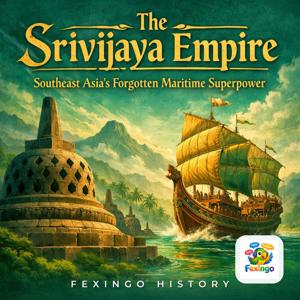


In 682 CE, a stone pillar was raised near the Musi River in Sumatra, bearing an Old Malay inscription that would become the founding document of the Srivijaya Empire. This episode unpacks the Kedukan Bukit inscription—its discovery, its cryptic verses, and the fierce scholarly debates over what it really says. Did Dapunta Hyang lead a naval expedition with 20,000 troops, or was it a smaller religious pilgrimage? We trace the siddhayatra (sacred journey) that launched Southeast Asia's greatest maritime power, explore the curse that protected the stone, and examine how epigraphers like George Coedès pieced together a lost empire from a single block of sandstone. Along the way, we meet the multilingual scribes, the ships called K'un-lun Po, and the forested riverbanks where history was carved in stone.
#KedukanBukit #Srivijaya #DapuntaHyang #Siddhayatra #Epigraphy #OldMalay #GeorgeCoedes #Palembang #MusiRiver #MaritimeHistory #SoutheastAsia #BuddhistEmpire #Inscription #Curse #7thCentury #History #FexingoHistory #Archaeology
Keep every episode free: buymeacoffee.com/fexingo
For centuries, the name Srivijaya meant nothing to historians. The great maritime empire that dominated Southeast Asia from the 7th to 13th centuries had vanished from memory, leaving only scattered inscriptions in Malay, Chinese, and Tamil. Then came French epigraphist George Coedès. In the early 1900s, armed with a camera and a keen eye, he traveled across Sumatra, Java, and the Malay Peninsula, photographing and translating ancient stone texts. Piece by piece, he stitched together the story of a Buddhist thalassocracy that controlled the Strait of Malacca. This episode follows Coedès's intellectual detective work: the Kedukan Bukit inscription that announced Dapunta Hyang's spiritual journey, the Kota Kapur curse against rebels, and the Ligor stele that revealed the Sailendra dynasty. We also explore how his methods shaped modern Southeast Asian historiography, and the controversies that linger about his conclusions. It's a story of scholarly obsession and the power of epigraphy to resurrect lost worlds.
#Srivijaya #GeorgeCoedès #Epigraphy #SoutheastAsianHistory #HistoryScholarship #MaritimeHistory #FrenchColonialScholarship #Inscriptions #Rediscovery #BuddhistHistory #Sailendra #Palembang #KedukanBukit #LigorInscription #Archaeology #FexingoHistory #History #AcademicHistory
Keep every episode free: buymeacoffee.com/fexingo
Episode 186 of Srivijaya: The Forgotten Maritime Superpower takes you to the Bujang Valley in Kedah, Malaysia—an archaeological treasure trove that reveals Srivijaya's far-reaching trade and cultural influence. Lucas and Luna explore the Hindu-Buddhist temples, iron smelting sites, and inscriptions that show how this port kingdom connected the Indian Ocean to the South China Sea. They discuss the discovery of Candi Bukit Batu Pahat, the role of the Kra Isthmus route, and how Bujang Valley's decline mirrored Srivijaya's own. Along the way, they touch on the Sungai Batu complex—Southeast Asia's earliest iron industry—and the mystery of why such a bustling entrepôt was abandoned. This episode offers a ground-level view of how Srivijaya's mandala really operated.
#BujangValley #Srivijaya #Kedah #Malaysia #SungaiBatu #IronSmelting #HinduBuddhist #KraIsthmus #TradeRoute #Candi #Archaeology #History #FexingoHistory #SoutheastAsia #MaritimeHistory #Entrepot #IndianOcean #Buddhism
Keep every episode free: buymeacoffee.com/fexingo
In this episode, Lucas and Luna explore Muaro Jambi, the sprawling temple complex on the Batanghari River that served as Srivijaya's second capital after the Chola invasion of 1025. Unlike Palembang, which eventually silted up, Muaro Jambi flourished as a center of Vajrayana Buddhist scholarship, attracting monks from as far as Tibet and China. We trace the site's rediscovery in the 20th century, the excavation of its eight major candi (temples), and the clues left by Balaputradewa's reign — including a rare inscription that links him to the Nalanda monastery in India. We also discuss the Batanghari River's role as a trade artery, the site's enigma of sudden abandonment, and what the crumbling stupas tell us about Srivijaya's blend of Mahayana and Vajrayana traditions. Along the way, we consider how Muaro Jambi challenges the old narrative that Srivijaya was solely a Palembang-based empire.
#Srivijaya #MuaroJambi #BuddhistArchaeology #Vajrayana #IndonesianHistory #BatanghariRiver #Balaputradewa #CandiGumpung #CandiTinggi #Nalanda #SoutheastAsianEmpires #MaritimeSilkRoad #BuddhistUniversity #Jambi #OrangLaut #Sumatra #FexingoHistory #History
Keep every episode free: buymeacoffee.com/fexingo
In 686 CE, a stone slab was erected on the island of Bangka, bearing a curse on anyone who dared defy Srivijaya. This episode unravels the story behind the Kota Kapur inscription—the oldest known Srivijayan curse. We trace the expansion of Dapunta Hyang's fleet from Palembang to southern Sumatra, the conquest of Bangka, and the role of the Orang Laut as naval enforcers. Discover how the inscription's Sanskrit and Old Malay text reveals a sophisticated legal system, the threat of supernatural punishment, and the empire's ruthless consolidation of power. We also explore the inscription's modern discovery by Dutch archaeologists and what it tells us about Srivijaya's maritime empire. A tale of kings, curses, and the struggle for control of the Sunda Strait.
#Srivijaya #KotaKapurInscription #DapuntaHyang #Palembang #BangkaIsland #OrangLaut #OldMalay #Sanskrit #SundaStrait #MaritimeHistory #SoutheastAsia #Empire #Expansion #Curse #Inscription #History #FexingoHistory #ListeningHistory
Keep every episode free: buymeacoffee.com/fexingo
In this episode, Lucas and Luna explore the inner workings of Srivijaya's mandala system — the network of vassal states that held the empire together — and the dramatic shift of power from Palembang to Jambi after the Chola invasion of 1025. They trace the rise of the Malayu kingdom, the role of the Orang Laut in the transition, and how the move to Jambi ultimately reshaped the empire's identity. Along the way, they consider the mandala as a model of flexible sovereignty, and how Srivijaya's decline paved the way for Majapahit. Specific figures include Maharaja Sri Cudamani Warmadewa, Rajendra Chola I, and the maharajas of Malayu. The conversation also touches on the archaeological traces at Muaro Jambi and the legacy of the mandala concept in Southeast Asian history.
#Srivijaya #Malayu #Jambi #Mandala #CholaInvasion #OrangLaut #Palembang #MuaroJambi #SoutheastAsianHistory #MaritimeEmpire #RajendraChola #SriCudamaniWarmadewa #StraitOfMalacca #BuddhistEmpire #VassalStates #11thCentury #FexingoHistory #History
Keep every episode free: buymeacoffee.com/fexingo
Srivijaya was not only described by Chinese chroniclers. Arab and Persian travelers and geographers like Sulayman al-Tajir, Abu Zayd al-Sirafi, and Al-Mas'udi wrote about a powerful maritime empire they called Zabag or Sribuza. In this episode, Lucas and Luna explore what these Islamic world sources reveal about Srivijaya's wealth, navy, and court. They discuss the famous golden lake palace, the tribute system for foreign merchants, and the reliability of these accounts. How did Arab and Persian descriptions compare to Chinese ones? What do they tell us about Srivijaya's global connections? This conversation dives into the legends and hard facts left by travelers from the Abbasid Caliphate.
#Srivijaya #Zabag #Sribuza #ArabTravelers #SulaymanalTajir #AbuZaydalSirafi #AlMasudi #IbnKhurdadhbih #GoldenLakePalace #StraitofMalacca #Palembang #MaritimeHistory #SoutheastAsia #MedievalTrade #FexingoHistory #History #BuddhistEmpire #PrimarySources
Keep every episode free: buymeacoffee.com/fexingo
Long before the Song dynasty chronicles, Srivijaya was already a major player in Tang China's maritime world. In this episode, Lucas and Luna explore the diplomatic and trade relations between the Srivijayan mandala and the Tang empire during the 7th to 9th centuries. They discuss the tributary missions recorded in Tang annals, the exchange of gifts—including a captive king and a Buddhist relic—and the role of Srivijayan ports as hubs for Chinese monks traveling to India. They also delve into the strategic importance of the Strait of Malacca, the goods that flowed through the maritime silk road, and how the Tang dynasty's view of Srivijaya as 'Shilifoshi' reveals a sophisticated understanding of Southeast Asian politics. Specific figures like the Tang emperor Gaozong, the Srivijayan king Jayanasa, and the Chinese monk I-Tsing are revisited with new context. This episode sheds light on a lesser-known but crucial period of Srivijayan history, showing how alliances with China helped shape the empire's golden age.
#Srivijaya #TangDynasty #MaritimeSilkRoad #StraitOfMalacca #Shilifoshi #ChineseAnnals #TributarySystem #BuddhistNetworks #I-Tsing #Jayanasa #Palembang #MuaroJambi #Nalanda #Seafaring #Diplomacy #History #FexingoHistory #SoutheastAsia
Keep every episode free: buymeacoffee.com/fexingo
In 1025, the mighty Srivijaya empire, which had dominated Southeast Asian seas for centuries, faced a devastating naval attack from across the Bay of Bengal. The Chola king Rajendra Chola I launched a massive fleet that stormed Srivijaya's heartland, sacking the port of Kadaram (modern Kedah) and capturing the Srivijayan king. This episode dives into the causes, the dramatic campaign, and the long-term consequences: how a single invasion shattered Srivijaya's monopoly, shifted power to rival Malayu in Jambi, and reshaped the political map of the Malay Archipelago. We explore the Chola expedition's route, the role of the Orang Laut as both allies and victims, and the surprising resilience of Srivijaya's mandala system. Join Lucas and Luna as they unravel this forgotten clash of empires that changed Southeast Asia forever.
#CholaInvasion #RajendraChola #Srivijaya #Kadaram #MalayArchipelago #OrangLaut #StraitOfMalacca #NavalWarfare #1025 #MedievalHistory #IndianOceanTrade #Malayu #Jambi #TamilDynasty #SoutheastAsianHistory #FexingoHistory #History #LostEmpires
Keep every episode free: buymeacoffee.com/fexingo
Episode 179 of Fexingo History's Srivijaya series explores the Ligor inscription, a stone stele discovered in Nakhon Si Thammarat, Thailand, that provides crucial evidence of Srivijayan control over the Kra Isthmus trade route. Lucas and Luna discuss the stele's discovery in the 19th century, its two faces inscribed in Sanskrit and Khmer, and the debate over whether it commemorates a Sailendra king or a local ruler. The episode examines how Srivijaya used the isthmus as a shortcut between the Bay of Bengal and the Gulf of Siam, bypassing the Straits of Malacca, and why this inland route was vital for their empire. They also touch on the stele's reference to a Buddhist sanctuary and what it reveals about state-sponsored religion. Finally, they consider the stele's legacy and what it tells us about Srivijaya's reach beyond Sumatra.
#Srivijaya #LigorInscription #KraIsthmus #NakhonSiThammarat #Sailendra #BuddhistEpigraphy #SanskritInscription #KhmerInscription #SoutheastAsianHistory #MaritimeTrade #StraitOfMalacca #BayOfBengal #GulfOfSiam #History #Archaeology #FexingoHistory #Palembang #Epigraphy
Keep every episode free: buymeacoffee.com/fexingo
From the publisher's feed