
Sign up to save your podcasts
Or

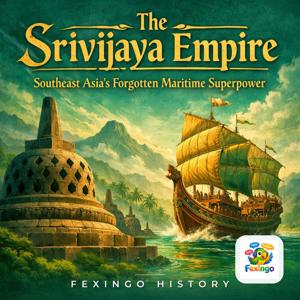


Before the Srivijayan Empire minted its own silver coins, much of Southeast Asia still relied on barter and Chinese cash. But by the 7th century, the maharajas of Palembang introduced a remarkable currency — tiny silver coins stamped with a unique sail-and-vajra symbol that circulated from Sumatra to the Malay Peninsula. Drawing on recent hoard discoveries along the Musi River and Chinese merchant accounts like the Zhufan Zhi, this episode explores how Srivijaya's monetization strategy transformed the Strait of Malacca into a financial hub. We trace the evolution from proto-coins (ingots and stamped silver bars) to the iconic sandalwood-flower coinage (masa), examine the role of Buddhist monastic treasuries as mints, and uncover a forgotten controversy: did the Chola invasion of 1025 specifically target Palembang's treasury? Lucas and Luna also discuss how the Orang Laut served as floating toll-collectors, and how the empire's silver standard later influenced the currencies of Melaka and Aceh. A micro-history of money that reveals the economic backbone of Srivijaya's maritime supremacy.
#Srivijaya #Numismatics #MonetaryHistory #Palembang #MusiRiver #ZhufanZhi #OrangLaut #MasaCoinage #BuddhistMints #StraitOfMalacca #CholaInvasion #SoutheastAsia #AncientEconomy #SilverCoins #TradeHistory #MedievalMaritime #FexingoHistory #History
Keep every episode free: buymeacoffee.com/fexingo
In this episode, Lucas and Luna explore the underwater treasures of the Musi River in Palembang, where decades of illegal dredging have yielded thousands of artifacts from the Srivijaya era. They discuss the ethical dilemmas of artifact recovery, the role of the Orang Laut as salvagers, and what these objects—from Buddhist statues to Chinese ceramics—reveal about the empire's global trade networks. Lucas pieces together how a 9th-century gold Buddha head ended up in a riverbed, and why scholars are torn between celebrating these finds and mourning the loss of context. The conversation touches on the Chinese chronicle Zhu Fan Zhi, the Arab merchant Sulayman al-Tajir, and the legendary wealth of Sanfoqi. It's a detective story about a submerged empire, told through objects that were never meant to be found.
#MusiRiver #Srivijaya #Palembang #OrangLaut #ZhuFanZhi #Sanfoqi #UnderwaterArchaeology #BuddhistArt #ChineseCeramics #MaritimeTrade #SoutheastAsianHistory #Sumatra #GoldTreasure #Looting #CulturalHeritage #SulaymanAlTajir #FexingoHistory #History
Keep every episode free: buymeacoffee.com/fexingo
In 1079, a fleet of Srivijayan ships arrived at the Song court bearing gold, ivory, and a diplomatic letter that would reshape Southeast Asian geopolitics. This episode dives into the embassy of Maharaja Sri Maharaja — a ruler who sent his son to China as a hostage to secure Song protection against the looming Chola threat. We explore the tangled web of tribute missions, espionage, and shifting alliances that defined Srivijaya's final golden age. Through the lens of the 1079 embassy, Lucas and Luna unpack how Palembang navigated the rise of Jambi, the ambitions of the Khmer, and the relentless pressure of the Chola navy. Featuring the Song court's gift of a golden seal, the mysterious figure of the maharaja's son, and the Chinese merchant records that reveal the empire's desperate gambit for survival. A story of power, pragmatism, and the high-stakes diplomacy of the maritime Silk Road.
#Srivijaya #SongDynasty #MaritimeSilkRoad #Diplomacy #Embassy #Palembang #Maharaja #Chola #Jambi #Khmer #Tribute #Hostage #1079 #GoldenSeal #Mandala #OrangLaut #History #FexingoHistory
Keep every episode free: buymeacoffee.com/fexingo
In this episode, Lucas and Luna explore the deep Austronesian foundations of Srivijaya — the pre-Indianized maritime culture that made the empire possible. They discuss the Proto-Malay migrations from Taiwan around 4,000 years ago, the development of outrigger canoes and lashed-lug construction, and the linguistic evidence linking Austronesian languages across the Pacific. They examine the Bukit Tengkorak archaeological site in Sabah, the origin of the Orang Laut sea nomads, and how Austronesian navigation techniques — reading stars, currents, and bird migrations — predated Indian influence by millennia. The conversation highlights that Srivijaya's success wasn't just borrowed from Indian models but built on indigenous maritime expertise.
#Srivijaya #Austronesian #OrangLaut #BukitTengkorak #ProtoMalay #OutriggerCanoe #MaritimeHistory #SoutheastAsia #AncientNavigation #LashedLug #Taiwan #MalayoPolynesian #IndigenousTechnology #PreIndianization #FexingoHistory #History #Podcast #Empire
Keep every episode free: buymeacoffee.com/fexingo
In this episode, Lucas and Luna explore a little-known diplomatic maneuver that helped Srivijaya maintain its grip on the Strait of Malacca. We focus on the eleventh-century alliance between the Srivijayan mandala and the kingdom of Tambralinga on the Malay Peninsula, centered on the port of Kedah. Drawing on Tamil inscriptions from Takuapa and Chinese records from the Song dynasty, we uncover how Srivijaya leveraged marriage ties, trade privileges, and military support to counter the growing influence of the Chola Empire after the 1025 raid. We also examine the role of the Orang Laut as enforcers of this alliance and how the partnership frayed under pressure from the rising Khmer Empire and the Jambi succession. This episode offers a granular look at the realpolitik of a maritime empire that ruled not through conquest but through strategic relationships.
#Srivijaya #Tambralinga #Kedah #StraitOfMalacca #OrangLaut #CholaEmpire #SongDynasty #TakuapaInscription #MalayPeninsula #MaritimeHistory #SoutheastAsia #Diplomacy #Alliance #RajendraChola #Jambi #KhmerEmpire #FexingoHistory #History
Keep every episode free: buymeacoffee.com/fexingo
In this episode, Lucas and Luna revisit the Kedukan Bukit inscription — but not to talk about the Siddhayatra or Dapunta Hyang. Instead, they explore the enigmatic 'fire' references in the text and what they reveal about Srivijaya's spiritual landscape. Drawing on Old Malay philology, Tantric Buddhist practices from Nalanda, and ethnographic parallels from the Orang Laut, they uncover evidence of fire-walking ceremonies, ritual immolations, and a sacred flame kept burning on the Musi River. The discussion touches on the Sailendra maharajas, the Vajrayana tradition, and how these fiery rites may have served both religious and political purposes — asserting divine authority and unifying a mandala of diverse peoples. A fascinating look at how ritual shaped empire.
#Srivijaya #KedukanBukit #OldMalay #FireRituals #TantricBuddhism #Vajrayana #OrangLaut #Sailendra #Palembang #MusiRiver #Siddhayatra #DapuntaHyang #Nalanda #Mahayana #SoutheastAsianHistory #MaritimeHistory #History #FexingoHistory
Keep every episode free: buymeacoffee.com/fexingo
Long before nutmeg and cloves made Europeans race east, Srivijaya's maharajas dominated the spice trade from Sumatra. This episode traces how the empire's strategic chokehold on the Strait of Malacca allowed it to control the flow of cloves from the Moluccas, nutmeg from Banda, and pepper from Java and Sumatra itself. Lucas and Luna explore the logistics: how Orang Laut ships carried spices to Palembang's markets, how Chinese and Indian merchants paid in silk and silver, and how Srivijaya's naval patrols kept competitors at bay. They also examine the human cost—the enslaved laborers who harvested spices on distant islands—and the ecological impact of centuries of intensive cultivation. Along the way, they revisit the writings of Zhao Rugua, who described Srivijaya's spice wealth in the 13th century, and consider how the empire's decline opened the door for later powers like the Portuguese and Dutch. A story of trade, power, and the fragrant cargoes that built an empire.
#Srivijaya #SpiceTrade #StraitOfMalacca #Palembang #OrangLaut #Cloves #Nutmeg #Pepper #Moluccas #Banda #ZhaoRugua #ZhufanZhi #MaritimeSilkRoad #SoutheastAsia #History #FexingoHistory #TradeMonopoly #CommodityHistory
Keep every episode free: buymeacoffee.com/fexingo
The Orang Laut — the 'Sea People' — were the backbone of Srivijaya's maritime empire. But what about the women among them? This episode dives into the overlooked role of female leaders in the Orang Laut communities that patrolled the Strait of Malacca for the Maharaja. Drawing on Chinese records like Zhao Rugua's Zhufan Zhi, Malay legends of sea queens, and archaeological finds of female-led burial ships, we explore how women commanded fleets, controlled trade routes, and even negotiated with foreign powers. We also touch on the contested evidence: were these 'pirate queens' exceptions or part of a broader matrilineal tradition? Join Lucas and Luna as they navigate the murky waters of gender and power in Southeast Asia's forgotten maritime superpower.
#OrangLaut #Srivijaya #MaritimeHistory #SoutheastAsia #PirateQueens #StraitOfMalacca #ZhaoRugua #ZhufanZhi #Matrilineal #History #FexingoHistory #WomenInHistory #SeaPeople #Palembang #Maharaja #GenderAndPower #AncientTrade #MaritimeSilkRoad
Keep every episode free: buymeacoffee.com/fexingo
This episode explores the bitter rivalry between Srivijaya's capital, Palembang, and its upstart neighbor, the Malayu kingdom of Jambi. After the devastating Chola raid of 1025, Srivijaya's power waned, and Jambi seized the opportunity to assert dominance over the Strait of Malacca. We trace the shifting alliances, the diplomatic maneuvering with Song China, and the archaeological evidence—from the Muaro Jambi temple complex to Chinese ceramic distributions—that reveals how Malayu gradually eclipsed its former overlord. We also examine the role of the Orang Laut sea nomads, who shifted their loyalty from Palembang to Jambi, and the eventual rise of the Malayu-based Dharmasraya kingdom. This is the story of a slow-motion succession that redefined the political landscape of early Southeast Asia.
#Srivijaya #Malayu #Jambi #Palembang #StraitOfMalacca #OrangLaut #Dharmasraya #SongChina #MaritimeHistory #SoutheastAsianHistory #CholaRaid #MuaroJambi #BatangHari #Adityawarman #Maharaja #FexingoHistory #History #TradeRoutes
Keep every episode free: buymeacoffee.com/fexingo
In 1345, the Moroccan traveler Ibn Battuta visited a place he called 'Mul Jawa' — a wealthy, walled city ruled by a Muslim king. Historians now largely agree he was describing a late-period Srivijayan coastal center, likely on the northern coast of Sumatra. This episode reexamines Battuta's account of the port city, its ruler (Sultan al-Malik al-Zahir), and his meeting with the Indian Sufi mystic Qutb al-Din. We explore what the visit reveals about Srivijaya's final century: a thalassocracy transformed by Islam, squeezed by Majapahit, and fading from the record. Battuta's eyewitness observations — the king's elephant procession, the betel-nut customs, the floating markets — offer a rare, intimate portrait of a civilization on the edge of empire. We also confront the controversy over whether Battuta truly visited Srivijaya or conflated it with Pasai or Samudra, weighing the clues in his Rihla against archaeological evidence from Sumatra. A grounded, human look at the empire's twilight years.
#IbnBattuta #Srivijaya #MulJawa #Sumatra #SultanAlMalikAlZahir #QutbAlDin #Pasai #Samudra #Majapahit #Rihla #MaritimeSilkRoad #14thCentury #SoutheastAsianHistory #IslamicSultanate #BetelNut #ElephantProcession #History #FexingoHistory
Keep every episode free: buymeacoffee.com/fexingo
From the publisher's feed