
Sign up to save your podcasts
Or

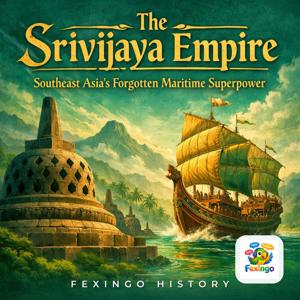


In this episode, Lucas and Luna explore the life of Balaputradewa, the Sailendra prince who fled Java after a dynastic struggle and built a new power base in Srivijaya's heartland of Palembang. We follow his journey from exile in the 830s to becoming the maharaja who sponsored Buddhist learning, commissioned the Nalanda inscription, and reshaped Srivijaya's identity. Along the way, we discuss the shifting alliances between the Sailendra and Sanjaya lines, the role of the Kalasan and Nalanda copper plates as historical sources, and how Balaputradewa's reign marked a pivot from land-based to maritime power. We also touch on the legacy of Borobudur, which his grandfather Samaratungga built, and how Balaputradewa's patronage of the Mūlasarvāstivāda school connected Srivijaya to the broader Buddhist world. This episode draws on inscriptions, Chinese records, and the travelogues of Yijing to reconstruct a figure who turned political defeat into a golden age.
#Balaputradewa #Sailendra #Srivijaya #Palembang #NalandaInscription #Sanjaya #Borobudur #Mūlasarvāstivāda #Yijing #Mahayana #KalasanInscription #Java #MaritimeHistory #SoutheastAsia #BuddhistKing #Exile #FexingoHistory #History
Keep every episode free: buymeacoffee.com/fexingo
We know the Sailendras as temple builders—Borobudur, the great Mahayana monument. But their relationship with Srivijaya was far more complicated than a simple royal family. In this episode, Lucas and Luna explore the ambiguous origins of the Sailendra dynasty: were they native Javanese, or did they come from Srivijaya's heartland in Sumatra? We trace the fragmentary evidence—the Kalasan inscription, the Kedu Plain stelae, the shifting marriage alliances with the Sanjaya dynasty—and the bitter succession crisis that split the family. By the 9th century, a Sailendra prince named Balaputradewa fled to Sumatra and claimed the Srivijayan throne, effectively merging the two royal lines. But that merger also triggered a century of rivalry between the Sailendra-loyal Srivijaya and the Medang kingdom in Java, culminating in the Chola raid of 1025. We also examine how the Sailendra's Buddhist identity shaped Srivijaya's diplomatic strategy with Tang China, and why their legacy is often overshadowed by the non-royal 'Maharajas' who followed. This is not just a story of kings—it is a story of how dynastic legitimacy was manufactured, contested, and remembered across centuries.
#Sailendra #Srivijaya #Balaputradewa #KalasanInscription #Sanjaya #Borobudur #MahayanaBuddhism #MedangKingdom #CholaRaid #TangDynasty #KeduPlain #Palembang #MaritimeSilkRoad #SoutheastAsianHistory #DynasticStruggle #HistoricalControversy #FexingoHistory #History
Keep every episode free: buymeacoffee.com/fexingo
Episode 146 takes a closer look at a side of Srivijaya's economy that rarely gets the spotlight: jewelry and ornamental goods. While spices and camphor dominated the bulk trade, the empire was also a hub for high-value luxury items that tell a story of cross-cultural exchange, technological skill, and social hierarchy. Lucas and Luna explore the Indo-Pacific bead industry that connected Southeast Asia to Africa, the goldworking traditions of Sumatra, and how jewelry served as status symbols and diplomatic gifts along the Maritime Silk Road. They reference specific archaeological finds—like the sealed glass beads from the Java Sea Wreck and the gold rings from Muaro Jambi—to illustrate how these tiny objects reveal the movement of artisans, ideas, and wealth. The episode also touches on the role of women in the adornment economy and how Srivijayan jewelry styles influenced later Malay and Javanese aesthetics. For listeners who thought they knew Srivijaya's trade networks, this episode offers a sparkling new perspective on the empire's cultural and economic reach.
#Srivijaya #Jewelry #Beads #IndoPacificBeads #Goldworking #MuaroJambi #JavaSeaWreck #MaritimeSilkRoad #LuxuryTrade #SoutheastAsia #Sumatra #Palembang #Archaeology #GlassBeads #Adornment #WomenInHistory #History #FexingoHistory
Keep every episode free: buymeacoffee.com/fexingo
In this episode, Lucas and Luna explore the Sailendra dynasty that ruled Srivijaya at its zenith. They delve into the figure of Maharaja Indra, the Sailendra king who commissioned Borobudur, and his successor Samaratungga, who completed the great monument. The conversation examines how the Sailendras blended Mahayana Buddhism with divine kingship, using mandala symbolism on a massive scale. They discuss the political challenges Samaratungga faced after Indra's death, including the rebellion of his cousin Balaputradewa, and how the Sailendra legacy shaped Javanese and Sumatran politics for centuries. The episode also covers the Sailendras' patronage of the Nalanda monastery and their diplomatic relations with the Chola dynasty, revealing a maritime empire that projected power through religion, art, and trade.
#Sailendra #Borobudur #MaharajaIndra #Samaratungga #Balaputradewa #Srivijaya #MahayanaBuddhism #Nalanda #Chola #Mandala #DivineKingship #CandiMendut #CandiPawon #KeduPlain #SoutheastAsia #MaritimeHistory #History #FexingoHistory
Keep every episode free: buymeacoffee.com/fexingo
In this episode, Lucas and Luna explore the often-overlooked rivalry between Buddhist Srivijaya and Hindu Medang on Java. They discuss how King Mpu Sindok moved the Mataram court to East Java in the 10th century, the construction of the Candi Sukuh pyramid-like temple, and the violent eclipse of Medang under King Dharmawangsa, who launched a naval attack on Srivijaya around 990 CE. The conversation covers the role of the Watugunung inscription, the marriage of Airlangga, and the eventual collapse of Medang in a 'pralaya' or cosmic disaster following a rebellion by Wurawari. Lucas explains how this rivalry reshaped Southeast Asian politics and trade, paving the way for the rise of Singhasari and Majapahit.
#Srivijaya #MedangKingdom #MpuSindok #Dharmawangsa #CandiSukuh #Watugunung #Airlangga #Pralaya #EastJava #Hinduism #Buddhism #IndianOceanTrade #10thCentury #SoutheastAsianHistory #NavalWarfare #IndonesianHistory #FexingoHistory #History
Keep every episode free: buymeacoffee.com/fexingo
Episode 143 of Fexingo History explores the linguistic legacy of the Srivijaya Empire through its surviving inscriptions. Lucas and Luna delve into the Kedukan Bukit inscription, the oldest known Old Malay text, and what it reveals about the empire's origins. They discuss the Talang Tuwo inscription, which documents a royal garden and reflects Buddhist values, and the Kota Kapur inscription, a curse against rebels. The conversation examines how these stone texts, written in Pallava script, blend Sanskrit loanwords with local Austronesian syntax, offering a window into Srivijaya's cultural hybridity. Lucas explains the challenges of decipherment, including eroded stone and rare terms, and how inscriptions help map the empire's political reach. The episode also touches on the role of Sanskrit as a prestige language and the significance of Old Malay as a unifying administrative tongue. Tune in for a nuanced look at how language preserves the memory of Southeast Asia's forgotten maritime superpower.
#Srivijaya #OldMalay #PallavaScript #KedukanBukit #TalangTuwo #KotaKapur #Sanskrit #Austronesian #Epigraphy #Palembang #Sumatra #BuddhistHistory #MaritimeEmpire #Linguistics #Decipherment #SoutheastAsia #History #FexingoHistory
Keep every episode free: buymeacoffee.com/fexingo
Long before modern embassies, the Srivijaya Empire mastered the art of diplomacy through tribute missions to Tang and Song China. This episode of Fexingo History explores the sophisticated network of gifts, envoys, and state letters that kept the Strait of Malacca open for centuries. We follow the journey of Srivijayan ambassadors to the Chinese court—what they brought (camphor, rhinoceros horn, tortoiseshell), what they received (silk, porcelain, imperial recognition), and how these exchanges underpinned the empire's power. Lucas and Luna examine the specific tribute list from 724 CE, the role of Buddhist monks as diplomats like the famous Yijing, and the shift in relations after the Chola raid of 1025. They also unpack the 'Sanfoqi' label used by Chinese chroniclers and what the Songshu records reveal about Srivijaya's careful balancing act with rival kingdoms like Java and Champa. A story of soft power, strategic gifts, and the forgotten envoys who kept the spice routes flowing.
#Srivijaya #ChineseDiplomacy #TributarySystem #SongDynasty #TangDynasty #Sanfoqi #Yijing #CamphorTrade #StraitOfMalacca #SoftPower #Palembang #OrangLaut #BuddhistMonks #MaritimeHistory #SoutheastAsia #IndianOceanTrade #History #FexingoHistory
Keep every episode free: buymeacoffee.com/fexingo
Episode 141 of Fexingo History's Srivijaya series explores the urban design of the empire's capital, Palembang, and the network of riverine settlements that sustained it. Drawing from Chinese records like Zhao Rugua's Zhufan Zhi and archaeological evidence from the Musi River basin, Lucas and Luna examine how the city's layout—its wooden stilt-houses, canals, and floating markets—reflected a maritime-oriented society. They discuss the central role of the Musi and its tributaries as highways, the division between the royal quarter at Bukit Seguntang and the commercial districts downstream, and the challenges of governing such a dispersed urban landscape. The episode also touches on the 'water village' model as a deliberate adaptation to monsoon flooding and the seasonal rhythms of trade. No prior deep knowledge of Srivijaya is assumed, but connections to previous episodes on the Orang Laut and the K'un-lun Po ships provide continuity.
#Srivijaya #Palembang #MusiRiver #BukitSeguntang #ZhaoRugua #ZhufanZhi #OrangLaut #maritimehistory #SoutheastAsia #Sumatra #IndianOceanTrade #urbanplanning #canals #floatingmarkets #monsoon #FexingoHistory #historypodcast #empire
Keep every episode free: buymeacoffee.com/fexingo
Before Borobudur, before the great trading fleets, the Srivijaya Empire left its first mark in stone. In this episode, Lucas and Luna examine the Kedukan Bukit Inscription, the oldest known text in the Malay world. Discovered in 1892 near Palembang, this small stone slab records a military expedition under Dapunta Hyang Sri Jayanasa in 682 CE. Lucas breaks down the date, the use of Old Malay written in Pallava script, and the scholarly debates around its meaning: was it a conquest, a pilgrimage, or a royal progress? They explore the journey of 20,000 men from a place called Minanga, possibly the interior of Sumatra, and the founding of Srivijaya itself. The episode also touches on the inscription's discovery by Dutch scholars, its role in dating the empire's rise, and the challenges of interpreting a fragmentary text. For listeners who know Srivijaya through its trade networks, this episode grounds that story in a single, tangible artifact—a stone that speaks across thirteen centuries.
#KedukanBukitInscription #Srivijaya #DapuntaHyangSriJayanasa #OldMalay #PallavaScript #682CE #Palembang #Minanga #Sumatra #SoutheastAsianHistory #MaritimeHistory #Epigraphy #DutchColonialScholarship #Sanskrit #Mandala #OrangLaut #History #FexingoHistory
Keep every episode free: buymeacoffee.com/fexingo
This episode dives into how the Srivijaya Empire controlled the global spice trade long before European powers arrived. Lucas and Luna explore the strange biology of clove and nutmeg trees, which only grow on a handful of volcanic islands in the Maluku archipelago — and how Srivijaya's Orang Laut fleets enforced a monopoly that made Palembang one of the richest cities in the medieval world. They discuss the grueling monsoon voyages, the role of Barus as a transshipment hub, and the shadowy networks of Javanese and Malay traders who moved cloves from Ternate and Tidore to markets as far as Cairo and Venice. They also unpack the ecological limits: why the spice monopoly was fragile, and how later empires like the Portuguese and Dutch would brutally replicate Srivijaya's strategy. The episode ties together geography, biology, and economics to show how a maritime empire's power rested on a few tiny trees.
#Srivijaya #SpiceRoutes #MalukuIslands #CloveTrade #Nutmeg #Palembang #OrangLaut #Barus #IndianOceanTrade #MedievalCommerce #MonsoonWinds #Ternate #Tidore #SoutheastAsianHistory #MaritimeHistory #GlobalTrade #FexingoHistory #History
Keep every episode free: buymeacoffee.com/fexingo
From the publisher's feed