
Sign up to save your podcasts
Or

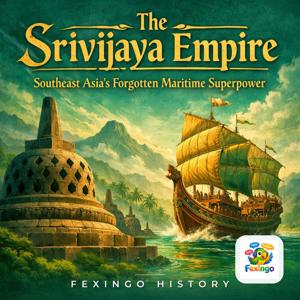


In this episode of Fexingo History, Lucas and Luna explore a neglected chapter of Srivijaya's decline: the Spice Wars of the 11th and 12th centuries. When rival ports like Barus and Lambri began trading directly with Indian and Chinese merchants, Srivijaya's monopoly on nutmeg and cloves from Maluku was threatened. We examine how the Maharaja deployed the Orang Laut fleet to enforce blockades, the rise of the Tamil merchant guilds (the 'Ayyavole'), and the shifting alliances that eventually broke Srivijaya's grip. Discover the role of the 'K'un-lun Po' ships in protecting trade routes, the archaeological evidence from shipwrecks like the 'Intan Wreck', and the diplomatic missions recorded in Chinese sources that hint at desperation. This episode ties together economic history, naval strategy, and the human cost of maintaining an empire. No clickbait — just the story of how spice shaped Southeast Asia.
#Srivijaya #SpiceTrade #OrangLaut #Maluku #IndianOcean #Barus #Lambri #Ayyavole #KunlunPo #IntanWreck #Maharaja #NavalHistory #StraitOfMalacca #SongDynasty #Palembang #History #FexingoHistory #SoutheastAsia
Keep every episode free: buymeacoffee.com/fexingo
In this episode of Fexingo History, Lucas and Luna explore the Sailendra dynasty's role in building the monumental Borobudur temple in Central Java. They discuss the dynasty's origins, its connection to Srivijaya, and the architectural and religious significance of Borobudur as a Mahayana Buddhist stupa. Learn about the Sailendra king Indra, the temple's design as a mandala, and the use of volcanic stone. The episode also covers the later shift of Sailendra power to Srivijaya and the temple's rediscovery in the 19th century.
#Sailendra #Borobudur #MahayanaBuddhism #Srivijaya #CentralJava #Indra #Mandala #VolcanicStone #BuddhistArt #SailendraDynasty #AncientArchitecture #SoutheastAsianHistory #BuddhistTemple #GuptaArt #CandiMendut #KeduPlain #FexingoHistory #History
Keep every episode free: buymeacoffee.com/fexingo
This episode takes a fresh look at the Srivijaya Empire through the lens of its spice trade, focusing on nutmeg, cloves, and mace from the Maluku Islands. Lucas and Luna explore how Srivijaya controlled the maritime routes from Sumatra to the Spice Islands, the role of the Orang Laut in safeguarding these passages, and the cultural impact of spices on Southeast Asian society. They discuss the Ming Dynasty's Zheng He expeditions, the rise of Malacca, and the European scramble for spices. Specific topics include the port of Banda Aceh, the nutmeg plantations on Banda Island, the Chinese market for cloves, and the eventual decline of Srivijaya as new sea routes opened. The conversation draws on recent archaeological findings from shipwrecks and port cities to trace the spice networks that made Srivijaya a medieval superpower.
#Srivijaya #SpiceRoutes #Nutmeg #Cloves #Maluku #OrangLaut #IndianOceanTrade #ZhengHe #Malacca #BandaAceh #MaritimeHistory #SoutheastAsia #MedievalTrade #FexingoHistory #Archaeology #SpiceIslands #Mace #History
Keep every episode free: buymeacoffee.com/fexingo
The Srivijaya Empire wasn't just a single city—it was a web of bustling port cities stretching across Sumatra and the Malay Peninsula. In this episode, Lucas and Luna explore the lesser-known ports of Srivijaya, like Barus, known for its camphor and gold; Lambri, a key stop on the Indian Ocean trade route; and Kalah Bar, a fortified island base that protected the empire's maritime interests. They discuss how Chinese records from the Song dynasty, particularly the Zhufan Zhi by Zhao Rugua, describe these ports and their goods. The conversation also touches on the Orang Laut, the sea nomads who served as scouts and guards, and the temple complex at Padang Lawas, which shows evidence of Tantric Buddhist practices. Join us as we uncover the intricate network that made Srivijaya a maritime superpower for centuries.
#Srivijaya #PortCities #Barus #Lambri #KalahBar #OrangLaut #PadangLawas #ZhufanZhi #ZhaoRugua #SongDynasty #Camphor #IndianOceanTrade #TantricBuddhism #SoutheastAsia #MaritimeHistory #Sumatra #StraitOfMalacca #FexingoHistory
Keep every episode free: buymeacoffee.com/fexingo
Imagine a river so rich in artifacts that fishermen pull up golden statues in their nets. This is the story of the Musi River in South Sumatra, the watery graveyard of the Srivijaya Empire. While Palembang was the capital, the river itself was the economic and spiritual artery of the mandala. For centuries, the river yielded treasures—Buddhist bronzes, Chinese ceramics, Hindu icons, and gold coins—shedding light on trade, religion, and daily life in a maritime superpower. But the river's bounty also sparked controversy: looting versus archaeology, treasure hunting versus heritage preservation. In this episode, Lucas and Luna dive into the Musi River finds: the "Srivijaya gold rush" of the 19th and 20th centuries, the role of the river in rituals and trade, the mysterious "golden flower" artifacts, and the modern disputes over who owns the past. They discuss the 2015 discovery of a 9th-century shipwreck loaded with Tang dynasty ceramics, and the ethical dilemma of selling artifacts on eBay. From the sacred to the commercial, the Musi River tells the story of an empire that floated on water and disappeared into it.
#Srivijaya #MusiRiver #Palembang #UnderwaterArchaeology #Sumatra #MaritimeHistory #BuddhistArt #HinduBronzes #TangDynasty #Shipwreck #TreasureHunting #HeritagePreservation #SoutheastAsianHistory #Mandala #OrangLaut #IndoPacificTrade #History #FexingoHistory
Keep every episode free: buymeacoffee.com/fexingo
In this episode of Fexingo History, Lucas and Luna explore the role of gold in the Srivijaya Empire. While earlier episodes covered beads and statues, this one dives into the gold trade that underpinned the empire's economy. Lucas explains how Sumatra's rivers—especially the Musi—carried alluvial gold from highland mines to coastal entrepôts, where Malayu and Orang Laut traders transferred it to K'un-lun Po ships bound for China and India. They discuss the Takua Pa inscription from the 9th century, which mentions gold donations to a Buddhist monastery, and the weight units used—mas and tahil. Luna asks about the Sandalwood Flower coin, a punch-marked gold currency that appears in Zhufan Zhi. Lucas notes how Srivijaya's gold was so abundant that Chinese records from the Song dynasty describe it as a land where 'gold is used like copper.' The episode also touches on the decline: when gold supplies dwindled and trade routes shifted, the empire's financial foundation weakened. A revealing look at how a single commodity shaped a maritime superpower.
#Srivijaya #GoldTrade #Sumatra #MusiRiver #Malayu #OrangLaut #Palembang #TakuaPa #ZhaoRugua #ZhufanZhi #SandalwoodFlowerCoin #mas #tahil #KunlunPo #SongDynasty #AlluvialGold #History #FexingoHistory
Keep every episode free: buymeacoffee.com/fexingo
Srivijaya's dominance of the Strait of Malacca wasn't built on armies but on a secret weapon: the massive K'un-lun Po trading ships. In this episode, Lucas and Luna explore these behemoths of the ancient seas—vessels that could carry 600-1000 tons of cargo and 200 crew, combining Chinese junk and Southeast Asian lashed-lug techniques. We trace the ships from their origins among the 'K'un-lun' peoples of maritime Southeast Asia to their role in Srivijaya's monopolization of the spice, sandalwood, and camphor trades. The 13th-century Chinese inspector Zhao Rugua described them in his Zhufan Zhi, noting their distinctive construction—multiple masts, bamboo sails, and hulls made of multi-layered planks sealed with palm oil and resin. We also examine the human cost: the shipwreck of the 9th-century Belitung wreck off Java, which carried 60,000 Tang ceramics and a crew of mostly Southeast Asian sailors. The K'un-lun Po were more than technology—they were the literal vessel of Srivijaya's power, projecting authority from the Sumatran coast to the South China Sea. This episode connects maritime archaeology, trade networks, and the empire's unique naval strategy that relied on merchant fleets rather than warships.
#Srivijaya #KunlunPo #ZhaoRugua #ZhufanZhi #BelitungWreck #MaritimeHistory #AncientShips #IndianOceanTrade #StraitOfMalacca #Palembang #SoutheastAsianHistory #TangDynasty #SpiceTrade #Shipbuilding #MaritimeArchaeology #OrangLaut #FexingoHistory #History
Keep every episode free: buymeacoffee.com/fexingo
This episode dives into the long, simmering conflict between Srivijaya's capital Palembang and the upstart Malayu kingdom based at Muaro Jambi on the Batang Hari River. We explore how this internal struggle — spanning the 11th to 13th centuries — slowly drained Srivijaya's power and reshaped Sumatra's political landscape. Key figures include Maharaja Trailokyaraja, the Jambi-based Malayu ruler who challenged Palembang's supremacy, and the Chinese Songshi records that document the shifting tribute missions. We look at the archaeological evidence from Muaro Jambi — the sprawling temple complex that was Malayu's heart — and examine how the rise of Jambi coincided with Srivijaya's decline, long before Majapahit or Melaka entered the scene. The episode also covers the mysterious 'Golden Tara' statue, the role of the Orang Laut in the conflict, and the eventual merging of Malayu into the Srivijayan mandala system — or was it a takeover?
#Srivijaya #Malayu #MuaroJambi #Palembang #Trailokyaraja #Songshi #OrangLaut #Sumatra #BatangHari #CandiGumpung #GoldenTara #Mandala #MaritimeHistory #SoutheastAsianHistory #SrivijayaDecline #Jambi #FexingoHistory #History
Keep every episode free: buymeacoffee.com/fexingo
In this episode, Lucas and Luna explore the role of glass beads in the Srivijaya Empire's economy and cultural reach. Drawing on archaeological finds from Kota Cina, Sungai Mas, and Bukit Seguntang, they discuss how Indo-Pacific beads — small, durable glass beads produced in South India and Sri Lanka — became a key trade commodity in the Strait of Malacca. Lucas explains how these beads were used as currency, adornment, and status markers across Southeast Asia, and how their distribution maps the Srivijayan trade network. The conversation also touches on bead production techniques, the Mon-Khmer connection, and what bead assemblages reveal about Srivijaya's interactions with China, India, and the Malay Peninsula. The episode ties the bead trade to the broader story of Srivijayan maritime dominance and the everyday objects that fueled it.
#Srivijaya #GlassBeads #IndoPacificBeads #KotaCina #SungaiMas #BukitSeguntang #SoutheastAsianTrade #StraitOfMalacca #AncientEconomy #MaritimeHistory #Archaeology #MonKhmer #TradeNetwork #Palembang #BeadTrade #History #FexingoHistory #SrivijayaEmpire
Keep every episode free: buymeacoffee.com/fexingo
In this episode of Fexingo History, Lucas and Luna explore the golden age of the Srivijaya Empire under Maharaja Dharmasetu, who transformed Palembang into a maritime superpower in the 8th century. They delve into Dharmasetu's strategic use of the Orang Laut sea nomads to control the Strait of Malacca, his patronage of Buddhism that drew pilgrims like Yijing, and the economic boom fueled by Chinese tribute missions and Indian Ocean trade. The conversation also covers the empire's mandala political structure, the construction of the Kedukan Bukit inscription, and the cultural synthesis of Sanskrit, Malay, and Tamil influences. Listeners will learn how Dharmasetu's reign set the stage for the Sailendra dynasty and the building of Borobudur, and why Palembang became the wealthiest entrepôt in Southeast Asia before the Chola raids.
#Srivijaya #Dharmasetu #Palembang #OrangLaut #StraitOfMalacca #Buddhism #Yijing #Mandala #KedukanBukit #Sailendra #Borobudur #IndianOceanTrade #SoutheastAsia #MaritimeHistory #8thCentury #TangDynasty #History #FexingoHistory
Keep every episode free: buymeacoffee.com/fexingo
From the publisher's feed