
Sign up to save your podcasts
Or

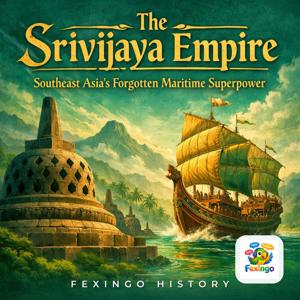


This episode of Fexingo History dives into the remarkable Tamil merchant guild inscriptions found at Lobu Tua in Barus, Sumatra. Lucas and Luna explore the 'Five Hundred Lords of the World' (Ayyavole) guild, their 1088 CE charter, and what it reveals about Srivijaya's multicultural trade networks. They discuss the guild's oath, its protections for merchants, and how Tamil, Chinese, and Southeast Asian traders coexisted under Srivijayan rule. The episode also touches on the port's role in the camphor trade and the shahbandar system. A fascinating look at medieval Southeast Asia's globalized economy.
#Srivijaya #Barus #Ayyavole #LobuTua #TamilInscriptions #CamphorTrade #MaritimeSilkRoad #SoutheastAsianHistory #AncientTrade #MerchantGuilds #Shahbandar #OrangLaut #Sumatra #1088CE #FiveHundredLords #History #FexingoHistory #Podcast
Keep every episode free: buymeacoffee.com/fexingo
In this episode of Fexingo History, Lucas and Luna explore the role of the goddess Kumari in the Srivijaya Empire. Srivijaya was a maritime mandala that controlled the Strait of Malacca from the 7th to 13th centuries, and its Buddhist kings worshipped a fierce protector goddess named Kumari, associated with the sea and trade. We examine the origins of Kumari worship in Indian Tantric traditions, how Srivijayan inscriptions like the Telaga Batu and Kedukan Bukit reference female deities, and the archaeological evidence of Kumari statues found at Muaro Jambi and Candi Gumpung. We also discuss how the Orang Laut, the sea nomads who served as Srivijaya's navy, may have blended local animist spirits with Kumari worship. The episode touches on the connection between Kumari and the later Malay spirit cults, and how the goddess faded after the empire's decline but left traces in regional folklore. Tune in for a deep dive into the spiritual life of Southeast Asia's forgotten maritime superpower.
#Srivijaya #Kumari #BuddhistGoddess #SoutheastAsia #MaritimeHistory #OrangLaut #MuaroJambi #TelagaBatu #Palembang #StraitOfMalacca #TantricBuddhism #KedukanBukit #CandiGumpung #Mahayana #Vajrayana #History #FexingoHistory #Mythology
Keep every episode free: buymeacoffee.com/fexingo
After decades of covering Srivijaya's trade networks and Chola invasions, Episode 66 turns to a quiet but pivotal figure: King Tribhuwanaraja of Dharmasraya. Discovered on the Padang Roco inscription dated 1286 CE, this Malayu ruler switched allegiance from Srivijaya to the rising Javanese kingdom of Singhasari. We dissect the Amoghapasa statue gift from Kertanegara, the carved mantra that rewrote political alliances, and how one vassal's choice helped unravel the Srivijaya mandala. Along the way, we explore the Sanskrit and Old Malay inscriptions at the site, the Buddhist symbolism of the statue, and what it reveals about 13th-century Sumatran geopolitics. A focused look at how a single stone monument records an empire's decline.
#Srivijaya #Dharmasraya #PadangRoco #Tribhuwanaraja #Kertanegara #Singhasari #Amoghapasa #OldMalay #Sanskrit #Inscriptions #Sumatra #Jambi #Malayu #Buddhism #Mandala #13thCentury #History #FexingoHistory
Keep every episode free: buymeacoffee.com/fexingo
Before Melaka, before Majapahit, there was Srivijaya — a Buddhist thalassocracy that ruled the Strait of Malacca for nearly 700 years. This episode dives into how Srivijaya's maritime empire actually worked: the 'pass system' that controlled trade through the strait, the role of the Orang Laut sea nomads as naval enforcers, and the sophisticated diplomatic balancing act between Tang China, the Chola Empire, and the Abbasid Caliphate. We explore the Kedukan Bukit inscription, the earliest surviving Old Malay text, which describes a sacred journey (siddhayatra) that may have marked Srivijaya's founding. We also unpack the mandala model of Southeast Asian kingship — how power radiated from the center rather than being territorially fixed — and how that shaped Srivijaya's resilience for centuries. Finally, we trace its decline: the Chola raid under Rajendra Chola I in 1025, the shifting trade routes, and the rise of competing ports on Sumatra and Java. This is the story of an empire built not on land, but on water.
#Srivijaya #MaritimeSilkRoad #OrangLaut #StraitOfMalacca #KedukanBukit #Siddhayatra #Mandala #RajendraChola #TangDynasty #AbbasidCaliphate #BuddhistEmpire #SoutheastAsianHistory #MaritimeHistory #OldMalay #Palembang #Sumatra #History #FexingoHistory
Keep every episode free: buymeacoffee.com/fexingo
Episode 64 of the Srivijaya series dives into the Lobu Tua stone, a Tamil inscription discovered near Barus on Sumatra's west coast. Dating to 1088 CE, it records a guild of Tamil merchants—the Ayyavole, or 'Five Hundred Lords of the World'—operating deep inside Srivijaya's sphere. Lucas and Luna explore what this stone tells us about long-distance trade networks, the role of foreign merchant enclaves in Srivijayan ports, and the surprising degree of autonomy these Tamil guilds enjoyed. They also unpack the political context: why were Tamil merchants allowed to set up their own assembly, complete with a militia and religious endowments, in a Buddhist mandala empire? The episode touches on the shahbandar system, the Orang Laut's role in policing trade, and how Srivijaya balanced its Buddhist identity with the needs of a multi-ethnic commercial hub. A mystery remains: the stone mentions a 'kottam'—a fortified settlement—yet no trace of it has been found. Was it destroyed by the later Chola invasion, or is it still buried under the coastal soil of Barus?
#Srivijaya #LobuTua #Barus #Ayyavole #TamilMerchants #FiveHundredLords #StraitOfMalacca #Sumatra #MaritimeSilkRoad #Shahbandar #OrangLaut #1088CE #SoutheastAsianHistory #IndianOceanTrade #BuddhistEmpire #Epigraphy #MedievalTrade #FexingoHistory
Keep every episode free: buymeacoffee.com/fexingo
In this episode of Fexingo History, Lucas and Luna explore the monastic universities of Srivijaya, the Buddhist empire that dominated the Strait of Malacca from the 7th to 13th centuries. Drawing on the records of the Chinese pilgrim Yijing, who studied in Palembang around 671 CE, they discuss how Srivijaya's monasteries attracted monks from China, India, and Tibet. They examine the curriculum, the role of Sanskrit, and the library system that made Palembang a major center of Buddhist learning. They also touch on the influence of the Pala Empire of Bengal, which supplied manuscripts and teachers to Srivijaya. The episode highlights the thousand-pillared monastery at Muaro Jambi, a sprawling complex along the Batanghari River that rivaled Nalanda in scale. Lucas and Luna consider how Srivijaya's monastic network helped spread Vajrayana Buddhism to Tibet, linking the empire to figures like Atisha, who studied in Srivijaya in the 11th century. They also discuss the decline of these monasteries after the Chola invasions and the rise of Majapahit. A donation segment early on invites listeners to support ad-free history at buy me a coffee dot com slash fexingo.
#Srivijaya #Buddhism #Yijing #Nalanda #MuaroJambi #Palembang #Atisha #Vajrayana #PalaEmpire #Sanskrit #Batanghari #MonasticUniversity #MaritimeSilkRoad #SoutheastAsia #BuddhistMonasteries #MahaVihara #FexingoHistory #History
Keep every episode free: buymeacoffee.com/fexingo
In this episode, Lucas and Luna explore the often-overlooked role of women in the Srivijaya Empire. While previous episodes focused on kings, monks, and warriors, this conversation turns to Srivijaya's queens and female merchants who shaped the empire's trade and diplomacy. Lucas introduces the 7th-century Queen Shima of Kalingga, a Javanese ruler known for her strict justice and control over the lucrative camphor trade. He also discusses the Srivijayan queen consorts mentioned in Chinese records, such as the queen of Shilifoshi who sent envoys to Tang China with gifts of ivory and slaves. The episode delves into the domestic sphere, covering the high status of women in Malay maritime societies, their roles in managing port cities while husbands were at sea, and the discovery of gold jewelry and bronze mirrors in female burials at Muaro Jambi that suggest wealth and influence. Lucas also touches on the Buddhist nuns who traveled with Yijing to study in India, including the enigmatic Jnanavati, a Srivijayan nun who became a respected scholar at Nalanda. The conversation challenges the assumption that Southeast Asian history was exclusively male-driven, showing how women quietly sustained and enriched the Srivijayan world.
#Srivijaya #WomenInHistory #SoutheastAsia #QueenShima #Kalingga #MaritimeSilkRoad #CamphorTrade #MuaroJambi #Yijing #Jnanavati #Nalanda #TangDynasty #FemaleMerchants #BuddhistNuns #AncientTrade #FexingoHistory #History #Empire
Keep every episode free: buymeacoffee.com/fexingo
In this episode, Lucas and Luna explore the life and journey of Atisha Dipamkara, the great Vajrayana master who studied in Srivijaya under the teacher Dharmakirti. They trace his path from Bengal to Sri Lanka to Palembang, where he spent twelve years mastering Buddhist philosophy. The conversation covers the transmission of Buddhism between India and Southeast Asia, Atisha's role in the Tibetan revival of Buddhism, and the political context of Srivijaya as a center of learning. They also touch on the historical sources, including Tibetan hagiographies and Yijing's records, that document Atisha's time in the Srivijayan mandala. The episode highlights how Srivijaya was not just a trading empire but a crucial node in the Buddhist world, shaping the development of Mahayana and Vajrayana traditions.
#Atisha #Srivijaya #Vajrayana #Buddhism #Dharmakirti #Palembang #Nalanda #Tibet #Yijing #MaritimeSilkRoad #SoutheastAsia #MedievalHistory #BuddhistStudies #TradeAndReligion #Mahayana #History #FexingoHistory #Podcast
Keep every episode free: buymeacoffee.com/fexingo
In this episode of Fexingo History, Lucas and Luna explore the pivotal Pamalayu Pact of 1275, when the Javanese king Kertanegara of Singhasari dispatched an expedition to Sumatra under the command of Mahisa Anabrang. They examine the political motivations behind this diplomatic mission, the negotiation with Malayu ruler Tribhuwanaraja at the Dharmasraya court, and the lasting impact on Srivijaya's waning influence. The discussion covers the Singhasari-Mongol tensions, the role of the Orang Laut, and the ethnic blending that followed the alliance. How the Pamalayu expedition reshaped power in the Strait of Malacca and set the stage for Majapahit's rise.
#Srivijaya #Pamalayu #Kertanegara #Singhasari #Malayu #Dharmasraya #Tribhuwanaraja #MahisaAnabrang #OrangLaut #Majapahit #StraitOfMalacca #Sumatra #Java #BuddhistHistory #MaritimeSilkRoad #13thCentury #SoutheastAsia #FexingoHistory
Keep every episode free: buymeacoffee.com/fexingo
How did a loose maritime empire control the Strait of Malacca for centuries without a standing army? The answer was the Orang Laut — sea nomads who formed the backbone of Srivijaya's naval power. This episode dives into their shipbuilding techniques, the evolution of the perahu and the lashed-lug tradition, how they enforced the pass system on passing merchant vessels, and the psychological warfare of fire arrows. We also explore the strategic chokepoints like Bangka Strait and the Selat Panjang, and how the fleet's composition changed under Chola and Majapahit pressure. Featuring the oldest known depiction of a Southeast Asian warship at Borobudur, the role of the shahbandar, and why naval decentralization was both Srivijaya's strength and its fatal weakness.
#Srivijaya #OrangLaut #MaritimeHistory #NavalWarfare #StraitOfMalacca #Perahu #BorobudurShip #PassSystem #Shahbandar #BangkaStrait #SelatPanjang #FireArrows #SoutheastAsia #AncientNavy #LashedLug #Chola #Majapahit #FexingoHistory
Keep every episode free: buymeacoffee.com/fexingo
From the publisher's feed