
Sign up to save your podcasts
Or

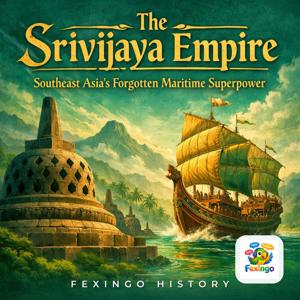


This episode of the Fexingo History podcast takes listeners deep into the jungles of Sumatra to explore the Muaro Jambi temple complex, once the second capital of the Srivijaya Empire and a major center of Buddhist learning. Hosts Lucas and Luna discuss the site's rediscovery, its layout of over 80 brick stupas and monasteries, and its connection to the Chinese pilgrim Yijing, who studied there. They reveal how Muaro Jambi rivaled Palembang as a political and religious hub, and examine the ongoing archaeological work that is rewriting the history of Srivijaya. The conversation touches on the Batanghari River's role in trade, the influence of Nalanda University, and the site's abandonment—likely due to the shifting course of the river. Specific terms include Muaro Jambi, Yijing, Batanghari River, Candi Gumpung, Candi Tinggi, and the Malayu Kingdom.
#Srivijaya #MuaroJambi #Yijing #BatanghariRiver #BuddhistTemples #SoutheastAsianHistory #MaritimeSilkRoad #Palembang #Nalanda #MalayuKingdom #CandiGumpung #CandiTinggi #Archaeology #Sumatra #MedievalHistory #Buddhism #History #FexingoHistory
Keep every episode free: buymeacoffee.com/fexingo
In the 11th century, the Strait of Malacca wasn't just a waterway — it was a marketplace governed by Tamil merchant guilds. This episode explores the Ayyavole, or 'Five Hundred Lords of Ayyavolu,' a powerful trade corporation that operated across South and Southeast Asia. We uncover their role in Srivijaya's port cities, how they managed trade across the Bay of Bengal, and what the Lobu Tua inscription tells us about their influence. From shipping pepper and spices to endowing Hindu temples, the Ayyavole were the venture capitalists of their age. Lucas and Luna discuss the complex relationship between these Tamil merchants and the Buddhist Srivijayan rulers, the goods that flowed through their networks, and the eventual decline of their power. Along the way, we touch on the Chola-Srivijaya relationship, the role of the Orang Laut as maritime guards, and how the Ayyavole's own inscriptions reveal a forgotten chapter of globalisation.
#Ayyavole #FiveHundredLords #TamilMerchantGuilds #LobuTua #Srivijaya #StraitOfMalacca #BayOfBengal #PepperTrade #HinduTemples #Chola #OrangLaut #MaritimeTrade #SoutheastAsia #Globalization #Inscription #TradeCorporation #History #FexingoHistory
Keep every episode free: buymeacoffee.com/fexingo
In this episode, Lucas and Luna explore the origins and impact of the Malay fire lance, an early gunpowder weapon used by Srivijaya. They discuss how the fire lance emerged from Song dynasty Chinese influence, the role of saltpetre trade through Southeast Asian ports, and its deployment against Chola raids and Mongol invasions. The conversation also covers the weapon's construction, its psychological effect on enemies, and how it foreshadowed the rise of gunpowder empires in the region. Specific details include the use of bamboo tubes, ceramic shards, and the chemical composition of early gunpowder, as well as archaeological evidence from the Musi River.
#Srivijaya #FireLance #Gunpowder #MalayWeaponry #SongDynasty #CholaInvasion #MongolInvasion #MusiRiver #Palembang #MaritimeSilkRoad #OrangLaut #Saltpetre #HuoQiang #MedievalWarfare #SoutheastAsianHistory #MilitaryHistory #History #FexingoHistory
Keep every episode free: buymeacoffee.com/fexingo
This episode of the Srivijaya series tells the story of Jnanavati, a rare named female scholar from Srivijaya's Buddhist golden age. Lucas and Luna explore her journey from Palembang to the great monastery of Nalanda in India, her study under the abbot Shilabhadra, and her return to lead a teaching center at the Thousand Temples monastery near present-day Jambi. Using Chinese traveler Yijing's records, they piece together Jnanavati's life against the backdrop of Srivijaya's patronage of Buddhism and its connections with the Pala Empire. The episode highlights the role of women in Buddhist scholarship, the transmission of texts across the Maritime Silk Road, and the archaeological evidence that hints at her legacy. It offers a fresh angle on Srivijaya as a center of learning, not just commerce, and brings to light a figure whose name survives in manuscripts and inscriptions.
#Srivijaya #Jnanavati #BuddhistNuns #Nalanda #Yijing #PalaEmpire #Shilabhadra #ThousandTemples #Palembang #Jambi #MaritimeSilkRoad #BuddhistScholarship #WomenInHistory #SoutheastAsianHistory #MuaroJambi #BuddhistManuscripts #History #FexingoHistory
Keep every episode free: buymeacoffee.com/fexingo
In Episode 44, Lucas and Luna explore the life and reign of King Balaputradewa, the last great Sailendra monarch of Srivijaya. They delve into his exile to Nalanda Monastery in India after a dynastic struggle with the Sanjaya rulers of Mataram, and his enduring legacy as a patron of Buddhism. The episode examines the Nalanda Copper Plate inscription, which reveals Balaputradewa's request for land endowments and his connection to the Pala Emperor Devapala. Lucas explains the significance of the Sailendra dynasty's transition from central Java to Sumatra, and how Balaputradewa's move solidified Srivijaya's role as a Buddhist center. The conversation touches on the architectural parallels between Borobudur and Nalanda, and the broader cultural ties between Southeast Asia and India. This episode sheds light on a pivotal figure who shaped the religious and political landscape of the Srivijayan empire.
#Balaputradewa #Sailendra #Nalanda #Srivijaya #Borobudur #Buddhism #PalaEmpire #Devapala #NalandaCopperPlate #Mataram #Sanjaya #Palembang #SoutheastAsianHistory #MaritimeHistory #BuddhistMonarchs #History #FexingoHistory #AncientEmpires
Keep every episode free: buymeacoffee.com/fexingo
Episode 43 dives into the shadowy conflict between Srivijaya and the Sanjaya dynasty of Mataram in central Java. While Srivijaya dominates the Strait of Malacca, the Sanjaya kings—from Sanjaya himself to Rakai Pikatan and Rakai Kayuwangi—build a rival Hindu kingdom inland, challenging Srivijaya's trade monopoly. We explore the 856 CE Old Malay inscription that hints at a war, the shifting alliances with the Sailendra Buddhist rulers at Borobudur, and how the Sanjaya eventually drive the Sailendras out of Java. Lucas and Luna unpack the archaeological clues: the Wanua Tengah III inscription, the Prambanan temple complex built as a Hindu counterpoint, and the mystery of Samaratungga's succession. How did a land-based kingdom challenge a maritime empire? And why did the Sanjaya ultimately fail to break Srivijaya's hold on the seas? This episode reveals a forgotten rivalry that shaped Southeast Asia.
#Srivijaya #Sanjaya #Mataram #Sailendra #RakaiPikatan #RakaiKayuwangi #Prambanan #Borobudur #CentralJava #OldMalay #WanuaTengahIII #Samaratungga #Balaputradewa #MaritimeSilkRoad #StraitOfMalacca #SoutheastAsianHistory #History #FexingoHistory
Keep every episode free: buymeacoffee.com/fexingo
In 1178, a Chinese maritime official named Zhou Qufei wrote a book that preserved one of the most detailed descriptions of Srivijaya ever recorded. But one line in his text has puzzled historians for centuries: the claim that Srivijaya's king sent a golden statue of a Buddha as tribute to the Song emperor — and that the statue was inscribed with a secret message. In this episode, Lucas and Luna unravel the mystery of the Chuanzhou Stone, a 12th-century stele from the port of Quanzhou that bears an inscription in Old Malay, linking Srivijaya directly to China's maritime trade network. They explore how this stone, along with Zhou Qufei's writings, reveals the sophisticated diplomatic and commercial strategies of a mandala that controlled the Strait of Malacca. Along the way, they touch on the role of the Tamil merchant guilds, the Buddhist networks that connected Palembang to Quanzhou, and the forgotten story of a Srivijayan envoy who may have died in China. This is the untold story of how Southeast Asia's greatest maritime empire managed its relationship with the Middle Kingdom — not as a vassal, but as a savvy partner in the global trade of the 12th century.
#Srivijaya #SongDynasty #Quanzhou #ChuanzhouStone #ZhouQufei #MaritimeSilkRoad #StraitOfMalacca #OldMalay #BuddhistTrade #TamilMerchants #Palembang #ChineseTribute #Mandala #12thCentury #SoutheastAsianHistory #ForgottenEmpires #History #FexingoHistory
Keep every episode free: buymeacoffee.com/fexingo
In Episode 41 of Fexingo History, Lucas and Luna explore how Srivijaya navigated its relationship with Tang and Song China through the tributary system. They delve into the strategic use of envoys, gifts, and titles—like the 'General of the Left'—to secure Chinese recognition without becoming a vassal. The discussion covers the Zhu Fan Zhi's description of Srivijaya's wealth, the role of Buddhist monks as diplomats, and the empire's clever balancing act between China, India, and local rivals. Lucas explains how Srivijaya's rulers, like Siddhayatra, leveraged the mandala model of overlapping loyalties to maintain autonomy while reaping the benefits of Chinese trade. The episode also touches on the controversy over whether these missions were truly tributary or diplomatic, and how the system evolved under the Song. A fresh angle that connects the dots between Srivijaya's maritime power and its savvy political maneuvering in the East Asian world order.
#Srivijaya #TangDynasty #SongDynasty #TributarySystem #MandalaModel #ZhuFanZhi #Siddhayatra #MaritimeSilkRoad #ChineseHistory #SoutheastAsianHistory #Diplomacy #BuddhistMonks #Palembang #StraitOfMalacca #FexingoHistory #HistoryPodcast #AncientTrade #PoliticalStrategy #SrivijayaEmpire #MaritimeHistory
Keep every episode free: buymeacoffee.com/fexingo
In 1088, a Tamil merchant guild called the Five Hundred Lords of Ayyavole erected an inscription near the Musi River in Palembang, deep in the heart of Srivijaya. This episode explores that stone — the Tanjore inscription's forgotten counterpart — and what it reveals about Srivijaya's cosmopolitan society, trade networks, and religious tolerance. Lucas and Luna discuss the Ayyavole guild, their oath of the flaming sword, the Tamil-Sanskrit hybrid culture of medieval Sumatra, and the diplomatic dance between Srivijaya, the Chola Empire, and the merchant communities that held the Strait of Malacca together. They also touch on the mysterious 'kings of the mountain' and whether Srivijaya's rulers actively courted foreign traders as a counterweight to Chola aggression. A story of commerce, coexistence, and a stone that rewrites Southeast Asian history.
#Srivijaya #Palembang #Ayyavole #CholaEmpire #TamilMerchants #FiveHundredLords #MusiRiver #Inscription #MaritimeTrade #StraitOfMalacca #1088 #MedievalSumatra #SoutheastAsia #History #FexingoHistory #TradeRoutes #ReligiousTolerance #Epigraphy #SrivijayaEmpire #SoutheastAsianHistory
Keep every episode free: buymeacoffee.com/fexingo
In this episode, Lucas and Luna explore the life and writings of the Chinese Buddhist monk Yijing, who spent over a decade in Srivijaya during the 7th century. Yijing's detailed records offer a rare window into the empire's golden age: its universities, monastic discipline, and role as a center for Buddhist learning. They discuss his journey from Tang China via the Maritime Silk Road, his studies at Srivijaya's 'thousand monasteries,' and his translations of scriptures. The episode also examines how Yijing's accounts corroborate other evidence, like the Kedukan Bukit inscription, and what they reveal about Srivijaya's connections to Nalanda and Tang China. A fresh angle on Srivijaya's intellectual and religious life through the eyes of an outsider.
#Srivijaya #Yijing #Buddhism #MaritimeSilkRoad #Palembang #TangDynasty #Nalanda #KedukanBukit #IChing #MonsoonTrade #BuddhistMonks #SoutheastAsia #7thCentury #SrivijayaEmpire #PilgrimRecords #History #FexingoHistory #BuddhistSutras #SoutheastAsianHistory #MaritimeHistory
Keep every episode free: buymeacoffee.com/fexingo
From the publisher's feed