
Sign up to save your podcasts
Or

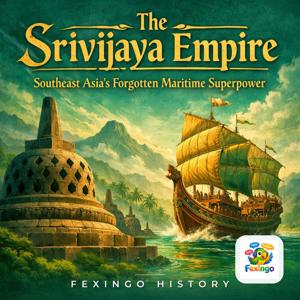


Lucas and Luna dive into the daily lives of the merchants, sailors, and captains who powered Srivijaya's maritime empire. They explore the multi-ethnic trading communities in Palembang, the grueling life aboard a perahu, the role of the shahbandar as port master, and the way the monsoon dictated everything from trade routes to religious festivals. Lucas paints a vivid picture of a floating city of traders from China, India, Arabia, and beyond, and reveals how Srivijaya's wealth wasn't just in gold, but in the invisible networks of trust, credit, and multilingual brokers. They also touch on the dangers: piracy, shipwreck, and the constant threat of disease in the sweltering port cities. A rare look at the human side of Southeast Asia's forgotten superpower.
#Srivijaya #MaritimeTrade #Monsoon #Shahbandar #Palembang #Perahu #OrangLaut #StraitOfMalacca #SongDynasty #IndianOceanTrade #SilkRoadoftheSea #SoutheastAsia #AncientEconomy #PortCities #Piracy #BuddhistTrade #FexingoHistory #History #SrivijayaEmpire #SoutheastAsianHistory
Keep every episode free: buymeacoffee.com/fexingo
In this episode, we explore the maritime network that underpinned Srivijaya's power through the lens of the "Thousand Islands Tribute" – a fascinating but obscure practice where vassal states sent symbolic ships to the capital at Palembang. We discuss the role of the Orang Laut sea nomads as both tribute bearers and enforcers, the types of ships used (including the lashed-lug perahu and the massive jong), and the political meaning of these floating offerings. Lucas and Luna also touch on the 13th-century Chinese account of a Srivijayan envoy who brought a model golden ship to the Song court, and how this tradition of tribute ships may have influenced later Malay sultanates. Along the way, we examine specific archaeological finds from the Musi River, including a 9th-century dhow wreck, and consider whether the "thousand islands" were literal or symbolic. This episode offers a fresh look at how Srivijaya used naval display to project authority without a standing navy.
#Srivijaya #OrangLaut #MaritimeHistory #Palembang #MusiRiver #SoutheastAsia #ThousandIslands #TributeSystem #SongDynasty #LaschedLug #Perahu #Jong #NavalHistory #TradeNetworks #Archaeology #Shipwreck #FexingoHistory #History #SrivijayaEmpire #SoutheastAsianHistory
Keep every episode free: buymeacoffee.com/fexingo
In 1025 CE, the mighty Chola emperor Rajendra Chola I launched a devastating naval raid across the Bay of Bengal, striking at the heart of the Srivijaya Empire. This episode reconstructs the Battle of Kadaram (modern Kedah, Malaysia), a turning point that shattered Srivijaya's monopoly on the Strait of Malacca. We explore how the Chola fleet—with its advanced shipbuilding and organized logistics—overwhelmed the Orang Laut and their lashed-lug war boats. We examine the Tanjore inscription's detailed account of captured Srivijayan kings, including Sangrama Vijayatunggavarman, and the empire's struggle to recover. Archaeological evidence from the Musi River and Kedah reveals the scale of the conflict. We also discuss how this invasion reshaped maritime trade, opening the strait to Tamil merchant guilds and paving the way for later regional powers. Join Lucas and Luna for a gripping tale of naval warfare, imperial ambition, and the fragility of a thalassocracy.
#Srivijaya #CholaInvasion #Kadaram #RajendraChola #Battleof1025 #OrangLaut #StraitofMalacca #MaritimeHistory #NavalWarfare #SoutheastAsia #TanjoreInscription #SangramaVijayatunggavarman #LashedLug #MusiRiver #Kedah #CholaDynasty #AncientShips #FexingoHistory #SrivijayaEmpire #SoutheastAsianHistory
Keep every episode free: buymeacoffee.com/fexingo
In this episode of Fexingo History, Lucas and Luna explore the life and legacy of Balaputradewa, the last known king of the Sailendra dynasty, whose 9th-century inscription at Nalanda monastery in India reveals a complex tale of exile, diplomacy, and cultural patronage. Fleeing Srivijaya after a succession struggle with the Sanjaya dynasty in Java, Balaputradewa petitioned the Pala emperor Devapala for funds to build a monastery for Southeast Asian monks at Nalanda, the greatest Buddhist university of its time. We examine the Nalanda Copper Plate inscription, Balaputradewa's claim to be a descendant of the Sailendra line, and what his move to India tells us about the interconnectedness of medieval Buddhist kingdoms across the Bay of Bengal. We also touch on the earlier Buddhist monk Yijing's account of Srivijaya as a center of Buddhist learning, and how Balaputradewa's story fits into the broader narrative of Srivijaya's golden age and eventual decline. This episode offers a glimpse into the personal and political dimensions of a king who lost his throne but left a lasting mark on transregional Buddhist culture.
#Srivijaya #Balaputradewa #Nalanda #Sailendra #PalaEmpire #BuddhistMonastery #Devapala #Yijing #CopperPlateInscription #MedievalIndia #SoutheastAsianHistory #MaritimeSilkRoad #BayOfBengal #BuddhistDiplomacy #ExileKing #9thCentury #History #FexingoHistory #SrivijayaEmpire #MaritimeHistory
Keep every episode free: buymeacoffee.com/fexingo
In this episode, Lucas and Luna explore how Srivijaya controlled the Strait of Malacca through a sophisticated pass system that regulated shipping and trade. They discuss the role of the shahbandar (harbor master), the use of the Musi River as a central hub, and how Srivijaya's naval power, based on the Orang Laut, enforced this system. The episode also touches on the economic impact of this control and how it eventually attracted the attention of the Chola Empire, leading to the 1025 raid.
#Srivijaya #StraitOfMalacca #MaritimeTrade #Shahbandar #OrangLaut #MusiRiver #PassSystem #Palembang #Chola #RajendraChola #SoutheastAsianHistory #MaritimeEmpire #IndianOceanTrade #Monsoon #FexingoHistory #History #AncientTrade #NavalPower #SrivijayaEmpire #MaritimeHistory
Keep every episode free: buymeacoffee.com/fexingo
In this episode of Fexingo History, Lucas and Luna explore a rarely discussed aspect of Srivijaya's military arsenal: the early use of gunpowder weapons. Long before the famous Ming dynasty fleets, Southeast Asian polities were experimenting with saltpetre, sulphur, and charcoal. Lucas explains the archaeological and textual evidence for the 'fire lance' — a bamboo tube filled with gunpowder and pellets, used as a flamethrower and proto-gun. He traces the likely transmission of saltpetre knowledge from Song China via the tribute system, and how Srivijayan shipwrights may have mounted these weapons on their lashed-lug war boats. Luna questions the reliability of the Zheng He map showing cannon on Srivijayan vessels, and they discuss the controversial claim that the 1293 Mongol invasion of Java sparked a gunpowder arms race in the archipelago. The episode also touches on the chemical composition of early Malay gunpowder, which had less saltpetre than Chinese formulas, and the tactical role of fire lances in defending the Musi River against Chola raids. Finally, they consider why this technology didn't prevent Srivijaya's decline — and how it passed to Majapahit and later European colonists.
#Srivijaya #FireLance #Gunpowder #MalayWeapons #MusiRiver #SongDynasty #ZhengHe #MongolInvasionJava #Saltpetre #Sulphur #Charcoal #LashedLug #OrangLaut #Majapahit #Chola #MilitaryHistory #History #FexingoHistory #SrivijayaEmpire #SoutheastAsianHistory
Keep every episode free: buymeacoffee.com/fexingo
In this episode, Lucas and Luna explore the fascinating world of Srivijaya's coinage—the gold and silver currency that powered the empire's maritime trade for centuries. They examine the famous 'sandalwood flower' coins, called 'mas' in Malay, which bore a distinctive floral design and were likely minted in Palembang. Lucas explains how these coins facilitated exchange from the Strait of Malacca to Chinese ports, and how their weight standard—based on the Indian 'masha'—reflected Srivijaya's deep connections to the broader Indian Ocean economy. They also discuss the mysterious 'tin coinage' found at archaeological sites like Muaro Jambi, which may have been used for everyday transactions. The conversation touches on the Tang and Song Chinese documents that mention Srivijayan currency, and the eventual decline of this monetary system under Chola and Majapahit pressure. A must-listen for anyone interested in economic history and the material culture of Southeast Asia's forgotten maritime superpower.
#Srivijaya #Coinage #MaritimeTrade #Palembang #SandalwoodFlowerCoin #MasCoin #IndianOceanTrade #MuaroJambi #TangDynasty #SongDynasty #Numismatics #EconomicHistory #SoutheastAsianHistory #StraitOfMalacca #MashaWeight #TinCoinage #History #FexingoHistory #SrivijayaEmpire #MaritimeHistory
Keep every episode free: buymeacoffee.com/fexingo
In this episode, we explore the final years of Srivijaya through the story of its last known king, who faced the dual threats of Javanese expansion and internal decline. We discuss the Majapahit conquest under Gajah Mada, the 1377 naval expedition against Palembang, and the fate of the Srivijayan royal family. We also examine the Chinese Ming Dynasty's tribute system and how the once-mighty thalassocracy faded from history, leaving behind only inscriptions and legends. Learn about the Nagarakretagama, the Pararaton, and the archaeological evidence from the Musi River that sheds light on this forgotten empire's end.
#Srivijaya #Majapahit #GajahMada #Palembang #MusiRiver #Nagarakretagama #Pararaton #MingDynasty #TributeSystem #Thalassocracy #SoutheastAsianHistory #MaritimeHistory #AncientEmpires #IndonesianHistory #FallOfEmpires #Sumatra #History #FexingoHistory #SrivijayaEmpire #BuddhistEmpire
Keep every episode free: buymeacoffee.com/fexingo
In this episode, Lucas and Luna explore a remarkable piece of evidence for Srivijaya's Buddhist patronage and international diplomacy: the Nalanda Copper Plate inscription of 860 CE. Discovered in the ruins of the great Buddhist university of Nalanda in Bihar, India, this copper plate records a grant of four villages by the Pala king Devapala to support a monastery built by a king of Suvarnadvipa, identified as Balaputradewa of Srivijaya. The inscription reveals the close ties between the Sailendra dynasty of Srivijaya and the Pala empire, and sheds light on the flow of Buddhist scholarship, art, and texts across the Bay of Bengal. Lucas explains how the plate was found, what it says, and why it matters for understanding Srivijaya's role as a center of Buddhist learning. He also discusses the broader context of Srivijaya's connections with India, including the travels of the Chinese monk Yijing, who studied at Srivijaya and Nalanda. The episode touches on the debates among historians about the identity of 'Balaputra' and the political dynamics between Srivijaya and the Pala kingdom. A fascinating look at how a single inscription can illuminate an entire civilization's intellectual and religious networks.
#Srivijaya #NalandaCopperPlate #Balaputradewa #PalaEmpire #Devapala #Suvarnadvipa #BuddhistPatronage #Nalanda #Sailendra #Yijing #SoutheastAsianHistory #IndianOceanWorld #BayOfBengal #BuddhistMonastery #Inscription #9thCentury #Bihar #FexingoHistory #SrivijayaEmpire #MaritimeHistory
Keep every episode free: buymeacoffee.com/fexingo
In this episode, Lucas and Luna explore the deep ties between the Srivijaya Empire and the construction of Borobudur, the world's largest Buddhist monument. They discuss how the Sailendra dynasty, which ruled Srivijaya's Java heartland, commissioned this massive stupa in the 9th century as a symbol of Mahayana Buddhist cosmology and royal power. The conversation covers the monument's design, its relief panels depicting maritime trade, and the philosophical meaning behind its three-tiered structure. They also examine the role of Srivijayan kings as patrons of Buddhism, sponsoring monks and building temples across Sumatra and Java. The episode touches on the debated links between Srivijaya and the Sailendras, the influence of Indian Gupta art, and how Borobudur's abandonment after volcanic eruptions mirrors Srivijaya's own decline. Listeners will learn about the monument's rediscovery in the 19th century and its modern significance as a UNESCO World Heritage site. The episode ends with a reflection on what Borobudur tells us about Srivijaya's ambition and cultural reach.
#Srivijaya #Borobudur #Sailendra #MahayanaBuddhism #Java #Sumatra #BuddhistMonuments #UNESCO #9thCentury #MaritimeTrade #Stupa #GuptaArt #IndonesianHistory #BuddhistCosmology #WorldHeritage #History #SoutheastAsianHistory #FexingoHistory #SrivijayaEmpire #MaritimeHistory
Keep every episode free: buymeacoffee.com/fexingo
From the publisher's feed