
Sign up to save your podcasts
Or

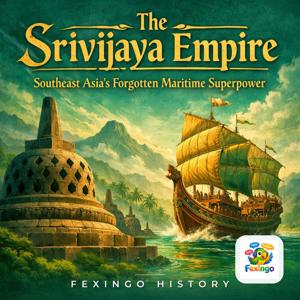


In 683 CE, a Srivijayan king named Harshawangdi (likely a Chinese rendering of a local title) sent an envoy to the Tang court, carrying exotic gifts including a pair of trained elephants and a rare bird. This episode digs into the diplomatic mechanics of Srivijaya-Tang relations, using the 683 mission as a case study. We explore how the empire leveraged tributary missions to secure trade privileges, military protection, and cultural prestige. Lucas and Luna examine the envoy's route from Palembang to Chang'an, the gifts' symbolic meaning, and the Tang emperor's response. They also consider the debate among historians over whether 'Harshawangdi' refers to a specific ruler or is a generic title. Along the way, they touch on Srivijaya's rivalries with other Southeast Asian polities like Melayu and Jambi for Chinese favor, and how these missions shaped the empire's golden age. The episode offers a focused look at a single diplomatic event that illuminates broader patterns of power, commerce, and culture in the Indian Ocean world.
#Srivijaya #TangDynasty #Harshawangdi #Palembang #ChangAn #TributarySystem #ChineseDiplomacy #SoutheastAsianHistory #MaritimeHistory #IndianOceanTrade #Melayu #Jambi #EmpressWuZetian #BuddhistDiplomacy #ElephantGifts #683CE #AncientDiplomacy #FexingoHistory #SrivijayaEmpire #BuddhistEmpire
Keep every episode free: buymeacoffee.com/fexingo
In the 11th century, Srivijaya faced a dilemma: its traditional tributary relationship with Tang China had collapsed, and the new Song dynasty was wary of maritime powers. This episode follows the diplomatic missions of Srivijayan envoys like the monk Śrījaya and the king Chü-li-hua-shi (Sri Deva) to the Song court, where they navigated changing protocols to maintain trade privileges, secure military aid against the rising Chola threat, and project Buddhist kingship. We explore the political subtlety behind seemingly humble tribute offerings—from rhinoceros horns to pearl-studded garments—and how Srivijaya's ambassadors leveraged Buddhist credentials to outmaneuver rivals like Jambi and the Cholas. The episode also touches on the Song source "Zhu Fan Zhi" for its records of these missions, and the new "pass system" that controlled access to Chinese ports. A story of soft power, maritime diplomacy, and the art of the tributary gift.
#Srivijaya #SongChina #BuddhistDiplomacy #ZhuFanZhi #SriDeva #Chola #MaritimeTrade #TributarySystem #RJaya #PassSystem #11thCentury #SoutheastAsia #IndianOcean #Sumatra #History #FexingoHistory #Diplomacy #SoftPower #SrivijayaEmpire #SoutheastAsianHistory
Keep every episode free: buymeacoffee.com/fexingo
In this episode, Lucas and Luna explore the inscribed stones left behind by the Srivijayan Empire—the Telaga Batu inscription, the Kedukan Bukit inscription, and others—which provide our most direct evidence of how this maritime power governed, worshipped, and projected authority. We examine what these Old Malay texts reveal about the empire's political structure, its adoption of Mahayana Buddhism, and the curious mix of Sanskrit and local vocabulary. We also look at the Kota Kapur inscription from Bangka Island, which threatens rebels with a curse and confirms Srivijayan expansion in the late 7th century. New discoveries and ongoing debates about the reading of these inscriptions are discussed, including the enigmatic 'varman' titles and what they might mean for Srivijaya's relationship with Indian models of kingship. This episode assumes some background on Srivijaya but dives deep into the epigraphic record that brings this forgotten empire back to life.
#Srivijaya #OldMalay #Inscriptions #TelagaBatu #KedukanBukit #KotaKapur #Sanskrit #MahayanaBuddhism #Palembang #Bangka #7thCentury #Epigraphy #MaritimeHistory #SoutheastAsia #Archaeology #Lingga #Kadatuan #History #SrivijayaEmpire #SoutheastAsianHistory
Keep every episode free: buymeacoffee.com/fexingo
Before the Chola invasion, before the rise of Malayu, Srivijaya's power rested not on a vast army or navy of conscripts, but on a loose confederation of sea nomads known as the Orang Laut. In this episode, Lucas and Luna explore who the Orang Laut were, how they patrolled the Strait of Malacca for the maharaja, and how their loyalties—or lack thereof—shaped the empire's rise and fall. We trace the origins of the Orang Laut back to the prehistoric Austronesian migrations, their role as informal coast guards and pirates, and their complex relationship with the Srivijayan court at Palembang. Drawing on Chinese accounts from the Zhu Fan Zhi, Malay legend, and modern archaeological evidence from the Batang Hari estuary, we uncover how these 'sea people' constituted the empire's invisible navy—and why their eventual shift of allegiance to Jambi may have been a death knell for Srivijaya. We also examine the Orang Laut's lasting legacy in the maritime cultures of the Riau Islands and the Malay Peninsula, where their descendants still navigate the same waters today.
#OrangLaut #Srivijaya #SeaPeople #StraitOfMalacca #Palembang #ZhuFanZhi #Austronesian #MaritimeHistory #SoutheastAsia #Piracy #NavalHistory #MalayWorld #RiauIslands #BatangHari #SeaNomads #FexingoHistory #History #Podcast #SrivijayaEmpire #SoutheastAsianHistory
Keep every episode free: buymeacoffee.com/fexingo
Srivijaya's power depended on controlling the Strait of Malacca, but how did they patrol those waters without a visible navy? This episode unpacks the empire's maritime strategy, focusing on the lashed-lug boat technology that made their fleet fast, flexible, and nearly invisible to outsiders. Lucas explains how the Malayu and Orang Laut peoples built and manned these vessels, how the monsoon dictated patrol schedules, and why the Chola invasion in 1025 CE exposed the fleet's fatal weakness: no standing navy. Along the way, we meet the sea peoples, the shahbandar port masters, and the tribute system that disguised naval supremacy as diplomacy. A fresh angle on how a 'thalassocracy' actually works when your ships are made of lashed planks and your sailors are seasonal.
#Srivijaya #MaritimeHistory #LashedLug #OrangLaut #StraitOfMalacca #Perahu #Shipbuilding #Thalassocracy #SoutheastAsia #Malayu #CholaInvasion #Monsoon #NavalHistory #Palembang #SeaPeoples #AncientTrade #History #FexingoHistory #SrivijayaEmpire #SoutheastAsianHistory
Keep every episode free: buymeacoffee.com/fexingo
In this episode, Lucas and Luna explore the surprising evidence of Tamil influence in Srivijaya — not through the Chola invasion, but through centuries of peaceful trade and cultural exchange. They examine inscriptions found in Sumatra and the Malay Peninsula that record Tamil merchant guilds, Hindu temples, and bilingual edicts. Lucas explains how Srivijayan kings adopted Tamil administrative terms, how Tamil maritime law shaped Straits trade, and why a 9th-century Tamil inscription in Palembang mentions a godown for goods bound for a Shiva temple. Luna asks why this connection is often overlooked by historians, and Lucas points to colonial-era biases and modern nationalist narratives. They also discuss the Tamil word 'kadam' (debt) appearing in Srivijayan records, and the spread of Tamil-style shipbuilding. The episode ends with a reflection on how empires are rarely monocultural, and how Srivijaya's genius was its ability to absorb and adapt influences from across the Indian Ocean.
#Srivijaya #TamilInscriptions #Palembang #TamilMerchantGuilds #IndianOceanTrade #TamilEpigraphy #StraitOfMalacca #HinduTemplesSumatra #BilingualInscriptions #TamilMaritimeLaw #KadamDebt #Shipbuilding #SoutheastAsianHistory #IndianInfluence #Epigraphy #9thCentury #History #FexingoHistory #SrivijayaEmpire #MaritimeHistory
Keep every episode free: buymeacoffee.com/fexingo
In this episode, Lucas and Luna explore the shifting power dynamics in 11th-13th century Sumatra, focusing on the rivalry between Srivijaya's capital Palembang and the upstart kingdom of Malayu based in Jambi. The conversation covers the gradual shift of trade and political influence from the Musi River to the Batang Hari River, the role of the Minangkabau highlands, and the enigmatic figure of Adityawarman. Specific details include Chinese records from the Song dynasty, particularly Zhao Rugua's Zhu Fan Zhi, describing Malayu as a rising power with its own tributary missions. The episode also examines the archaeological site of Muaro Jambi, its sprawling temple complex, and theories about why Srivijaya declined while Malayu flourished. New evidence from the Padang Roco inscription and the Amoghapasa statue is discussed, shedding light on Tantric Buddhist influences and the last known Srivijayan king, Mahesha. This is a deep dive into the subtler, internal collapse of a maritime empire overshadowed by the Chola invasion narrative.
#Srivijaya #Malayu #Jambi #Palembang #Sumatra #Adityawarman #ZhaoRugua #ZhuFanZhi #MuaroJambi #PadangRoco #Amoghapasa #Mahesha #BatangHari #Minangkabau #SongDynasty #MaritimeHistory #SoutheastAsianHistory #FexingoHistory #SrivijayaEmpire #BuddhistEmpire
Keep every episode free: buymeacoffee.com/fexingo
Srivijaya is often called an empire, but it was really a mandala: a fluid network of tributary port-kingdoms bound by oaths, trade, and shared Buddhism. This episode unpacks the term kadatuan (the ruler's domain) and how Srivijayan kings like Balaputradewa and Dharmasetu maintained control without a standing army or fixed borders. We discuss the role of the datu (local chieftains), the swearing of oaths with sacred water, and the 7th-century Telaga Batu inscription, which lists curses against rebels. Lucas and Luna explore how this decentralized structure allowed Srivijaya to dominate the Strait of Malacca for centuries—and why it ultimately made the empire vulnerable to defection. Drawing on epigraphic evidence and recent scholarship, we challenge the idea of Srivijaya as a centralized state.
#Srivijaya #Mandala #Kadatuan #TelagaBatu #Balaputradewa #Dharmasetu #Datu #Oath #SoutheastAsia #MaritimeEmpire #Palembang #StraitOfMalacca #Epigraphy #SrivijayanPolitics #Decentralization #BuddhistKingship #FexingoHistory #History #SrivijayaEmpire #SoutheastAsianHistory
Keep every episode free: buymeacoffee.com/fexingo
Long before the Strait of Malacca became the world's busiest shipping lane, the Srivijaya Empire of Sumatra grew rich not just on trade, but on a hidden treasure: gold. This episode of Fexingo History follows Lucas and Luna into the Sumatran highlands, where the Minangkabau people mined gold that traveled downriver to Palembang and across the Indian Ocean. They explore the legendary 'Isle of Gold' known to Arab and Indian traders as Suvarṇadvīpa, the innovative mining techniques of the highland communities, and how control of gold production helped Srivijaya dominate regional trade. From the Ophir region's ancient tunnels to the royal monopoly on bullion, discover how Sumatra's golden interior shaped a maritime empire. Lucas also examines the surprising role of gold in Srivijayan diplomacy, including tribute missions to Tang China and gifts to the Chola court. Along the way, the hosts encounter the mysterious Padang Roco inscription and the Amoghapasa statue, connecting Sumatra's gold trade to the later rise of the Malayu kingdom. A thoughtful look at how geology and geography shaped one of Southeast Asia's most powerful states.
#Srivijaya #SumatraGold #SuvarAdvPa #Minangkabau #Ophir #Palembang #PadangRoco #Amoghapasa #StraitOfMalacca #IndianOceanTrade #GoldMining #SoutheastAsianHistory #MaritimeEmpire #TangDynasty #CholaDynasty #AncientEconomy #FexingoHistory #History #SrivijayaEmpire #MaritimeHistory
Keep every episode free: buymeacoffee.com/fexingo
In this episode, Lucas and Luna explore the Muaro Jambi temple complex, a massive Hindu-Buddhist archaeological site on the Batang Hari River in Jambi, Sumatra. Built between the 7th and 13th centuries, it was likely a major religious and educational center for the Srivijaya Empire. They discuss the site's rediscovery in the 19th century, its layout of over 80 temple ruins (candi), and the ongoing debates about its role—was it a rival capital to Palembang, a monastic university, or a pilgrimage hub? The conversation covers the Chinese chronicler Zhao Rugua's accounts, the shift of Srivijaya's power base from Palembang to Jambi, and the site's eventual abandonment as the empire declined. They also touch on the modern challenges of preservation and looting. Fresh angle: focusing on the under-discussed Muaro Jambi complex as a window into Srivijaya's later period and its Buddhist heritage, distinct from earlier episodes on Palembang and trade.
#MuaroJambi #Srivijaya #Jambi #BatangHari #Candi #IndonesianHistory #Sumatra #Buddhism #Hinduism #Archaeology #ZhaoRugua #Palembang #Melayu #13thCentury #SoutheastAsianHistory #TempleComplex #MaritimeHistory #FexingoHistory #SrivijayaEmpire #BuddhistEmpire
Keep every episode free: buymeacoffee.com/fexingo
From the publisher's feed