
Sign up to save your podcasts
Or

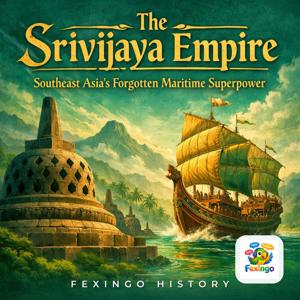


While earlier episodes explored Srivijaya’s spice trade, naval tactics, and Buddhist scholarship, this episode focuses on the man who cemented its golden age: King Balaputradeva. We trace his lineage from the Sailendra dynasty of Java to his eventual exile in the Khmer Empire, uncovering how his patronage of Nalanda University created a transoceanic intellectual bridge. Through the lens of Chinese monk Yijing’s accounts and Sanskrit inscriptions, we examine the political maneuvering that allowed Srivijaya to dominate the Strait of Malacca without constant warfare. We also look at the mysterious final years of Balaputradeva, questioning whether he fled invasion or sought refuge with old allies, and what his legacy means for understanding Southeast Asian identity.
#Balaputradeva #SailendraDynasty #SrivijayaEmpire #NalandaUniversity #YijingMonk #MaritimeSoutheastAsia #BuddhistScholarship #StraitOfMalacca #OldJavaHistory #MahayanaBuddhism #IndianOceanTrade #KhmerEmpire #TangDynastyChina #AncientNavalPower #JavaneseKingdoms #SoutheastAsianHistory #FexingoHistory #History
Keep every episode free: buymeacoffee.com/fexingo
Before the Chola raids shattered its political power, Srivijaya was a global beacon of learning. In this episode, we explore how Palembang became the premier center for Mahayana Buddhist study in Southeast Asia, attracting scholars from as far away as Central Asia. We look at the vibrant monastery complex that thrived on the Musi River, where monks translated Sanskrit texts into Old Malay and Chinese, creating a unique intellectual bridge between India and China. The story focuses on the role of royal patronage, particularly under King Balaputradeva, who invited the great scholar Dharmakirti to teach at the capital. We also examine the physical evidence of these institutions—the stone foundations, the inscriptions detailing endowments, and the travelogues of pilgrims like Yijing who described the daily life of students studying logic, grammar, and meditation. This is not just a story about trade routes, but about the flow of ideas, showing how a maritime empire used religion and education as its primary soft power tools long before it became known primarily for its spice monopoly or naval warfare.
#Srivijaya #Palembang #BuddhistMonastery #Mahayana #Balaputradeva #Yijing #Dharmakirti #MusiRiver #Nalanda #TangDynasty #OldMalay #Sanskrit #SoutheastAsiaHistory #MaritimeEmpire #BuddhistScholarship #TextTranslation #IndianOceanTrade #History #FexingoHistory
Keep every episode free: buymeacoffee.com/fexingo
We often remember Srivijaya for its trade routes and monasteries, but the empire’s survival hinged on one man’s desperate flight. In this episode, we explore the reign of Balaputradeva, a king who lost his throne in Java to the rising Sailendra dynasty and sought refuge in Sumatra. His arrival didn’t just add another ruler to the Palembang throne; it transformed the maritime state into a regional powerhouse by merging Javanese political sophistication with local naval strength. We look at how he used diplomatic marriages to secure alliances with the Chola kingdom and how he funded massive temple projects like the Trowulan complex, turning Srivijaya into a sanctuary for Buddhist scholars from across Asia. It is a story of exile, reinvention, and the quiet power of cultural diplomacy that kept the empire alive long after its military might had faded.
#Balaputradeva #SrivijayaEmpire #SailendraDynasty #PalembangHistory #MaritimeSoutheastAsia #BuddhistKingdoms #IndonesianHistory #MonsoonTrade #NalandaUniversity #YijingMonk #MalaccaStrait #CholaDiplomacy #SumatraPast #JavaHistory #AncientNavalPower #BuddhistArt #TrowulanTemple #FexingoHistory
Keep every episode free: buymeacoffee.com/fexingo
While Srivijaya is often remembered for its spice trade and naval power, this episode explores its profound role as a center of Buddhist scholarship. We trace the journey of the Chinese pilgrim Yijing, who spent years in Palembang studying Sanskrit texts before heading to India. The conversation highlights how Srivijayan rulers like Balaputradeva funded monasteries at Nalanda University, creating a diplomatic bridge between Southeast Asia and the Gupta Empire. We examine the Telaga Batu inscription, which reveals the spiritual authority behind the empire's political might, and discuss how the Orang Laut navigators carried not just goods but sacred manuscripts across the Indian Ocean. This deep dive into Srivijaya’s religious diplomacy shows how faith was the true currency of its maritime superpower status.
#Srivijaya #Yijing #Nalanda #Palembang #Balaputradeva #TalangTuwo #TelagaBatu #Mahayana #Vajrayana #OrangLaut #MusiRiver #DapuntaHyang #OldMalay #Sanskrit #ChinesePilgrims #MaritimeSoutheastAsia #BuddhistScholarship #History #FexingoHistory
Keep every episode free: buymeacoffee.com/fexingo
While earlier episodes explored Srivijaya’s trade routes and naval power, this episode follows the spiritual journey of the Chinese monk Yijing. In 671 CE, Yijing arrived in Srivijaya not as a merchant, but as a student seeking Sanskrit mastery before traveling to India. He spent years in Palembang, studying under local scholars and translating key Mahayana texts into Chinese. His detailed accounts in the Record of Buddhist Practices Sent Home from the Sea offer rare insights into daily life, monastic discipline, and the intellectual climate of seventh-century Southeast Asia. We examine how Srivijaya became a crucial bridge for Buddhist transmission between China and India, supporting hundreds of monks who passed through its ports. The narrative highlights the role of Srivijayan priests like Sramana Bhiksukara, who guided Yijing across the Bay of Bengal, and reveals how religious diplomacy reinforced political stability. Through Yijing’s eyes, we see Srivijaya not just as a commercial hub, but as a center of learning that preserved and transmitted Buddhist knowledge during a turbulent era.
#Srivijaya #Yijing #BuddhistMonk #Palembang #Mahayana #Nalanda #IndianOceanTrade #SoutheastAsiaHistory #AncientMaritimeEmpire #ChineseTravelers #BuddhismInSEAsia #TangDynasty #SanskritScholars #HistoricalMonks #MaritimeSilkRoad #ReligiousDiplomacy #FexingoHistory #HistoryPodcast
Keep every episode free: buymeacoffee.com/fexingo
We’ve spent the last dozen episodes tracing Srivijaya’s naval power, its spice monopolies, and the devastating Chola invasions. But we haven’t really talked about the physical ground beneath those ships: the river city of Palembang itself. In this episode, Lucas and Luna explore how the empire’s capital was built not on stone, but on water, mud, and bamboo. We look at the Telaga Batu inscription and the K'un-lun Po accounts to understand how a maritime state governed a labyrinthine archipelago without traditional fortresses. We’ll discuss the Orang Laut as both enforcers and guides, the engineering of floating palaces, and the specific diplomatic rituals that took place on the Musi River. This is a story about adaptability, hydrology, and the invisible infrastructure that held Southeast Asia’s first great thalassocracy together.
#Srivijaya #Palembang #MusiRiver #TelagaBatu #KedukanBukit #OrangLaut #DapuntaHyang #OldMalay #MaritimeHistory #SoutheastAsiaHistory #Thalassocracy #BambooArchitecture #IndianOceanTrade #Archaeology #AncientIndonesia #RiverCivilization #FexingoHistory #HistoryPodcast #MonsoonTrade
Keep every episode free: buymeacoffee.com/fexingo
In this episode, we explore how Srivijaya mastered the monsoon winds to control Southeast Asian trade. We look at the practical navigation techniques used by sailors in the ninth century, relying on star paths and seasonal wind shifts rather than complex instruments. The conversation examines the role of the Orang Laut in guiding ships through the treacherous waters of the Malacca Strait and the Java Sea. We discuss how these navigational secrets allowed Srivijaya to maintain its monopoly on spice trade for centuries, connecting the Tang Dynasty with India and beyond. This is a deep dive into the maritime technology and ecological knowledge that underpinned one of history’s most powerful thalassocracies.
#Srivijaya #MaritimeHistory #SoutheastAsia #MonsoonWinds #IndianOceanTrade #OrangLaut #MalaccaStrait #NinthCentury #TangDynasty #NavigationTechniques #SpiceTrade #Thalassocracy #Palembang #HistoricalNavigation #AncientSeafaring #FexingoHistory #HistoryPodcast #AsianHistory
Keep every episode free: buymeacoffee.com/fexingo
We often picture Srivijaya as a static port city in Palembang, but its true power lay in its mastery of the monsoon winds. In this episode, we explore how Srivijayan navigators and merchant princes understood the rhythmic pulse of the Indian Ocean better than any contemporary empire. We trace the journey of the Chinese monk Yijing again, but this time through his eyes on the logistics of travel—how ships waited months for the wind to shift, how they stocked fresh water in specific bays along Sumatra, and how this knowledge created a de facto monopoly on trans-oceanic transit. We also look at the Telaga Batu inscription not just as a legal code, but as evidence of a state that regulated maritime timing itself. By understanding the mechanics of the monsoon, Srivijaya didn't just trade goods; it traded time, controlling the very schedule by which the medieval world moved.
#Srivijaya #MonsoonNavigation #IndianOceanTrade #Yijing #Palembang #MaritimeHistory #SoutheastAsiaHistory #TelagaBatu #NalandaUniversity #TangDynasty #ChineseMonks #AncientNavigation #MalayArchipelago #HistoricalGeography #OceanCurrents #FexingoHistory #HistoryPodcast #GlobalHistory
Keep every episode free: buymeacoffee.com/fexingo
Long before the spice wars and naval blockades defined Srivijaya’s reputation, it was a critical node on the Buddhist Silk Road. In this episode, we explore how the empire became a sanctuary for scholars fleeing political upheaval in India and China. We look at the journey of the Chinese pilgrim Yijing, who documented his stay in Palembang around 671 CE, seeking Sanskrit texts to translate back into Tang dynasty China. Lucas and Luna discuss the unique role of Srivijayan monks like Sakyakirti, who translated key Mahayana sutras from Sanskrit into Chinese, effectively bridging two great literary traditions. You’ll learn about the specific monasteries that lined the Musi River, the curriculum of this ancient maritime university, and how religious diplomacy provided a stable alternative to military conflict. This is the story of how ink and parchment traveled further than swords, shaping the intellectual landscape of Southeast Asia.
#Srivijaya #Yijing #BuddhistSilkRoad #Palembang #Mahayana #Nalanda #MusiRiver #Sanskrit #TangDynasty #MaritimeTrade #SoutheastAsiaHistory #MonasticLife #TextTranslation #Balaputradeva #IndianOceanTrade #ChinesePilgrims #FexingoHistory #HistoryPodcast #AncientEmpires #ReligiousDiplomacy
Keep every episode free: buymeacoffee.com/fexingo
While previous episodes explored Srivijaya’s maritime networks and diplomatic ties to Nalanda, this episode investigates the physical reality of its capital, Palembang. We look at how the city functioned as a riverine metropolis built on bamboo and wood, defying the expectations of stone cities. Lucas traces the archaeological evidence from the Musi River banks, discussing the Telaga Batu inscription and the unique hydraulic engineering that allowed a floating market to thrive in the humid tropics. Luna asks about the daily life of merchants and monks who navigated these waterways, leading to a discussion on how the environment shaped Srivijayan law and religion. We also examine the mysterious disappearance of the stone structures and the enduring legacy of the Orang Laut in maintaining the city’s fragile infrastructure against the encroaching jungle and shifting river channels.
#Srivijaya #Palembang #MusiRiver #TelagaBatu #OrangLaut #SoutheastAsiaHistory #MaritimeEmpire #Archaeology #BuddhistKingdom #RiverCity #WoodenArchitecture #HydraulicEngineering #OldMalay #DapuntaHyang #KedukanBukit #JungleRuins #FexingoHistory #History
Keep every episode free: buymeacoffee.com/fexingo
From the publisher's feed