
Sign up to save your podcasts
Or

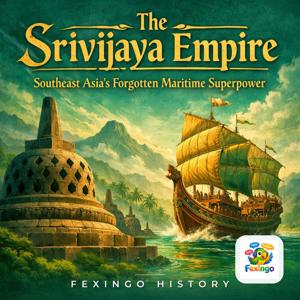


While previous episodes explored Srivijaya’s Buddhist scholarship and naval might, this episode uncovers the economic engine that sustained the empire: its ruthless control over the spice trade. We examine how Srivijaya transformed from a local riverine power into a regional monopoly holder by controlling the export of black pepper from Sumatra and cloves from the Moluccas. Lucas and Luna discuss the diplomatic tensions with the Chola Empire, the strategic importance of the Bangka tin mines, and the intricate system of tolls extracted from passing merchants in the Strait of Malacca. Through the lens of Arab merchant accounts and Chinese customs records, we reconstruct the daily reality of Palembang’s markets, where foreign traders navigated not just treacherous waters but also complex legal codes designed to keep competitors out. This is a story of economic warfare, where spices were more valuable than gold and trade routes were defended with the same ferocity as borders.
#SrivijayaEmpire #BlackPepperTrade #SpiceMonopoly #StraitOfMalacca #PalembangHistory #CholaInvasion #RajendraCholaI #OrangLaut #MaritimeSoutheastAsia #TalangTuwo #KedukanBukit #Yijing #Zabag #Sanfoqi #SumatraHistory #AncientTradeRoutes #IndianOceanTrade #FexingoHistory
Keep every episode free: buymeacoffee.com/fexingo
In 1025 CE, the Chola Emperor Rajendra Chola I launched a devastating naval expedition across the Bay of Bengal, striking at the heart of the Srivijaya Empire. While earlier episodes explored Srivijaya’s trade networks and Buddhist scholarship, this episode focuses on the military catastrophe that exposed its vulnerabilities. We trace the Chola fleet’s journey from Kanchipuram to Palembang, examining the Tamil inscriptions that detail the sacking of Kadaram (Kedah) and the capture of the Srivijayan king’s relatives. This event marked a pivotal shift in Southeast Asian power dynamics, weakening Srivijaya’s monopoly over the Strait of Malacca and paving the way for new maritime powers. Through the lens of the Thiruvalangadu plates, we uncover how a distant Indian dynasty’s ambition reshaped the archipelago’s political landscape.
#SrivijayaEmpire #CholaDynasty #RajendraCholaI #KadaramCampaign #MaritimeHistory #SoutheastAsiaHistory #TamilNaduHistory #StraitOfMalacca #MedievalNavalWarfare #BuddhistEmpires #IndianOceanTrade #Archaeology #Epigraphy #ThiruvalangaduPlates #Palembang #Kedah #BayOfBengal #History #FexingoHistory
Keep every episode free: buymeacoffee.com/fexingo
We often think of Srivijaya’s power as resting on the wealth of its capital, Palembang, or the spiritual prestige of its Buddhist universities. But maritime dominance requires more than gold; it requires control of the waters themselves. This episode explores the critical, often overlooked alliance between the Srivijayan maharajas and the Orang Laut, or 'Sea People.' We examine how this indigenous naval force acted as the empire’s eyes, ears, and sword in the treacherous Strait of Malacca. Through the lens of inscriptions like the Kedukan Bukit and Ligor texts, we trace how Srivijaya formalized a relationship with these seafaring communities, granting them autonomy in exchange for safe passage and tribute collection. We also look at the technological edge provided by the K'un-lun Po ships and the navigational mastery that allowed Srivijaya to choke off trade routes for rival powers like Chola India. This is a story of political ingenuity and maritime adaptation.
#Srivijaya #OrangLaut #StraitOfMalacca #Palembang #MaritimeHistory #SoutheastAsia #KedukanBukit #Nalanda #Balaputradeva #Yijing #CholaInvasion #KunlunPo #TalangTuwo #BatangHari #OldMalay #MandalaSystem #FexingoHistory #History #Podcast
Keep every episode free: buymeacoffee.com/fexingo
Before the modern nation-states of Indonesia and Malaysia existed, a maritime network governed by law held sway over the Strait of Malacca. This episode explores the legal architecture of the Srivijaya Empire, focusing on the Ligor inscription and the concept of mandala sovereignty. We examine how Srivijayan kings enforced safe passage for merchants through the Orang Laut naval forces and how their legal code influenced regional trade practices for centuries. By looking at stone inscriptions in Old Malay and Sanskrit, we uncover a sophisticated system of justice that protected both local fishermen and foreign traders from pirates and corrupt officials. The conversation traces the journey of this legal tradition from its roots in Palembang to its influence on later Islamic sultanates, revealing how ancient maritime law still echoes in the region’s commercial culture today.
#Srivijaya #LigorInscription #OldMalayLanguage #OrangLaut #StraitOfMalacca #MandalaSystem #MaritimeLaw #PalembangHistory #SoutheastAsiaHistory #AncientTradeRoutes #BuddhistKingdoms #NalandaConnection #TalangTuwo #KedukanBukit #Sanfoqi #Zabag #FexingoHistory #HistoryPodcast
Keep every episode free: buymeacoffee.com/fexingo
We trace the dramatic flight of Balaputradeva, the last great Sailendra king who lost his throne in Java to rival dynasties and sought refuge in Srivijaya. This episode explores how a defeated monarch became a patron of Nalanda University, sending land grants that linked Southeast Asia directly to India’s intellectual heart. We examine the Ligor inscription as proof of Srivijaya’s expanding influence into the Kra Isthmus, challenging the idea that Palembang was the sole center of power. By looking at the diplomatic correspondence between the Pala Empire and the Malay world, we uncover a network of religious and trade alliances that outlasted military defeats. Listen as we piece together the life of a king who turned exile into cultural diplomacy, reshaping the Buddhist landscape of medieval Asia.
#Balaputradeva #Sailendra #NalandaUniversity #PalaEmpire #LigorInscription #SrivijayaHistory #MaritimeSoutheastAsia #BuddhistDiplomacy #JavaKingdoms #KraIsthmus #MataramKingdom #RakaiPikatan #Devapala #OldMalay #SanskritInscriptions #SoutheastAsianHistory #FexingoHistory #History
Keep every episode free: buymeacoffee.com/fexingo
While we have explored Srivijaya’s trade routes, shipwrecks, and naval power, this episode turns inward to its intellectual heart. We trace the journey of Yijing, a Tang dynasty monk who arrived in Palembang around 671 CE seeking advanced Buddhist texts unavailable in China. Living for years in what he called Zabag, Yijing documented a thriving center of Sanskrit learning that rivaled Nalanda in India. He described hundreds of Indian monks studying grammar, logic, and philosophy under Srivijayan patronage. This conversation examines how a maritime empire became a crucial link in the transmission of Mahayana Buddhism to East Asia, detailing the curriculum, the library, and the daily life of students at this forgotten university.
#Srivijaya #Yijing #Palembang #BuddhistUniversity #Zabag #TangDynasty #Nalanda #SanskritLearning #Mahayana #MaritimeSilkRoad #SoutheastAsiaHistory #MonkScholar #Borobudur #IndianOceanTrade #ChineseMonk #BuddhismInSEAsia #AncientEducation #FexingoHistory
Keep every episode free: buymeacoffee.com/fexingo
In this episode, Lucas and Luna dig into the everyday economy beneath Srivijaya's grand temples and foreign quarters. Long before the maharaja's gold, traders along the Musi River used tin coins stamped with a conch shell, gold dust weighed on Chinese scales, and barter rings from Java. Lucas explains how the 775 CE Ligor inscription hints at royal control of currency, how a single shipwreck off Sumatra carried thousands of these tin pieces, and how Palembang's marketplaces juggled multiple currencies without a single central mint. The conversation touches on the Chinese traveler Zhao Rukuo's 1225 account of Sanfoqi, the Malay word wang as a lasting linguistic footprint, and why the Chola invasion may have disrupted more than just politics. It's a story of small change — and the quiet power of a standard denomination.
#Srivijaya #TinCurrency #SoutheastAsianHistory #Palembang #MusiRiver #LigorInscription #Sanfoqi #ZhaoRukuo #CholaInvasion #AncientEconomy #Numismatics #MoneyHistory #TradeRoutes #StraitOfMalacca #OldMalay #Wang #MaritimeHistory #FexingoHistory
Keep every episode free: buymeacoffee.com/fexingo
In this episode, Lucas and Luna explore the pivotal yet often overlooked role of the Orang Laut, the sea nomads who formed the backbone of Srivijaya's naval power. Beyond their famed skills as pirates and pilots, the Orang Laut were crucial to the empire's intelligence network and political stability. Lucas reveals how their loyalty was secured through ritual oaths, as recorded in the Telaga Batu inscription, and how their strategic control of the Strait of Malacca allowed Srivijaya to dominate trade for centuries. The conversation also touches on the legendary K'un-lun Po ships, the maritime code of conduct, and the eventual shift of power to Malayu-Jambi. Listeners will come away with a deeper understanding of how a decentralized network of sea peoples sustained a maritime superpower.
#OrangLaut #Srivijaya #SeaNomads #StraitOfMalacca #TelagaBatu #KunlunPo #MaritimeHistory #SoutheastAsia #Palembang #MalayuJambi #NavalPower #TradeEmpire #Buddhism #Sailendra #Yijing #AncientShips #History #FexingoHistory
Keep every episode free: buymeacoffee.com/fexingo
In this episode, Lucas and Luna dive into the maritime technology that made Srivijaya the undisputed ruler of the Strait of Malacca: the K'un-lun Po, a massive ocean-going vessel that carried spices, gold, and diplomatic gifts across the Indian Ocean. They explore its construction from the jungles of Sumatra, its role in Srivijaya's trade with Tang China and the Abbasid Caliphate, and the fierce Orang Laut crews who navigated by stars and monsoon winds. Through Chinese travel accounts and Arab geographies, they piece together the life of a ship that was both a merchant and a symbol of power. The episode also touches on the Belitung wreck and the challenges of reconstructing these ancient ships from archaeology and fragmentary texts. It's a story about how a kingdom built not on walls but on waves, and how a lost fleet still shapes our understanding of Southeast Asian history.
#Srivijaya #KunlunPo #MaritimeHistory #StraitOfMalacca #OrangLaut #IndianOceanTrade #TangDynasty #AbbasidCaliphate #Shipbuilding #BelitungWreck #AncientShips #SoutheastAsia #Palembang #Monsoon #Navigation #Nusantara #History #FexingoHistory
Keep every episode free: buymeacoffee.com/fexingo
In this episode, Lucas and Luna step into the court of Srivijaya's maharaja during the empire's golden age. They explore how the ruler's divine status was built on ritual, trade, and naval power, and how the maharaja's court in Palembang became a hub for Buddhist learning and diplomacy. The conversation moves from the Kedukan Bukit inscription, which records the empire's founding voyage, to the lavish ceremonies described by Chinese and Arab visitors, and the maharaja's role as a patron of the great monastery at Nalanda. Lucas shares how the maharaja's palace, with its gold, ivory, and exotic woods, was designed to awe foreign envoys and local subjects alike, reinforcing his claim to rule over the Strait of Malacca. They also touch on the limits of the maharaja's power, as the empire was more a mandala of loyal port-cities than a centralized state, and how that structure would eventually leave Srivijaya vulnerable. The episode weaves together archaeology, inscriptions, and traveler accounts to paint a vivid picture of a king whose wealth and wisdom were the stuff of legend, even as his realm's foundations were shifting.
#Srivijaya #Maharaja #Palembang #StraitOfMalacca #OrangLaut #KedukanBukit #Nalanda #Buddhism #SoutheastAsianHistory #MaritimeHistory #GoldenAge #TradeEmpire #Mandala #ChineseAccounts #ArabAccounts #Sanskrit #OldMalay #FexingoHistory
Keep every episode free: buymeacoffee.com/fexingo
From the publisher's feed