
Sign up to save your podcasts
Or

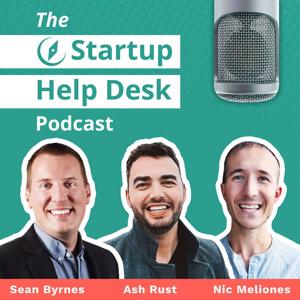


In this episode we answer questions about how to handle competition! We all have competition and how we handle it is the difference between winning and losing in our markets. We are here to help and in this episode we answer questions including:
All of these questions were submitted by listeners just like you. You can submit questions for us to answer on our website https://www.thestartuphelpdesk.com/ or on Twitter @thestartuphd - we'd love to hear from you!
Reminder: this is not legal advice or investment advice.
Q1: How much time should we be spending thinking about our competition?
The dream is to only focus on your customers’ needs. In reality, almost every founder – good and bad – probably spends too much time thinking about competition.
You should spend more time understanding your competition when potential customers name your competition as other solutions they are considering. You need to know who your potential customers are considering to solve the same problem you solve. You need to know why potential customers are considering them and, if a competitor wins the business, what made the customer’s decision.
In these scenarios, you can accelerate your ability to learn about your customers by understanding your competition.
In some cases, your “competition” may be a new trend or technical advancement, such as what we are seeing in AI. Tectonic shifts like this may make it possible to solve problems in a new way: this can either be a huge differentiator for you, a distraction, or a disruptor for your business.
Q2: How do you handle entirely new kinds of competition, like LLMs & GPT?
It will happen! If not today, eventually. Your playbook to handle this kind of competition should include:
Adapt as quickly as possible.
Q3: What do we do if our competition starts to beat us?
1: Make sure you know where and how they are beating you.
2: Talk to even more customers than usual. Understand WHY they are beating you. Is it your product? Price? Marketing?
3: Set expectations. There are rarely short term solutions, so set expectations appropriately.
4: Focus, focus, focus on whatever you need to do to win again.
Remember: your startup is a calculated bet. You should be in a constant state of learning if your value proposition works and adjusting where needed. If your competition starts to beat you, it is time to evaluate your differentiation. Simplify what you do so that you focus exclusively on your differentiation, and test continuously to see if your differentiation is enough to get you back into the winner’s circle.
In this episode we answer questions about how to handle a crisis! There have been no shortage of crises recently, including the COVID pandemic and the recent banking crisis. We are here to help and in this episode we answer questions including:
All of these questions were submitted by listeners just like you. You can submit questions for us to answer on our website https://www.thestartuphelpdesk.com/ or on Twitter @thestartuphd - we'd love to hear from you!
Episode Notes
Reminder: this is not legal advice or investment advice.
Q1: What, if anything, can I do to prepare for a crisis?
It is extremely difficult to predict when the next crisis will strike. The good news is that you can take action today to prepare. The best preparation is to build a healthy business (revenue coming from various sources and/or well managed runway) with:
- Clear ownership across the team for key responsibilities.
- A legal team already established and familiar with the needs of your business and industry.
- A regular cadence of communication with all team and direct reports.
Additionally, it can be hugely helpful to have your go-to advisors or other founders who have been in the trenches. When crisis strikes, you don't time to establish new relationships and friendships to learn how others are navigating a crisis. Instead, build your network of trusted advisors and fellow founders so that you can consistently learn from them and - in the moments of crisis - learn how they are addressing the crisis, too.
Q2: How do we handle crises that are bigger than we are, like the recent banking crises?
Make sure you survive. Assess what you control and what you don’t, and focus on on what you control.
In the midst of a crisis, you need to act and make decisions quickly. To do so:
- Sync with co-founders immediately.
- Seek guidance from advisors to learn what steps they are taking for their businesses.
- Proactively reach out to employees and customers.
- Get legal’s endorsement for the plan.
By communicating early and often, focusing on what you can control, and clearly defining your goal as "survival", you can get your startup to smoother tides.
Q3: What do I tell my team if they are panicking during a crisis?
They will panic; it would be strange if they didn’t!
1: Acknowledge the crisis and their concern.
2: Give them a plan to work towards. If you don’t have a plan, give them a plan to make a plan.
3: Be honest and transparent while staying calm and consistent. You are the anchor.
4: Give them a forum 1:1 to express concerns and listen.
Common pitfalls to avoid include:
- Yelling and screaming to create urgency. Instead, communicate urgency and set ambitious, shared goals.
- "Anyone not onboard with the plan needs to leave now." Instead, over-communicate the plan to help everyone understand the company's focus and how to get there.
In this episode we answer questions about the problems that come from scaling your startup, and how to fix them! We answer questions including:
All of these questions were submitted by listeners just like you. You can submit questions for us to answer on our website https://www.thestartuphelpdesk.com/ or on Twitter @thestartuphd - we'd love to hear from you!
Episode Notes
Reminder: this is not legal advice or investment advice.
Q1: How does the Founder role as a company grows?
We discussed three common stages for a founder as the company grows:
Stage 1: Building. Find the right problem, do customer discovery, and start solving the problem for your first customers. Build, test, repeat!
Stage 2: Fundraising and Marketing. Once you have proof that your startup is solving a problem worth solving, it’s time to add fuel to the fire. Your primary focus is growth via accelerating your sales and marketing and/or fundraising.
Stage 3: Recruiting and HR. When your company reaches a large enough scale, the best way to scale your efforts as a founder is to hire more great people.
Your role as a founder at all stages is to set the vision, remind people of the vision, decide on how to prioritize the pursuit of that vision, and motivate people to keep going.
Q2: What do I need to change as my team goes from 5 to 25 people?
Move from leading by example to leading through instruction. “Leading by example” only scales so far. To scale your leadership principles:
In addition to changing your leadership style, your startup will face new responsibilities, such as:
Q3: What do I do if my co-founder isn’t growing with the company?
It happens at almost all companies. An effective partnership requires frequent talks, including those about productivity and performance. Being a “founder” is a unique role, but the title doesn’t make someone magically qualified.
Start with investigating the problem. Have an open discussion about your co-founder’s role and the company’s future.
You may find that more frequent open discussions with your co-founder lead to better alignment and a better environment to support their growth.
You may find there is a role that better fits their skills.
Alternatively, you may find that they are no longer bought into the vision.
If they are being toxic or creating conflict, it’s time to part ways and transition them out of the company. This is complex, so of course discuss this with your lawyers and investors.
Understanding the main obstacle to your co-founder’s growth will help you triage and either unlock their growth potential or recognize that it is no longer a fit so that you can adjust accordingly.
In this episode we answer questions about your employees, how to know if they are happy and how to ensure that they are! We answer questions including:
All of these questions were submitted by listeners just like you. You can submit questions for us to answer on our website https://www.thestartuphelpdesk.com/ or on Twitter @thestartuphd - we'd love to hear from you!
Episode Notes
Reminder: this is not legal advice or investment advice.
Q1: How do you measure employee satisfaction?
You have to find ways to "listen" to the pulse of the company. However, listening is hard, so you have to design intentional ways to collect info.
Go-to methods include: surveys, 1-on-1s, event attendance, demand for more events (i.e. are people asking for events?), employee retention numbers, and manager perceptions (their observations from 1-on-1s and more generally how they perceive team morale).
Lastly: make sure you spend the time to interpret the results and demonstrate that they lead to action. For example, if you run a survey, commit to investigating the results closely and implementing change where applicable.
Q2: What do you do if employee morale is low?
There will always be points where morale is low! Focus on where you are going, not where you are stuck. It is important to give employees something to believe in: always have a plan, and change the plan if it's not working.
Consider the following ingredients in your plan:
- Have an all-hands: be open about problems, take questions and feedback.
- Let go of bad eggs: if your startup faces a money crisis, you can have layoffs in one go.
- Make a plan for success: make it credible, set owners to generate excitement.
Transparency is key. Be honest about the circumstances and optimistic about the road forward.
Q3: What's an MVP of performance reviews?
Early companies don’t need performance reviews. Focus instead on personal growth: help your team grow in their careers.
If you have under performers, you know it. If someone is over performing, you know know it.
Let go of under performers, and give more responsibilities to over performers.
When it comes time to create v1 of your performance review process: document team members' progress. You want an easy way to track when an employee is helping move the company forward. Do this via monthly 1-on-1s and written status updates from the employee (can be weekly, monthly, quarterly: track their "wins" that contribute to helping the startup reach its milestones).
In this episode we answer questions about how to set the price on your product! We answer questions including:
All of these questions were submitted by listeners just like you. You can submit questions for us to answer on our website https://www.thestartuphelpdesk.com/ or on Twitter @thestartuphd - we'd love to hear from you!
Episode Notes
Reminder: this is not legal advice or investment advice.
Q1: How do I decide on a price for my new product?
Here's a 4-step formula to consider when pricing your first product:
A few more best practices:
Proper pricing is a function of "value". How much value does your product provide to your customer? Are you helping them make money or cut costs? Understanding how your customer values your product allows you to price effectively.
Q2: Should I raise my prices if I think they are too low?
Yes! You should raise prices.
Q3: Should I raise prices on existing customers or only new customers?
There are a few avenues to consider on this one:
One route: raise prices for new customers only, never raise prices on existing customers.
Another route: you are probably undercharging customers today, so it is OK to raise prices on both new and existing customers.
In this episode we answer questions about making money and profitability! We answer questions including:
All of these questions were submitted by listeners just like you. You can submit questions for us to answer on our website https://www.thestartuphelpdesk.com/ or on Twitter @thestartuphd - we'd love to hear from you!
Episode Notes
Reminder: this is not legal advice or investment advice.
Q1: Should I focus on Growth or Profitability?
Most should prioritize profitability. This has not always been the case, especially as investors have encouraged venture-backed founders to prioritize growth for years. However, the macro climate has changed, and profitability is always in season.
Q2: How do I figure out my Unit Economics?
Unit economics answer this question: are you making money or losing money on every unit of your product that you sell? Common factors for your unit economics include:
The aforementioned methods can be effective to helping you determine how much money you make (or lose) with every product you sell.
Another way to think about unit economics is to start with the margins you need for your startup (Ash implores founders to aim for 90%+ margins), and price your product accordingly. Thus, the revenue you generate per customer should be roughly 10x the corresponding costs you incur to acquire, service, and retain that customer.
When do unit economics matter? They matter when you are turning on your startup's growth engine.
Q3: How do I know if I'm making enough money?
The answer to "am I making enough money with my startup" is different for every founder. Are you comfortable, motivated, or over-stressed with your startup? Are you venture-backed? Or are you profitable and bootstrapped? The answers to these questions will factor into your own equation for what "enough money" means to you.
Other factors to include in your equation are:
As your startup grows, "enough money" may take on a new form at every stage. Are you making enough money to help your company reach the next milestone. Once you reach that next milestone, you will likely need to recalculate what "enough money" means and continue your pursuit for it.
In this episode we answer questions about how to hire your first employees! We answer questions including:
All of these questions were submitted by listeners just like you. You can submit questions for us to answer on our website https://www.thestartuphelpdesk.com/ or on Twitter @thestartuphd - we'd love to hear from you!
Episode Notes
Reminder: this is not legal advice or investment advice.
Q1: How do you find the right co-founder?
It takes a ton of effort. Plan to work on it daily, scheduling a minimum of 5 meetings a week.
Search for co-founders everywhere:
Don’t become best friends overnight. Look for someone with:
You can start testing your fit as co-founders by solving problems together and creating things together.
Don’t get discouraged! It takes time.
Q2: How do you convince people to join your very early stage startup?
Got it? Ok, let's talk strategy now.
People are most likely to join because of "you". Thus, they are most likely to be from your network. Offer them what they can’t find elsewhere: a chance to be creative and solve important problems with a huge impact.
Empower them to contribute meaningfully:
Look for people who bring the passion with them and care deeply about solving the problem your startup intends to solve.
And of course, a key strategy is "build your startup"! That's right: people want to work with folks who create momentum. As you generate traction, you will demonstrate that this is a real opportunity, and it will make it easier to convince folks to join your journey.
Be patient. It takes a long time to hire your first few employees.
Q3: What should you pay a co-founder?
We heard a variety of answers on this one! First, some common details:
We saw differing opinions on other details.
Opinion 1:
Opinion 2:
That's the magic of your startup journey: advice can help pave the way for a variety of paths to consider, and you can then decide how to apply it to your startup.
In this episode we answer questions about how to build your first product! We answer questions including:
All of these questions were submitted by listeners just like you. You can submit questions for us to answer on our website https://www.thestartuphelpdesk.com/ or on Twitter @thestartuphd - we'd love to hear from you!
Episode Notes
Reminder: this is not legal advice or investment advice.
Q1: How do you decide what to include in your Minimum Viable Product (MVP)?
Start with "nothing". You heard that right!
Once you have validated what you should build, v1 of your software needs to only do one thing well: solve one part of the problem. Everything else is a distraction.
The emphasis on “one” is key: by only doing one thing, you can measure if your solution is actually solving the problem or not.
Of course, there are components of your solution that will be requirements, such as the ability to login. Eliminate everything that is not absolutely essential.
Q2: When does good design matter?
Design matters on day 1, but not necessarily the “design” that we commonly think of. There are three kinds of design, and they typically arrive in this order:
1: Design thinking: important from day 1 of startup journey.
2: UX Design: important once you know which problem to solve.
3: Visual Design: important once you have proof that you are solving an important problem.
Early investment in design can hold you back, since you don’t want to over-invest in prototypes. Thus, good design matters when you have a clear idea of who your user is and how they want to use your product.
Until then, your "design" efforts should focus on unearthing insights about your prospective users and how to solve their problems.
Lastly, design makes complex products simple and can be a critical differentiator. Users won’t see great design, since it makes everything easier, but that’s okay!
Q3: How do you start selling, with just a prototype or an MVP?
Start selling as early as possible. How early?
Start selling long before you even have a prototype!
However, "selling" ultimately means you are getting money for the product. Thus, when you have customers ready to pay, they are often looking to use your MVP (which many often consider to be your prototype). This is especially true if it’s a product that requires integration with other systems: an MVP is usually necessary to get the customer to integrate.
In general, with few exceptions, if you build before you sell - you will have to build twice. Limit this risk considerably by selling ASAP so that you know what to build.
In this episode we answer questions about how to get your product in the hands of customers, also known as distribution! We answer questions including:
All of these questions were submitted by listeners just like you. You can submit questions for us to answer on our website https://www.thestartuphelpdesk.com/ or on Twitter @thestartuphd - we'd love to hear from you!
Episode Notes
Reminder: this is not legal advice or investment advice.
Q1: Should you build an audience or product first?
We heard differing opinions on this one!
One take: either works, as it really depends on the team’s existing talents.
You can generate long wait lists and strong demand by working on the audience first. An example of this might be making a great video for a Kickstarter campaign and generating a community from that interest.
Alternatively, if you’re building in a crowded market or your product UX will be a major differentiator, it can make sense to build first then launch with an innovative product that generates interest. A good example here would be launching a new kind of CRM on Product Hunt.
Another take: the biggest risk you face as an entrepreneur is building something that nobody wants. It is more important to prove demand first. Thus, build an audience first.
To do so:
Q2: What are the secrets to cold outreach?
Best practices include:
Even the best cold outreach has extremely low conversion rates. Anything above 1% is amazing.
Q3: What are channel partners and should you use them?
Channel partners are great AFTER you’ve established your business. They work best if you have customers coming to you that you don’t want to support yourself.
However, channel partners come with plenty of challenges:
In the early days of your startup, it is much less likely that a channel partner will be effective. The main benefit may be the perceived prestige from working with a known brand in your industry.
In this episode we answer questions about doing effective Customer Discovery, including:
All of these questions were submitted by listeners just like you. You can submit questions for us to answer on our website https://www.thestartuphelpdesk.com/ or on Twitter @thestartuphd - we'd love to hear from you!
Episode Notes
Reminder: this is not legal advice or investment advice.
Q1: How do you hold a Customer Discovery interview?
Step 1: disarm your interviewee.
Step 2: ask about their problems.
Step 3: ask “subjective” questions to go deeper on their motivations to solve the problem.
Step 4: conclude the interview by asking if you can follow up with more questions and if they can introduce you to others to interview. Schedule another meeting or get them on the mailing list.
Additional best practices:
Q2: What to do if you hear inconsistent feedback?
In the early stages of your customers interviews, expect a lot of variance. It can often mean you haven’t found the right problem to solve yet, or you have not narrowed in on the right target audience yet.
Remember: words and behavior are not the same. Listen closely and continue calibrating your questions, asking more open ended questions.
Furthermore:
As you increase your volume of interviews, calibrate your questions, and refine your target audience, you may see your feedback become much more consistent!
Q3: How much time should makers put towards building vs selling/discovery?
Selling only matters after you have product/market fit. If you don’t have it, then you need to focus your time on customer development.
Once your interviews show that you have right problem to focus on, you want to test your ability to solve it: this is where you have a balance of “building” and “discovery”.
Once you have product/market fit, you need to have a team in place so that you can build and sell at the same time instead of jumping back and forth.
From the publisher's feed
Answers to your questions about starting and building companies. Your hosts are Sean Byrnes, Ash Rust and Nic Meliones, all experienced founders who have built companies themselves and coached…