
Sign up to save your podcasts
Or



Based on Podcast App listening data
The past 20 years of President Vladimir Putin's rule have coincided with a widening inequality gap in Russia. Now a constitutional change allows him two more chances at the ballot box — which means he could still be president in 2036. Today, we're looking at how Putin's economic policies have made the rich richer, the poor poorer, and why he's still so popular.
In this episode:
Julian Colling (@juliancllg), a freelance journalist based in Moscow; and Greg Yudin, a professor of political philosophy at the Moscow School of Social and Economic Sciences.
For more:
Will Vladimir Putin be president of Russia for life?
Connect with The Take:
Twitter (@ajthetake), Instagram (@ajthetake) and Facebook (@TheTakePod).
Juneteenth, as it's known, is the day in 1865 when enslaved people in Texas finally learned that slavery had been abolished two years earlier. The date, June 19, has been marked as the true day of independence in the Black community for over 150 years, and now state governments, companies and many other Americans are finally taking notice.
In this episode:
Michael Harriot (@michaelharriot), senior writer for The Root; Michael Hurd, a historian and director of Prairie View A&M University’s Texas Institute for the Preservation of History and Culture; Opal Lee, a 93-year-old activist and advocate for Juneteenth becoming a US federal holiday.
Connect with The Take:
Twitter (@ajthetake), Instagram (@ajthetake) and Facebook (@TheTakePod).
Latin America's most populous country now has over 1 million infections and more than 50,000 COVID-19 deaths. But President Jair Bolsonaro continues to dismiss the outbreak, and has protested local lockdown measures. The rate of infections continues to grow, threatening indigenous communities in the Amazon, with many accusing the government of genocide.
In this episode:
Teresa Bo, Al Jazeera journalist covering Latin America.
For more:
Protests target Bolsonaro after Brazil's worst coronavirus week
In Pictures: COVID-19 ravages Amazon river communities in Brazil
COVID-19 spreading fast among Brazil's Indigenous tribes
Connect with The Take:
Twitter (@ajthetake), Instagram (@ajthetake) and Facebook (@TheTakePod).
July 1 is a deadline with the potential to reshape Israel, Palestine, and the rest of the Middle East. That’s when Israel may begin plans to annex parts of the Occupied West Bank — as much as 30 percent. Annexation is illegal under international law and much of the world has condemned it. So why might this controversial move happen now?
In this episode:
Rania Zabaneh (@RZabaneh), Al Jazeera journalist in the Occupied West Bank; Gershom Gorenberg (@GershomG), Israeli historian.
For more:
'Everyone scared': How Palestinians are preparing for annexation
UN, Arab League call on Israel to drop annexation plans
Palestine and Israel: Mapping an annexation
Connect with The Take:
Twitter (@ajthetake), Instagram (@ajthetake) and Facebook (@TheTakePod).
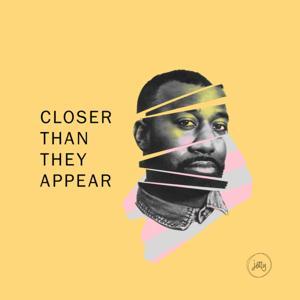
Carvell Wallace was the host of Al Jazeera's first feature podcast in 2017. In Closer Than They Appear, he had tough conversations centered around issues we are struggling with today, and he gave us a glimpse into what it's like to be a Black man in America. In the first of seven episodes, he talks with Academy Award-winning actor Mahershala Ali. Today, The Take brings you this conversation.
In this episode:
Mahershala Ali, actor and artist.
For more:
Closer Than They Appear
Connect with The Take:
Twitter (@ajthetake), Instagram (@ajthetake) and Facebook (@TheTakePod).
Global hunger is one of the most dangerous side effects of the coronavirus pandemic. Some of the most vulnerable to hunger live in the world's richest cities, or work in the industries that feed us. In this episode, The Take explores the global food chain's weak links and how some are innovating to help keep people fed.
In this episode:
Duarte Geraldino (@Duartegeraldino), deputy managing business editor for AJ Impact; Edward Summers (@edsummers11), executive director of The Bronx Private Industry Council; and Raj Patel (@_RajPatel), research professor at the University of Texas at Austin.
For more:
Coronavirus response: Hacking emergency food supply chains
Food supply chains do not care if people go hungry
Connect with The Take:
Twitter (@ajthetake), Instagram (@ajthetake) and Facebook (@TheTakePod).
Protesters say the Hong Kong and Beijing governments are stealthily chipping away at the city's democracy this year, expecting the international community to be distracted by the coronavirus pandemic. Many activists say 2020 is the year Hong Kong will either get democracy, or lose everything.
In this episode:
Divya Gopalan (@DivyaGnews), Hong Kong native and Al Jazeera journalist.
For more:
Hong Kong’s long game to secure democracy
Hong Kong security law: Growing unease about China's legislation
'There is never an end game': Hong Kong after a year of protest
Connect with The Take:
Twitter (@ajthetake), Instagram (@ajthetake) and Facebook (@TheTakePod).
The coronavirus pandemic has changed every aspect of society, including education. Classes have moved online, and parents have become responsible for their children's schooling. In this episode, we’re exploring how this sudden shift in routine might affect a child's development, and asking what families can do to make kids feel safe and supported.
In this episode:
Dr. Jessica Dym Bartlett (@dymbartlett), director of early childhood research at Child Trends.
For more:
Children facing 'devastating' effect of coronavirus: Report
Coronavirus fallout triggers human development crisis: UN
New normal awaits US college students returning to campus
Connect with The Take:
Twitter (@ajthetake), Instagram (@ajthetake) and Facebook (@TheTakePod).
Five years of civil war, cholera, and starvation have devastated Yemen while Saudi-led blockades and bombing campaigns have left its healthcare system almost useless. Now, Yemen faces a new challenge — a global pandemic, right when crucial aid to the country is starting to dry up. How bad could things get in Yemen?
In this episode:
Hakim Almasmari, journalist and mediator in Sanaa, Yemen.
For more:
Donors pledge $1.35bn in humanitarian aid to war-ravaged Yemen
Yemen gov't accuses Houthis of covering up coronavirus outbreak
Saudi-led coalition says it shot down two Houthi drones
Connect with The Take: Twitter (@ajthetake), Instagram (@ajthetake) and Facebook (@TheTakePod).
Each time someone leaves their home in Baltimore, Maryland, their every move could be recorded from above. The city with one of the highest murder rates in the US has launched the Aerial Investigation Research surveillance program. Critics say it represents a frightening erosion of people's right to privacy.
In this episode:
Patty Culhane (@PattyCulhane), Al Jazeera journalist; Brett Max Kaufman, senior staff attorney at the American Civil Liberties Union's (@ACLU) National Security Program.
For more:
US city deploys camera-equipped planes for surveillance
Connect with The Take: Twitter (@AJTheTake), Instagram (@ajthetake) and Facebook (@TheTakePod).
From the publisher's feed
The Take is a daily interview-driven international news podcast hosted by award-winning journalist Malika Bilal. Each episode focuses on conversations with journalists and people directly impacted by the news of the day, offering our listeners the context necessary to understand what's in the headlines.
With millions of global listens, it's clear the conversations we're having on The Take are worth hearing. And critics think so too. The show has won the Online Journalism Awards, the Signal Awards, Lovie Awards, and Anthem Awards, among others.
Ranked by our users in the last 21 days

5,733 Listeners

1,862 Listeners

1,795 Listeners

1,461 Listeners
8 Listeners

1,585 Listeners

6,103 Listeners
45 Listeners

111,791 Listeners
619 Listeners
257 Listeners
266 Listeners

976 Listeners

16,316 Listeners
109 Listeners
82 Listeners

15,877 Listeners
143 Listeners
13 Listeners

278 Listeners

366 Listeners
11 Listeners
0 Listeners

472 Listeners
45 Listeners

0 Listeners