Introduction
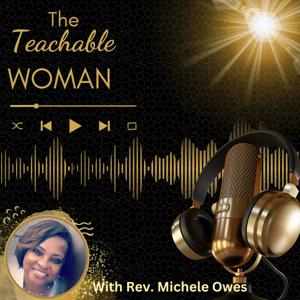
Welcome to another episode of the Teachable Woman Podcast with Reverends Michele Owes and Diana P. Cherry, teachers of good things. In this episode of the About Marriage series, the conversation turns to a subject that is often misunderstood: submission in marriage.
Using Ephesians 5:21—“Submitting yourselves one to another in the fear of God”—Rev. Michele and Rev. Diana explore what biblical submission really means and how it can create protection, peace, respect, and unity within marriage. They also discuss the importance of communication, premarital counseling, recognizing potential irritants before marriage, allowing God to work in a spouse's life, and learning to pursue what is right rather than who is right.
With humor, personal stories, biblical principles, and practical marriage wisdom, this episode encourages couples to examine themselves, honor one another, seek godly counsel, and give God room to work.
Show Note 1: Understanding Biblical Submission
Submission is often viewed negatively, especially when it is understood as one person controlling or dominating another. Rev. Michele explains that biblical submission is not about being “bossed around” or living under someone's thumb. Ephesians 5:21 calls believers to submit to one another in the fear of God.
The discussion reframes submission as a willingness to be under appropriate protection and to consider the needs and requests of one's spouse. Marriage requires two people who are willing to put God's Word over their personal preferences, attitudes, and reactions.
Submission means asking: What does God require of me? What does my spouse need from me? What can I do differently so that our home can be more peaceful?
When both husband and wife submit themselves to God and to one another, the goal is not control—it is peace, order, protection, and mutual consideration.
Show Note 2: The Protection of a Godly Husband
Rev. Michele shares a deeply personal reflection about the protection she experienced during her marriage and how much she misses it following the death of her husband. She describes protection not simply as physical protection, but also as the protection that comes through prayer, presence, wisdom, and attention to the details of everyday life.
Rev. Diana shares a similar experience, emphasizing the comfort of knowing that her husband prayed for her and their family.
The conversation highlights an important aspect of marriage: sometimes protection comes through small, almost invisible acts. Rev. Michele recalls how her husband could communicate with her through something as subtle as a look or a slight shake of his head. She understood that he was telling her it was time to end a conversation with one of their young adult children.
Rather than publicly correcting or embarrassing her, he quietly helped her recognize when to step back.
This becomes a beautiful example of mutual understanding and submission—a husband providing loving guidance and a wife recognizing and responding to it.
Show Note 3: Respect, Love, and the Power of Our Words
Rev. Michele and Rev. Diana emphasize that respect and love are essential to a healthy marriage. They caution couples against name-calling, cursing, disrespectful tones, eye-rolling, and other behaviors that can gradually damage the relationship.
Rev. Michele compares hurtful words to toothpaste squeezed from a tube: once the toothpaste is out, you can put some of it back, but you cannot get all of it back.
The words spoken in marriage matter.
The hosts explain that respect gives love longevity. A wife is instructed to reverence, or respect, her husband, while a husband is instructed to love his wife. They also point out that love and respect often reinforce each other. When a wife feels genuinely loved and treated with kindness, she is more likely to respond positively.
The episode encourages both spouses to take responsibility for their own part rather than demanding that the other person change first.
You cannot control your spouse, but you can control your own words, attitude, behavior, and response.
Show Note 4: You Cannot Change Your Spouse—But You Can Change Yourself
One of the central lessons of this episode is that husbands and wives cannot remake each other into the person they believe they need.
Rev. Michele reminds listeners that what we think we need in a spouse may not actually be what we need. Instead, couples must allow God to work in both people.
This requires patience and humility.
Rather than trying to fix, mold, or control a husband or wife, each person should ask God to work within them. Personal change can influence the atmosphere of the marriage and can create room for God to work in the other spouse.
The hosts also encourage couples to stop focusing on who is right and instead focus on what is right.
There is no prize for winning an argument. The real reward comes when both spouses pursue what is right according to God's Word.
Show Note 5: Why Premarital Counseling Matters
Rev. Diana strongly encourages couples to seek meaningful premarital counseling before they marry. She explains that counseling should be a place where couples can be honest about their concerns, expectations, habits, finances, personalities, and potential areas of conflict.
She cautions couples not to dismiss small irritations simply because they seem insignificant during dating.
The episode uses humorous examples such as toothpaste, noisy eating, personal hygiene, perfume, cologne, and other everyday habits. While these examples may seem funny, they illustrate a serious point: the things that bother you before marriage may become much bigger sources of irritation after marriage.
The hosts encourage engaged couples to answer counseling questions honestly and bring difficult issues into the open before saying “I do.”
Don't spend thousands of dollars preparing for a wedding while failing to prepare for the marriage itself.
If something concerns you, talk about it before the wedding.
Show Note 6: Marriage Requires Ongoing Enrichment and Honest Communication
Premarital counseling is not the only time couples should seek help. Rev. Michele encourages married couples to participate in marriage enrichment classes, retreats, and counseling whenever opportunities are available.
The message is simple: don't wait until the marriage is in crisis to seek help.
Couples should continue learning how to communicate, understand one another, and strengthen their relationship.
The hosts also discuss the importance of addressing “known knowns”—things you already know about your fiancé or spouse that could become significant problems later. Examples include spending habits, financial expectations, household responsibilities, and personal preferences.
If you already know about an issue, pretending it does not exist will not make it disappear.
Healthy marriage requires bringing concerns into the light, discussing them honestly, and working through them together.
Show Note 7: When God Says “Wait”—It May Be a Delay, Not a Denial
The episode closes with a powerful story about a couple who were preparing to marry when Rev. Diana's husband, who was serving as their pastor, told them that he could not marry them because he had not received God's release to do so.
The wedding was only weeks away. Everything had been arranged.
Rather than inventing an explanation, he simply acknowledged that he did not know exactly why God would not give him a release.
The couple listened. They attended the church's teaching series, The Family Man, and eventually came to understand what God was showing them. They later married in a much simpler ceremony and went on to have a wonderful marriage.
This story illustrates the importance of obeying God even when you do not have complete understanding.
Rev. Michele makes a particularly powerful observation: sometimes what appears to be God's denial is actually God's delay.
A delay can provide time for preparation, healing, understanding, growth, or correction.
The lesson is to obey what God has already made clear, remain patient, and trust that God knows what He is doing.
Summary
In About Marriage – Part 6, Reverends Michele Owes and Diana P. Cherry offer a candid and practical conversation about submission, protection, respect, communication, counseling, and obedience to God.
The episode teaches that biblical submission is not about domination. It is about mutual submission to God and consideration for one another. Marriage requires husbands and wives to learn each other, protect each other, speak respectfully, and recognize when it is time to yield.
Couples are encouraged not to try to change one another but to allow God to change them individually. They are also reminded to address problems before marriage, seek honest premarital counseling, continue with marriage enrichment after the wedding, and never underestimate the impact of seemingly small irritations.
Most importantly, the episode reminds listeners that God's way is always worth following—even when His instructions do not make immediate sense.
There is no prize for being right. The goal is to do what is right.
And when God says “wait,” remember that a delay may not be a denial. Sometimes God is simply giving us time to become prepared for what He has planned.