A common objection to telepsychiatry is that it simply doesn’t work for patients with psychosis. The concern was that patients might feel paranoid on camera, refuse to engage, or become more symptomatic because the visit was happening through a screen.
But is that actually what the evidence shows? Not even close.
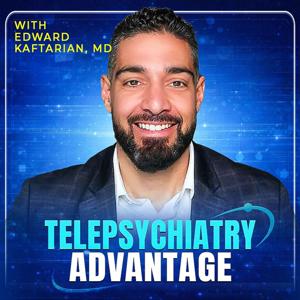
In this episode of The Telepsychiatry Advantage, Dr. Edward Kaftarian looks at the research behind telepsychiatry for patients with psychosis and schizophrenia, and explains why clinicians should be careful not to rule out virtual care based on flat-out wrong assumptions.
The episode also gets into the practical side of treating psychotic patients through telepsychiatry: how to respond when a patient is uncomfortable, why access sometimes matters more than a perfect setup, and why the doctor-patient relationship still matters more than the camera.
For more information about Orbit Health, visit us at:
https://www.orbithealth.com/
DISCLAIMER: The opinions expressed in the podcast are Dr. Kaftarian's personal opinions regarding best practices and are not intended to establish or represent the standard of care. It remains the responsibility of each listener to ensure compliance with all applicable standards of care, laws, regulations, and professional requirements.
Research articles referenced in the video:
https://pmc.ncbi.nlm.nih.gov/articles/PMC4132656/
https://pubmed.ncbi.nlm.nih.gov/23428781/
https://pmc.ncbi.nlm.nih.gov/articles/PMC3101132/
https://link.springer.com/article/10.1186/1744-859X-10-14
https://formative.jmir.org/2025/1/e59540/authors
https://pubmed.ncbi.nlm.nih.gov/28550756/
https://psychiatryonline.org/doi/10.1176/appi.ajp.2020.177901