
Sign up to save your podcasts
Or

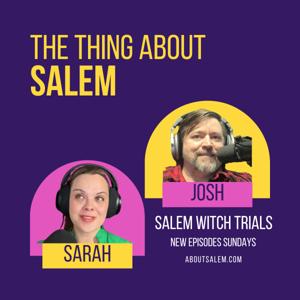


History remembers Tituba—but she wasn’t the only enslaved woman caught in Salem’s 1692 witch hunt. Meet Candy of Barbados, whose courtroom testimony turned Puritan assumptions upside down.
When magistrates asked if she was a witch, Candy gave an answer that indicted the entire colony: “Candy no witch, Barbados. This country, mistress give Candy witch.” Then she brought cheese and grass into the courtroom as proof.
What followed was one of the strangest examinations of the summer—complete with burning rags, forced grass-eating, and an enslaved woman accusing the woman who held her in bondage of witchcraft. Discover the story of resistance, strategy, and survival that the history books rarely tell.
Salem Witch Trials Daily Videos & Course
The Thing About Salem Website
The Thing About Witch Hunts YouTube
The Thing About Witch Hunts Website
Sign the Petition: MA Witch Hunt Justice Project
www.massachusettswitchtrials.org
Support the nonprofit End Witch Hunts Podcasts and Projects
Bernard Rosenthal, ed., Records of the Salem Witch-Hunt
Emerson W. Baker, A Storm of Witchcraft: The Salem Trials and the American Experience
Marilynne K. Roach, The Salem Witch Trials: A Day-by-Day Chronicle of a Community Under Siege
Mary Beth Norton, In the Devil’s Snare: The Salem Witchcraft Crisis of 1692
Peabody Essex Museum Salem Witch Trials Collection
We trace Reverend Samuel Parris’s sermons from late 1691 through 1692 to show how his preaching shifted from general theology to targeted rhetoric during the Salem witch trials. Beginning November 22, 1691, amid village disputes over his salary and firewood, Parris preaches on Psalm 110:1 about enemies. On January 3, 1692, he intensifies his message, calling even the elect “children of wrath,” warning that the devil actively threatens the church and that wicked men assist Satan, cutting the sermon short due to extreme cold. On February 14, 1692, he urges the congregation to “war a good warfare” before accusations fully erupt. By March 27, he directly addresses the “dreadful witchcraft” outbreak, invokes Judas and the idea that “one of you is a devil,” and lists sins he associates with being a devil, including “envious persons as witches.” That day he also publicly chastises Mary Sibley for making a witch cake, saying it sought the devil’s help and “raised” the devil among them. Sermon notes for June and July are missing, but church records document August 1692 actions as executions begin and accused families stop attending; the church sends a delegation and learns Samuel Tarbell is ill and Peter Cloyce is frequently at the Ipswich prison with his wife Sarah. On September 11, after more condemnations including church member Martha Cory, Parris preaches that the devil has found assistants “from amongst us,” and the church votes to excommunicate Cory; Parris personally delivers the sentence in jail, describing her as stubborn and noting she refused to pray with him. The episode ends with Parris’s October 23 sermon on the sweetness of “kisses” after “jars and differences” and long absences, highlighting a stark disconnect as the congregation is missing relatives of people he helped condemn.
00:00 A Not-So-Romantic Salem Valentine’s Day Sermon (1692)
00:36 Meet the Hosts & Why Parris’s Sermons Matter
01:11 Nov 1691: ‘Enemies’ at the Door—Sermon as Village Power Struggle
01:46 Jan 1692: God’s Wrath, the Devil Appears—and the Meetinghouse Freezes
02:58 Feb 1692: ‘War a Good Warfare’ Before Accusations Begin
03:18 Mar 1692: Witchcraft Breaks Out—Judas, Devils in the Pews, and the Witch Cake
04:22 Summer Gap: Lost Sermon Notes & a Shift to Church Records
04:43 Aug 1692: Trials, Executions, and Policing ‘Empty Seats’ in Church
05:52 Sept 1692: Excommunicating Martha Cory—Pulpit to Prison Cell
06:38 Oct 1692: ‘Sweet’ Kisses After ‘Differences’—A Hollow Closing Note
Bernard Rosenthal, ed., Records of the Salem Witch-Hunt
The Thing About Witch Hunts / About Salem YouTube channel
Salem Witch Trials Daily Hub
Salem Witch Trials Daily Course Week 5: The Framework of Death
The Thing About Salem
The Thing About Witch Hunts
Emerson W. Baker, A Storm of Witchcraft: The Salem Trials and the American Experience
Marilynne K. Roach, The Salem Witch Trials: A Day-by-Day Chronicle of a Community Under Siege
Mary Beth Norton, In the Devil’s Snare: The Salem Witchcraft Crisis of 1692
Ben Wickey, More Weight: A Salem Story
Peabody Essex Museum Salem Witch Trials Collection
The Sermon Notebook of Samuel Parris, 1689–1694 - Colonial Society of Massachusetts
We examine the unwavering defiance of many individuals accused of witchcraft in 1692, looking into the stories of Rebecca Nurse, George Jacobs Sr., Susannah Martin, John Willard, and more, who refused to confess despite immense pressure and the threat of execution. Additionally, we discuss those who did confess, like Samuel Wardwell, and examine the physical and psychological pressures faced by the accused. The episode also highlights Mary Esty's poignant petition and the brutal execution of Giles Cory.
00:00 Introduction to the Salem Witch Trials
00:39 Meet Your Hosts
00:45 The Integrity of the Accused
01:24 Examples of Refusal to Confess
03:06 Confessions and Their Consequences
03:21 The Case of Samuel Wardwell
04:15 Rumors and Physical Pressure
04:56 Tituba's Confession
05:07 Acts of Defiance
05:19 Mary Esty's Petition
05:53 The Story of Giles Cory
Bernard Rosenthal, ed., Records of the Salem Witch-Hunt
The Thing About Witch Hunts / About Salem YouTube channel
Salem Witch Trials Daily Hub
Salem Witch Trials Daily Course Week 5: The Framework of Death
The Thing About Salem
The Thing About Witch Hunts
Emerson W. Baker, A Storm of Witchcraft: The Salem Trials and the American Experience
Marilynne K. Roach, The Salem Witch Trials: A Day-by-Day Chronicle of a Community Under Siege
Mary Beth Norton, In the Devil’s Snare: The Salem Witchcraft Crisis of 1692
Ben Wickey, More Weight: A Salem Story
Peabody Essex Museum Salem Witch Trials Collection
We examine the critical role of geography in the 1692 Salem Witch Trials. They discuss the stark contrasts between Salem Town and Salem Village, the widespread nature of the accusations, and the influence of the broader region, including the impact of the Frontier War in Maine and the significant number of accusations in Andover. They also debunk common misconceptions about the accusers' proximity and detail the physical realities of property disputes and the execution sites, emphasizing the trials' concrete historical context.
00:00 Introduction to Cotton Mather and the Salem Witch Trials
00:38 Geographical Context of Salem
00:56 Salem Town vs. Salem Village
01:51 Misconceptions About the Afflicted Girls
02:55 The Spread of Accusations
03:10 Impact of the Frontier War
03:38 Andover's Role in the Witch-Hunt
04:14 Land Disputes and Accusations
05:05 Geography of the Executions
05:48 Conclusion: Understanding the Map of 1692
Bernard Rosenthal, ed., Records of the Salem Witch-Hunt
The Thing About Witch Hunts / About Salem YouTube channel
Salem Witch Trials Daily Hub
Salem Witch Trials Daily Course Week 5: The Framework of Death
The Thing About Salem
The Thing About Witch Hunts
Emerson W. Baker, A Storm of Witchcraft: The Salem Trials and the American Experience
Marilynne K. Roach, The Salem Witch Trials: A Day-by-Day Chronicle of a Community Under Siege
Mary Beth Norton, In the Devil’s Snare: The Salem Witchcraft Crisis of 1692
Ben Wickey, More Weight: A Salem Story
Peabody Essex Museum Salem Witch Trials Collection
In this episode, we explain the criteria set by English Puritan theologian William Perkins for identifying witches, as detailed in his book 'A Discourse of the Damned Art of Witchcraft.' The discussion includes the seven grounds for examining alleged witches, such as public defamation and association with other witches, and the insufficiency of various olden-day practices like the swimming test and the red-hot iron test. The episode highlights how Perkins' standards influenced the Salem Witch Trials and other notable cases, emphasizing the reliance on confessions and witness testimonies in securing convictions.
00:00 Introduction to Witchcraft Examination
00:11 William Perkins' Influence on Witch Trials
01:16 Welcome to Salem Witch Trials Daily
01:23 Criteria for Examining a Witch
04:08 Insufficient Proofs for Conviction
08:00 True Proofs for Witchcraft Conviction
08:40 Conclusion and Historical Context
Bernard Rosenthal, ed., Records of the Salem Witch-Hunt
The Thing About Witch Hunts / About Salem YouTube channel
Salem Witch Trials Daily Hub
Salem Witch Trials Daily Course Week 5: The Framework of Death
The Thing About Salem
The Thing About Witch Hunts
Emerson W. Baker, A Storm of Witchcraft: The Salem Trials and the American Experience
Marilynne K. Roach, The Salem Witch Trials: A Day-by-Day Chronicle of a Community Under Siege
Mary Beth Norton, In the Devil’s Snare: The Salem Witchcraft Crisis of 1692
Peabody Essex Museum Salem Witch Trials Collection
We investigate the lives of the afflicted persons during the Salem Witch Trials, focusing on their roles as servants and their marriage prospects. The episode delves into the stories of key figures Abigail Williams, Elizabeth Hubbard, Mary Warren, Mercy Lewis, Sarah Churchill, Elizabeth Parris, Ann Putnam Jr., Mary Walcott, Susannah Sheldon, and Daniel Wilkins. Listeners will learn about the diverse backgrounds and fates of these individuals, and how their afflictions impacted their lives and the trials themselves.
00:00 Introduction to the Afflicted Girls of Salem
01:30 Abigail Williams: The First Afflicted Girl
02:07 Elizabeth Hubbard: The Doctor's Niece
02:51 Mary Warren: The Proctor's Servant
04:07 Mercy Lewis: The Orphaned Maid
05:10 Sarah Churchill: The Accuser and Confessor
06:03 Other Afflicted Persons and Their Fates
09:50 Conclusion: The Diverse Lives of the Afflicted
Bernard Rosenthal, ed., Records of the Salem Witch-Hunt
The Thing About Witch Hunts / About Salem YouTube channel
Salem Witch Trials Daily Hub:
Salem Witch Trials Daily Course Week 5: The Framework of Death
The Thing About Salem
The Thing About Witch Hunts
Emerson W. Baker, A Storm of Witchcraft: The Salem Trials and the American Experience
Marilynne K. Roach, The Salem Witch Trials: A Day-by-Day Chronicle of a Community Under Siege
Mary Beth Norton, In the Devil’s Snare: The Salem Witchcraft Crisis of 1692
Peabody Essex Museum Salem Witch Trials Collection
We look into the lesser-known yet significantly impacted town of Andover during the 1692 witch-hunt. Despite common assumptions of a rift due to its two ministers, Francis Dane and Thomas Barnard, historical research by Richard Hite reveals that Andover's massive outbreak of accusations was not driven by ministerial factions. The episode examines the geographical distribution of the accused and uncovers the targeted accusations against Dane's family, shedding light on the deeper complexities of the Andover witch-hunt. It challenges established narratives and highlights the unity of the ministers against the witch trials. For an in-depth discussion, listeners are encouraged to tune into the detailed interview with Richard Hite.
00:00 Introduction to Salem Witch Trials Daily
00:12 The Andover Witch-Hunt: A Closer Look
01:05 Ministers of Andover: Francis Dane and Thomas Barnard
02:22 Debunking the Minister Controversy Theory
03:39 The Touch Test Incident
04:58 Targeting the Dane Family
06:00 Reevaluating Andover's Witch-Hunt
06:37 Conclusion and Further Reading
Bernard Rosenthal, ed., Records of the Salem Witch-Hunt
The Thing About Witch Hunts / About Salem YouTube channel
Salem Witch Trials Daily Hub
Salem Witch Trials Daily Course Week 5: The Framework of Death
The Thing About Salem
The Thing About Witch Hunts
Emerson W. Baker, A Storm of Witchcraft: The Salem Trials and the American Experience
Marilynne K. Roach, The Salem Witch Trials: A Day-by-Day Chronicle of a Community Under Siege
Mary Beth Norton, In the Devil’s Snare: The Salem Witchcraft Crisis of 1692
Peabody Essex Museum Salem Witch Trials Collection
On February 8th, 1692, news of a new Massachusetts charter heightened fears of losing colonial independence. As hosts of Salem Witch Trials Daily, we're deeply connected to this history. We, are descendants of Mary Esty and Rebecca Nurse. Today, we delve into the heart-wrenching stories of the Towne sisters—Rebecca Nurse, Mary Esty, and Sarah Cloyce—our own ancestors who faced unimaginable trials during the Salem Witch Trials. Rebecca's wrongful conviction and execution, Mary's courageous and selfless petition, and Sarah's bold defiance in church are chapters of our family history that we feel compelled to share. Through this episode, we honor their legacy and the efforts of the Towne Family Association. We are also motivated by Mary Esty's plea to prevent further innocent bloodshed and continue our work with our nonprofit, End Witch Hunts, to eliminate modern-day witch hunts and trials.
00:00 Introduction to the Salem Witch Trials
00:20 Meet the Hosts: Josh and Sarah
00:26 The Towne Sisters: A Family Tragedy
01:42 Rebecca Nurse: A Shocking Arrest
03:22 Mary Esty: A Story of Self-Sacrifice
04:39 Sarah Cloyce: Defiance and Survival
05:53 The Legacy of the Towne Sisters
06:17 Continuing the Fight Against Witch Hunts
Bernard Rosenthal, ed., Records of the Salem Witch-Hunt
The Thing About Witch Hunts / About Salem YouTube channel
Salem Witch Trials Daily Hub
Salem Witch Trials Daily Course Week 5: The Framework of Death
The Thing About Salem
The Thing About Witch Hunts
Emerson W. Baker, A Storm of Witchcraft: The Salem Trials and the American Experience
Marilynne K. Roach, The Salem Witch Trials: A Day-by-Day Chronicle of a Community Under Siege
Mary Beth Norton, In the Devil’s Snare: The Salem Witchcraft Crisis of 1692
Peabody Essex Museum Salem Witch Trials Collection
Episode Description
This episode examines the story of Mary Black, an enslaved woman accused of witchcraft in April 1692, and the complex household she lived in. Mary Black was owned by Nathaniel Putnam, a politically active Salem Village leader who opposed Reverend Parris before the trials began and later defended Rebecca Nurse—yet left no documented advocacy for the enslaved woman in his own household.
What You'll Learn
The racial dimensions of the Salem witch trials and how court records identified accusers differently
How Mary Black's experience contrasts with white accused women who had community defenders
Nathaniel Putnam's complex role: opposing Parris, defending Rebecca Nurse, while owning Mary Black
The stark silences in historical sources around enslaved and women of color in colonial New England
Mary Black's examination, nine-month imprisonment, and eventual clearing by proclamation
Key Figures Discussed
Mary Black - African enslaved woman accused April 21, 1692
Nathaniel Putnam - Mary's owner, Salem Village political leader
Rebecca Nurse - white woman Nathaniel defended
Keywords: Salem witch trials, Mary Black, enslaved women, Nathaniel Putnam, racial history, colonial New England, 1692, Tituba, Rebecca Nurse, Salem Village
Salem Witch Trials Daily Videos & Course
The Thing About Salem Website
The Thing About Witch Hunts YouTube
The Thing About Witch Hunts Website
Sign the Petition: MA Witch Hunt Justice Project
www.massachusettswitchtrials.org
Support the nonprofit End Witch Hunts Podcasts and Projects
Bernard Rosenthal, ed., Records of the Salem Witch-Hunt
Emerson W. Baker, A Storm of Witchcraft: The Salem Trials and the American Experience
Marilynne K. Roach, The Salem Witch Trials: A Day-by-Day Chronicle of a Community Under Siege
Mary Beth Norton, In the Devil’s Snare: The Salem Witchcraft Crisis of 1692
Peabody Essex Museum Salem Witch Trials Collection
Dorothy Good, the youngest Salem Witch Trials victim, was arrested at the age of four or five and imprisoned for nearly nine months in 1692. Though she survived, the trauma from her incarceration had lasting impacts. Research by Rachel Christ-Doane indicates that Dorothy's life was marked by instability, financial hardship, and abandonment. She lived a transient life, moving between households and institutions, and her children were ultimately indentured to other families. Distressingly, Dorothy's life ended in obscurity, with her body reportedly discovered in a bog meadow in Connecticut in 1761.
00:00 Introduction and Historical Context
00:27 Welcome to Salem Witch Trials Daily
00:32 The Tragic Story of Dorothy Good
01:01 Dorothy's Life After Imprisonment
02:00 Dorothy's Adulthood and Struggles
03:02 Dorothy's Children and Their Fate
03:28 A Grim Conclusion
Bernard Rosenthal, ed., Records of the Salem Witch-Hunt
The Thing About Witch Hunts / About Salem YouTube channel
Salem Witch Trials Daily Hub
Salem Witch Trials Daily Course Week 5: The Framework of Death
The Thing About Salem
The Thing About Witch Hunts
Emerson W. Baker, A Storm of Witchcraft: The Salem Trials and the American Experience
Marilynne K. Roach, The Salem Witch Trials: A Day-by-Day Chronicle of a Community Under Siege
Mary Beth Norton, In the Devil’s Snare: The Salem Witchcraft Crisis of 1692
Peabody Essex Museum Salem Witch Trials Collection
From the publisher's feed

25 Listeners