
Sign up to save your podcasts
Or



We are recording this while it still hurts.
Something happened recently with someone we trusted. And instead of waiting until we'd figured it all out, we decided to have this conversation now, while we're still in the middle of it.
Why do good people keep getting taken advantage of? And does getting hurt repeatedly make us wiser, or simply more closed off?
In this episode, we share the painful experience we're currently navigating, the moment Parisa realized she'd ignored her intuition about someone, and Pej's story of a business partner he trusted who later tried to take his company away.
We explore why generosity sometimes leads to entitlement, how appreciation can turn into expectation, and why giving without healthy boundaries can leave us vulnerable.
We also talk about the difference between wisdom and emotional walls, the human needs that sometimes drive people to take advantage of others, and a question we try to ask even in the hardest moments: If there were a gift in this experience, what would it be?
This isn't a conversation about becoming suspicious of everyone or learning to trust less. It's about finding the wisdom to recognize what people are showing us without losing our willingness to see the good in them.
We haven't closed our hearts. And we're learning how to keep them open without ignoring what people show us.
Podcast Chapters
00:00:00 When Trust Gets Broken
00:04:35 Talking About It While It Hurts
00:06:55 Pej's Business Partner Story
00:09:55 Ignoring Our Intuition
00:14:45 Wisdom or Emotional Walls?
00:20:40 Recognizing Warning Signs
00:25:35 When Generosity Creates Entitlement
Three doctors told Pej he needed spinal fusion surgery. His own brother, a spinal surgeon, was one of them. Pej said no.
Instead, he sought another opinion and ultimately chose regenerative medicine and stem cell therapy. Five years later, he shares what happened and what the experience taught him after 33 years working inside the medical system.
We talk about spinal fusion and back surgery, regenerative medicine, stem cell therapy, second opinions, patient advocacy, and how to distinguish a legitimate regenerative medicine practice from one Pej believes patients should avoid. Pej also shares his perspective on why insurance often doesn't cover regenerative medicine and how he combines Western medicine, Ayurveda, cannabis, and regenerative medicine rather than treating them as competing philosophies.
This episode isn't anti-surgery, and it isn't an argument that stem cell therapy is right for everyone. It's a conversation about becoming an informed participant in your own healthcare: asking questions, understanding your options, seeking another opinion when appropriate, and recognizing that no single medical lens has every answer.
Because sometimes the most important question you can ask isn't “What should I do?” It's “What are all of my options?”
What happens when the strength that helped you succeed makes it difficult to let go in your relationship?
Many women have learned to be capable, independent, and in control, qualities that can help us thrive in life but can also shape the dynamics we create with our partners.
In this episode, Parisa and Pej explore masculine and feminine energy, polarity, the tradwife debate, and the tension many modern women experience between wanting to surrender and being afraid of losing themselves in the process.
Parisa also shares an uncomfortable realization from her first marriage: the ways she contributed to weakening her partner without realizing it, and how taking accountability for that changed the way she understood relationships.
This isn't an argument for traditional roles or against them. It's a conversation about whether strength and surrender can coexist, whether a man can be powerful without controlling a woman, and whether a woman can let go without giving up who she is.
Because masculine and feminine aren't necessarily opposites. They exist on a continuum. Perhaps the goal isn't choosing one over the other, but learning when each of us needs to lead, soften, hold, or let go.
CHAPTERS
00:00 Introduction
01:14 Tradwife vs. Modern Woman
08:35 Masculine and Feminine Energy
14:00 Strength and Relationship Dynamics
21:20 Healthy vs. Wounded Masculinity
27:45 Polarity, Attraction and Surrender
I came to the US with $150 in my pocket, no place to stay, and no one waiting for me. I was 21, and I had just traveled through a war zone in Afghanistan to get here.
In this solo episode, I share the full story of how I arrived in America, including the moment a complete stranger handed me $2,000 in a foreign country with no guarantee he would ever see me again, and how that single act of trust changed the way I saw life.
But this episode isn’t only about that journey.
It’s about what happened after I made it here. How immigration, financial struggle, divorce, postpartum depression, motherhood, and years of survival mode slowly changed the girl who once moved through life with extraordinary faith.
And how a pre-cancer diagnosis became a wake-up call that made me realize how tightly I had started holding on to life.
For years, people have asked what advice I would give my younger self. But I’ve started asking a different question: what would my 21-year-old self tell me now?
If you’ve ever had a version of yourself you deeply admired and somehow lost touch with along the way, this one is for you.
The Uncommons is where we have the conversations people usually have behind closed doors about marriage, family, money, identity, faith, and what it takes to build a meaningful life.
What if your financial ceiling has nothing to do with how hard you work? In this episode, we talk about the beliefs underneath our relationship with money: fear of losing it, fear of not having enough, the messages we inherited from our families, the way we view wealthy people, and the deeper question of whether we actually feel worthy of having more. Pej shares the financial ups and downs of entrepreneurship, including a period when his businesses were losing hundreds of thousands of dollars a month, and how those experiences forced him to examine the fear and scarcity he had carried long before those losses ever happened. We also explore our own conflicting beliefs around wealth: the desire to have more while being taught not to need much, wanting abundance while admiring detachment, and pursuing financial success without allowing money to become our identity. Eventually the conversation becomes less about money itself and more about what money reveals: our fears, our self worth, our inherited beliefs, and our ability to move from contraction into trust. Can you pursue wealth without becoming attached to it? Can abundance and spirituality exist together? And what changes when you stop believing your worth is tied to what you have?
🔔 The Uncommons is where we have the conversations people usually have behind closed doors about marriage, family, money, identity, faith, and what it takes to build a meaningful life.
After our first interfaith marriage episode, thousands of comments came in: some full of hate, many full of genuine questions from people privately navigating the same situation. In this episode, we sit down and answer the real ones: how we designed a wedding ceremony that honored both faiths, why neither of us converted and the specific reason that had everything to do with what we wanted to model for our children, how we navigate holidays and family traditions across two religions, and how we created our own value system before we got married, a document we literally call our Bible. We also talk about why we chose a Christian school for our son, what Pej's experience growing up Jewish in a Muslim country taught him about religious segregation, and why we believe shared values will always matter more than shared religion. If you're in an interfaith relationship and wondering if it can work, this one is for you.
Nobody warns you about the guilt that can come with outgrowing your friends.
Sometimes nobody did anything wrong. You still love the person, value the history, and miss who you were together. But somewhere along the way, you grew apart. And admitting that can somehow feel like a betrayal in itself.
In this episode, we talk honestly about outgrowing friendships and the complicated guilt that can come with changing. When is loyalty really loyalty, and when is it guilt? What happens when your values, priorities, or life begin moving in a different direction from the people you've always loved? And at what point does loyalty to an old friendship become disloyalty to the person you're becoming?
We explore Pej's warrior vs. wizard framework for thinking about relationships, why shared history doesn't always create a shared future, the Sufi idea of the people in our lives as mirrors, and whether some friendships need to end or simply change shape.
Because letting go of a friendship doesn't erase what it gave you. You can love someone, miss them, and be deeply grateful for a chapter of your life while accepting that you may not be meant to keep rereading it forever.
If you've ever felt yourself growing apart from someone you love and felt guilty for even admitting it, this conversation is for you.
Two years ago we made a decision most people in our lives didn't fully understand.. we pulled our kids out of school and committed to homeschooling completely. Two years later we're sitting with a question we didn't expect to be asking: did we get it right? In this episode we get honest about what two years of homeschooling actually gave our kids, what it cost them, and what it cost us, including the moment Parisa realized she was oscillating between pride and doubt about the same child thirty minutes apart. We talk about the tension between raising free thinkers and raising disciplined kids, why homeschooling made us the enforcers in our own home, and how the spiritual concept surrender became the only framework that made this decision feel possible. We don't resolve it cleanly. But we stay honest all the way through.
Before we got married, he asked for a prenup. I couldn't sign it. Not because I didn't trust him, but because everything I believed about love, faith, and marriage made the idea of a prenuptial agreement feel like a betrayal of what we were building together. It nearly ended our relationship before our marriage even started.
Nearly ten years later, that prenup is still valid. In this episode, we sit down together to ask the question we've never asked out loud: do we still need it?
We talk about why he wanted it, why I resisted, what it revealed about how differently we viewed love, money, trust, and security, and what it cost our relationship in those early months. But this conversation goes beyond whether you should get a prenup. We get into the deeper question underneath it all: can a legal contract and complete trust exist in the same marriage? Or does one always undermine the other?
And after nearly a decade of marriage, building a family, and building a life together, do the reasons we had for signing that agreement still apply to the people we've become?
By the end of this episode, we make a decision. Together. In real time. You'll have to listen to find out what we choose.
The Uncommons is a podcast for people who are done with surface-level answers and want to explore what it really takes to build a meaningful life. Every Thursday, we have honest conversations about relationships, identity, family, purpose, and the choices that shape who we become. If these conversations resonate with you, subscribe and join us each week as we keep asking the questions that don't have simple answers.
A few weeks ago, my aunt called to tell me the community had found the podcast. I spent the next week confronting a fear of rejection and an anxiety I hadn't felt in years... not because I had done something wrong, but because being seen by people who knew me felt far more threatening than being seen by strangers.
In this episode, we explore why the fear of rejection and the fear of being seen aren't personal flaws, and how hiding yourself can be a completely rational response to growing up inside a culture where other people's opinions carry real consequences. We talk about the voice I internalized from childhood, why Parisa questions whether Brené Brown's framework on vulnerability fully accounts for what visibility costs inside collectivist cultures, and what it actually took to decide that being seen was worth whatever it cost.
We close with a declaration to anyone who wants us to stay hidden; one of the most honest things we've said on this podcast.
From the publisher's feed
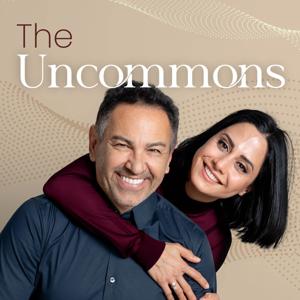
The Uncommons is a podcast about what it really takes to find fulfillment in marriage, family, business, and life.
Through honest conversations and lived experience, the podcast…
This is not about perfect relationships or easy answers. It’s about navigating the tension between who you are and who you’re becoming, learning how to grow together instead of apart, and building a life rooted in connection, responsibility, and intention.
Through personal stories and conversations with guests who have lived through real challenges, The Uncommons offers a deeper perspective on love, family, and what it means to live a truly fulfilling life.
Hosted by Parisa and Pej Bady.