
Sign up to save your podcasts
Or

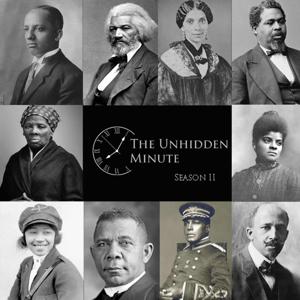


Fazendeville, Louisiana, was a historic Black community founded in the 1860s by freedman Jean Pierre Fazende, not long after the Civil War. The land near Chalmette, just outside of New Orleans was subdivided to sell to formerly enslaved people. For nearly a century, Fazendeville thrived as a tight-knit settlement, with many homes, a school, a church, and cemetery. Generations of Black families lived there, carving out stability and independence in the shadow of systemic racial discrimination.
However, in the 1960s, the community was erased in the name of historic preservation. The land it occupied was incorporated into the Chalmette Battlefield, part of Jean Lafitte National Historical Park, the site of the Battle of New Orleans during the War of 1812. Residents were displaced through eminent domain, their homes demolished to create an “authentic” battlefield landscape. Fazendeville’s removal highlights the contradictions of U.S. historic preservation, where Black communities were wiped out of existence.
The Joy Trip Project celebrates American History. The Unhidden Minute is part of the Unhidden Podcast Project supported through a National Geographic Explorer Grant from the National Geographic Society, with the cooperation of the National Park Service. This series aims to elevate the untold stories of Black Americans who are too often left out of the stories share about our common national heritage.
#unhiddenblackhistory #NationalParkService #yourparkstory #NationalGeographic #unhiddenminute
Mary Jane Richards, also known as Mary Bowser, was a formerly enslaved Black woman who became a Union spy during the American Civil War. Born in Richmond, Virginia, around 1840, she was freed by her owner, Elizabeth Van Lew, a wealthy white abolitionist. Van Lew arranged for Richards to be educated in the North before returning her back to the South to gather intelligence. Under the alias Mary Bowser, she posed as an illiterate servant in the Confederate White House, working in the home of President Jefferson Davis. Using her intellect and photographic memory, she accessed sensitive military information, which she relayed to Union forces through the Van Lew spy network. Exploiting racist assumptions, Richards was able to move unnoticed and unchallenged. Her bravery and brilliance made her one of the most effective undercover agents of the Civil War. Though much of her life remains obscured, her legacy as a patriot and freedom fighter endures.
The Joy Trip Project celebrates American History. The Unhidden Minute is part of the Unhidden Podcast Project supported through a National Geographic Explorer Grant from the National Geographic Society, with the cooperation of the National Park Service. This series aims to elevate the untold stories of Black Americans who are too often left out of the stories share about our common national heritage.
#unhiddenblackhistory #NationalParkService #yourparkstory #NationalGeographic #unhiddenminute
James Baldwin (1924–1987) was a groundbreaking Black American writer and social critic whose work explored the intersections of race, sexuality, and identity. Born in Harlem, he rose from poverty to become one of the 20th century’s most influential voices. His essays, such as those in Notes of a Native Son (1955), and novels like Go Tell It on the Mountain and Giovanni’s Room, boldly addressed both the realities of racism and the complexities of being a gay Black man in a deeply prejudiced society. Baldwin refused to separate his sexual identity from his politics, challenging both white supremacy and homophobia in his work and public life. Though he lived much of his adult life in France, he returned often to the U.S. to support the Civil Rights Movement, forging relationships with leaders like Malcolm X and Martin Luther King Jr. Baldwin’s legacy endures as a fierce, fearless advocate for human dignity and truth. His work continues to resonate as a prophetic examination of democracy, love, and the enduring fight for Black liberation.
The Joy Trip Project celebrates American History. The Unhidden Minute is part of the Unhidden Podcast Project supported through a National Geographic Explorer Grant from the National Geographic Society, with the cooperation of the National Park Service. This series aims to elevate the untold stories of Black Americans who are too often left out of the stories share about our common national heritage.
#unhiddenblackhistory #NationalParkService #yourparkstory #NationalGeographic #unhiddenminute
The Chicago Race Riot of 1919 erupted on July 27 in the Bronzeville neighborhood along the shores of Lake Michigan. A Black teenager, Eugene Williams, drowned when white beachgoers threw rocks at him for drifting into a whites-only swimming area. When police refused to arrest the white perpetrator, long-simmering racial tensions exploded into violence. For eight days, white and Black residents clashed in deadly street battles throughout Chicago’s South Side. The epicenter of the unrest was Bronzeville, home to much of the city’s Black population. Thirty-eight people were killed—23 Black and 15 white—and more than 500 were injured. Thousands of Black families were displaced as mobs burned homes and businesses. One of the worst incidents of the Red Summer of 1919, the riot highlighted the consequences of segregation, discriminatory policing, and job competition. The violence marked a turning point, as Black Chicagoans demanded equal protection and laid the groundwork for future civil rights advocacy.
The Joy Trip Project celebrates American History. The Unhidden Minute is part of the Unhidden Podcast Project supported through a National Geographic Explorer Grant from the National Geographic Society, with the cooperation of the National Park Service. This series aims to elevate the untold stories of Black Americans who are too often left out of the stories share about our common national heritage.
#unhiddenblackhistory #NationalParkService #yourparkstory #NationalGeographic #unhiddenminute
Lincoln Hills, Colorado, established in 1922, was the only Black-owned mountain resort west of the Mississippi River during the Jim Crow era. Founded by entrepreneurs E.C. Regnier, Robert Ewalt, and Edmund J. McMahon, this site provided a refuge for Black Americans barred from other vacation destinations due to segregation. Over 600 lots were sold to middle-class Black families, creating a vibrant summer community. In 1928, Obrey “Winks” Hamlet opened Winks Lodge. This full service hotel hosted prominent guests like Duke Ellington, Lena Horne, and Langston Hughes. Camp Nizhoni, a YMCA camp for Black girls, offered outdoor education and recreation starting in 1927. Lincoln Hills thrived through the Depression and into the 1960s, offering cultural enrichment and outdoor access. Though its popularity declined after desegregation, the area remains significant. Winks Lodge is now a National Historic Landmark, preserving its unique place in American history.
The Joy Trip Project celebrates American History.
The Unhidden Minute is part of the Unhidden Podcast Project supported through a National Geographic Explorer Grant from the National Geographic Society, with the cooperation of the National Park Service. This series aims to elevate the untold stories of Black Americans who are too often left out of the stories share about our common national heritage.
#unhiddenblackhistory #NationalParkService #yourparkstory #NationalGeographic #unhiddenminute
The Victory Monument in Chicago’s Bronzeville neighborhood honors the all-Black Eighth Regiment of the Illinois National Guard. Later known as the 370th Infantry, these soldiers fought valiantly under French command in World War I. Erected in 1927 and later enhanced with a bronze “doughboy” statue in 1936, the monument features granite reliefs depicting battles, symbols of victory, and a Black infantryman. It lists the names of 137 fallen soldiers and commemorates the regiment’s heroism, which earned them 21 Distinguished Service Crosses and 68 French Croix de Guerre. As the only state-sponsored WWI memorial dedicated to Black American soldiers, the monument continues to be a centerpiece of remembrance during Memorial Day events and serves as a lasting testament to the patriotism and sacrifice of Black servicemen from Bronzeville and beyond.
Original Photograph by James Edward Mills
The Joy Trip Project celebrates American History. The Unhidden Minute is part of the Unhidden Podcast Project supported through a National Geographic Explorer Grant from the National Geographic Society, with the cooperation of the National Park Service. This series aims to elevate the untold stories of Black Americans who are too often left out of the stories share about our common national heritage.
#unhiddenblackhistory #NationalParkService #yourparkstory #NationalGeographic #unhiddenminute
During World War I, the Bronzeville Armory in Chicago played a crucial role as a center of Black military organization and community pride. Located in the heart of the city's thriving African American neighborhood, the armory was home to the Eighth Regiment of the Illinois National Guard—the first all-Black regiment officially recognized by the U.S. Army. When the U.S. entered the war, this regiment became the 370th Infantry, composed largely of Black soldiers from Chicago. The armory served not only as a training ground but also as a powerful symbol of Black patriotism, resilience, and civic contribution during a time of widespread racial segregation. Despite facing discrimination, these troops trained with determination and later fought with distinction under French command in Europe. The Bronzeville Armory thus stood as both a military facility and a cultural landmark, representing the hope and determination of a community striving for equality through service.
Original Photograph by Kris Graves
The Joy Trip Project celebrates American History.
The Unhidden Minute is part of the Unhidden Podcast Project supported through a National Geographic Explorer Grant from the National Geographic Society, with the cooperation of the National Park Service. This series aims to elevate the untold stories of Black Americans who are too often left out of the stories share about our common national heritage.
#unhiddenblackhistory #NationalParkService #yourparkstory #NationalGeographic #unhiddenminute
On July 5, 1852, in Rochester, New York, Frederick Douglass delivered his searing speech “What to the Slave is the Fourth of July?” His eloquent words exposed the hypocrisy of a nation that celebrated liberty while millions remained enslaved. Invited to commemorate America’s independence, Douglass instead challenged his audience to confront the deep contradictions of a country that proclaimed freedom but denied it to Black Americans. He praised the Founding Fathers for their revolutionary courage but made clear that their ideals had not been extended to enslaved people. “This Fourth of July is yours, not mine,” he declared, calling the celebration a sham in the face of human bondage. With passionate rhetoric and moral clarity, Douglass condemned the injustice of slavery and urged his fellow citizens to live up to the true meaning of the Declaration of Independence and the Constitution. His speech remains a powerful critique of American democracy and its unfulfilled promise.
The Joy Trip Project celebrates American History.
The Unhidden Minute is part of the Unhidden Podcast Project supported through a National Geographic Explorer Grant from the National Geographic Society, with the cooperation of the National Park Service. This series aims to elevate the untold stories of Black Americans who are too often left out of the stories share about our common national heritage.
#unhiddenblackhistory #NationalParkService #yourparkstory #NationalGeographic #unhiddenminute
Gwendolyn Brooks was a groundbreaking American poet whose work captured the joys, struggles, and beauty of Black life, particularly in Chicago’s South Side community of Bronzeville. Born in 1917, she began writing poetry at a young age and published her first poem at 13. Her 1949 collection, Annie Allen, won the Pulitzer Prize for Poetry, making her the first African American to receive the honor. Brooks’s writing was celebrated for its technical mastery and emotional depth, exploring themes of racial identity, poverty, motherhood, and resilience. Deeply rooted in community, she engaged directly with young writers and activists during the Civil Rights and Black Arts movements, later serving as Illinois’ poet laureate and the Poet Laureate of the United States. Her work, including We Real Cool and The Bean Eaters, remains vital and influential. Brooks used poetry not only as an art form, but as a means of bearing witness and inspiring change.
The Joy Trip Project celebrates American History.
The Unhidden Minute is part of the Unhidden Podcast Project supported through a National Geographic Explorer Grant from the National Geographic Society, with the cooperation of the National Park Service. This series aims to elevate the untold stories of Black Americans who are too often left out of the stories share about our common national heritage.
#unhiddenblackhistory #NationalParkService #yourparkstory #NationalGeographic #unhiddenminute
The Yosemite Act of 1864 was a landmark piece of legislation signed by President Abraham Lincoln during the Civil War. Signed on June 30th the new law granted the Yosemite Valley and the Mariposa Grove of Giant Sequoias to the state of California, with the stipulation that the land be preserved for “public use, resort, and recreation.” This act marked the first time in U.S. history that the federal government set aside land specifically for public enjoyment and conservation, laying the groundwork for the national park system. Though Yosemite would not become a national park until 1890, the 1864 act recognized the inherent value of protecting natural landscapes from private development. The land was to be managed by the state, which set a precedent for future federal conservation efforts. The Yosemite Act is often seen as a foundational moment in the American environmental movement, reflecting a growing national appreciation for scenic wilderness and natural heritage.
The Joy Trip Project celebrates American History.
The Unhidden Minute is part of the Unhidden Podcast Project supported through a National Geographic Explorer Grant from the National Geographic Society, with the cooperation of the National Park Service. This series aims to elevate the untold narratives that are too often left out of the stories we share about our common national heritage.
#NationalParkService #yourparkstory #NationalGeographic #unhiddenminute
From the publisher's feed