Vicarious trauma, compassion fatigue, secondary traumatic stress, and burnout get used interchangeably in the media and even in the literature. They describe four different processes, and confusing them costs trauma therapists real time and real support.
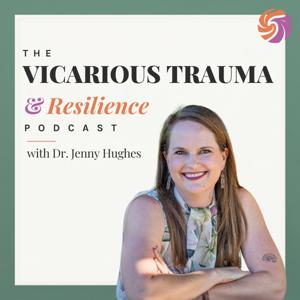
In this first episode, Dr. Jenny Hughes walks through the Trauma Therapist Trauma Response Model, the framework she built after years of teaching trauma therapists about vicarious trauma and after coming apart at the seams from it herself.
Some trauma therapists carry this work for decades and stay in love with it. Others leave the field within a few years. The difference has almost nothing to do with how strong you are, and almost everything to do with how supported and resourced you've been.
What this episode covers:
- Vicarious trauma, coined in 1990 to name what empathic engagement does to your worldview over time. It comes with the work, because empathic engagement is the foundation of the job.
- Compassion fatigue, coined in 1992 and first described in nurses. The empty cup, the numbness, the warm body in the chair, and the question underneath about whether you're good enough for this work.
- Secondary traumatic stress, the one that is an actual DSM-5 diagnosis, and how it differs from the two before it. Jenny shares her own experience of it as the trauma psychologist at a level one trauma center in New Orleans, and what actually brought her back.
- Burnout, depersonalization, and why isolation is the single biggest risk factor the literature points to.
- Vicarious resilience, discovered almost by accident in the early 2000s by researchers studying therapists working with survivors of torture. The same mechanism as vicarious trauma, running the opposite direction.
Chapters
00:00 Understanding vicarious trauma in therapy
05:16 Recognizing and managing burnout signs
09:05 Understanding Secondary Traumatic Stress
12:54 Discussing burnout and depersonalization
14:28 Importance of seeking support
17:15 Understanding vicarious resilience in therapyWant to see where you currently fall on the model?
The free Trauma Therapist Trauma Response Quiz takes a few minutes: https://www.braveproviders.com/quiz
FOR ORGANIZATIONS AND LEADERS
Bringing this work to your team, practice, or agency: https://www.braveproviders.com/speaking
Dr. Jenny Hughes is a trauma psychologist and the founder of The BRAVE Trauma Therapist Collective. More at braveproviders.com
Vicarious trauma comes with being human in this work, and so does vicarious resilience. Being human is how we stay in the work we love.