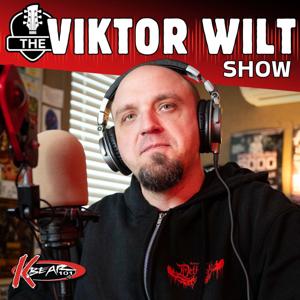
Friday morning kicks the door down like a raccoon on espresso, except Viktor is the raccoon and the espresso hasn’t entered his bloodstream yet—so instead he’s stumbling through existence like a haunted Roomba with emotional damage. The episode opens in a fog of exhaustion, where basic human tasks like remembering errands or staying conscious feel like side quests designed by a sadistic game developer. He recounts a night that began with “I’ll just nap” and ended in a full-blown carpet-cleaning crusade that spiraled into a late-night war against dirt, sleep, and his own sanity. Now he’s paying the price: a hollow-eyed, caffeine-deprived shell of a man trying to host a radio show while his brain runs Windows 95 on dial-up.
From there, the show morphs into a beautifully chaotic buffet of topics that feel like they were pulled from a broken vending machine. We get local hype about the possibly FINAL Idaho Falls Riverfest and Melaleuca Freedom Celebration—250,000 people, parking nightmares, and the looming existential dread of “what happens when this massive tradition just… disappears?” Viktor processes this like any rational human: by spiraling into logistics, mild panic, and vague determination to actually see fireworks for once in his life instead of being trapped in a studio like a broadcast goblin.
Then—without warning—we’re thrown into the internet’s emotional landfill: generational lies. Home ownership? A myth. Loyalty to companies? A gamble. Happiness? Pending DLC. Viktor starts reading them, immediately regrets it, and aborts mission before the entire show becomes a nihilistic TED Talk. In a desperate pivot, he grabs relationship advice like a man clinging to driftwood in a sea of bad vibes, delivering surprisingly wholesome marriage wisdom while still sounding like he might pass out mid-sentence. Somehow, between the jokes and rambling, actual insight sneaks through: don’t keep score, communicate, don’t be a jerk—basic human decency dressed up as survival tactics.
But the descent continues. Suddenly we’re in South Carolina, where pinball has apparently been treated like an illegal underground vice for 70 YEARS. Yes—pinball. The same thing your uncle plays while ignoring his family at a pizza place. Viktor unpacks this like it’s a conspiracy, dragging in The Who and their song Pinball Wizard, which quickly spirals into a discussion about how lyrics from the 70s would absolutely not survive modern society without being obliterated on social media. Cultural whiplash achieved.
Then comes the studio banter with Peaches, which feels like two sleep-deprived NPCs glitching through dialogue trees—discussing everything from drag shows to trying on bras at Goodwill (yes, really), to the horrifying logistical nightmare of finding size 16 stripper heels. Reality bends. Time loses meaning. Promotions are mentioned. Tickets are almost accidentally sent into the void. Everything is hanging by a thread, but somehow the show continues like a duct-taped rollercoaster.
And just when you think it couldn’t get any more unhinged, Viktor closes the episode by proposing that American politics should be settled via cage fights—specifically suggesting Hunter Biden vs Donald Trump Jr. in a full-blown octagon battle at the Mountain America Center. No debates. No tweets. Just two dudes swinging until democracy feels something again. It’s chaotic. It’s absurd. It somehow makes sense in the most cursed way possible.
The episode ends not with resolution, but with a man staring down a never-ending to-do list, running on fumes, clinging to the hope that maybe—just maybe—the weekend won’t disappear in the blink of an eye like everything else in his rapidly unraveling reality.