
Sign up to save your podcasts
Or

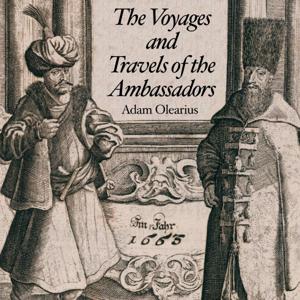


Last time, we heard the tale of watchmaker John Stadler’s execution for murdering a Muslim citizen of Isfahan. This time we will hear the same tale as told in 1678 by French jewel merchant Jean-Baptiste Tavernier, who made six voyages to Turkey, Persia, and India over the course of his 40-year career.
Tavernier is perhaps most famous as the man who brought the Hope Diamond from India to Europe, probably during his sixth and final voyage between 1664 and 1668. The stone originally weighed 112 carats, and was known as the Tavernier Blue. He sold the diamond to Louis XIV of France for 220,000 livres, or the equivalent of 16,500 English pounds.
John Stadler arrives in Persia six years before we meet him. He is often seen in the company of our Germans. After killing a Muslim, Stadler is sent to prison, and the shah tries three times to rescue him: the first time offering him two thousand tumans to convert, and the second time offering ten thousand tumans and a woman from his harem with all her jewels. He is executed at the end of October, 1637.
The Armenian community in Isfahan was created in 1604 when Shah Abbas conducted a scorched earth military campaign against the Ottomans in the Caucuses, left many villages and the city of Julfa as smoking ruins, and deported the Armenians to Persia for his strategic and economic benefit.
Our ambassadors have their first public audience with the shah occurs on August 8, 1637, and the first private audience three weeks later. They attend many of the best parties ever, but the English merchants throw a party that surpasses the magnificence of all previous entertainments.
The Prior of the Augustine monastery complains about debauchery to Adam Olearius. Olearius complains to Ambassador Bruggeman and is threatened with murder.
Our ambassadors arrive in Isfahan on August 3, 1637, and immediately get into a running street battle with servants of the Indian ambassador. The shah demands someone's head.
Olearius tells us that, in general, the Indians are good natured, civil, friendly, and their conversation not unpleasant, provided that no one does them any injury. But they are also apt to resent any kind of insult, they are never satisfied without taking the blood of those who do the offending.
The first audience with Shah Safi occurs on August 16. Forty horses from the shah’s own stables arrive to take them to dinner. Shah Safi sits on a satin cushion, behind the fountain, his back to the wall. He is about 27 years old, Olearius says, “handsome bodied, having a graceful aspect, and of a clear and smooth complexion, somewhat hawk-nosed, as most of the Persians are,” with a little black moustache on his upper lip.
The Germans are seated near 13 very handsome women dancers, and some of them are the most beautiful courtesans of the city who pay a yearly tax to conduct their business and must come to court whenever the shah sends for them. “We were told,” Olearius writes, “that a man might have had his choice of them for a tuman.” You will remember from episode 13 that a tuman is not an actual coin, but a unit of accounting. In the 1930s, one tuman was equivalent to about five American dollars.
The Germans discover afterward that a spy had been hidden nearby during dinner, observing their demeanor, listening to whatever they said among themselves, and reporting back to the shah. Bruggeman is critical of the paintings, the entertainment, and the manners of the Persians, and that this works to his disadvantage and prejudice during the later negotiations.
The Holstein trade mission leaves Caswin on the evening of July 13, 1637, the baggage and sick people leaving first and the gentlemen following later that night.
This is the final leg of their outbound journey from the German port city of Hamburg to the Persian capital of Isfahan that began almost four years ago. Along the route they’re taking, Persia is about 500 miles wide from the Caspian Sea to the Persian Gulf, and although the 300-mile road to Isfahan does not cross the harshest deserts in the country, the conditions described by Adam Olearius are still very harsh indeed.
Our ambassadors are crossing the western edge of this desert in Caswin province toward the city of Kom and a great dry salt lake. Ambassador Crusius falls ill. Not able to ride on horseback, he is carried on a litter for several days.
At a caravanserai named Choskeru, the names of travelers are carved on the walls, like people from every era in history who want to leave some evidence that they had been there. The heat is so bad they strip down to their underwear. They pitch tents to acquire some shade, but wind out of the mountains comes in blasts that are hotter than the heat of an oven. They escape into the caravanserai and Olearius tells us they cannot walk five or six steps without burning their feet.
Several of the Germans are plagued by the “bloody flux,” which he says is caused by eating too much fruit and drinking too much water. Three men die of the disease, and their bodies are carried to the next stop, the city of Kaschan.
Because of the scorpions, the locals never sleep on mattresses laid on the ground, as they do in other cities, using a bed frame instead. Olearius is the only member of the trade mission to get stung by one. The Persian remedy for scorpion bites is to apply a piece of copper money to the wound, leave it there for 24 hours, and then replace it with a plaster made of honey and vinegar.
They reach Isfahan on the morning of August 3, 1637.
The Persian city of Caswin, where our trade ambassadors from Holstein are now, is about 50 miles from the south shore of the Caspian Sea. They have traveled almost 500 miles overland after being shipwrecked on the west shore near the small town of Nisavay, and they have roughly another 300 miles to go before reaching their destination – the capital city of Isfahan.
The perimeter of Persia is almost entirely mountainous, while the center is a vast desert plateau that sits below the mountains but two or three thousand feet above sea level. The country might be described as a saucer, and the central desert is sometimes called “Qanat Civilization” due to its long historical use of irrigation systems.
Caswin, at the extreme northwestern edge of that great desert, is snuggled into a pocket right up against the Alborz mountain range. The kings of Persia once had their ordinary residences here after Shah Tamasp transferred his court here from Tauris.
It is said that Caswin was once the home of a famous physician named Lokman, a black Arabian who had acquired a great reputation because of the many books he had written about medicine and other works that endeared him to the inhabitants of the city. One day, the wise Lokman was asked how he had attained such great learning, and he said it was due to the ignorant and uncivil people, for he had always done the opposite of what he had seen them do.
As the trade mission from Duke Frederick of Holstein prepares to leave Ardebil, our author investigates the local religious institution built by the city’s founder and expanded by his son. Its wealth amounts to many millions in gold, that it could supply more ready cash than the Shah of Persia himself, and that it is capable of raising and maintaining a powerful army all on its own.
The tomb of Sheik Sefi has the additional critical function of providing certificates that can be used to prove a pilgrim’s Islamic faith, protect the bearer against disgrace and misfortune, and even save them from execution.
They leave Ardebil on June 10, with 160 horses and 12 camels, and eight days later reach the village of Kamahl and find their assigned lodgings to be unacceptable. So they force their way in to several occupied homes, evicting families of men, women and children into the night. As you might expect, this does not end well.
At the little city of Senkan, they encounter a man with wooden hands and no feet, although he appears to ride as well as anyone else. The son of an important family in the city, the young man had been guilty of “strange debauches and extravagances” including the frequent rape of women and girls in their own homes. His behavior had become so bad that the shah could have ordered his execution. But his father’s good reputation at court saved his life, and the penalty was merely that his hands and feet were cut off, and the stumps thrust into boiling butter to stop the bleeding.
In Sulthanie, 15 members of the embassy get sick from the sudden changes in temperature – extreme cold at night to the excessive heat of the day – and all suffer fits and a violent burning fever.
"By God’s wisdom, because cats in Ardebil have short lives, there are very many rats, more than in other regions. The mice chew up the people's clothing – their woolen cloaks, for example. So this city has a royal auction for cats. There are professional cat-brokers, much in demand, who sell cats in cages. The Divrigi cat is a particular favorite, fetching a price of up to 100 gurus; still, it does not live long here. When the brokers cry their wares, this is the patter they sing in a loud voice: ‘You who seek a feline, A cat to hunt your mice: To rats it makes a beeline, but otherwise it’s nice; An enemy to rodents, And yet it’s not a thief; A pet to share your grief.’”
At least that’s the story from Evliya Celebi, an Ottoman citizen who was born in 1611, died around 1683, and documented 40 years of travels in a manuscript that apparently remained unknown until 1742. A complete edition in Turkish did not appear until 1938, and – as unbelievable as it may seem – critical translations had to wait until the 1970s.
The city of Ardebil is located in the midst of a great plain and surrounded by mountains. Mount Sabalan to the west is always covered with Snow, and mount Bakru lies to the southwest. The air from these mountains is sometimes extremely hot and sometimes extremely cold, so that autumn can even begin in August and the air brings what he calls “epidemical diseases” that kill a great number of persons every year.
The ambassadors take a tour of Sheik Sefi’s tomb, but only after giving up their personal weapons, for anyone who carries even a knife into the tomb is subject to execution.
On May 14, the citizens of Ardebil begin a 10-day festival celebrating the memory of Husayn ibn Ali – grandson of Muhammad himself – killed at the battle of Karbala in the year 680 AD. The battle marked an important milestone in the schism between the Sunni and Shia sects of Islam, and the Safavid state used it and other observances in a government-run operation to convert its majority Sunni population to the Shia faith.
Over the years, Safavid shahs gradually instituted forms of piety specific to their brand of Shi‘ism, and some historians say the reforms begun by Abbas I “created a new dependency of the monarchy on a greatly strengthened Shia clergy for its legitimacy – a development which could be said to have led eventually to the overthrow of the monarchy in the Islamic revolution of 1978-9.”
This is the first episode of the year 2024, and I am recording it on January 1. On the Islamic calendar, the current year is 1445, and it is 1402 on the Iranian calendar.
In Persia, the date is March 30, 1637, and our travelers are in the Kur River valley near the modern-day border of Azerbaijan and Iran. After days of freezing in the mountains, they now encounter “nothing but fair weather, a sky clear, and without any cloudiness,” except for a light haze in the mornings that is quickly burned off by the sun.
They cross the river on April 2, and are met by a guide from the city of Ardebil. They transfer their belongings to 40 camels and 300 horses, being informed that wagons are not suitable for the next 120 miles of road through mountains and valleys. Each day on the road to Ardebil, they are supplied with 10 sheep, 30 batmans of wine, along with rice, eggs, almonds, raisins, and as much fruit as they please.
They arrive in Ardebil – where they will stay for two months – on April 10 and with greater pomp and magnificence than they had met in Schamachie. About a league from the city, Governor Kelbele Khan – described as “a low man, but of a good aspect and pleasant humor” – meets them with more than a thousand horse-mounted troops.
The worst day of the Persian year is the Wednesday before New Year’s Day. Nothing good ever happens on that day, so no one does business, no one signs contracts, no one holds a party, and – perhaps most important of all – no one pays anyone any money. Some people spend the entire day counting whatever money they have, while others go without speaking. Many people sprinkle their homes and possessions with river water, hoping to fend off any misfortune. If they meet anyone they know on the way home from the river, they throw water into his face. If they meet a best friend, they may pour a whole jug of water on him, the theory being that anyone so doused with water cannot fail to be happy for the rest of the year.
Islam has a fierce reputation for opposing alcohol, but – as we have seen since our ambassadors arrived in Persia – that reputation was hardly warranted in the 1600s. Historically, some shahs, caliphs, and sultans took it more seriously than others, and historians also note that Muhammad had a progressively negative take on drinking: from calling wine good nourishment, to a warning against abusing it, to insisting that wine leads to sin, to a prohibition on attending prayer while drunk, and only then banning alcohol altogether.
Farrukhi Sistani, one of the most prominent court poets in the history of Persian literature, wrote in the 11th century that, “Although wine is forbidden, I believe that it becomes licit for lovers when spring arrives. God gives us His blessings as we drink. Come and don’t regret it.”
Safavid Shah Isma’il, who at the age of 15 declared himself the ruler of Persia in 1501, suffered a catastrophic defeat by the Ottomans in 1514 and was never the same man again. Instead of governing, he took to hunting, drinking wine, spending time with young boys, and alternately trying to legitimize Islam and engaging in ritual drinking combined with sex orgies.
His son, Shah Tahmasb, was more devout. Ruling from 1524-1576, he gave up drinking wine and instituted the practice of enslaving Christians from the regions west of the Caspian Sea.
Welcome to The Voyages and Travels of the Ambassadors, the epic story of a 17th century trade expedition from Germany to Persia that failed so completely its leader was publicly executed upon his return. This is Episode 12: Gunpowder Empires.
It is still early February, 1637, and our voyagers are still in the city of Schamachie, Persia, just a few days by horseback from where they were shipwrecked on the Caspian Sea. They have been drinking their way across two continents, carrying barrels of the stuff by land, river, and sea, and 22 of them are in bed with “burning fevers” caused by the "abundant drinking of wine."
But this episode is mostly about gunpowder and trade, epitomized by two adventurous British brothers, Sir Anthony and Sir Robert Sherley, soldiers of fortune who traveled to Isfahan to persuade Shah Abbas to form a military alliance with the Christian kingdoms.
When they arrive in Persia in 1599, their first meeting with Shah Abbas occurs as he returns from an eastern campaign against the Uzbeks. According to Anthony, the Shah’s soldiers carry no less than 24,000 decapitated enemy heads on pikes.
From the publisher's feed