
Sign up to save your podcasts
Or



Share a comment
Some messages promise that if you live right and say the right words, God will build a spiritual shield around you and keep hard things away. We push back on that idea head-on, because it turns faith into a formula and it collapses the moment real suffering shows up. Instead of “declare abundance” certainty, we look at the kind of confidence Scripture actually celebrates: trust in God’s power without demanding God’s preferred outcome.
We open by naming prosperity theology for what it is and why it can sound so persuasive, especially when you want control over health, money, and the future. Then we follow Peter’s warning not to be shocked by fiery trials and step into Daniel 3, where Nebuchadnezzar builds a massive golden image and makes worship compulsory. The stakes are brutal: bow when the music plays or be thrown into a burning furnace. With Daniel absent, the spotlight lands on Shadrach, Meshach, and Abednego and their steady refusal to compromise.
Their response is the turning point: “Our God is able to deliver us… but if not… we will not serve your gods.” We talk through why “but if not” is not doubt but surrendered, mature faith. When the furnace is heated seven times hotter, God does not remove the fire, He joins them in it, and even a pagan king ends up publicly acknowledging the Most High God. If you’re facing pressure, disappointment, or a trial you did not choose, this conversation reframes what faithfulness can look like in the furnace. Subscribe, share with a friend who needs hope, and leave a review with your biggest takeaway.
We're taking the truth of God's Word to the nations - and you can help make it possible.
Learn more and support our work here: https://www.wisdomonline.org/
Learn more at https://www.wisdomonline.org/
Support the show
Share a comment
A nightmare keeps hitting Nebuchadnezzar on repeat, and he knows it matters. So he does what anxious power often does: he turns the whole situation into a loyalty test. The king summons Babylon’s elite wise men and demands something absurd, tell him the dream itself and then explain it. If they cannot, they die. That single command exposes how thin “spiritual expertise” can be when truth is on the line, and it pulls Daniel and his friends into a crisis they never asked for.
We walk through Daniel chapter 2 step by step: Daniel’s calm tact with Ariok, the urgent decision to gather his friends for prayer, and the moment God reveals the mystery in a night vision. One detail we love is that Daniel does not sprint for credit. He stops to thank God first, praising the Lord as the one who changes times and seasons, removes kings, and sets up kings. That frame matters because biblical prophecy is not trivia about end times, it is a declaration that God reigns over rulers, empires, and history itself.
Then the dream unfolds: the towering statue, the metals, the divided feet and toes, and the stone that crashes down and grows until it fills the earth. We connect the image to the rise and fall of world empires, Babylon, Medo-Persia, Greece, and Rome, and we talk about how the vision stretches toward the latter days and the second coming of Jesus Christ. If you want a clear, story-driven guide to Daniel’s prophecy and a practical model for faith under pressure, press play, then subscribe, share with a friend, and leave a review telling us what part challenged you most.
We're taking the truth of God's Word to the nations - and you can help make it possible.
Learn more and support our work here: https://www.wisdomonline.org/
Learn more at https://www.wisdomonline.org/
Support the show
Share a comment
Most resolutions fail because they aim at behavior without settling the deeper question: who gets to shape our character. We start with the reality that millions of people set goals each January, yet only a small fraction stay with them, then we pivot to a better framework from Proverbs 4:26 and the example of Jonathan Edwards. Written, godly resolutions are not hype or self-help; they are a clear-eyed commitment to walk a certain path even when no one is clapping.
From there, we step into Daniel chapter 1 and the collision between faith and pressure. Nebuchadnezzar conquers Judah and pulls the best and brightest Jewish teenagers into Babylon’s leadership pipeline, complete with elite education, status, and new names tied to pagan gods. Daniel, Hananiah, Mishael, and Azariah face a full rebrand designed to make them think, speak, and belong like Babylonians. The surprising twist is that the first major temptation is not the classroom or the name change, but the king’s food and wine, where Daniel resolves not to defile himself and asks for a simple alternative.
We walk through the ten-day test of vegetables and water, the unexpected outcome that points to God’s intervention, and the long-term result: God grants these four young men skill, wisdom, and favor until the king finds them ten times better than his best advisors. The practical takeaways land hard for modern life, especially for Christians navigating school, work, and a loud culture: don’t let the world rewrite your character, and don’t let the crowd become your model.
If you want biblical encouragement for building lasting Christian habits, integrity, and spiritual discipline, listen now. Subscribe, share this with a friend who needs steadiness, and leave a review with the “line in the sand” you’re choosing to hold.
We're taking the truth of God's Word to the nations - and you can help make it possible.
Learn more and support our work here: https://www.wisdomonline.org/
Learn more at https://www.wisdomonline.org/
Support the show
Share a comment
Ruins don’t get the last word. As we reach the closing pages of Ezekiel, we walk through a vivid, measurable vision of restoration: a literal temple, a renewed Jerusalem, and a kingdom ruled by the Messiah where presence replaces distance and worship becomes clear and joyful. We set the timeline after tribulation and trace how Christ returns, conquers his enemies, and establishes a thousand–year reign. Resurrected believers rule with him, while a redeemed people from every nation enter the kingdom and learn the rhythms of justice, peace, and praise in a world finally made right.
Guided by an angel with a measuring rod, Ezekiel moves from gates to courts and into the Holy of Holies—only to note what is missing. There is no veil and no Ark, because the true mercy seat is now a person: Jesus, the once-for-all sacrifice who stands at the center of worship. We explore why priests from the line of Zadok are honored for ancient faithfulness, how a civil “prince” governs under the Messiah’s authority, and why sacrifices return as memorials rather than atonement—teaching tools that retell the story of redemption to Israel and the nations. The precision of the temple’s dimensions and the structure of sacred districts highlight order, holiness, and a public faith that invites the world to learn.
Then the scene widens. From the temple flows a river that transforms the land, turning the Dead Sea fresh and filling its shores with fishermen and life. It’s a portrait of creation healed and community restored, where glory returns from the east and God says, “I will dwell in their midst forever.” If you’ve ever wondered how prophecy describes the millennial kingdom, what role Israel plays, or how worship looks when the King is present, this is your map and compass.
Listen now, subscribe for future journeys through Scripture, and share this episode with someone who needs hope anchored in promise. If it moved you, leave a review and tell us which moment in Ezekiel’s vision changed how you see the future.
We're taking the truth of God's Word to the nations - and you can help make it possible.
Learn more and support our work here: https://www.wisdomonline.org/
Learn more at https://www.wisdomonline.org/
Support the show
Share a comment
A ruined city, a scattered people, and an ancient promise that refuses to die—Ezekiel 38–39 reads like a paradox until you see the timeline come into focus. We walk through the prophet’s vision of a secure Israel suddenly targeted by a northern coalition, and we explain why this dramatic conflict is not Armageddon and not the final rebellion after the millennium. Instead, it likely unfolds early in the tribulation, after the rapture and under the temporary calm created by the Antichrist’s covenant. That framing unlocks the logic of the passage and turns a frightening war into a window on God’s faithfulness.
We map the players Ezekiel names to modern regions—Gog of Magog from the north, with partners like Persia, Cush, and peoples from Anatolia—and dig into motives that blend religious hostility with the lure of plunder. Then we slow down for the turning point: God’s decisive intervention. Earthquake, confusion, torrential rains, hailstones, fire—judgment that leaves no doubt who holds the script. The collapse of the invading alliance sets the stage for something bigger than survival. Israel awakens to the Lord’s hand and moves toward a Spirit‑led renewal that anticipates the Messiah’s reign.
Across the conversation, we outline a clear end‑times sequence: Christ gathers the church, a global leader rises and promises peace, Israel enjoys real security, the invasion strikes and fails, and history rolls forward toward the visible return of Jesus and the millennial kingdom. Rather than stoke fear, this vision aims at confidence. If God keeps promises across centuries, he can keep you steady this week. Join us as we connect prophecy to hope, theology to daily courage, and headlines to the larger story of a King who will reign.
If this episode helped clarify your view of Ezekiel 38–39, follow the show, share it with a friend, and leave a review with your biggest takeaway or question. Your feedback shapes our next journey.
We're taking the truth of God's Word to the nations - and you can help make it possible.
Learn more and support our work here: https://www.wisdomonline.org/
Learn more at https://www.wisdomonline.org/
Support the show
Share a comment
A restless heart can chase a thousand paths and still come up empty. We walk through Ezekiel 36–37 to explore a hope that holds when everything else shakes: God’s promise to restore, cleanse, and breathe life where despair has settled in. From the renewal of the land to the renewal of the heart, the prophet maps a future where scattered people are gathered, shame is washed away, and a stone-cold will is warmed to life by the Spirit.
We start with the hard truth of exile and the staggering claim that God acts for the sake of his name. That single motive turns the entire forecast from wishful thinking into anchored certainty. Clean water for uncleanness, a new heart and a new spirit, and an indwelling presence that reshapes desire—this isn’t surface change but deep transformation. Then the scene shifts to one of Scripture’s most arresting images: a valley of dry bones. As Ezekiel prophesies, skeletons reassemble, tendons knit, flesh returns, and breath rushes in. God declares the bones are “the whole house of Israel,” promising national resurrection where hope looked like dust.
Unity follows life. God instructs Ezekiel to join two sticks—Judah and Joseph—into one. The divided kingdoms become a single people under one king, with David named and the sanctuary restored. Whether you read David as the beloved king serving under the Messiah or as a title pointing to Jesus, the son of David, the emphasis is the same: real leadership, true worship, and a people remade from the inside out. We also address the timing tied to the return of Christ and the millennial kingdom, while drawing a line to today’s questions: where does your heart rest, and what does repentance look like now?
If your confidence feels thin, this conversation offers more than comfort; it offers a framework for hope rooted in God’s character. Listen for the sweep of promise and the personal call—turn from pride, receive cleansing, and find rest in Jesus. If the vision of dry bones can stand, so can your faith. Subscribe, share this with a friend who needs hope, and leave a review to join the conversation. Where is your heart resting today?
We're taking the truth of God's Word to the nations - and you can help make it possible.
Learn more and support our work here: https://www.wisdomonline.org/
Learn more at https://www.wisdomonline.org/
Support the show
Share a comment
A city falls, a prophet’s warning is vindicated, and the path from ruin to restoration comes into view. We journey through Ezekiel 33–35 to uncover how a watchman’s duty, a people’s personal responsibility, and a searing indictment of corrupt leaders converge to reveal a deeper hope: God himself promises to shepherd his scattered flock and establish lasting peace. Along the way, we confront the survivors’ flawed claim to the land, the danger of hearing truth without heeding it, and the sobering reality that covenant privilege never overrides ethical obedience.
We speak candidly about spiritual leadership that wounds instead of heals. The shepherds of Israel fed themselves, not the flock, leaving the weak, sick, and lost to wander. God steps in with fierce mercy: I am against the shepherds, and then with tender resolve, I myself will be the shepherd of my sheep. That promise looks forward to the Good Shepherd, the Messiah, who gathers, binds, strengthens, and secures his people. We explore the prophetic picture of one shepherd, my servant David, and how this points to the reign of Jesus, with thoughtful perspectives on David’s future role and the contours of a restored, fruitful land where people dwell secure and unafraid.
Edom’s judgment adds another layer: those who cherish enmity and revel in another’s fall will answer to a just God. The message is timeless and provocative: God disciplines his own and confronts hostile nations, defending his name and his people. The episode closes with a personal question that lingers beyond the final word: who is your shepherd today? Not the voice you enjoy, but the one you obey. If this exploration deepened your understanding of Ezekiel and sparked fresh resolve to follow the Good Shepherd, subscribe, share the show with a friend, and leave a review to help others find these conversations.
We're taking the truth of God's Word to the nations - and you can help make it possible.
Learn more and support our work here: https://www.wisdomonline.org/
Learn more at https://www.wisdomonline.org/
Support the show
Share a comment
Headlines from the ancient Near East still sound uncomfortably current: neighbors gloat at a rival’s fall, markets cheer a competitor’s collapse, and leaders claim they built the very rivers that feed them. We walk through Ezekiel 25–32 as a living map of pride and consequence, tracing God’s oracles over Ammon, Moab, Edom, Philistia, Tyre, Sidon, and Egypt to see how arrogance corrodes people and nations from the inside out.
We start with the nations around Judah—mocking voices and old grudges that feel small until they summon real harm. Then we linger with Tyre, the shimmering trade hub that believed beauty and wealth made it unsinkable. When Jerusalem stumbled, Tyre smiled; when profits rose, conscience fell. Ezekiel answers with images you can’t forget: a perfect ship that goes down with all its cargo, a king who calls himself a god and learns he is only dust. The portrait widens into a glimpse of older pride—language reaching back to Eden and the anointed cherub—reminding us that human hubris often hides deeper currents, and yet none of it outruns God’s rule.
From there we turn to Egypt, where Pharaoh boasts over the Nile as if he poured it himself. History pushes back. Babylon becomes the scalpel, Assyria the cautionary tale, and the great cedar crashes to the ground. The point isn’t despair; it’s clarity. Strength without humility is brittle, and empires without reverence eventually meet their limits. Still, woven through these judgments is a promise: Israel will be regathered and will know the Lord. That thread keeps us grounded—justice is not chaos, and correction is not the end of the story.
If you’re hungry for a grounded take on ancient prophecy with modern relevance—power, economics, leadership, and the posture of the heart—press play and reflect with us. Subscribe for more thoughtful walkthroughs, share this with a friend who loves history and theology, and leave a review to join the conversation. Where do you see pride pretending to be strength today?
We're taking the truth of God's Word to the nations - and you can help make it possible.
Learn more and support our work here: https://www.wisdomonline.org/
Learn more at https://www.wisdomonline.org/
Support the show
Share a comment
A hard word can save a life, and Ezekiel’s voice carries that weight. We walk through Ezekiel 22–24 as the prophet lays out an unflinching indictment—bloodshed, idolatry, fraud, and the quiet collapse that follows when a people forget God. The courtroom gives way to the furnace: a searing image where dross floats to the surface and illusions burn away. Then the storytelling turns provocative and painfully human—two sisters chasing power like lovers, treaties dressed as desire, and the bitter end of letting empires define safety and truth.
The moment everything becomes real is stamped with a date. A Babylonian siege tightens, and Jerusalem is pictured as a corroded cauldron, its people lifted out one by one until the pot itself is thrown into the flames. It’s poetry with teeth, and it sets up the most startling scene of all: God tells Ezekiel that the delight of his eyes—his wife—will die, and he must not mourn in public. That silence becomes a living prophecy for exiles who will be too stunned to weep when their temple falls and their children are lost. The grief is not performative; it is the stark mirror of a people who traded covenant love for the illusions of power.
Yet a fierce mercy threads through the ash. “You shall know that I am the Lord” isn’t a taunt; it’s a promise that reality is anchored in God’s character, even when judgment lands. We reflect on how forgetting God unravels personal and national life, why alliances can become idols, and where hope stands when holiness demands justice. The path forward points to a Savior who bears the fire, turns judgment into rescue, and invites us to remember before we self-destruct.
Listen, reflect, and share your takeaways with us. If this conversation helped you see justice and mercy with fresh eyes, subscribe, leave a review, and send the episode to someone who needs a clear word today.
We're taking the truth of God's Word to the nations - and you can help make it possible.
Learn more and support our work here: https://www.wisdomonline.org/
Learn more at https://www.wisdomonline.org/
Support the show
Share a comment
What if the excuse you trust most is the very thing keeping you stuck? We open Ezekiel 18–21 and confront the sour grapes proverb head-on, trading the comfort of blame for the power of personal responsibility. Through vivid images and piercing lines, Ezekiel shows why no one is saved by a family name, and no one is doomed by it either. The soul that sins shall die, yet the one who turns will live—justice and mercy meet here, offering a way forward that starts with honesty.
We move from the household to the throne room as Ezekiel’s poem of lion cubs reveals how Judah’s kings—Jehoahaz, Jehoiachin, and Zedekiah—fell under judgment for their own choices. Leadership carries weight, but it does not erase individual agency. Then the lens widens again as we trace Israel’s national story: rescued from Egypt, given the law, warned in the wilderness, and spared again and again by God’s grace. The pattern is sobering—rebellion, consequence, mercy—but it’s also profoundly hopeful, because a pattern can be broken. Ezekiel anchors that hope in a future when the Messiah reigns and the people return to wholehearted faithfulness.
The closing images are hard to miss: a consuming fire and a polished sword, the blunt reality of consequences. Yet right beside them stands an open door to restoration: confess and be cleansed; leave the dry land of disobedience and step into green pastures with a faithful Shepherd. If you’ve been saying, “My past made me do it,” this conversation offers a better script: name your choices, seek forgiveness, and begin again. Subscribe, share with a friend who needs a nudge toward hope, and leave a review with one takeaway you’re acting on this week. What excuse are you laying down today?
We're taking the truth of God's Word to the nations - and you can help make it possible.
Learn more and support our work here: https://www.wisdomonline.org/
Learn more at https://www.wisdomonline.org/
Support the show
From the publisher's feed
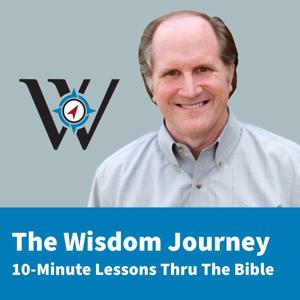
Stephen Davey shares practical and relevant lessons through the entire Bible, Genesis to Revelation, in just 10-minute each weekday. Want to understand the Bible and its implications? Subscribe and…
Ranked by our users in the last 21 days

2,512 Listeners

8,586 Listeners
1,428 Listeners

1,377 Listeners

3,093 Listeners

7,111 Listeners

1,991 Listeners

21,171 Listeners

6 Listeners

5,405 Listeners

248 Listeners
6 Listeners

39,342 Listeners

1,306 Listeners

13,145 Listeners

33 Listeners
13 Listeners

9 Listeners
0 Listeners