
Sign up to save your podcasts
Or



Share a comment
What if the most important city in the world never tops the travel lists? We journey through Psalm 48–50 to show why Zion—Jerusalem—is called the city of the Great King and the joy of the whole earth, and why that claim reshapes how we think about power, security, worship, and hope. From ancient walls that made enemies tremble to the phrase sides of the north that subverts pagan myths, we trace how Scripture anchors Zion in God’s throne and unshakable promises.
We then step into the heart of Psalm 49, where wealth, legacy, and self-made plans collapse before the certainty of death. The psalm’s blunt wisdom becomes stunning good news: God will ransom my soul from the power of Sheol. That line reframes life and afterlife. Instead of engineering our own salvation, we receive a rescue that Jesus secures through His sacrifice, turning Zion into the city of the redeemed rather than a monument to human strength.
Finally, Psalm 50 reorients our worship. God doesn’t need cattle; He desires the sacrifice of thanksgiving from people who trust Him. That practice points forward to Revelation 21, where the New Jerusalem descends and Christ’s kingdom takes visible shape. The thread holds together: Zion’s beauty flows from God’s presence, God’s promise answers death, and thankful worship becomes our daily posture. Along the way, we explore history, theology, and practical steps for cultivating gratitude that lasts longer than any name etched on stone. If you’re longing for a hope that outlives headlines, this conversation will steady your heart and lift your eyes to the city that lasts.
If this encouraged you, follow the show, share it with a friend, and leave a review to help others find these teachings. Tell us: what promise about Zion gives you the most hope today?
We're taking the truth of God's Word to the nations - and you can help make it possible.
Learn more and support our work here: https://www.wisdomonline.org/
Learn more at https://www.wisdomonline.org/
Support the show
Share a comment
What if the loudest headline isn’t chaos but a coronation? We journey through Psalms 45–47 to move from panic to peace, from tight places to steady hope. Psalm 45 opens with a royal wedding that points beyond ancient Israel to Christ the King and the joy of a redeemed bride. Hebrews echoes its center line—Your throne, O God, is forever and ever—so we ground hope in the deity of Jesus and the permanence of his rule.
From ceremony to shelter, Psalm 46 meets us where life feels cramped and out of control. God is our refuge and strength does not promise escape from the storm but presence within it. We name our althoughs—loss, betrayal, illness, uncertainty—and learn the rhythm of selah: pause, slow down, and remember who stands with us. The psalm lifts our eyes to a promised city where God dwells with his people, wipes every tear, and ends pain. That future steadies the present; peace on earth will come, and peace in the heart can begin now.
The arc crescendos with Be still and know that I am God—an invitation to stop striving and surrender the illusion of control. Psalm 47 then throws open the doors to celebration: clap your hands, all peoples. The Lord ends wars, reigns over the nations, and sits on a holy throne. Christian hope is not fragile optimism; it is the certainty of a reigning King who will finish what he began. Walk with us through these psalms and trade anxiety for anticipation, striving for stillness, and fear for worship.
If this encouraged you, follow the show, share it with a friend who needs peace today, and leave a review to help others find this teaching.
We're taking the truth of God's Word to the nations - and you can help make it possible.
Learn more and support our work here: https://www.wisdomonline.org/
Learn more at https://www.wisdomonline.org/
Support the show
Share a comment
When life turns upside down and prayers seem to echo in silence, where do you place your hope? We journey through Psalms 42–44 to face spiritual drought with honest words and a steady heart, exploring how ancient songs teach modern souls to trust and wait. We begin with the raw confession of a downcast spirit—tears by day and night, a mind rattled by inner turmoil, and the piercing question, “Where is your God?” Instead of hiding the pain, we learn to pray it. The sons of Korah invite us into a maskil—a teaching psalm—that trains our hearts to thirst for the living God like a deer searching deep ravines for hidden streams. The refrain becomes the anchor: hope in God means trust and wait, even when the water is not yet visible.
We then widen the lens to see how praise works before circumstances shift. “I shall again praise him, my salvation and my God” is not denial; it is identity. By anchoring praise in God’s character rather than quick outcomes, we discover how spiritual resilience grows in dry seasons. Psalm 44 extends the theme to a national story: Israel’s failures, discipline, and mockery do not equal abandonment. Drawing on Paul’s insight in Romans 8, we press into a crucial truth—tribulation, distress, persecution, famine, and danger are not signs that God has walked away. Suffering may be the soil where faithful love takes deeper root.
Along the way, we share practical ways to keep moving when the heart feels heavy: name the sorrow without shame, return to the refrain of hope, attach praise to God’s person, and remember the witness of those who walked this road before us. And yes, sing through tears. Those songs, shaped by waiting, often become the strongest witnesses to God’s steady presence.
If this conversation strengthens your hope, subscribe, share it with a friend who needs courage today, and leave a review to help others find the show. Tell us: what scripture helps you trust and wait when life feels dry?
We're taking the truth of God's Word to the nations - and you can help make it possible.
Learn more and support our work here: https://www.wisdomonline.org/
Learn more at https://www.wisdomonline.org/
Support the show
Share a comment
Ever notice how trials make your world feel smaller and your words come out hotter? We explore how Psalms 39–41 expand that tight, anxious frame and turn impulsive speech into deliberate praise. David begins by wrestling with the tongue—acknowledging how quickly anger ignites—and then reframes the moment with a sober truth: life is brief, time is flying, and hope belongs in God. That shift doesn’t silence honesty; it disciplines it, so what we say builds wisdom rather than adding noise.
From there, we trace David’s testimony in Psalm 40: waiting, crying out, being lifted from the pit, and standing on solid rock. That rescue places a new song in his mouth, and the personal story becomes a public anthem. We talk about why congregational singing matters, how shared lyrics steady shaky hearts, and how the choir master and the gathered assembly turned private faith into communal courage. When we sing God’s wondrous deeds and unmatched thoughts, we rebuild memory and resist fear together.
We close with the final cadence of Psalm 41, the doxology that ends the first book of the Psalter: Blessed be the Lord from everlasting to everlasting. Amen and amen. That double amen is not filler; it is conviction. Along the way we reflect on the flood of words we speak each day and offer a simple pattern to redeem them—pause when heat rises, retell a rescue, and sing with others often. If you’re ready to trade venting for worship and anxiety for anchored hope, this journey through Psalms 39–41 will help you guard your tongue, lift your voice, and dedicate today’s words to God’s glory. If this encouraged you, follow the show, share it with a friend, and leave a quick review to help others find it.
We're taking the truth of God's Word to the nations - and you can help make it possible.
Learn more and support our work here: https://www.wisdomonline.org/
Learn more at https://www.wisdomonline.org/
Support the show
Share a comment
Who has your ear, and where are they leading you? We trace a vivid path through Psalms 36–38 that starts with the seductive voice of sin, moves through the hard work of refusing outrage, and ends with the healing power of confession. Along the way, we contrast mud-puddle promises with the fountain of life, and darkness with the clarifying light of Christ, to show how listening shapes seeing and ultimately directs your steps.
We begin with Psalm 36, where David exposes the inner monologue that flatters us into moral rebellion and numbs our fear of God. Against that darkness, he lifts a brighter vision: with the Lord is the fountain of life, and in his light we see light. That promise anchors a way of living that is clear, honest, and deeply satisfying. It also frames a crucial decision: whether to lend our ears to transgression or to truth, knowing that what captures our ear will guide our eyes and lead our feet.
From there, Psalm 37 tackles a familiar temptation: to blaze hot with anger at the wickedness around us. David’s counsel is bracing and practical—don’t fret; trust the Lord and do good. We unpack what it means to commit your way to the Lord, literally to roll your burdens onto his strong shoulders, and we consider the long view: unjust power is temporary, the offices of the wicked will not last, and the meek—humble, submitted, courageously steady—will inherit the earth. Meekness isn’t weakness; it’s strength under God’s rule, a posture that lets us act with integrity without letting darkness dictate our methods.
Finally, Psalm 38 gives us ten simple words that can change a life: “I confess my iniquity, I am sorry for my sin.” We explore how honest confession opens the floodgates of grace, repairs ruptured relationships, and keeps our hearts tender before God. Whether you’re weary from outrage or thirsty for clarity, this journey invites you to listen differently, walk lighter, and practice humility that restores joy.
If this spoke to you, follow the show, share it with a friend who needs hope, and leave a review to help others find these conversations. What’s one burden you’ll roll onto the Lord today?
We're taking the truth of God's Word to the nations - and you can help make it possible.
Learn more and support our work here: https://www.wisdomonline.org/
Learn more at https://www.wisdomonline.org/
Support the show
Share a comment
Praise can lift the heart, but what do we do when hurt and injustice won’t let go? We walk through Psalms 33–35 and trace a real spiritual journey: joyful worship grounded in God’s creative power, a testimony of rescue and God’s nearness to the brokenhearted, and a raw, honest plea for justice when enemies strike without cause. Along the way, we talk about the tension many feel—how to love enemies without denying the reality of evil—and why biblical love includes a holy hatred of sin.
Stephen Davey helps unpack key context behind imprecatory psalms, connecting David’s prayers to the Abrahamic and Davidic covenants and the Old Testament’s eye for an eye standard. That backdrop clarifies why David asks God to contend with his adversaries: he is appealing to the Judge, not taking vengeance into his own hands. We then bridge to the New Testament where God is storing up wrath for a final day and where the cross reveals how perfect justice and steadfast love meet. Because Jesus bore wrath for repentant sinners, we can extend mercy, pray for repentance, and still long for God to make wrongs right.
Expect a thoughtful, practical conversation that moves from the lyre-led praise of Psalm 33 to the gritty rescue behind Psalm 34 and the fierce honesty of Psalm 35. If you’ve ever been wounded by lies, watched wickedness flourish, or wondered how to pray when outrage swells, you’ll find language for both lament and hope. We close with a simple image: asking the “big brother” of divine justice to ride the bus with you, trusting His timing while you keep your heart clean.
If this helped you think and pray with clarity, subscribe, share the show with a friend, and leave a review so more people can find it. What line from the Psalms is shaping your prayers today?
We're taking the truth of God's Word to the nations - and you can help make it possible.
Learn more and support our work here: https://www.wisdomonline.org/
Learn more at https://www.wisdomonline.org/
Support the show
Share a comment
Pride sneaks in sounding like confidence and leaves us feeling empty. We unpack how David’s story in Psalms 30–32 exposes the subtle drift from “God-centered” to “self-secure,” and why that shift always costs more than it promises. When David boasts, “In my prosperity, I shall never be moved,” the result isn’t strength but distance—God’s face hidden, joy fading, and a heart weighed down. Then comes the turn: God’s rescue, favor that outlasts anger, and a path back through honest confession.
We walk through Psalm 31 to see humility as strong surrender, not weak self-loathing. David warns that pride will be repaid, yet a brighter picture emerges as Jesus quotes, “Into your hands I commit my spirit,” modeling radical trust at the cross. That moment reframes humility as open-handed faith—entrusting outcomes, reputation, and hidden motives to the Father. If pride clenches and controls, humility releases and receives.
Psalm 32 offers the cure in plain words: acknowledge, uncover, confess. David describes the blessedness of forgiveness with three angles—transgression, sin, iniquity—and shows how pride blocks the flow of blessing like plaque in an artery. The relief of confession isn’t theoretical; it’s felt in a clean conscience and restored fellowship. We share practical cues for spotting pride’s creep (listen to your pronouns, watch your envy), simple steps for prompt and specific confession, and daily practices that keep a soft heart before God. Humble pie may not be on any menu, but it’s the meal that turns weeping into morning joy.
If this helped you breathe a little easier, follow the show, share it with a friend who needs courage to confess, and leave a review to help others find their way back to joy.
We're taking the truth of God's Word to the nations - and you can help make it possible.
Learn more and support our work here: https://www.wisdomonline.org/
Learn more at https://www.wisdomonline.org/
Support the show
Share a comment
What if waiting wasn’t wasted time but sacred training? We walk through Psalm 27–29 and trace a path from fear to courage, from isolation to community, and from noise to the clear voice of a God who is never late. David shows us how remembering God’s past rescue fuels present resolve, why worship is more than a song—it’s alignment—and how teachability turns delays into formation. Rather than rushing the yellow lights of life, we learn to ask for a level path we can actually walk, steady under God’s guidance.
As the themes shift from personal plea to communal care, we explore how comfort received becomes comfort shared. David doesn’t hoard hope; he prays for his people, modeling a faith that looks beyond itself. That shift invites us to bring what we learned in hardship to spouses, children, neighbors, and co-workers who are navigating their own storms. The wisdom is practical: remember truth, sing anyway, stay teachable, and pass along the courage you’ve gained.
Then the sky opens. Psalm 29 lifts our eyes to a storm rolling in from the sea, snapping cedars and shaking wilderness, and names the thunder for what it is: the voice of the Lord. Not chance, not idols—God. The same God enthroned over the Genesis flood reigns over the downpour you face today. If he governs the waters that once covered the earth, he can govern deadlines, diagnoses, and detours. Patience, here, is trust in motion: remembering, learning, and loving while we wait for the One who arrives right on time. If this conversation steadied your steps, subscribe, share it with a friend who needs courage, and leave a review to help others find the show.
We're taking the truth of God's Word to the nations - and you can help make it possible.
Learn more and support our work here: https://www.wisdomonline.org/
Learn more at https://www.wisdomonline.org/
Support the show
Share a comment
Gates lift, questions rise, and the path to God narrows to one clear doorway: grace. We follow David through Psalms 24–26 to ask who can stand in the holy place and discover why the answer isn’t the best performers but the forgiven. From Zion’s ridge to Calvary’s cross, we trace how political hills look mighty but real power rests where God’s presence dwells. Clean hands and a pure heart aren’t trophies we earn; they’re gifts we receive at the foot of the cross, where the King of Glory opens the way.
We then move from access to guidance. David’s acrostic prayer in Psalm 25 becomes a daily rhythm for anyone who knows how quickly hearts drift: make me know your ways, teach me your paths, lead me in your truth. That humble posture doesn’t just sound spiritual; it redirects real choices, protects us from our blind spots, and trains us to seek counsel before crisis. God instructs sinners in the way and leads the humble in what is right, which means there is fresh mercy and new direction for ordinary days and complicated seasons alike.
Finally, we clarify integrity. Far from a corporate buzzword, integrity in Psalm 26 is a relational reality: trusting the Lord today, even after yesterday’s failures. David is not claiming perfection but progression, a present-tense testimony grounded in grace. With practical reflections and a vivid link between ancient gates and a humble King on a donkey, we explore how worship, confession, and obedience shape a credible life. If you’re longing for forgiveness that sticks, guidance you can follow, and integrity that holds under pressure, this conversation will help you take the next faithful step.
If this encouraged you, subscribe, share it with a friend, and leave a review to help others find the show.
We're taking the truth of God's Word to the nations - and you can help make it possible.
Learn more and support our work here: https://www.wisdomonline.org/
Learn more at https://www.wisdomonline.org/
Support the show
Share a comment
A world that feels sharp and unsafe can make faith sound like wishful thinking—until you hear Psalm 23 through a shepherd’s hands. We walk the path from “pasture to palace,” slowing down over each image David gives us: the valley of the shadow of death, a rod that means real authority, a staff that keeps us close, a mesa-table prepared in enemy territory, and a healing anointing that soothes hidden agony. What emerges is not sentiment but sturdy care: a Shepherd who confronts danger, guides our steps, and pursues us with goodness and mercy on our best and worst days.
We begin by reframing the valley. Death, David insists, is a shadow, not a wall—evidence that light is near and that the Shepherd is closer. Fear loses its grip not because evil disappears, but because presence changes the terrain. From there, we unpack the rod and staff as working tools: the rod as power and protection, the staff as touch and rescue. Together they explain why “they comfort me” is more than a poetic line; it is daily assurance that we are defended and directed.
Then we climb to the “table” David names—a mesa cleared by the Shepherd who prepares provision in the middle of threat. Enemies remain, but so does the Shepherd, and that means rest is possible before the battle is over. We linger on anointing as well: not ceremonial oil, but a shepherd’s balm that protects ears and nose from parasitic torment. That picture opens into spiritual healing—God meeting us in intrusive thoughts, corrosive guilt, and restless anxiety, bringing forgiveness that overflows into joy. Finally, we follow two loyal companions—Goodness and Mercy—who don’t trail lazily but actively pursue every day of our lives, escorting us to a final address change: dwelling in the Lord’s house forever.
If you’re craving hope that holds when life bites back, this conversation offers grounded comfort, biblical insight, and practical imagery you can carry into your next hard day. Listen, share with someone who needs courage, and if this helped you, subscribe and leave a review so more people can find their way to the Shepherd’s care.
We're taking the truth of God's Word to the nations - and you can help make it possible.
Learn more and support our work here: https://www.wisdomonline.org/
Learn more at https://www.wisdomonline.org/
Support the show
From the publisher's feed
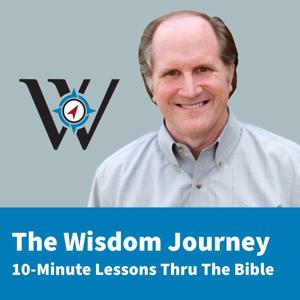
Stephen Davey shares practical and relevant lessons through the entire Bible, Genesis to Revelation, in just 10-minute each weekday. Want to understand the Bible and its implications? Subscribe and…
Ranked by our users in the last 21 days

2,511 Listeners

8,592 Listeners
1,427 Listeners

1,378 Listeners

3,091 Listeners

7,111 Listeners

1,992 Listeners

21,169 Listeners

6 Listeners

5,406 Listeners

248 Listeners
6 Listeners

39,346 Listeners

1,306 Listeners

13,144 Listeners

32 Listeners
13 Listeners

9 Listeners

0 Listeners