
Sign up to save your podcasts
Or

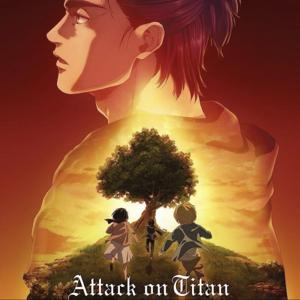


Casca, Mikasa, Alexa and Freya take Dumi's long, searching voice note and walk through it with care. It begins after a heavy weekend, when he watches Star Wars for the first time, catches the new Street Fighter film and keeps repeating one line: do not fall into the darkness. The four voices test his big idea, that injustice pulls us toward becoming the monsters we fight, against the stories he loves: Anakin's fall, Eren Yeager's rumbling and a fighter holding back a dark power. Alexa checks the facts, from Star Wars release order and the Obi-Wan series to Matthew twenty-four and Genesis six in the New International Version, and flags what cannot be verified. Mikasa asks why Obi-Wan stays good, and the answer, people who carry light and a reason beyond yourself, becomes a practical plan. They look honestly at neuroticism and the negativity bias, why online roasting shouldn't spoil what moved you, and a line you decide not to cross before the fire comes. Then, with great tenderness, they meet his hardest sentence, anger at God after the falling jet, through the lament of the Psalms. The episode closes with a reminder that you are not failing. You are choosing which wolf to feed.
After a weekend that left him heavy, Dumi does what he often does and goes looking for answers in stories. He watches Star Wars for the first time, starting with the prequels and the Obi-Wan series, catches the new Street Fighter film, and keeps hearing a line he cannot shake: do not fall into the darkness. In this raw voice note he connects Anakin's fall, Eren Yeager's descent and a fighter wrestling with the dark power inside him to Matthew twenty-four and Genesis six, and asks the question underneath them all: when the world is unjust and cold, how do you fight the monsters without becoming one? Along the way he wonders why people roast the shows that moved him, admits that his own neurotic eye sees darkness first, and explains why Obi-Wan, a man who stays good while everything around him burns, might be the goat. He credits the people around you who still carry light. Then comes the honest part. After the falling jet, he confesses he sometimes feels hatred towards God, and that he has not worked out what to do with that anger. A long, searching episode about identity, injustice, faith, fiction and choosing which wolf to feed.
Casca, Mikasa, Alexa and Freya take Dumi's raw voice note from the weekend a private jet went down in Florida and the Atlanta Dream lost Game seven of the WNBA Finals, and treat both with care. The first half sits with the tragedy: what was reported, what is still unknown, why a cockpit recording shakes us, and what philosophy, psychology and Scripture say about facing mortality without being swallowed by it. No one is named, nothing is guessed, and there are gentle tools for anyone left uneasy. The second half turns to basketball with the full play-by-play. Alexa walks through the fourth quarter minute by minute, from the tie at fifty-three to the Valkyries' sixty-eight to sixty-three win, Gabby Williams's thirty points and a decisive tip-in. The voices fact-check Dumi's claims about Angel Reese's seven shots, none in the fourth quarter, set against Allisha Gray, Jordin Canada and Rhyne Howard, correct one small error, and weigh the coaching question fairly. Mikasa asks what the pain of fandom is worth, Freya finds the thread joining a clock nobody can see to a clock everyone can, and the episode ends with permission to grieve and to keep loving the game.
Dumi sets out to record a quick one and ends up somewhere much heavier. In the same weekend, a private jet went down in Florida and his Atlanta Dream lost Game seven of the WNBA Finals, and he cannot stop thinking about how fast a life, or a season, can end. He begins with the plane: the video, the radio call from the cockpit, and why hearing a stranger say they are out of time is so unsettling. He asks why we are drawn to disasters we then wish we had never seen, and why modern life hides death until it knocks on the door. Then, with an apology, he turns to basketball. He reflects on a season nobody believed in, the purity of real sporting rivalry compared with hate that seems to come from somewhere else, and his history of painful Game sevens. He breaks down the box score: Angel Reese's seven shots against sixteen for Allisha Gray and fourteen for Rhyne Howard, the missed threes in the clutch, and the coaching choices behind them. He ends by cancelling his subscription, knowing he will be back. A raw, honest episode about mortality, loyalty, loss and love.
What happens to a society when the ladder disappears? In this unscripted episode of Wolves and Dragons, Fenrir turns to Game of Thrones for an unlikely lens on artificial intelligence. Remember when Daenerys is advised to reopen the fighting pits? It sounds barbaric until a former pit fighter explains that without them, he’d never have had a way to make a name for himself.
Fenrir argues that for generations, degrees, scholarships and sports were our fighting pits: clear arenas where someone with nothing could work hard and rise. Think of the basketball player with no other option, or the South African parents beaming at graduation because a degree means a better life. Now AI is automating entry-level work in tech, finance and beyond, and graduates are asking whether the effort still leads anywhere.
This conversation explores what happens when effort stops guaranteeing outcomes. It imagines a world with neither the rewards of capitalism nor the safety net of socialism, where the elite stay elite and everyone else is locked into rank. Does that breed resentment, revolution, or a new peasantry? Is Fenrir being paranoid, or was Game of Thrones onto something?
Raw, speculative and research-free, this is a reflection on motivation, meritocracy, and what a society needs to keep hope alive. Press play, then tell us: what’s the new fighting pit?
I left out the Netherlands job-loss figure, since it’s an unverified claim and could draw pushback. I can add it back with a hedge if you’d like.
It is game six of the WNBA Finals, the Atlanta Dream against the Golden State Valkyries, and with about two hours to tip-off it is win or go home. Your host opens by disclosing his bias: Angel Reese is the reason he bought a WNBA subscription and fell back in love with basketball, and Allisha Gray, whom he found through Reese, is the other favourite. He breaks down why Gray and Jordan Canada have struggled against this defence, why the refs have felt like the sixth man of the Valkyries, and what a rookie like Oakheart could unlock if she gets minutes next to Reese. He is honest about Reese's weak spot too: predictable post moves that Stokes can block, and why a summer of footwork, fakes and film could make her unstoppable. Along the way he compares the Finals run to Dwyane Wade's, says Reese is a competitor and a warrior in the mould of Freya, and ties the Valkyries villains into the story he is writing in real time. Win or lose, he argues, the biggest moment of her career may be about what comes next. A passionate, biased and funny pre-game take from the Wolves and Dragons podcast.
Game 2 of the WNBA Finals tips off tonight, and Dumi is calm on the outside and fretting about the game plan. The Atlanta Dream trail the Golden State Valkyries 0–1, and the Valkyries have now beaten them four times this season. The last three were close games the Dream felt they should have won.
Dumi starts with the name: an arena called Valhalla's cousin, a team named for Norse warrior-maidens, and the fact that it works. Then he gets into the basketball. His headline worry is that the Valkyries shot badly in a very low-scoring Game 1 and the Dream still lost, so he doesn't expect Golden State to miss that much again. His fix is not panic. The Dream thrive on runs from defensive plays, but against a set defence their half-court offence gets exposed.
He discusses whether Rhyne Howard should be the go-to scorer in the clutch, and why he understands the coach's trust in her even if the results are struggling. He wants designed plays for easy baskets, more post touches for Angel Reese, Jordin Canada's size problem against Golden State's defence, and a few minutes for Madina Okot, who sat out Game 1.
His verdict: it's one game, and he still believes in them. If they win tonight, the mood flips completely.
Three stories. Three endings of the world. One question: what do you do when you cannot bear what is happening under the sun?
Casca, Mikasa, Alexa and Freya retell Dumi's Season 5 episode "The Spirit of Fenrir" in full, in their own voices. They begin with a God who grieves in Genesis 6, a wolf bound by frightened gods in Norse myth, and Eren Yeager marching toward the end of the world in Attack on Titan.
Freya tells the myths, from Gleipnir to Tyr's lost hand. Mikasa takes on the betrayal at the heart of these stories, where the people who loved the wolf most are the ones who stop him, and asks whether you have ever been Tyr or Armin. Alexa adds context, including Ecclesiastes on oppression and envy, the shared name Ymir, and the trickster fathers Loki and Grisha. Casca guides the modern half: the corporate fear machine, imposter syndrome as the abusive manager inside you, and how attachment styles turn fear into self-fulfilling prophecy.
The episode also covers the ants and the line, the paradox of Fenrir (powerful in potential, powerless in condition), and the energy that never dies, the part of us that can still grieve. It closes with Dumi's answer: witness, hold the energy, build small good things, love well, and stay close to your people, the wolf in you and the watcher.
Dumi had a lot to say after a Game 1 loss, and Casca, Mikasa, Alexa and Freya have plenty to say back. This is the AI version of Sunward Village Park 22: witty, curious and a little bit dark.
The four voices walk through Dumi's journey from believer to agnostic. They explain why he reads the Bible as art, from the outside, with the question "what if this is true?" They unpack the word he just discovered, misotheist, and ask why anger at God has its own long tradition inside faith, from Job to the Psalms.
Alexa brings the science: the Pygmalion effect, the Golem effect, self-fulfilling prophecies and imposter syndrome, all as fear acting like a kind of negative faith. Mikasa defends his hardest question about God and evil, and Freya tells the story of a grieving God in Genesis 6, the wolf Fenrir bound by frightened gods, and Eren Yeager, the one with the power to act on the same despair. Casca keeps the thread and asks about the shadow we suppress until it breaks free.
They also take on his loneliness when friends don't want to talk about dark themes, the beach moment where the Bible made him feel less alone, and his closing warning. The voices end with gratitude for the dark conversations, and a promise to stay in them.
Dumi's Dream lost Game 1 away from home. He says it's good news, because now we find out what they're made of. But today's topic is something much darker.
Dumi used to be a believing Christian, then became agnostic. He explains why the Bible means more to him now, from the outside looking in. Treat it as a hypothesis ("what if this is true?"), and the story becomes a piece of art about human nature and how a God would view it.
He then introduces a word he just found: misotheist, someone angry at God for what he allows. Dumi says he is one when he entertains the Christian idea. He also looks at fear as a negative form of faith, through the Pygmalion effect, self-fulfilling prophecies and imposter syndrome.
The heart of the episode is Genesis 6. God grieves over a broken humanity, and for misanthropes, cynics and nihilists that is a story that makes them feel seen. He connects it to Eren Yeager in Attack on Titan, who had the power to act on the same despair. He connects it to Fenrir, the wolf chained by frightened gods, and to the shadow we suppress until it breaks free.
He ends with the beach, where the Bible made him feel less lonely, and a warning: Fenrir is about to break loose.
From the publisher's feed