
Sign up to save your podcasts
Or



Pilgrimage
“We are the Pilgrims, master; we shall go Always a little further: it may be
Beyond the last blue mountain barred with snow, Across that angry or that glimmering sea.”
Pilgrimage makes prayers come true. Or, to an unbeliever like me, a pilgrimage is about commitment and hard work, about the time invested and the time to think. These are the steps necessary to make most prayers and wishes come true.
Walking is both slow and difficult so it makes for powerful thinking time. Slow is good. With slowness and effort comes anticipation and clarity. Rewards have to be earned; ideas can be mulled over. I can appreciate the motivation of the pilgrims to Mount Kailash who prostrate themselves with each stride.
Ablaze in golden robes, hundreds of jovial pilgrims are marching down the road to their holy site with flags and banners. I smile as I pass amongst them. It is chaotic and spellbinding. Lazier pilgrims ride pillion on motorbike, their outfits streaming splendidly behind them. To the right is my river. Wheat fields stretch to my left. Villagers have spread wheat across the road to be threshed by the wheels of passing traffic.
Penance; redemption through suffering; searching – there seems to be an element of secular pilgrimage to my wandering, though that is not intentional. My walk does feel almost monastic and ascetic at times. I share the road for an hour or two with the turbanned, vermillion pilgrims. Eventually our routes diverge. They turn from my path at a junction in a road. I am sorry to see them go. I look down their road as far as I can, then take the other, the road that parallels the river. I am alone once again on my own forty days and forty nights in the wild. I am eating simply, living slow and testing myself out in the world. I do not know where the road is going. It doesn’t matter. Wherever the river goes is the right way for me.
Religion
“I have no bent towards gods. But I have a new love for that glittering instrument, the human soul.”
Religion is an integral part of India. Even my river is a goddess, revered at shrines along her course. Pilgrims come from all over to bathe in her sacred waters.
Every day I walk past temples, churches and mosques. I share the road with sadhus, wandering holy men. We walk side by side in amiable silence. I pass men dressed as gods (perhaps gods dressed as men too). Buses and cars are decorated with favoured deities, often the elephant-headed Ganesh. Roadside shrines depict lurid scenes from the Vedas.
I encounter so many festivals, ceremonies and wedding parades. There are celebrations of gods and goddesses and boisterous village trumpet bands practising for their celebrations of gods and goddesses. Flowers are scattered, garlands of marigolds draped round necks and girls tie fragrant white jasmine into their shining black hair. There is music, always music, with men thumping drums enthusiastically to the excited skirling of pipes.
Market stalls often cluster at the entrance to the village temple complex, the hub of community life. I pause to buy bananas. There is an enormous trench fire outside the temple, its pulsating heat stronger even than the sun. The air shimmers. Music blasts from crackling speakers. Suddenly about fifty singing and dancing children appear down the street. They are wet and muddy and are holding leafy branches in each hand. On the command of chaperoning adults, who pretend to beat them with sticks, the children stop, prostrate themselves, then stand again and continue dancing forward. They dance past me, into the temple, and are gone. The music stops. As so often happens I have no idea what I just saw. Nobody speaks enough English to be able to enlighten me. If I travel completely unprepared, I must accept that the price of surprised delight is occasional bemusement.
I stop at a mosque. The imam is rocking back and forth in the doorway, quietly reciting the Koran with three young pupils. He breaks off the class to chat and asks me to take his photo. Then, to my surprise, he whips out an iPhone and takes my photo. He enjoys having the modern gadget whilst the foreigner just has a clunky, old-fashioned camera. Even his beard is more impressive than mine. The imam gestures at the mosque and explains that it is very old,
“The mosque is 200 years old; three generations. My phone is 3G and my mosque is 3G!”
I happen across a Christian ashram and am invited to a service. The chapel is in a wood beside the river. It is plainly furnished. The congregation of about twenty people are squashed together on wooden benches. On the altar is a wooden cross and a bronze dish of fire. The priest sits cross-legged on the floor. His orange robes are vivid in the narrow strip of sunlight from the door, left ajar to allow a slight breeze.
I listen to the birds singing outside. The ashram is a good place for sedately, serenely looking for yourself whilst at peace. I am sun-fried, half asleep and half entranced as the chants, candle light, incense and gentle goodness wash over me. But I will be on my way shortly. I look for myself by hurtling, hurting and sweating.
I understand snatches of the service as the priest jumps around between languages. He intones words I recall from my childhood church visits,
“...through ignorance, through weakness, through our own deliberate fault...
He raises a chapatti scarred in baking with the sign of the cross. It is comforting and familiar, even if I dislike the dogma.
...hear our prayer...
I think of all the tiny chapels across the world where this ritual takes place. The world is so vast. Instead of chasing to touch it all, perhaps I should just try to find the essence of it in one place, like the tiny space at the heart of the lotus flower in which, they say, lies all the universe: the moons, the stars, everything.
...he broke bread and gave it to his disciples, saying: take, eat...
Maybe I should try to make the most of my life by remaining at the centre, where I am right now, and living well here. Perhaps I don’t need to be always yearning for the open road.
...for ever and ever, Amen.”
Though I am not allowed in the inner sanctuary, I am welcome to visit the small Hindu temples in each village. I leave my shoes at the temple entrance with a shrivelled old lady and enter. The only sound is the pad of my bare feet. The central courtyard, its flagstone floor cool in the shade, is an oasis of calm, a break from the noise and bustle outside. Inside the temple is an elephant. Worshippers put coins in its trunk. In response, the elephant pats them gently on the head, then drops the coin into its master’s hand.
Chipmunks race, tails up, around the elaborate pyramid above me. Monkeys watch from a wall. Swifts swirl across the sky, slipping the surly bonds of Earth. A man tosses a chunk of coconut towards a monkey. The monkey grabs it greedily and holds it tight to its chest. The man shyly offers me a piece too, then walks away. It tastes good.
A teenage girl, her hair in two neat plaits, with a garland of flowers round her neck and a school satchel on her back, pauses before a small carving of a god. Two candles flicker at its base. She puts down her satchel and squeezes her hands together in prayer. She is not at all self-conscious. The girl prays her concerns to her god, bends to pick up her satchel and then continues her walk to school.
A breath of breeze brings a scent of flowers. I treasure India’s endearing love of flowers. I love India. I love this journey. If I have a daughter one day, I will call her Jasmine, I decide. But no, these are my scented memories, my time. She must be free to choose her own life, her own flowers and memories.
Noon
“And it never failed that during the dry years the people forgot about the rich years, and during the wet years they lost all memory of the dry years. It was always that way.”
The sun is at its highest point. I am at my lowest. I walked and walked until now I just have to stop. My clothes are soaked with sweat. A prickly heat rash rages round my waist, across my shoulders, through my armpits and round my heels. It stings and it itches, but only when I think about it. The difficult task is to relax the mind when it is twisted and angry and summon up the grace to accept with serenity the things that cannot be changed. Succeed at that and the itching fades fast.
I’m tired. Ferocious heat. Thirsty. Force myself to drink warm, chemical-flavoured water. Eyelids so heavy. Want to lie down and sleep. Ten minutes, an hour. It doesn’t matter: there are more hours in this day than I can walk. At home, time is precious. Out here, I have cut everything unimportant so I have bought back time. I have as much of it as I need.
I’m irritable, impatient, out of love with India. Walking immerses me so deep that at times I feel I am drowning in it all, in the India described so well by Naipaul, “the broken roads and footpaths, the brown gasoline-and-kerosene haze adding an extra sting to the fierce sunlight, mixing with the street dust and coating the skin with grit and grime; the day-long cicada-like screech, rising and falling, of the horns of the world’s shabbiest buses and motorcars.”
I’m on the outskirts of a village. Pink bougainvillea flowers form tangled arches over people’s doorways. I peel off my clammy shirt, remove my shoes and socks and flop into the shade of a bus shelter. The floor is covered in litter, broken glass, tobacco spit and peanut shells. I don’t care. I sit cross- legged to keep the pressure off the soles of my feet. They feel as though they are on fire. Sweat pools in my Adam’s apple. Mid- day, middle of the journey, mid life crisis: hell, it’s been hard to get this far. Looking back, I feel I have done so little. So much remains to be done. Looking ahead down the road it is hard to convince myself to keep going, that things won’t always be this hard. But I cannot give in: I’m committed to the day now and this filthy bus shelter is no place to call The End. I can’t give in, but nor do I think I can make it to the end.
A very poor couple approach. I suspect they are homeless. Their movements are slow. They sit down next to me without speaking. They are sitting time away. The old man has a long beard and matted white hair. The lady is as fragile as a bird, old and hunched with empty eyes. Their clothes are faded. They chew paan6, a mild narcotic. Their few remaining teeth are stained red. They spit continuously, a stream of red saliva splashing at my feet. It’s too hot to care. I’m broken.
The old woman attempts to beg from me. It is the first time this has happened. She holds out her empty hand and gestures with her cloudy eyes. It is hard to see such poverty. But it is also alarmingly easy to ignore. What would happen if I gave her a hundred pounds? What impact would it have on this couple? It wouldn’t really be a big deal for me. I can earn another hundred quid sometime. But I don’t do it. I don’t even summon the energy to smile politely. I turn my eyes and look away.
In the distance an engine ticks over. I hear a sweeping broom and the rattle of a water pump. These small sounds accentuate the quietness. The three of us sit in silence. I wonder what they are thinking. The lady rubs her husband’s back, tenderly. She stands and walks slowly away down the road. A while later she returns, carrying a cup of chai given by a kinder soul than me. She hands it to her husband. And he takes the cup, and drinks. She sits back on her haunches. Not a word has been spoken. My life, my walk feels stupid.
I summon the resolve to continue and lift my bag back up onto my shoulders. The heat thumps me as I step out from the shade. I smile at the elderly couple. I’m light-headed, tired and weak. They smile back at me. I walk on.
People
“I wonder how many people I’ve looked at all my life and never seen.”
The people I meet are a highlight of the journey. I meet good people, kind people, funny people, mad and sad and one or two bad people. But mostly it is a random selection of good people. Many invite me to their homes for chai, for food or to spend the night.
One day a stylish man stops his motorbike to chat for a few minutes. His hair is swept back, he has a big bushy beard and a smear of red paste on his forehead. He wears three gold rings and a chunky gold necklace. His pretty wife and daughter are perched on the back. They are sharing the headphones of an iPod Shuffle. He works in a bank. He hands me his business card.
“Come and drink tea when you reach my town!” he calls as the family hoot, wave and roar away.
I take up the invitation. The bank is the first air-conditioned building I have been into in India. I am aware of how dirty I am. I find my new friend at a computer, data-entering a pile of cheques. My shoes stink. He smiles in welcome, shakes my hand and slaps me on the shoulder.
“Let us drink tea.”
I want to ask some of the questions I’ve been unable to answer walking through areas where nobody spoke much English. About rural poverty and India’s rising power, about the caste system, inequality and water wars. But he is not interested in any of that. He only wants to know about England. It’s good to be reminded that my normal life, my normal home and normal country are as interesting as anywhere else when seen with fresh and open eyes. The barrage of questions is charmingly frank.
“Are you having love marriages or arranged marriages? If your father does not like your girl will he ban you from his home? Are you circumcised? How many castes are there in England? Are you Christian? Are English villages like Indian villages? Do villages have water and electricity as well as the towns? Does it really rain everyday?”
I still have not seen an angry person. Indians seem to share the same mild characteristics as their revered cows. But one day I see an Indian cry. The sight jolts me. A middle-aged man, his spectacles askew, a friend’s arm round his shoulder, pushes through the market crowd. His eyes are shiny and numb with grief. Surrounded by the noise and rush of so many strangers it is easy to forget that each has an individual story.
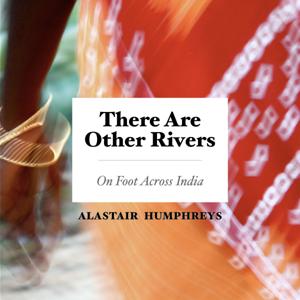
Most of my memories of people are from the briefest of connections. Moments that flash through the gulfs between our lives and simply connect on a human level. A woman, about my age, is running down the road towards me. She is wearing a red and orange sari. It is rare to see Indians running, particularly women. I like the way her gold bracelets jangle and the self- conscious look on her face as she runs. I smile. She catches my smile, grins back at me, but keeps running. Two people on the same road at the same time. Our lives meet, but in opposite directions and then we pass out of each other’s life for ever.
[NOTE FROM AL: This is the lady on the front cover of the book.]
Joy
“Every man has a retirement picture in which he does those things he never had time to do – makes the journeys, reads the neglected books he always pretended to have read.”
I like doing exciting, unusual things, particularly if they are thousands of miles from home and laced with an element of risk. The call to adventure is hard to ignore. And life is not all work. It’s not all Nietzsche and granola, penance and planning for retirement.
“I won’t have it,” declared Annie Dillard. “The world is wilder than that in all directions, more dangerous and bitter, more extravagant and bright. We are making hay when we should be making whoopee.”
I want fun and joy and laughter in my life. Many people dream of travelling the world when they retire or win the lottery. My trip is inspired by similar motives to people who sign up for the retirement cruise of a lifetime. It is just a lot cheaper than a cruise. Walking across India cost £500, of which £300 was the plane ticket. I want good food and the warm glow of the sun on my face. I want to visit beautiful places, see shooting stars on warm evenings and forget about life for a while. These are the joyful times. The good times.
There is nothing complicated to this: travelling the world and living adventurously is a lot of fun. When people ask, “why do you do this?” there is no simpler or more honest answer.
Landscape
“And then – the glory – so that a cricket song sweetens his ears, the smell of the earth rises chanting to his nose, and dappling light under a tree blesses his eyes. Then a man pours outward, a torrent of him, and yet he is not diminished. And I guess a man’s importance in the world can be measured by the quality and number of his glories.”
Most adventures revolve around beautiful landscapes and impressive wildness. But not this trip. This project was about normal-ness. I was not seeking the Top Ten Tourist Views of India. I did not see the Taj Mahal. I was looking for ordinary India (what an oxymoron!). I didn’t want the tourist highlights because I didn’t want the hassle, expense, disappointment and tedium that accompany them. And I wanted to see things I had never seen before, not even in a photograph. I wanted to see what real India was like, in the same way that a visitor to Britain will learn little from taking a photograph of Big Ben.
At walking pace, there are always interesting landscapes. Being outside all day and often all night as well, I tune in to the rhythms of nature. I wake at dawn and sleep at nightfall. I know where and when the moon will rise. I notice if the wind changes direction or if clouds begin to build in the sky. There are places of beauty, such as the beach where I begin the journey. I walk along the hot white sand, followed by dark-skinned children with huge white eyes and smiles. Pulled up to the high tide line is a row of narrow wooden fishing boats, pirogues. It feels wonderfully far from London. Waves roll gently up the sand and the air smells of sea salt. It is a fine place to begin a journey. Unusually for me, I do not stare out at the ocean and want to cross it to see what is on the other side. All my thoughts are inland, along the route of the river I am about to follow.
I run my hands through the warm river water as it mingles with the sea. This is a pilgrimage site for Hindus. A father mutters prayers and dunks his shining, surprised-looking baby several times beneath the water. A dozen men sit cross-legged in prayer round a small fire. Each has a coconut, broken open as an offering, puja. I breathe in the sea air, look forward to the next time I smell it, and begin to walk.
Hundreds of miles later, after walking towards the sunset each day, I have left the hot plains behind. The riverbank is tangled with trees and boulders and the tiny road struggles to hug the river valley. It climbs high and drops down, twisting round the compass, through forested hills. Coffee estates are dotted on hilltops, the coffee planted in amongst the tall forests. Birds screech and cicadas click feverishly. They fall silent until I have passed. I love the aroma of fresh cardamom, the hum of beehives and the creeper-hung trees dripping with moisture. Not a bad landscape to walk through, I think happily. Not bad for a haphazardly chosen strip of India unheralded in the Sunday papers’ Best of India pullouts.
Learning
“And this I believe: that the free, exploring mind of the individual human is the most valuable thing in the world.”
My life really got going the day I finished formal education. I began enjoying learning at about the same time, when I began wandering the world. Knowledge became gold dust. No longer was I learning stuff merely to regurgitate it in hot exam halls. I do appreciate the benefits of the little bits of paper I earned, but school on the road is different. Geography, culture, history, politics, religion: the way of the world begins to fit together. And the more I learn the more I learn how little I know.
Travel far from home and even mundane, ordinary events become out of the ordinary and fascinating. Knowledge and exciting fresh perspectives are thrown at me all the time. This doesn’t happen when life’s normal routine is ticking over. But I do have to caution myself to travel slowly. If I rush my journeys, one eye on the clock, eager only to tick off miles, countries or sights, then I’ll accumulate lists, but I won’t learn much. Truman Capote would dismiss it out of hand: “that’s not travelling, that’s moving.”
But backpackers and other holiday makers will learn at least as much about India as I will on my walk. And I hadn’t even particularly cared whether I did this walk in India or any other place on the planet. So I am not really doing this to learn specifically about India. What I want to learn from this experience, spending time amongst lives very different to mine, is about myself and the direction of my life. The slowness of a walk is a good chance to reflect on the past and contemplate the future, two things I never get round to doing at home. I am yet to find a better recipe for really learning about myself than a physically difficult, uncomfortable adventure thousands of miles from home.
Food
“What does a man need, really need? A few pounds of food each day, heat and shelter, six feet to lie down in and some form of working activity that will yield a sense of accomplishment.”
A boy asks me about English food. I find it hard to describe, particularly without mentioning the delicate subject of roast beef.
“Is it burger? Pizza?”
And because it is hot I just agree with him.
Indian food is even harder to summarise. It is certainly very different to the Great British Indian Takeaway. It is rarely fluorescent orange. However, although there is undoubtedly a vast variety of food across the whole of India, in any one place, at any one time of the year, the poor people will eat a very limited repertoire. Most places serve the same one or two dishes. I eat them every day until a hundred miles or so later a new option emerges. The general theme, however, is always “curry”.
I eat curry for breakfast. I eat curry in the mid-day heat. I eat it three times every day. And I eat a lot of rice. I eat rice served on broad green banana leaves. I eat it in compartmentalised tin thali trays. I even pour water over it, mush it up with my hand and eat it that way. I eat idli (steamed rice cakes) and dosa (crispy rice pancakes) and rice served with various sauces (sambar) and curd. I eat in places where the rice keeps coming until you are full. I eat in places where I am presented with a banana and a smile at the end. The charm is that I never know what I will get next. Everything surprises and amuses me.
After eating curry every day for weeks I am sick of it. So one day, when I smell a different aroma, my taste buds explode. In greedy excitement I follow my nose to a stand where a boy is stirring a sizzling pan.
The smell of the spices is so different to what I am accustomed to.
Chilli, garlic, onions...
I am drooling and excited. It smells new and delicious. Excited, I call out to the cook,
“What region is this food from?”
“China.”
Curiosity
“I’ve never been content to pass a stone without looking under it. And it is a black disappointment to me that I can never see the far side of the moon.”
Go somewhere new, try something different and life fizzes with questions. What will happen? How will my life change? How will I change my life?
No imagination has ever conjured up anything so unique, vivid and complex as any view on this planet. I am fascinated by what lies around the next corner. Like the lucky dip at a fairground, I was eager to delve into India, a country I had not been to, and rummage around in the sawdust with no idea what prizes I would pull out.
The Explorer, by Rudyard Kipling, tells of the lure of the unknown. The mountain ranges called to the explorer until he was drawn to find out what lay beyond them, even when people told him not to bother, that it was not possible. Curiosity took him “along the hostile mountains, where the hair-poised snowslide shivers” and through “the big fat marshes.” The hero, paradoxically, is content not to be a hero. He lets others take the plaudits and the spoils from his accomplishments. What then was his reward, if we assume rewards to be necessary? Primarily, it was a satiation of his curiosity. It never made him rich but the explorer ends his journey with a sense of satisfaction.
I am also drawn by the randomness and unpredictability of horizon chasing. I like having to respond to new situations. Out here I do not just have the opportunity for spontaneity; I am compelled into living spontaneously. I often fear this in anticipation, but love it in hindsight.
I know that these are the fun times, the mad times, the exciting times. Living by my wits. Trusting them to keep me alive. Standing on a hilltop and singing at the sky with no idea where I will sleep tonight but with enough chutzpah to be confident that it will all work out and enough positivity and humour to accept that the worst thing likely to happen is a long uncomfortable night. Morning will come. The sun will rise. And I will sleep extra well tomorrow because of tonight’s travails.
There is enough in this world for many lifetimes. But if the flavour of the ocean is contained in a droplet why can I not just be satisfied with all that is around me right now? Why am I constantly probing for something else? Is this the trait of an optimist or a pessimist? Am I always hoping for even better round the next corner? Am I just dissatisfied with the present, with my ‘now’? Or am I somewhere in between? In purgatory, searing away the bad, the weak and the superfluous in the hope that I’ll find a solution at last. The road rolls on and on. On towards the next horizon. It’s the most enticing page-turner I’ve ever known.And all I have to do is walk on to try to find out if the far-off jasmine flower really does smell sweeter.
Morning
“And again there are mornings when ecstasy bubbles in the blood, and the stomach and chest are tight and electric with joy.”
The water in the emerald paddy fields glints as I walk. A confetti of butterflies flutters in the air. The roadside palms are painted in black and white checks. I enter a village with music blaring from speakers rigged on bamboo poles. I always like places that play music out loud (it’s quite common in parts of Eastern Europe, China and Latin America), even in the countries where it’s done with Orwellian undertones.
This feels like a happy town, a happy morning, except, I guess, for the goat who is about to be butchered on the roadside. I stop to watch. The knife is sharp and swift and one elegant slice ends the goat. How fragile, life! So very easy to die. So final. Is this a beautiful, musical morning to die? Or so beautiful and musical that the thought of death feels too sad to bear?
The goat is dead. It lies in the dust. There is very little blood. The butcher works swiftly, turning the animal into joints of meat. His customers wait patiently. I am fascinated by the neat and tidy compartments of organs inside the goat that had, until moments before, been working magically well.
Morning on the road is about the satisfaction of committing to action. Of being in motion and not yet demoralised or tired. The nerves have passed. It’s a positive time of day. Everything is still fresh. It is up to me to fill this day. I picture what I would be doing back home and what my friends might be doing right now. I’m glad to be out here (as opposed to later in the day when I’m longing for home and an easy life).
I am rarely without company. People always want to talk to me, to find out about this strange Englishman walking briefly through their lives. I walk from one identical conversation to the next. Why don’t you take a bus? Do you know Freddy Flintoff? Every day I see children playing cricket in the fields, the pitch scratched out on a patch of flat earth. They are always delighted if I stop to join their game.
“England against India!” I declare as the boys squabble over who will bowl at me first.
I am still cheerful and energetic enough to greet everyone I pass. I always say “good morning” to children in English, as I know they have learned at least this much in school. They might as well put it into practise for the first, and perhaps only, time in their life. A conversation usually follows that is identical across the non-English-speaking world.
Me: “Good morning.” Child: “Good morning.” Me: “How are you?” Child: “I am fine.”
Me: “I am fine too. Goodbye.”
Child: “Goodbye.”
I walk on, followed by giggles and incredulous gasps.
I walk through a village where outside every home small piles of mangos are for sale. So many places in the world operate this way. One product per season. Harvest it, eat it, enjoy it, sell it. When it’s gone, it’s gone. Each town and region has their own speciality. These are places not yet homogenised (or diversified) by the efficient distribution networks we are accustomed to. At home I can eat strawberries all winter with no real feeling of appreciation or surprise. We have everything, all the time, which means also that we have nothing special. But here, now, walking into mango season, or mango region (I’m not sure which), I slurp with sticky satisfaction at this unexpected bonus to my day, munching mangos as I walk. I do not know how many villages I will walk through before I leave the mango behind. It’s an ephemeral pleasure and all the sweeter for that.
I pause at a water pump and wash my hands and face. I clank the long metal handle and dunk my head beneath the gushing burst of water. The day’s heat is beginning to build and I shiver at the delicious coldness of the water. The water runs down my face and neck, wetting my clothes. The sun will bake them dry again only too soon. I fill my broad-brimmed hat with water and up-end it on my head. I fill my bottles with enough water to get me to the next village and walk on.
Rooks caw and swirl above me. A funeral is taking place. The whole road from the home to the burial site, shaded beneath three gnarled trees, is strewn with yellow, orange and pink flowers.
“Funeral processions clatter
Down streets with drums and rose-petals, Dancing death into deafness.”
The task now is simple: blast out as many miles as I can manage before it gets too hot. I am earning my lunch break. The river teases me, tempting me to swim. But a combination of crocodiles, pollution and my impatient obsession with ticking off miles dissuades me. I snatch occasional respite in scraps of shade. After a few more hours I am beginning to suffer.
The first negative thoughts creep in. I miss home. I feel a hint of annoyance that every vehicle or moped beeps at me, even on these rural lanes. That every time I pause a cluster gathers to stare and snigger and ask the same questions I’ve been asked a million times before. I ask why I’m putting myself through this, a question I’ve asked myself a million times before.
It feels like a taking up of the strain, a satisfying stiffening of the challenge, like cranking up the treadmill pace a notch or two. The exercise in masochistic suffering has begun.
From the publisher's feed