
Sign up to save your podcasts
Or


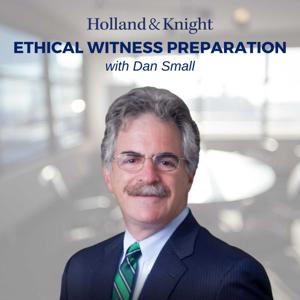
In trial work, courage often means pressing forward even when the outcome is uncertain. In this episode of "The Trial Lawyer's Handbook," litigation attorney Dan Small continues his discussion of the mock case State v. Faulkner and explains how he used it in his pro bono work in Uzbekistan. Referencing themes from his book for the American Bar Association Lessons Learned from a Life on Trial, Mr. Small reflects on cases with significant legal obstacles and why believing in the right result can justify taking risks. He describes how the mock trial revealed deep cultural differences in legal systems, including the Uzbek participants' resistance to trying a case they might lose and their unfamiliarity with direct and cross-examination. Mr. Small recounts a pivotal moment when one of the defense lawyers questioned whether it was even possible in her country to challenge a government witness and describes how the workshop offered a glimpse of what a balanced adversarial system could look like. He closes by sharing that a decade later Uzbekistan amended its constitution to include the right to cross-examine witnesses, showing that meaningful change can begin with small steps.
 View all episodes
 By Holland & Knight

4.8
1212 ratings
In trial work, courage often means pressing forward even when the outcome is uncertain. In this episode of "The Trial Lawyer's Handbook," litigation attorney Dan Small continues his discussion of the mock case State v. Faulkner and explains how he used it in his pro bono work in Uzbekistan. Referencing themes from his book for the American Bar Association Lessons Learned from a Life on Trial, Mr. Small reflects on cases with significant legal obstacles and why believing in the right result can justify taking risks. He describes how the mock trial revealed deep cultural differences in legal systems, including the Uzbek participants' resistance to trying a case they might lose and their unfamiliarity with direct and cross-examination. Mr. Small recounts a pivotal moment when one of the defense lawyers questioned whether it was even possible in her country to challenge a government witness and describes how the workshop offered a glimpse of what a balanced adversarial system could look like. He closes by sharing that a decade later Uzbekistan amended its constitution to include the right to cross-examine witnesses, showing that meaningful change can begin with small steps.
14,277 Listeners
192 Listeners

58 Listeners

61,892 Listeners

0 Listeners
5 Listeners

0 Listeners
2 Listeners

2 Listeners

0 Listeners
2 Listeners

5 Listeners

2 Listeners