
Sign up to save your podcasts
Or



Quick Answer
When should you have a performance conversation with an underperforming team member? Address it immediately the first time you notice an issue—not the third or fourth time. The first time, approach it with curiosity: "What happened?" The second time, express concern and document the conversation. Waiting only makes the problem worse for everyone involved.
Episode Description
How do you know when it's time to address underperformance? What are the early warning signs that someone's struggling? Why does waiting to have the conversation make everything worse?
Most managers wait too long to address performance issues—hoping the problem will fix itself or waiting for the "perfect time" to bring it up. But waiting doesn't help. It just lets small issues escalate into formal performance problems.
In this first part of a two-part series, Colby shares the four signs that tell you it's time to have the conversation, why you need to address issues immediately (the first time, not the third), and why early intervention is actually the kindest thing you can do for someone who's underperforming.
This episode sets the foundation. Next week, Part 2 will give you the exact framework for what to say and how to follow up.
Key Takeaways
Who This Episode Is For
Middle managers who've noticed someone on their team underperforming, who want to know when to intervene, and who need the confidence to address issues early instead of waiting until they become formal HR problems.
Connect with Colby
Don't miss Part 2 next week where Colby walks through the exact six-step framework for what to say in the conversation and how to follow up to make sure it sticks.
Support the show
What should you do when your January plans fall apart? Acknowledge what slipped, identify why it happened, and make one small adjustment to get back on track. This episode shares a three-step recovery process refined over 20+ years of leadership—because leadership isn't about perfect execution, it's about recovery.
Episode Description
What happens when your January plans fall apart by Week 2? How can you recover when you've already slipped back into old habits? What's the difference between perfect execution and sustainable leadership?
Most leaders are already behind by mid-January. They set goals, had a great first week back, and then reality hit. In this final episode of the Year-End Leadership Survival Guide series, Colby shares a personal story about a January that didn't go as planned—and the three-step recovery process he's refined over 20+ years in leadership and operations.
This isn't about perfect execution. It's about recovery. If you've already missed one-on-ones, if you've already fallen back into reactive mode, or if you're wondering how to maintain momentum beyond January, this episode is for you.
Key Takeaways
Who This Episode Is For
Middle managers and team leaders who've already slipped on their January goals, who want to know how to recover without starting over, and who need sustainable leadership habits that work in the real world.
Connect with Colby
Support the show
What should leaders do in the first week of January to set their team up for success in 2026? How can middle managers use the first week back to re-engage their teams and set the tone for the entire year?
Most leaders waste the first week of January drowning in email and attending pointless meetings. But the first week of January isn't about catching up—it's about resetting. In this episode, Colby breaks down the specific conversations leaders need to have, why one-on-ones are non-negotiable, and how to build leadership habits that actually stick.
If you've been struggling with team engagement or haven't been doing one-on-ones consistently, this episode will give you the framework to start 2026 strong.
Key Takeaways
Featured Statistics
Who This Episode Is For
Middle managers and team leaders who want to start 2026 strong, re-engage their teams after the holidays, and build sustainable leadership habits that actually stick.
Connect with Colby
Support the show
93% of employees can't align their personal goals with company objectives—because most goal-setting is one-directional garbage. This episode shows you how to create SMART goals using the two-way framework that balances corporate priorities with what your team actually wants to develop.
What You'll Learn:
Key Stats:
Questions I'll address:
Part of the Year-End Leadership Survival Guide - 4 episodes to finish 2025 strong
Perfect for: Middle managers setting 2026 goals who want to create objectives their team actually cares about achieving
Need help building a goal-setting framework that drives real performance? Colby works with leaders and teams through keynote speaking, executive coaching, and leadership training.
📧 linkedin.com/in/colbymorris | 🌐 nxtstepadvisors.com
Subscribe wherever you listen to podcasts | Share with a leader setting goals with their team
Support the show
Year-end performance reviews often fail because feedback evaporates by February. This episode shows you how to deliver feedback that actually changes behavior—whether you've been doing one-on-ones all year or you're starting fresh in 2026.
What You'll Learn:
Key Stats:
Questions I'll address:
Part of the Year-End Leadership Survival Guide - 4 episodes to finish 2025 strong
Perfect for: Middle managers facing year-end reviews who realize they haven't been as present as they should have been
Need help building a feedback culture in your organization? Colby works with leaders and teams through keynote speaking, executive coaching, and leadership training.
📧 linkedin.com/in/colbymorris | 🌐 nxtstepadvisors.com
Subscribe wherever you listen to podcasts | Share with a leader facing performance reviews
Support the show
Employee Recognition Strategies That Actually Work
How do you recognize employees effectively? Most leaders only show appreciation during holidays—a team lunch at Thanksgiving, gift cards at year-end—but your people deserve consistent recognition year-round. Research shows 76% of employees don't feel adequately recognized at work, yet gratitude often becomes a seasonal checkbox instead of a daily leadership practice. This episode gives you a proven framework for meaningful employee recognition that builds loyalty and engagement.
What You'll Learn:
Featured Statistics:
Common Questions Answered:
Perfect for: Middle managers, team leaders, directors, and anyone struggling to make employee recognition feel authentic instead of performative.
Need help building a culture where recognition drives engagement—not just checks a box during holidays? Colby works with leaders and teams through keynote speaking, executive coaching, and leadership training to build people-first cultures that drive real results.
Connect: linkedin.com/in/colbymorris
Learn more: nxtstepadvisors.com
How to Support The Things Leaders Do Podcast: Subscribe on your favorite podcast app | Leave a 5-star review | Share this episode with a leader who's trying to figure out how to show their team appreciation without it feeling forced or awkward
Keep noticing the work your people do. Keep showing gratitude that actually matches who they are. Keep making recognition a regular practice, not just a holiday tradition. Because those are the things that leaders do.
Support the show
Ever felt stuck between speaking up to your boss and protecting your career? You're in a meeting, your boss makes a decision you know is wrong, but you stay silent—worried that disagreeing will make you look insubordinate or damage the relationship. Here's the truth: you're not alone. 76% of employees avoid workplace conflict, and nearly 24% of all workplace conflict happens between employees and their direct supervisors.
This episode tackles the biggest challenge middle managers face: how to disagree with your boss without getting fired. You'll learn practical strategies for managing up, navigating upward conflict, and advocating for your team while protecting your career.
What You'll Learn:
Key Takeaways:
Featured Statistics:
Perfect for: Middle managers, directors, VPs, and team leads who need to navigate upward conflict, manage up effectively, and advocate for their teams while working within organizational power dynamics.
Resources Mentioned:
Need Help Managing Upward Conflict in Your Organization? Colby works with leaders and teams through keynote speaking, executive coaching, and leadership training to build people-first cultures where difficult conversations lead to better outcomes, not damaged relationships.
For Executives: Want to create an environment where your leaders feel safe disagreeing with you? Let's talk about building that culture.
How to Support The Things Leaders Do:
Keep advocating for your team. Keep navigating with strategy. Keep protecting your integrity. Because those are the things that leaders do.
Support the show
You delegated the project. Now you're wondering: Should I check in without micromanaging? How do I hold people accountable without hovering?
Here's the tension every middle manager feels: You want accountability, but you don't want to be the micromanager everyone complains about.
In this episode, leadership consultant Colby Morris breaks down the critical difference between holding someone accountable and micromanaging—and shows you exactly how to check in on your team without making them feel controlled or abandoned.
What You'll Learn:
Key Statistics:
Featured Quote:
"It doesn't make sense to hire smart people and then tell them what to do. We hire smart people and they tell us what to do." — Steve Jobs
Perfect for middle managers, directors, and team leaders who want to delegate effectively without either hovering over their teams or abandoning them completely.
Connect with Colby Morris
Website: nxtstepadvisors.com
LinkedIn: linkedin.com/in/colbymorris
Services: Executive Coaching | Leadership Training | Keynote Speaking | Delegation & Accountability Workshops
Enjoyed this episode?
Remember: Keep checking in on your people, not checking up on their work. Keep asking how you can help instead of how they're doing every task. And keep trusting the people you've developed while still being present to support them. Because those are the things that leaders do.
Support the show
You had the tough conversation. You thought you were clear. But nothing changed.
Now what?
Most leadership advice stops at "have the conversation" and never tells you what to do when the issue repeats. In this episode, leadership consultant Colby Morris walks you through exactly how to handle the second conversation—and why it's often more important than the first.
What You'll Learn:
Key Statistics:
Perfect for middle managers, directors, and team leaders who need practical guidance on accountability conversations that actually work.
Related Episodes:
Connect with Colby Morris
Website: nxtstepadvisors.com
LinkedIn: linkedin.com/in/colbymorris
Email: [email protected]
Services: Executive Coaching | Leadership Training | Keynote Speaking | Tough Conversations Workshop
Enjoyed this episode?
Remember: Keep having the hard conversations instead of avoiding them. Keep being clear about expectations and consequences. And keep giving your people a real chance to succeed before you move to termination. Because those are the things that leaders do.
Support the show
You believe in people-first leadership, but you work in a results-only culture. Your peers manage by spreadsheet. Your boss treats people like resources. You're wondering: Can I actually lead differently without getting crushed?
Here's the truth: You can't change the entire company culture right now. But you CAN change your team culture. And that's more powerful than you think.
In this episode, leadership consultant Colby Morris shares how middle managers can pioneer people-first leadership in organizations that aren't there yet—and create lasting cultural change from within.
What You'll Learn:
Perfect for middle managers, directors, and VPs who want to be people-first leaders but don't have authority to mandate company-wide change. Also valuable for executives exploring organization-wide culture transformation.
Referenced Episodes:
Want the one-on-one templates and frameworks? Contact Colby for free resources.
Connect with Colby Morris
Website: nxtstepadvisors.com
LinkedIn: linkedin.com/in/colbymorris
Services: Executive Coaching | Leadership Training | Keynote Speaking | Culture Transformation
Executives: Ready to discuss organization-wide people-first culture transformation? Let's talk.
Enjoyed this episode?
Remember: Keep focusing on your team first, not fixing the company. Keep showing up consistently in your one-on-ones. And keep proving that people-first leadership actually drives better results. Because those are the things that leaders do.
Support the show
From the publisher's feed
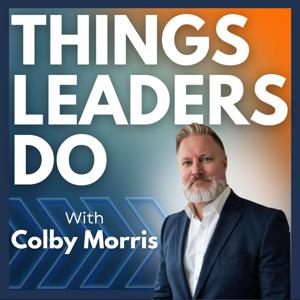
Things Leaders Do is a leadership podcast for managers who want practical strategies that actually work, not leadership theory that sounds good in a boardroom. No fluff. No vague concepts. Just…
Whether you're a new manager figuring out how to lead your first team, a middle manager carrying the weight of the org, or a seasoned executive refining your approach, host Colby Morris breaks down people-first leadership with humor, insight, and straight talk.
Weekly episodes cover how to communicate and build trust, run one-on-ones that actually work, handle performance reviews that don't suck, balance accountability with empathy, manage conflict and tough conversations, lead through pressure and setbacks, plan for succession, develop your people, and build team cultures where people want to stay instead of just show up.
A lot of his content is for the leaders stuck in the middle.
Gen X managers running teams while reporting to executives above them and leading Millennial and Gen Z employees below. If you've ever felt like most leadership advice was written for somebody else's generation, this show was built for you.
New episodes every Wednesday. Host Colby Morris is the founder of NXT Step Advisors, providing executive coaching, team training, and keynote speaking focused on people-first leadership that drives real business results.
Connect at NXTStepAdvisors.com or linkedin.com/in/colbymorris
35 Listeners

18,895 Listeners