
Sign up to save your podcasts
Or

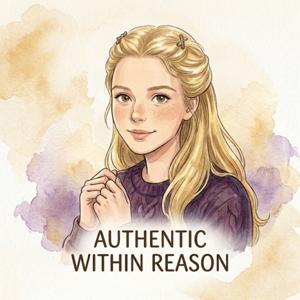


Thinking Out Loud - Chapter 4: Autistic Authenticity
This is the audio version of my YouTube video released under the same title.
In this complete episode, we take a deep, honest look at the realities of living as an autistic individual alongside neurotypical loved ones—without toxic positivity, sugarcoating, or judgment.
Being autistic is a medically recognized disability that brings genuine challenges to our daily lives and relationships. True authenticity isn't about ignoring how our behavior affects others; it's about learning how to work with our unique neurology while meeting the people we love halfway.
This complete compilation covers all three parts of Chapter 4:
Part 1: Daily Triggers — The hidden weight of sensory accumulation, understanding meltdowns vs. overstimulation, and learning how restorative isolation helps us recover.
Part 2: The Social Navigation Tax — How micro-social interactions (hallways, elevators, parked cars) drain our social battery, and why "nothing is wrong—the battery is just dead."
Part 3: ND Communication Is Key — Breaking the mind-reading trap, replacing shame with collaboration, learning when to pause, and aiming for accurate translation over perfect answers.
Timestamps / Chapter Markers
00:00 - Introduction & Chapter 4 Overview
03:41 - Part 1: Daily Triggers & Sensory Accumulation
07:12 - Part 2: The Social Navigation Tax & Dead Batteries
10:05 - Part 3: ND Communication Is Key
14:32 - Collaboration vs. Shame & Final Reflection
Connect & Support
🎧 Listen to the Podcast: Stream Thinking Out Loud on Spotify, YouTube Music, Apple Podcasts, Amazon Music, or iHeartRadio. (Links in Channel Description)
🎬 Watch on YouTube: "Chapter" Episodes are available in video format! Subscribe to our YouTube Channel: Autistic Beyond Reasonable Doubt (http://www.youtube.com/@NDCoachCatherine) to join the discussion in the comments!
📸 Follow on Instagram: Join us for daily clips, quote graphics, and unmasked insights @NDCoachCatherine.
💬 Join the Discussion: What is one area where you and your loved ones have learned to "meet halfway" in your communication? Share your experience in the comments below!
#actuallyautistic #AutisticASMR #Softspokenasmr #SensoryFriendly #Neurodivergent #Autism #ADHD #AutisticBurnout #SoftSpokenASMR #SoftSpoken
Episode 8: Parallel Play: The Adult Neurodivergent Secret to Low-Demand Connection
"What if true connection doesn't require constant conversation? What if you could just sit in the same room, do your own thing, and feel completely safe?"
In child development, parallel play is often treated as a stepping stone kids pass through before learning "proper" social interaction. But for neurodivergent adults, parallel play isn't something we grow out of—it's a profound, low-demand way of relating that our nervous systems need just as much, if not more.
In this episode, Neurodivergent Coach Catherine Lindsay breaks down why sharing space without the pressure to perform is the ultimate antidote to social exhaustion:
• Misconceptions vs. Reality: Why adult parallel play isn't childish—it's a rare, powerful form of unmasked connection in a high-demand world.
• Anatomy of Parallel Play: Scrolling, deep-diving, or asking out-of-context movie questions without the pressure to entertain or keep a back-and-forth conversation going.
• Reclaiming Low-Demand Safety: How parallel play buffers Rejection Sensitive Dysphoria (RSD), offering unspoken proximity and low-demand intimacy.
Connect & Support:
• 🎧 Follow the Podcast: Hit "Follow" or "Subscribe" on Spotify, YouTube Music, Apple Podcasts, Amazon Music, or iHeartRadio to never miss an episode!
• 🎬 Watch on YouTube: "Chapter" Episodes are available in video format! Subscribe to our YouTube Channel: Autistic Beyond Reasonable Doubt (http://www.youtube.com/@NDCoachCatherine) to join the discussion in the comments!
• 💬 Join the Conversation: Leave a comment—what does parallel play look like in your life?
#AutisticAdults #ParallelPlay #NDRelationshipAnchors #LowDemandConnection #RejectionSensitivity #ActuallyAutistic #AutisticBeyondReasonableDoubt #NDCoachCatherine #ThinkingOutLoud
Thinking Out Loud – Chapter 3: Neurodiverse RelationshipAnchors
This is the audio version of my YouTube video released underthe same title.
What actually makes a connection become a meaningfulrelationship?
We often talk about connection as though there's a formula:talk frequently, ask questions, spend time together, share personal information, remember birthdays. But meaningful relationships don't always work that way.
In Chapter 3 of Thinking Out Loud, we explore the small,often overlooked things that can give a relationship its own identity.
These are what I call neurodiverse relationship anchors:
Part 1 — Genuine Curiosity
What's the difference between asking someone questions and actually being curious about someone? Genuine curiosity isn't about following a conversation script. It's about wanting to understand the person behind the answers—and noticing the little things that make them uniquely themselves.
Part 2 — Inside Jokes & Shared References
Over time, shared experiences can become stories, phrases,jokes, songs, memes, and references that belong to the relationship. Eventually, you may develop a kind of shared language that nobody else needs to understand.
Part 3 — Parallel Play
Connection doesn't always require conversation. Sometimesit's simply being comfortable enough to exist beside someone while doing completely different things. No performance. No pressure. Just companionship.
Meaningful connection doesn't have to look impressive fromthe outside. It doesn't require constant interaction. It doesn't require dozens of friends or doing everything together.
Sometimes, it can be incredibly ordinary: A shared joke. Afamiliar phrase. A ridiculous story you've told a hundred times. A movie one person watches while the other barely pays attention. 😂 A quiet moment where neither person feels like they need to be anywhere else.
Those little things can become the anchors that make aneurodiverse relationship feel uniquely yours.
Thanks for thinking out loud with me through Chapter 3! ❤️
Connect & Support
🎧 Follow the Podcast: Hit "Follow" or "Subscribe" on Spotify, Apple Podcasts, YouTube Music, Amazon Music, or iHeartRadio so you never miss an episode!
🎬 Watch & Listen on YouTube: Subscribe to our YouTube Channel: Autistic Beyond Reasonable Doubt (@NDCoachCatherine) to stream full video episodes, access playlists on YouTube Music, or browse the Podcasts tab.
💬 Join the Conversation: Leave a comment—What’s been your version of parallel play? Have there been relationship anchors you realized you’ve had all along? 🥰
#ActuallyAutistic #AutisticASMR #Softspokenasmr#SensoryFriendly #Neurodivergent #Autism #ADHD #neurodiverse #parallelplay #AutisticCommunication#NDRelationships
Have you spent your life waiting for someone else to initiate the connection? When you’re neurodivergent, being chosen by friends or partners can feel like the ultimate proof of belonging. But what happens when no one picks you—or when you get stuck waiting so long that you forget you have a choice, too?
In this episode of Thinking Out Loud, Neurodivergent Coach Catherine Lindsay breaks down the painful dynamic between the "Chooser" and the "CHOOSEE" (a coined term from Episode 2 / Chapter 2).
Together, we unpack the hidden ways Rejection Sensitive Dysphoria (RSD) keeps us safe—but also stuck—and how shifting your mindset can help you reclaim your agency in adult relationships.
In this episode, we explore:
• Included vs. Pursued: Why having people around you can still leave you feeling completely alone.
• The "CHOOSEE" Trap: How waiting for permission to belong becomes a defense mechanism against rejection.
• Over-Accommodating & Auditioning: What happens when someone does choose you, and why you might end up settling for crumbs.
• Shifting the Question: Moving from "Am I wanted?" to "Do I actually like them, and are we a good fit?"
• Reclaiming Agency with RSD: Practical reframes for neurodivergent individuals who love having control over their own lives.
Stop auditioning for relationships that require you to disappear. Tune in to learn how to step off the edge of the metaphorical playground and start choosing yourself.
Connect & Support:
• 🎧 Follow the Podcast: If this episode resonated with you, hit "Follow" or "Subscribe" on Spotify, YouTube Music, Amazon Music, or iHeartRadio so you're automatically notified when the next chapter drops!
• 🎬 Watch & Subscribe on YouTube: "Chapter" Episodes are available in video format! Subscribe to our YouTube Channel: Autistic Beyond Reasonable Doubt (http://www.youtube.com/@NDCoachCatherine) to join the discussion in the comments and never miss an episode!
• 💬 Join the Conversation: Leave a comment or review—do you tend to be the Chooser or the CHOOSEE, and how are you reclaiming your agency?
#AutisticAdults #RejectionSensitivity #RSD #AdultFriendships #Neurodivergent
#AutisticBeyondReasonableDoubt #NDCoachCatherine #ThinkingOutLoud
"What if the exact same wiring that makes rejectionhurt so deeply also gives you an extraordinary ability to read the world?"
Rejection Sensitive Dysphoria (RSD) is often framed purelyas a deficit—an overwhelming nervous system reaction to perceived disapproval or failure.
However, RSD is a double-edged sword. The same hyper-vigilance that creates social anxiety and perfectionism also fuels deep empathy, precision and unmatched social intuition.
In this episode of Thinking Out Loud, Neurodivergent CoachCatherine Lindsay breaks down the full spectrum of RSD:
• The 3 Limitations: How RSD holds us back socially(pre-emptive retreat), professionally (hesitation trap), and personally (the internal legal case).
• The 3 Strengths to Leverage: Transforming hyper-awarenessinto high levels of empathy, professional precision, and fierce personal loyalty.
• The Choosee with RSD: Why having RSD as a Choosee isn't aweakness—it's a built-in quality control filter for genuine compatibility.
Connect & Support:
• 🎧 Follow the Podcast: Hit "Follow" or "Subscribe" on Spotify, YouTube Music, Apple Podcasts, Amazon Music, or iHeartRadio to never miss an episode!
• 🎬 Watch on YouTube: Subscribe to our YouTube Channel: Autistic Beyond Reasonable Doubt (http://www.youtube.com/@NDCoachCatherine) to join the discussion in the comments!
• 💬 Join the Conversation: Leave a comment—how do you leverage the strengths of RSD in your daily life?
#AutisticAdults #RejectionSensitiveDysphoria #RSD#NeurodivergentRelationships #ActuallyAutistic #SoftSpoken #AutisticASMR #ChooseeAndChooser#AutisticBeyondReasonableDoubt #NDCoachCatherine #ThinkingOutLoud
Rejection Sensitive Dysphoria: The Internal Monologue (Ep. 4)
"You suck and everyone hates you." What if your internal monologue said that out loud—and instead of arguing with it, you actually stopped to look at the evidence?
In this episode of Thinking Out Loud, Catherine Lindsay takes off the filter for an honest look into Rejection Sensitive Dysphoria (RSD).
Rather than offering quick "think positive" advice, she breaks down what happens when our neurodivergent brains encounter ambiguity and instantly start "building a full legal case out of circumstantial evidence."
Whether you're struggling with unreturned texts, shifting tones, or the overwhelming discomfort of not knowing where you stand, join Catherine for a raw, unmasked stream of consciousness about separating what actually happened from the stories our brains construct.
Connect & Support
🔊 Follow the Podcast: Hit "Follow" or "Subscribe" on Spotify, YouTube Music, Amazon Music, or iHeartRadio to never miss an episode!
🎬 Watch & Listen on YouTube: "Chapter" Episodes are available in full video format! Subscribe to our YouTube Channel Autistic Beyond Reasonable Doubt (@NDCoachCatherine) to watch the videos, stream full audio playlists on YouTube Music, or find all episodes under the channel's Podcasts tab.
💬 Join the Conversation: Leave a comment—how does your brain fill in the blanks when someone doesn't text back?
#Softspokenasmr #AutisticASMR #SoftSpoken #SensoryFriendly #Neurodivergent #RSD #Autism #ADHD #AutisticInternalMonologue #ThinkingOutLoud
Podcast Exclusive: They Never Initiate... Are They a Bad Friend or Partner? (Thoughts from Chapter 2)
They never initiate. Does that mean they don't care?
What if the person who isn't initiating isn't uninterested—they're just not naturally good at making the first move?
Important caveat: We don't turn this into “never hold people accountable.” There is a crucial distinction between poor initiation and poor reciprocity.
In this episode of Thinking Out Loud, we explore the difference between not initiating and not reciprocating—and why those two things shouldn't automatically be treated as the same thing.
“I’m always the one who texts first.”
“If I stopped reaching out, I’d never hear from them again.”
Sometimes, that does tell us something, but not always what we think it tells us.
Some people simply aren't good at initiating connection.
For autistic people, executive functioning, uncertainty, social anxiety, and fear of bothering someone can all make that first move surprisingly difficult.
For someone who has spent years as the “Choosee”—a coined term from Chapter 2 for the person who tends to wait to be chosen rather than doing the choosing—initiating can feel especially vulnerable.
But here's the nuance: Difficulty initiating doesn't automatically make someone a bad friend or partner. What happens after you open the door matters, too.
Are they thoughtful? Loyal? Responsive? Do they show up? Do they reciprocate? Do they make you feel valued once the connection is established?
At the same time, if you are the person who’s always initiating (whether you’re neurotypical or neurodivergent), your needs still matter. Understanding why someone struggles to initiate doesn't mean you have to pretend their communication style works for you all the time.
Because “This person doesn't give me what I need” and “This person doesn't give me what I need BECAUSE THEY DON’T CARE ABOUT ME” are completely different statements.
This is a Thinking Out Loud exploration of autism, relationships, RSD, reciprocity, and the wonderfully inconvenient thing called “nuance.”
#SoftSpokenASMR #AutisticASMR #SoftSpoken #SensoryFriendly #Neurodivergent
Thinking Out Loud- Chapter 2: Building Neurodivergent Connections
This is the audio version of my YouTube video released under the same title.
How do we build meaningful connections with other people—especially when connection itself can feel unpredictable, complicated, or emotionally expensive?
In Chapter 2 of my "Thinking Out Loud" series, we explore different ways of approaching connection while staying grounded in authenticity, compatibility, and self-acceptance.
Part 1 — The Chooser or the "Choosee?"
"Choosee" isn't a real word, but it's fun and RELEVANT in this context-- so let's use it! 🥰
Are you someone who naturally chooses the people you want to connect with, or are you more comfortable being chosen?
We explore the different roles people can occupy when relationships form—and why being a "choosee" isn't the same thing as being a pick-me.
And something additional that I realized days later about whether or not people initiate the connection and my thoughts on whether that's good, bad, or neither.
Part 2 — RSD & the Need for Predictability
For some people, repeatedly putting themselves out there and risking rejection can come with a significant emotional cost. What happens when the conventional advice to “just put yourself out there” simply isn't working? And what might happen if we tried a different approach?
Part 3 — Internal Acceptance Can Lead to External Acceptance
Building connection with others can sometimes begin with building a stronger connection with ourselves. We explore internal acceptance, toxic relationships, fear of rejection, valuing our own company, and becoming more intentional about what we choose to share with others.
This chapter isn't about finding one correct way to make friends, form relationships, or connect with other people.
It's about recognizing that even within the neurodivergent community, we AREN'T all wired the same way.
Some of us initiate. Some of us respond. Some need more predictability. Some are comfortable with risk. Some need a small, intimate circle, and some of us may move between all of those roles throughout our lives.
The goal isn't to force yourself into someone else's version of connection. It's to understand yourself well enough to find the kind of connection that works for you.
Along the way, you may discover that meaningful connection doesn't require you to abandon your authenticity.
If you prefer video format, please check out my YouTube Channel: https://www.youtube.com/@NDCoachCatherine
#SoftSpokenASMR #AutisticASMR #SoftSpoken #SensoryFriendly #Neurodivergent
Thinking Out Loud — Chapter 1: Investigating Autistic Labels
This is the audio version of my YouTube video released under the same title.
Have you ever been called boring, unreadable, or shy? Maybe those labels were meant to describe you. Maybe they were assumptions other people made about you. Either way, what happens when we stop automatically accepting those labels—and actually investigate them?
In Chapter 1 of Thinking Out Loud, we take a closer look at three traits that are often treated as labels for social problems:
Boring — What if someone who seems boring from the outside has a rich internal world that simply isn't visible to everyone?
Unreadable — What if being difficult to read doesn't mean being closed off? What if we're all diaries, with different locks and different levels of access?
Shy — What if quietness and solitude aren't problems to solve? What if someone's social behavior is intentional, protective, or simply comfortable for them?
This isn't about arguing that these labels are always wrong. It's about questioning the assumptions attached to them—and asking whether they actually tell us anything useful about the person underneath.
Because sometimes the most important question isn't “How do I become easier for other people to understand?”
It's “Do I actually want to change?”
Come think out loud about this with me. ❤️
Video format available! Check out my YouTube Channel:
https://www.youtube.com/@NDCoachCatherine
#SoftSpokenASMR #AutisticASMR #SoftSpoken #SensoryFriendly #Neurodivergent